(7% discount is applied at checkout)
Cart is empty
Your go-to destination for cutting-edge server products


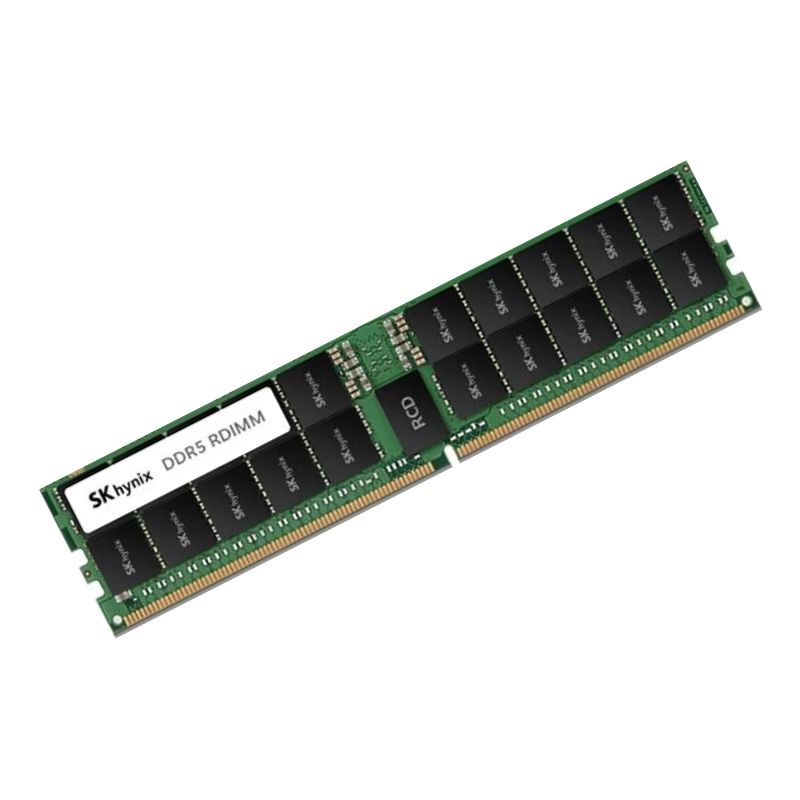
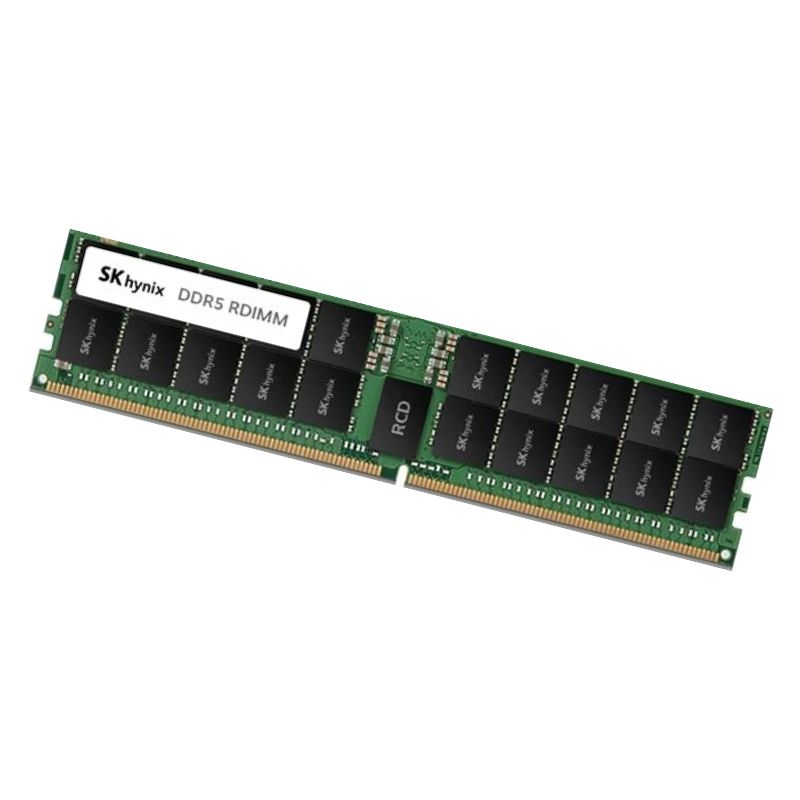
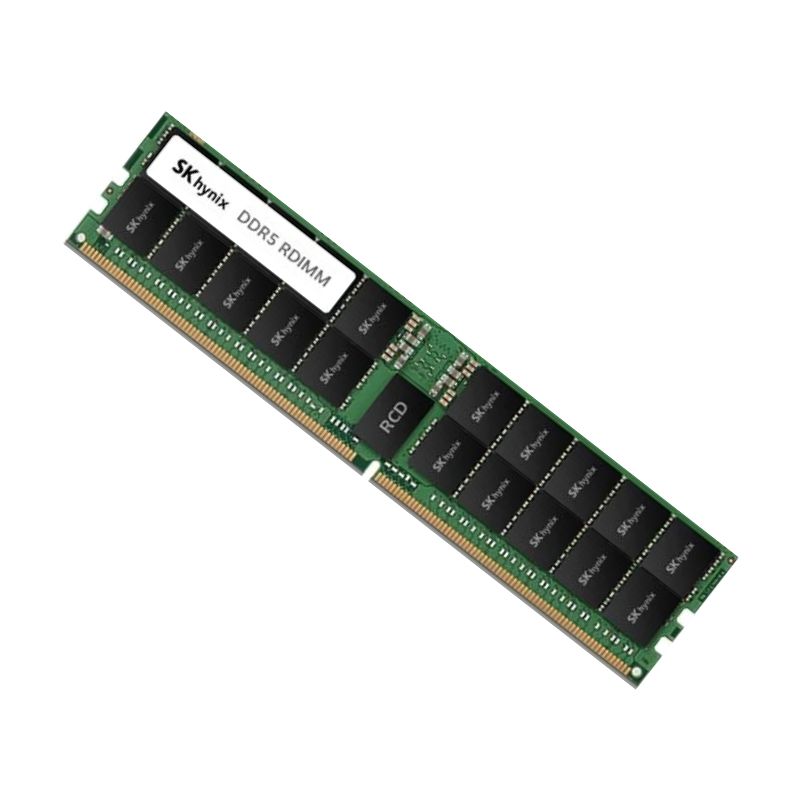
Hynix HMCT04AEERA138N 128GB DDR5 4800mhz Pc5-38400 Ecc SDRAM Registered Rdimm Memory Module. New (System) Pull with 1 year replacement warranty
The Hynix HMCT04AEERA138N 128GB DDR5 4800MHz PC5-38400 ECC SDRAM Registered CL46 288-pin RDIMM memory module delivers next-generation server performance. Designed for enterprises, cloud platforms, and demanding data centers, this quad-rank x4 module provides robust reliability, rapid data transfer speeds, and exceptional stability. With its combination of large storage capacity and ECC error correction, it ensures mission-critical workloads operate efficiently and securely.
With ECC (Error-Correcting Code) technology and registered signaling, the module reduces system crashes, minimizes risks of corrupted data, and provides secure operations in high-intensity applications. This is particularly beneficial in financial services, research computing, and database-driven operations.
The Hynix HMCT04AEERA138N 128GB DDR5 4800MHz PC5-38400 ECC Registered RDIMM memory module is designed for data centers, enterprise-class servers, and high-performance computing platforms that require large memory capacity, reliable error correction, and proven signal integrity. This category covers quad-rank, x4-bit-organization RDIMMs built to support modern server architectures that utilize DDR5 memory technology, offering improved bandwidth, power efficiency, and enhanced reliability over earlier generations.
This module uses the industry-standard 288-pin RDIMM form factor. That means it is compatible with motherboards and server systems designed for RDIMM DDR5 modules with a 288-pin connector. The registered (buffered) design places a register between the DRAM chips and the memory controller to stabilize large memory arrays in multi-module configurations.
At 128GB per module, the HMCT04AEERA138N represents high-density memory suited for memory-intensive workloads such as virtualization, in-memory databases, analytics, and scientific computing. It is a Quad Rank module — effectively composed of four rank groups — enabling the host to address more memory banks and deliver high aggregated capacity per channel.
As a DDR5 device operating at 4800MHz (marketed as PC5-38400), this module doubles down on DDR5’s advantages: higher peak transfer rates, improved prefetch architecture, and on-die features that streamline power delivery and signaling. The PC5-38400 designation refers to the theoretical peak bandwidth per module under standard configuration.
ECC (Error-Correcting Code) capability is essential in server and mission-critical environments — it detects and corrects single-bit errors and flags multi-bit errors to prevent data corruption. The registered nature (RDIMM) improves signal integrity and allows for larger memory populations on a system board without overloading the memory controller.
This module is specified at a nominal voltage of 1.1V, aligning with DDR5’s lower operating voltage compared to DDR4 and contributing to better energy efficiency at scale. The CAS latency and timing spec (CL46 in this part number) reflect DDR5 timing characteristics tuned for stability when running multiple ranks at high capacity.
Quad-rank modules present advantages and trade-offs. By grouping memory chips into four separate ranks, manufacturers can achieve higher capacity (128GB and beyond) while permitting interleaving and improved parallel access across ranks. This is particularly beneficial for multi-threaded server applications and memory-bound workloads.
An x4 organization indicates each DRAM device contributes 4 data bits to the module’s 64-bit data bus (plus ECC bits). The x4 configuration enables the use of a larger number of smaller-die devices, which eases manufacturing and often allows higher densities per module. For system designers, x4 devices are typical in high-capacity, high-reliability server DIMMs.
With DDR5-4800 / PC5-38400, the theoretical peak bandwidth per pin is significantly higher than previous generations. In multi-socket or multi-channel server setups, pairing several HMCT04AEERA138N modules can unlock very high memory throughput for data-intensive tasks. The trade-off is that very large, quad-rank modules sometimes exhibit slightly higher effective latencies compared to single- or dual-rank DIMMs, due to rank switching and electrical loading — but ECC and registered buffering mitigate many real-world stability concerns.
Operating at 1.1V helps reduce per-module power draw versus older DDR4 modules, which is significant at rack scale. For data centers with dense memory configurations, this yields measurable power savings and reduced cooling requirements.
Although RDIMMs typically do not ship with aggressive heat spreaders like some consumer DIMMs, proper chassis airflow and server rack cooling are critical when deploying multiple 128GB modules. Adequate airflow ensures sustained performance and prolongs component lifetime.
The integrated ECC corrects single-bit errors and detects multi-bit errors, improving uptime and data integrity for mission-critical systems. For enterprises running 24/7 operations, ECC is not optional — it’s a foundational feature to minimize silent data corruption.
Enterprise-grade modules such as the HMCT04AEERA138N typically undergo extensive testing: JEDEC compliance checks, thermal cycling, voltage stress testing, and burn-in tests to identify early failures and guarantee longevity. Vendors may offer lifetime or multi-year warranties, and many modules include vendor-provided validation with major server OEMs.
Cloud providers and private clouds that need to maximize VM density benefit from high-capacity RDIMMs. Swapping out lower-capacity DIMMs for 128GB DDR5 RDIMMs increases the total addressable memory per server socket, enabling more concurrent workloads per host.
Databases that maintain large working sets in RAM can dramatically reduce I/O overhead when sufficient memory is available. Deploying multiple HMCT04AEERA138N modules allows database engineers to configure in-memory buffer pools at scales that improve transaction throughput and lower query latency.
HPC clusters often require nodes with maximum memory per socket for simulations and data-intensive tasks. Quad-rank, high-density DDR5 modules maximize per-node capacity without resorting to multi-socket complexity, simplifying cluster configuration and job scheduling.
Registered DIMMs (RDIMM) use an integrated register to buffer command and address signals, while Load-Reduced DIMMs (LRDIMM) place isolation devices between the DRAM chips and the memory controller to reduce electrical loading. LRDIMMs can sometimes support even greater capacity per system by further reducing load, but RDIMMs like the HMCT04AEERA138N offer a favorable balance of performance, cost, and compatibility for many server platforms.
Quad-rank modules yield higher capacity but may influence per-channel achievable speed in highly populated configurations. Dual- and single-rank DIMMs can offer lower latency and sometimes higher per-module frequencies in mixed configurations, but they cap out at lower per-module capacities. Choose quad-rank modules when capacity is prioritized over absolute lowest latency.
Observe ESD precautions when handling RDIMMs: use grounded wrist straps, handle modules by the edges, and avoid touching gold fingers or component surfaces. Ensure modules are seated firmly until latches click, and perform post-installation memory tests to verify system stability.
ECC protects against single-bit errors and prevents silent data corruption—essential for storage nodes, financial systems, and any application where data correctness is paramount. Retaining ECC-capable memory across the fleet is a best practice for data-centric organizations.
Many server platforms support memory encryption features and secure boot processes to defend against physical memory tampering and cold-boot attacks. When deploying HMCT04AEERA138N modules, ensure these platform-level security features are configured to align with organizational security policies.
For modern data centers, memory capacity and performance are critical. The 128GB DDR5 capacity, coupled with the 4800MHz speed, enables servers to handle large workloads, virtual environments, and high-speed data processing without experiencing bottlenecks. Whether it's cloud computing, big data analysis, or high-performance computing (HPC), the Hynix DDR5 module ensures that data centers can maintain efficiency and reliability under heavy workloads.
Professional workstations used for graphic design, video editing, 3D rendering, CAD, and scientific computing require immense memory capacities and high-speed data access. The Hynix 128GB DDR5 module provides an excellent solution by ensuring that resource-intensive software runs smoothly, even when working with large files or multiple applications simultaneously. Whether you’re editing 8K video footage, rendering complex 3D models, or running simulations, this memory module can handle it all.
For gamers building a high-end gaming PC, the Hynix DDR5 module ensures that your system is future-proof and capable of handling the most demanding games at high settings. The increased memory bandwidth and speed provide seamless gaming experiences, reducing latency and enhancing system responsiveness. With the growing demand for ultra-realistic game graphics and complex AI algorithms, DDR5 ensures your gaming setup is ready for next-generation titles.


 Contact Us
 Information
 Catalog
 Solid State Drives (SSD)
 Network Switches
 Hard Disk Drives
 HBA & Controllers
 PC & Servers
 PC & Server Memory
 CPU & Processors
 Network Routers
 Power Supplies
 Tape Drives & Libraries
 Network Devices
 Computer & Network Cables