(7% discount is applied at checkout)
Cart is empty
Your go-to destination for cutting-edge server products
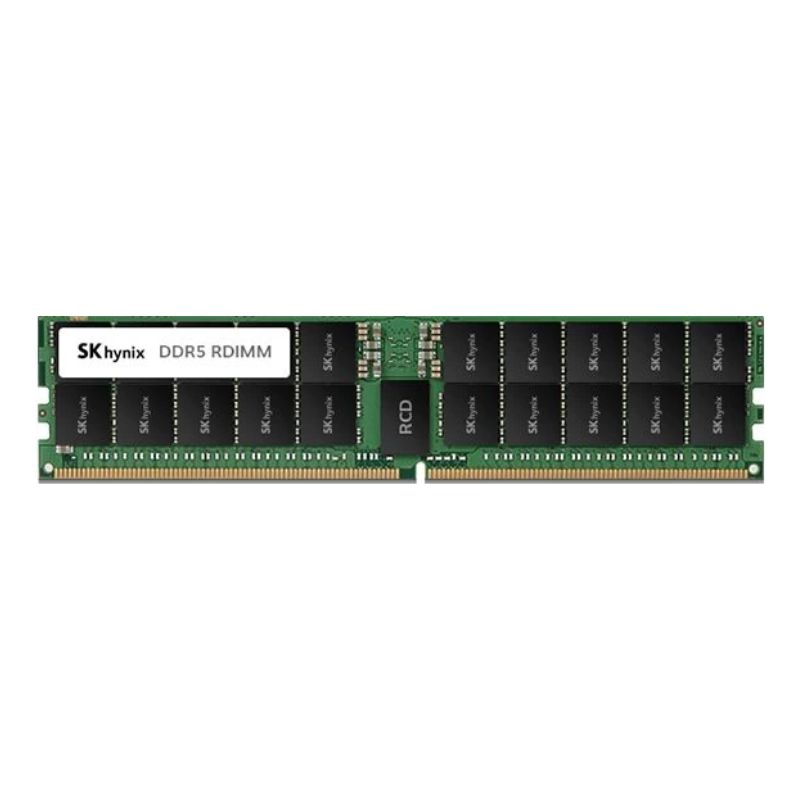


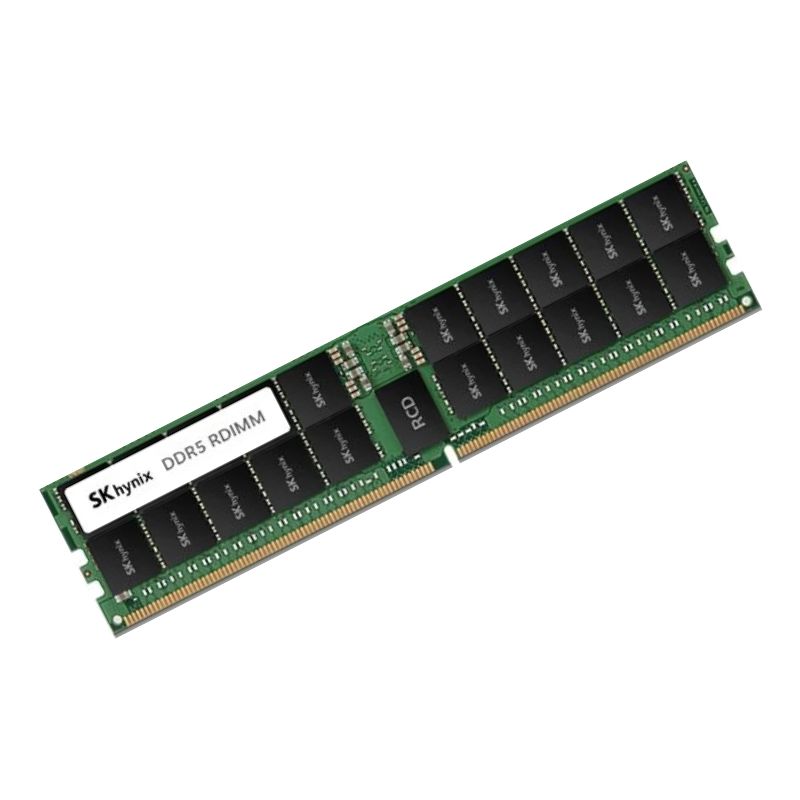
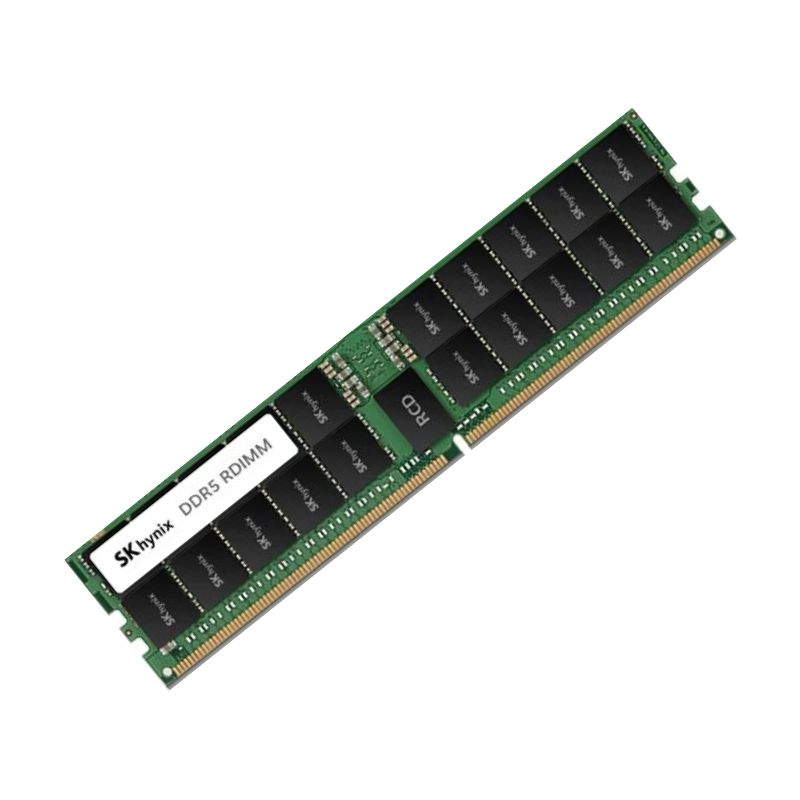
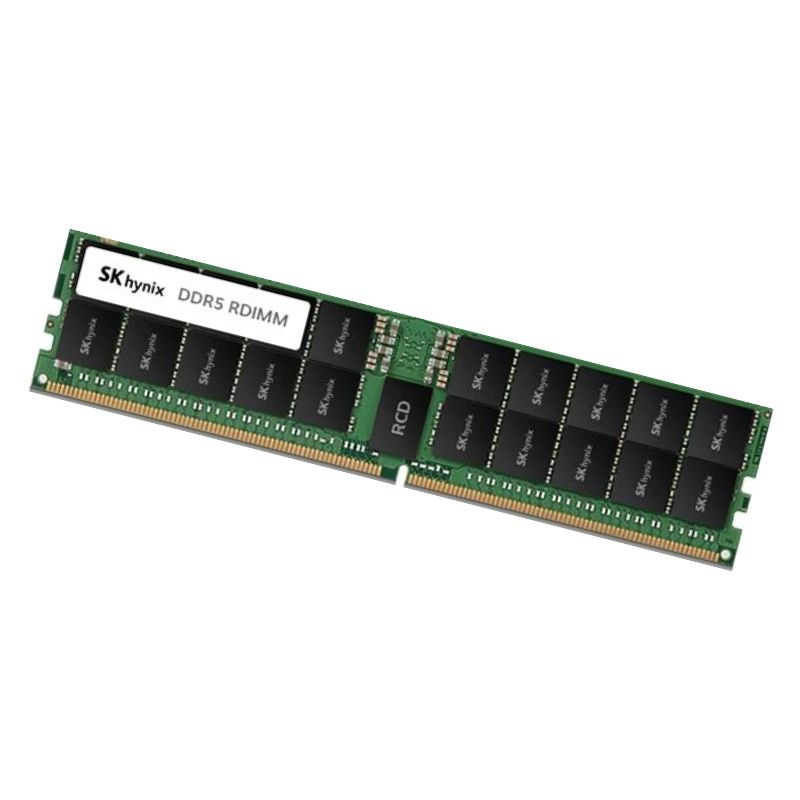
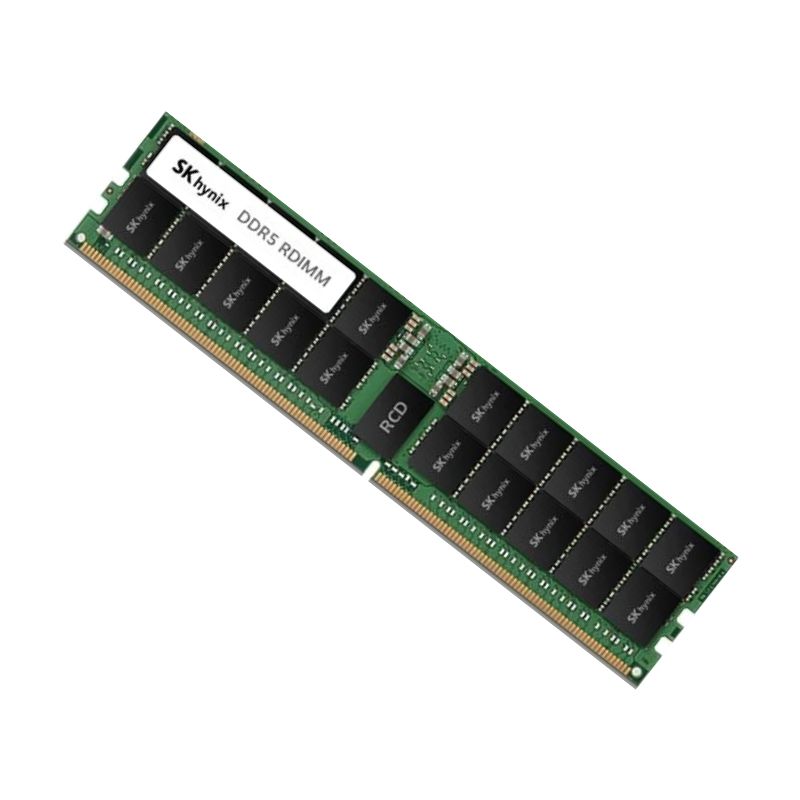
Hynix HMCT04AEERA140N 128GB DDR5 4800mhz Pc5-38400 Ecc SDRAM Registered Cl46 288-pin Rdimm Memory Module. New (System) Pull with 1 year replacement warranty
The Hynix HMCT04AEERA140N is a high-capacity 128GB DDR5 SDRAM Registered DIMM designed for enterprise-grade servers and workstations. Built with quad rank x4 architecture, it offers exceptional reliability, consistent bandwidth, and faster processing for data-intensive applications.
By adopting DDR5 technology, this memory module delivers nearly double the bandwidth compared to DDR4. It ensures faster response times, enhanced multitasking, and improved efficiency for virtualization, cloud computing, AI training, and database operations.
The Hynix HMCT04AEERA140N 128GB DDR5 4800MHz PC5-38400 ECC Registered RDIMM represents a modern, high-density server memory solution engineered for mission-critical environments. Designed around the DDR5 standard, this quad-rank (4R) X4 register memory module delivers elevated capacity, improved power-efficiency at 1.1V, and ECC (Error-Correcting Code) reliability required by enterprise-class systems. It is tailored for data centers, virtualization hosts, database servers, high-performance computing (HPC) clusters, cloud infrastructure, and any workload that benefits from large memory footprints with low-error operation.
Quad-rank modules pack four separate rank banks of DRAM into a single DIMM. Each rank appears to the memory controller as an independently addressable set of devices. Quad-rank designs allow memory manufacturers to increase per-module capacity without resorting to larger per-device densities, which can be beneficial for yield and cost. However, they also introduce additional electrical loading and can affect maximum supported speeds depending on the platform and number of populated ranks per channel.
Using x4 DRAM devices (data bus width of 4 bits per device) rather than x8 or x16 enables denser rank aggregation and flexible module design. X4 devices are typical in high-capacity RDIMMs and LRDIMMs. The trade-offs include increased complexity for error isolation and potential compatibility nuances with certain older systems or BIOS/firmware revisions.
RDIMMs include a register chip that buffers address and command signals to the DRAM, reducing electrical loading on the memory controller. DDR5 also introduced on-DIMM power management features; many modules include PMICs (power management ICs) on the module to regulate voltages and improve power sequencing. The 1.1V nominal voltage of DDR5 lowers power draw compared to DDR4 while delivering higher performance.
With built-in Error-Correcting Code (ECC) technology, the Hynix HMCT04AEERA140N minimizes data corruption and ensures high data accuracy. The registered design further improves stability by reducing electrical load on the memory controller, making it ideal for large-scale deployments.
This 128GB DDR5 module is ideal for cloud servers, data centers, AI modeling, and virtualization platforms. Its enhanced throughput allows IT administrators to deploy more virtual machines without compromising on performance.
With a transfer rate of 4800MT/s, this memory ensures seamless handling of demanding applications. The PC5-38400 rating certifies its ability to handle modern workloads with greater efficiency.
Operating at just 1.1V, this module reduces energy consumption while maintaining peak efficiency, making it a sustainable choice for large-scale data environments.
At 4800 MT/s, the Hynix 128GB DDR5 RDIMM offers significant throughput for memory-bound workloads. Practical performance depends on the server’s memory channel architecture (dual-, quad-, or octa-channel), the CPU’s memory controller, and the number of modules per channel. Systems configured with balanced channel population and interleaving will gain the most from DDR5’s increased bandwidth.
CAS latency (CL46) describes the number of clock cycles between a READ command and the availability of data. DDR5’s higher clocks mean higher numeric CL values compared to DDR4, but absolute latency in nanoseconds is comparable or often improved due to faster transfer rates. For most enterprise server workloads—such as large database scans, virtualization, and analytics—bandwidth and capacity outweigh small differences in latency.
DDR5’s 1.1V operating voltage and integrated power management improve energy efficiency per gigabyte. In dense server deployments where dozens of DIMMs are installed, these savings can compound. Proper airflow and chassis design remain important; heavy workloads can raise module temperatures, so administrators should adhere to recommended operating temperature ranges and use validated server cooling strategies.
Choose 128GB RDIMMs when capacity per slot is a priority, you need ECC reliability, and the server platform supports quad-rank RDIMMs. If the workload prioritizes absolute minimum latency or the motherboard supports fewer ranks per channel, consider comparing with dual-rank DDR5 modules or LRDIMM (Load-Reduced DIMM) options depending on platform guidance.
Leading server vendors (OEMs) typically publish QVLs for memory that list compatible module densities, rank types, and speeds. While Hynix is a major DRAM supplier and many modules are broadly compatible, always consult the system vendor’s documentation and firmware notes to avoid unsupported configurations that may reduce speed or prevent boot.
ECC corrects single-bit errors automatically and detects multi-bit errors, improving system uptime and data integrity. Registered DIMMs add signal buffering for more reliable operation in multi-DIMM configurations. Together, ECC and RDIMM design goals align to reduce soft errors, reduce unplanned reboots, and increase mean time between failures (MTBF) in server deployments.
Modern server OSes will detect and utilize the installed memory, but some enterprise features (e.g., memory hot-add, NUMA optimizations) require kernel or hypervisor-level configuration. Ensure your OS or hypervisor supports the larger page sizes and memory management strategies appropriate for high-capacity modules.
Adhere to manufacturer-specified operating temperature and humidity ranges. Maintain appropriate airflow, dust filtration, and power quality to lengthen useful life. Track module uptime and ECC event counters to proactively replace DIMMs showing elevated error rates.
Memory modules typically adhere to industry standards and regulations—RoHS, JEDEC DDR5 specifications, and other regional safety certifications. Verify that purchased modules include regulatory declarations where required by your procurement or audit processes.
Large memory modules like 128GB RDIMMs reduce the number of DIMMs needed to hit capacity goals, simplifying inventory and potentially lowering failure events. Evaluate whether increasing per-node capacity (by installing higher-density DIMMs) or adding more nodes is more cost-effective given licensing, CPU, networking, and power considerations.
Beyond CAS latency (CL46), DDR5 modules have multiple timing parameters (tRCD, tRP, tRAS, etc.) which combined define responsiveness. The BIOS/UEFI performs memory training at boot to find stable operating points for these timings, especially in multi-rank configurations where electrical characteristics vary.
Memory channel interleaving distributes memory accesses across multiple channels to improve throughput and reduce contention. Properly populating DIMMs across channels is essential to unlock interleaving benefits—consult your platform’s channel population charts to achieve optimal layout.
Use these paragraphs as on-page content blocks to increase topical relevance for search engines and to help users make informed decisions. They can be interleaved between headings, used as expandable “read more” sections, or exposed in FAQ schema for structured data.
Enterprises prioritize uptime; ECC RDIMMs like Hynix HMCT04AEERA140N add hardware-level protections that correct single-bit errors and detect multi-bit errors. Coupled with systematic monitoring and fault-curation policies, ECC modules dramatically reduce the risk of silent data corruption. Implement automatic logging and alerting for corrected ECC events, and define threshold-based replacement policies to preempt module failure.


 Contact Us
 Information
 Catalog
 Solid State Drives (SSD)
 Network Switches
 Hard Disk Drives
 HBA & Controllers
 PC & Servers
 PC & Server Memory
 CPU & Processors
 Network Routers
 Power Supplies
 Tape Drives & Libraries
 Network Devices
 Computer & Network Cables