(7% discount is applied at checkout)
Cart is empty
Your go-to destination for cutting-edge server products
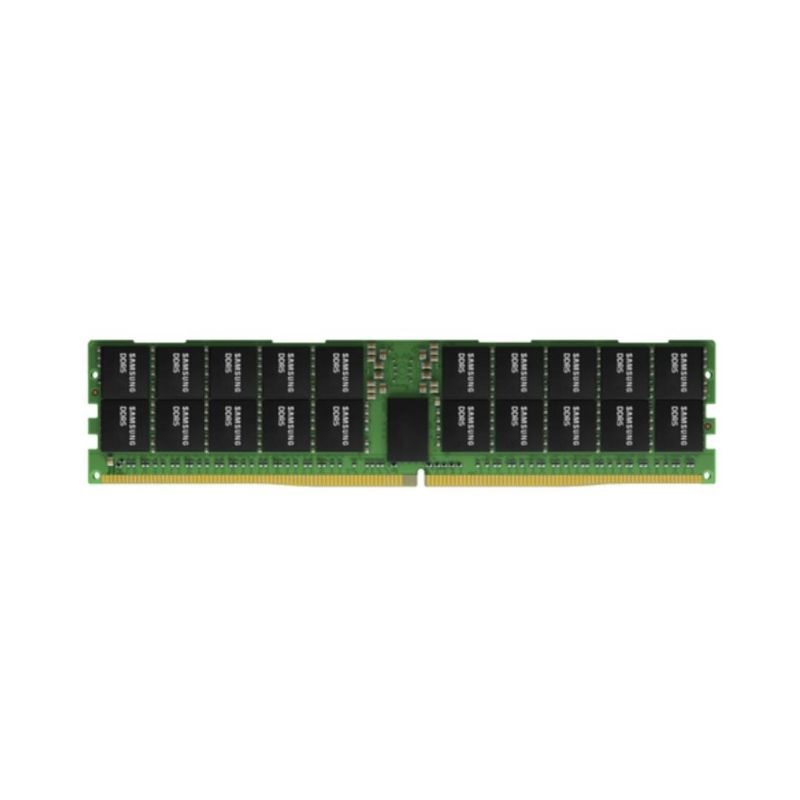


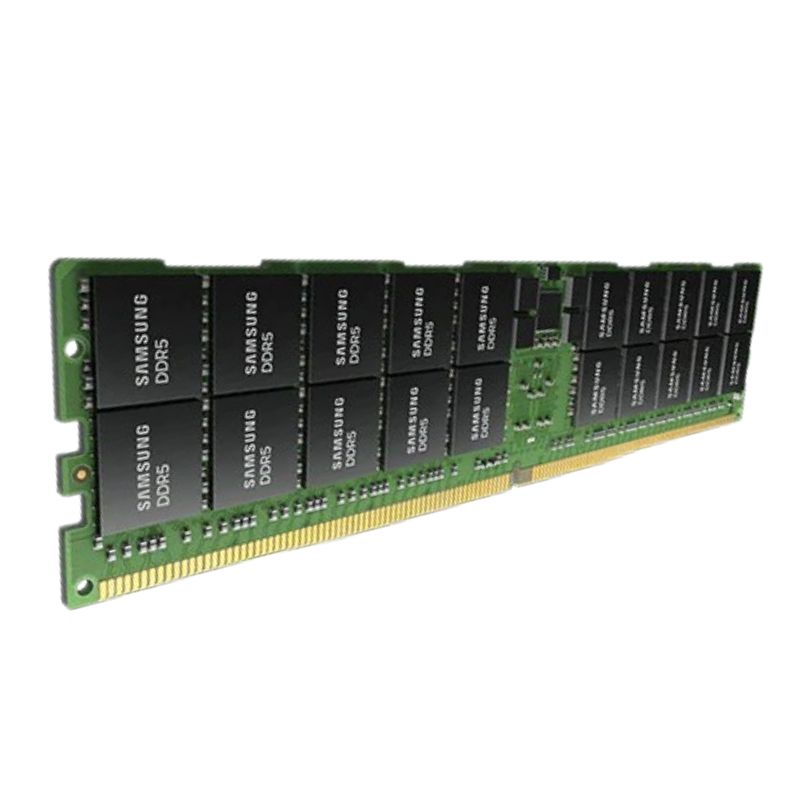
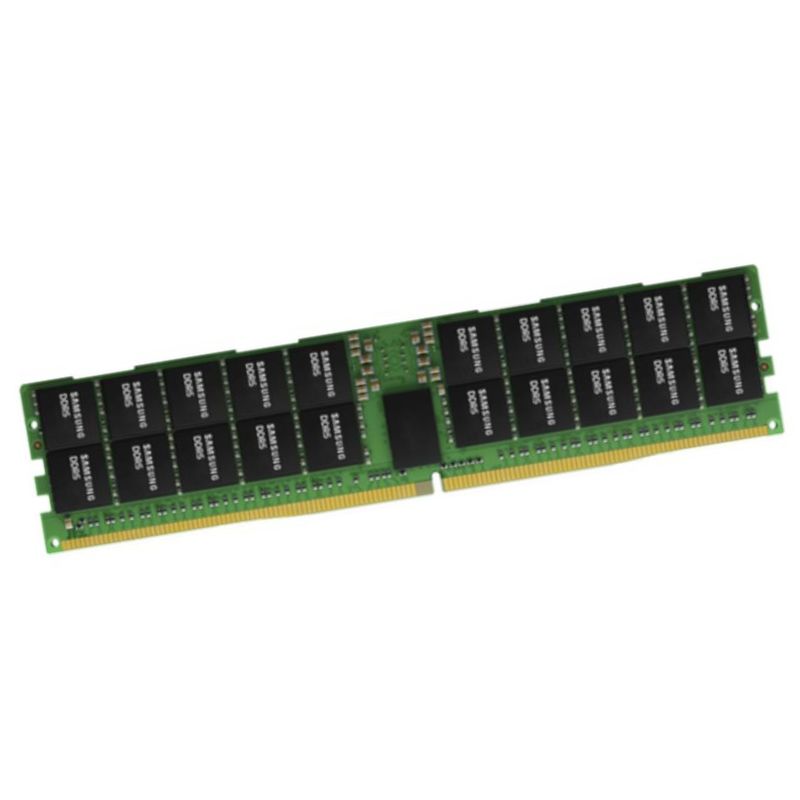
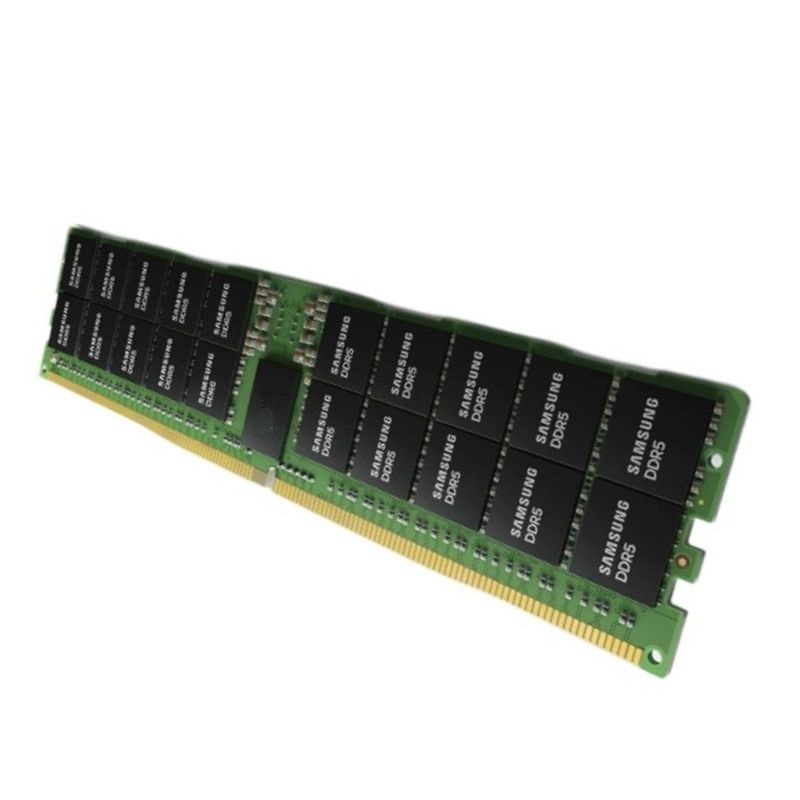
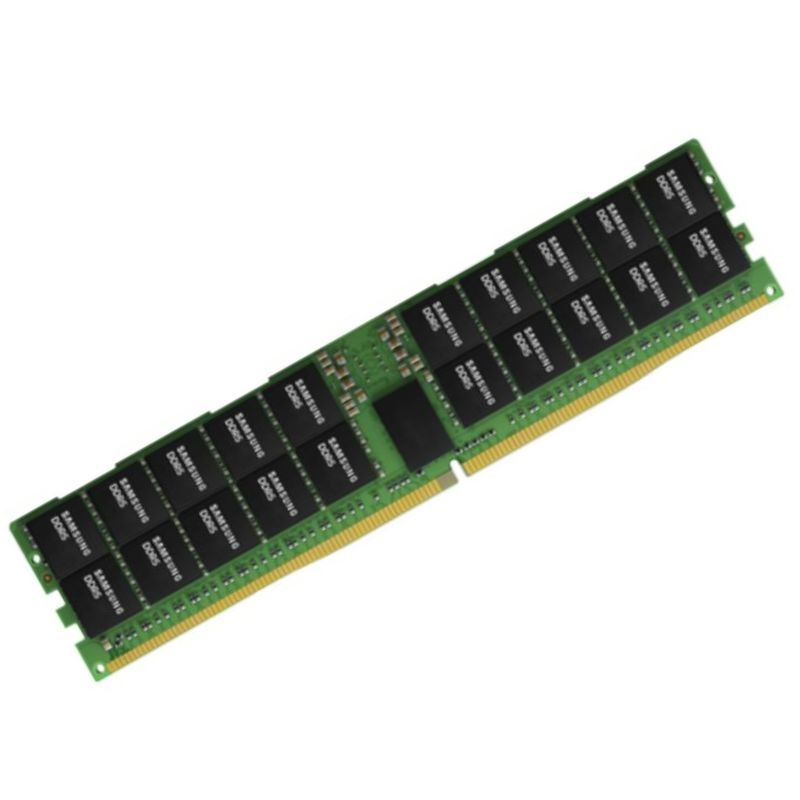
Samsung M321R2GA3EB2-CWM 16GB SDRAM PC5-44800 5600MHz ECC REG 288P RDIMM DDR5 Memory Module. New Sealed in Box (NIB) with 3 Years Warranty
Samsung M321R2GA3EB2-CWM is a 16GB DDR5 SDRAM memory module engineered for enterprise and server environments. This ECC, registered RDIMM delivers PC5-44800 performance at 5600MHz for reliable, high-throughput operation.
DDR5 technology is not merely an incremental speed boost; it is a fundamental redesign of memory architecture. Modules like the Samsung 16GB 5600MHz RDIMM deliver transformative advantages over previous generations.
DDR5 doubles the burst length and prefetch size compared to DDR4. More critically, it introduces a dual sub-channel architecture within each DIMM. While a single 64-bit data channel remains, it is partitioned into two independent 32-bit addressable sub-channels. This dramatically improves memory access efficiency and reduces latency for the memory controller, allowing for more concurrent operations. The PC5-44800 rating translates to a staggering peak theoretical bandwidth of approximately 44.8 GB/s per module, significantly alleviating data bottlenecks in CPU-intensive applications.
Where a high-end DDR4-3200 (PC4-25600) module offers ~25.6 GB/s, the Samsung PC5-44800 module provides a ~75% increase in raw bandwidth. This is pivotal for workloads involving large datasets, real-time analytics, and virtualized environments.
Error-Correcting Code (ECC) memory is essential for system reliability. The Samsung M321R2GA3EB2-CWM incorporates a robust, two-tiered ECC strategy:
This is a groundbreaking feature of DDR5. Each DRAM chip on the module has its own dedicated ECC engine that corrects bit errors within the chip itself before data is sent to the memory buffer. This scrubs "silent" internal errors, dramatically improving chip longevity and data integrity at the most fundamental level.
Complementing ODE, traditional sideband ECC protects the data along the entire path between the memory buffer and the CPU. It uses extra bits (typically 8 bits for every 64-bit word) to detect and correct single-bit errors and detect multi-bit errors on the data bus. This combination makes DDR5 ECC RDIMMs exceptionally resilient.
The "R" in RDIMM stands for Registered. A register, or buffer, is placed on the module to manage address and command signals from the memory controller. This reduces the electrical load on the controller, enabling it to support a much higher number of memory modules per channel without signal degradation. This is why RDIMMs are the standard for scalable server configurations, allowing for large, fully-populated memory capacities (e.g., 1TB+ per server) with superior signal integrity and stability compared to unbuffered (UDIMM) modules.
The Samsung 16GB 5600MHz ECC RDIMM is designed for professional and enterprise environments where failure is not an option.
In virtualized server environments running VMware, Hyper-V, or KVM, high memory density and reliability are paramount. These modules enable high virtual machine (VM) density, ensuring smooth live migrations (vMotion) and consistent performance for business-critical applications like ERP, CRM, and large-scale databases. ECC protection is crucial to prevent silent data corruption that could compromise multiple VMs.
Scientific simulations, financial modeling, genomic sequencing, and artificial intelligence training involve processing colossal datasets. The high bandwidth (44.8 GB/s) of these modules feeds data-hungry CPUs (like Intel Xeon Scalable or AMD EPYC processors) efficiently, reducing compute cycle wait times. The guaranteed data integrity via ECC ensures the accuracy of complex, long-running calculations.
For cloud service providers, the trifecta of performance, power efficiency, and reliability directly impacts operational costs and service-level agreements (SLAs). The lower 1.1V voltage of DDR5 reduces power consumption at scale, while the robust design ensures high uptime across thousands of deployed servers.
Professionals in CAD/CAM, 4K/8K video editing, 3D rendering, and simulation rely on workstation platforms that support registered ECC memory. These modules provide the stable, error-free performance needed for rendering complex scenes or compiling massive codebases over days, where a single memory error could lead to a crash or corrupted output.
Selecting the correct memory requires careful attention to platform compatibility.
The Samsung M321R2GA3EB2-CWM is designed for server and workstation platforms based on Intel Xeon Scalable Processors (Codename Sapphire Rapids, Emerald Rapids, and later) and AMD EPYC 9004 Series (Genoa) and 8004 Series (Siena) processors and beyond. These platforms feature memory controllers specifically designed to leverage DDR5's dual sub-channel architecture and official support for 5600MT/s speeds. It is not compatible with consumer desktop platforms (Intel Core or AMD Ryzen for desktops) or older DDR4 servers.
Always verify the server or workstation motherboard's Qualified Vendor List (QVL). The QVL confirms that this exact Samsung module has been tested and validated for that specific system. Furthermore, ensuring the system BIOS/UEFI is updated to the latest version is essential for stability, performance optimization, and compatibility with DDR5 modules.
Server memory channels follow specific population rules detailed in the system manual. For optimal performance, modules should typically be installed in matching sets per CPU, following a balanced population sequence (e.g., starting with slots A1, B1, C1, D1 for a 4-channel processor). Mixing modules of different speeds, capacities, or timings will cause the entire memory subsystem to run at the lowest common denominator and can potentially cause instability.
Samsung is a tier-1 manufacturer, producing both the DRAM chips and the finished modules. This vertical integration ensures strict quality control from wafer to final assembly.
Every Samsung RDIMM undergoes extensive testing at extreme temperatures and voltages far beyond standard operating conditions. This screens for early failures and guarantees the module will perform reliably 24/7 in the demanding environment of a server chassis. Modules are tested for full compliance with JEDEC standards and often exceed them.
While this specific module may feature a standard aluminum spreader or a bare-green PCB design common in servers with strong airflow, thermal management is a key design consideration. The higher data rates of DDR5 make efficient heat dissipation critical. Samsung designs its components and layouts to manage thermals effectively, ensuring consistent performance without throttling.


 Contact Us
 Information
 Catalog
 Solid State Drives (SSD)
 Network Switches
 Hard Disk Drives
 HBA & Controllers
 PC & Servers
 PC & Server Memory
 CPU & Processors
 Network Routers
 Power Supplies
 Tape Drives & Libraries
 Network Devices
 Computer & Network Cables