(7% discount is applied at checkout)
Cart is empty
Your go-to destination for cutting-edge server products
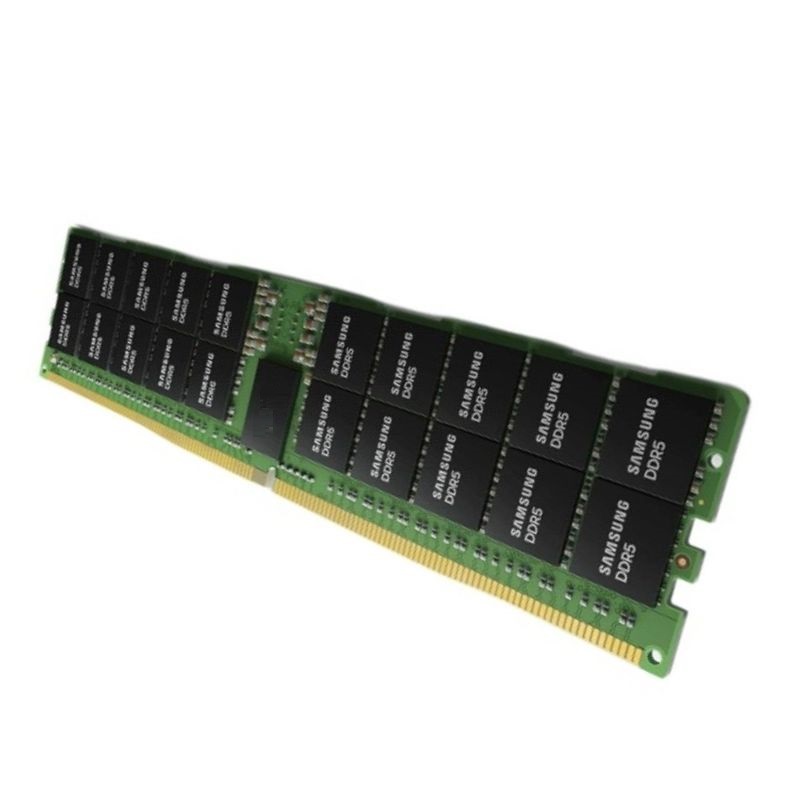


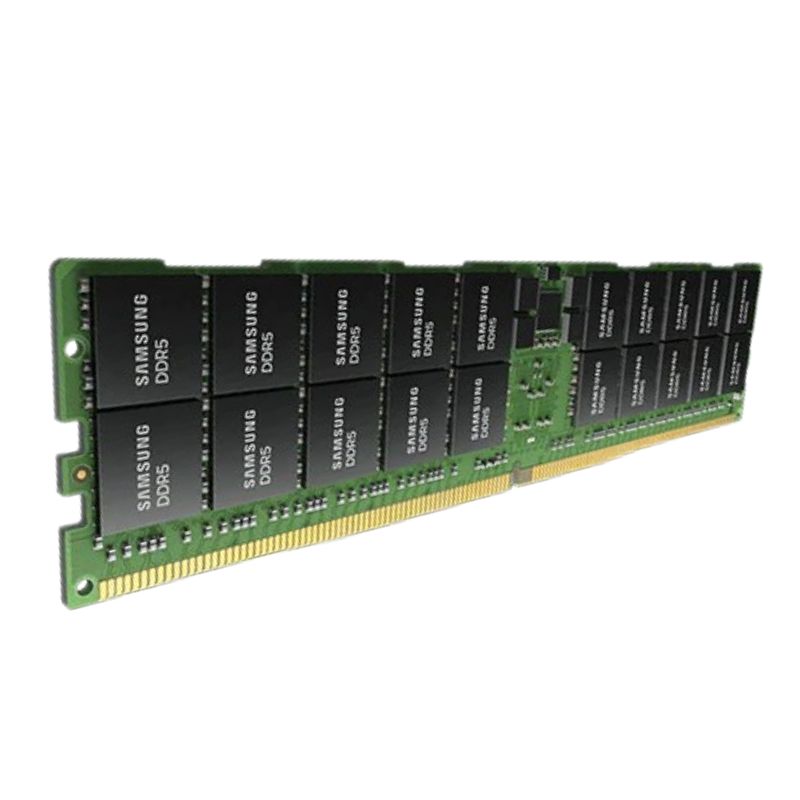
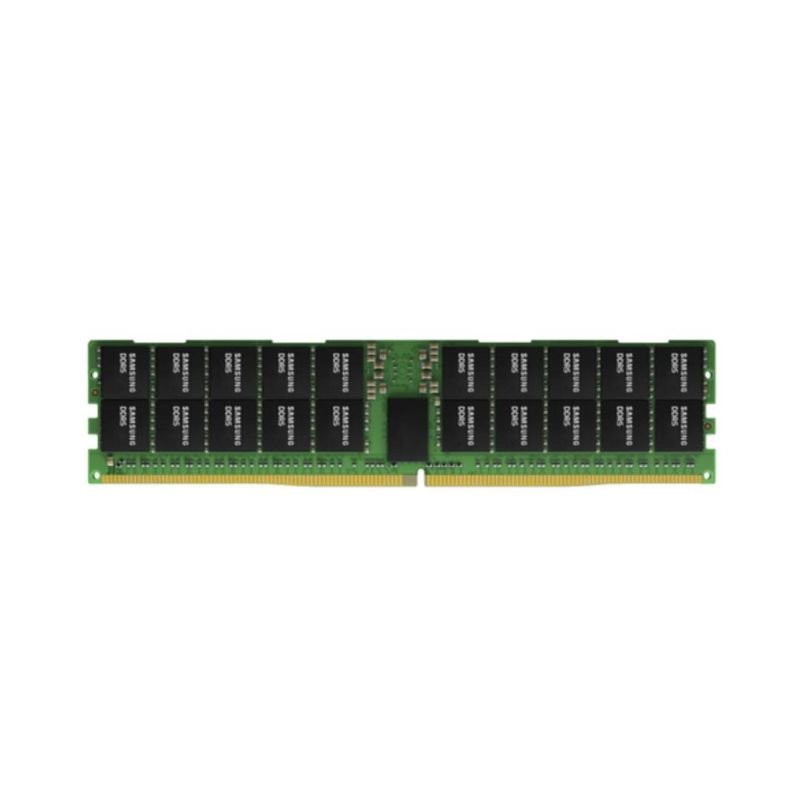
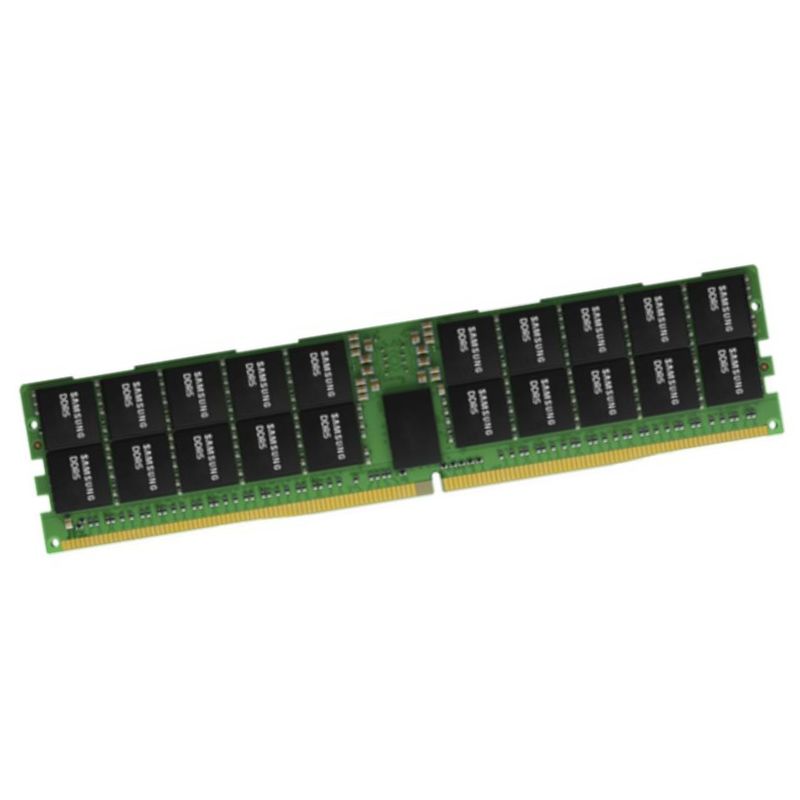
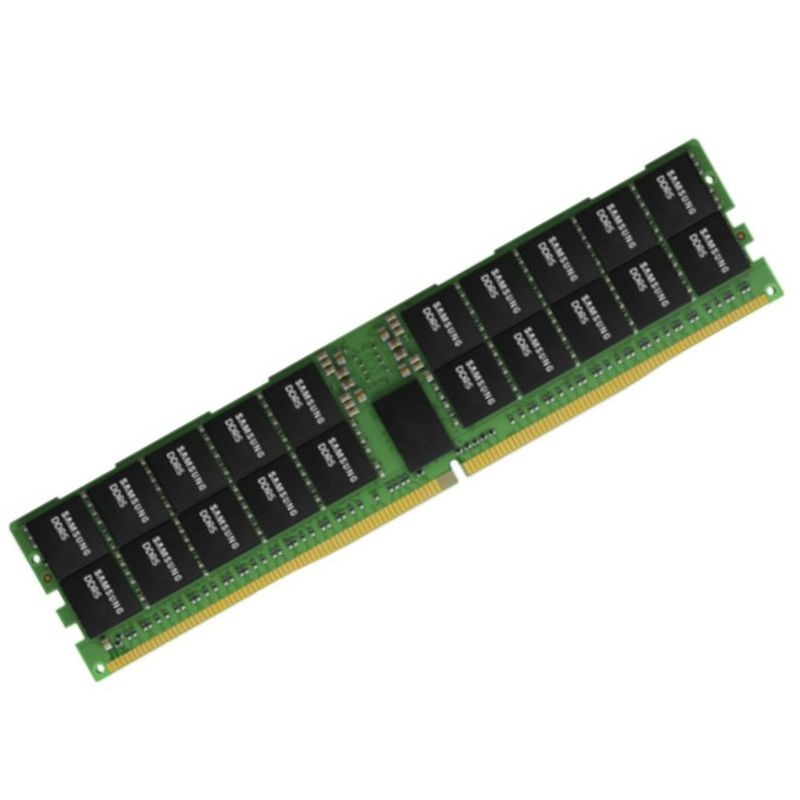
Samsung M321R2GA3EB2-CWMJJ 16GB SDRAM PC5-44800 5600MHz ECC REG 288P 1RX8 RDIMM DDR5 Memory Module. New Sealed in Box (NIB) with 3 Years Warranty
Discover the Samsung M321R2GA3EB2-CWMJJ, a high-performance 16GB DDR5 memory module engineered for servers and workstations. This single-module RDIMM (288-pin) delivers ECC error-correcting reliability, registered buffering and fast 5600MT/s throughput — ideal for mission-critical systems that demand stability and speed.
This Samsung RDIMM is tailored for enterprise motherboards and server platforms that support DDR5 registered memory and ECC. Use it to:
Built for enterprise environments, this module combines low-latency timings and robust data protection to maximize uptime. The registered buffer reduces electrical load on the memory controller, improving scalability in multi-module configurations.
DDR5 server memory, such as this Samsung module, is fundamentally different from its predecessors and consumer-grade counterparts. It is built upon a new architecture designed to overcome the bandwidth and scaling limitations of DDR4.
The move to DDR5 introduces several transformative features that directly benefit server performance and management.
Unlike DDR4's single 64-bit data channel, each DDR5 DIMM splits its bandwidth into two independent 32-bit sub-channels. This allows the memory controller to handle two data accesses simultaneously per module, significantly improving efficiency and reducing latency for smaller, random-access workloads common in server applications like database queries and virtualization.
Beyond the module-level ECC provided by the RDIMM itself, DDR5 incorporates On-Die ECC. This means each DRAM chip on the module can detect and correct minor bit errors internally before they are ever seen by the system. This additional layer of protection enhances data reliability and chip longevity, a critical factor for large memory arrays.
DDR5 modules relocate the power management integrated circuit (PMIC) from the motherboard to the memory module itself. This provides superior voltage regulation, cleaner power delivery, and reduced signal noise. It enables finer power control and improves stability, especially when populating all server DIMM slots—a common scenario in enterprise deployments.
Each specification of this module points to its intended use case and performance profile.
The 16GB capacity offers a balance between density and cost-effectiveness for scaling total system memory. The 1Rx8 configuration means it is a single-rank module using x8 DRAM chips. Single-rank modules generally allow for higher operating speeds and are less electrically taxing on the memory controller, enabling systems to support more modules at higher frequencies. This makes them ideal for maximizing bandwidth in multi-socket servers.
The 5600 Megatransfers per second (MT/s) speed, also labeled as PC5-44800 (calculated as 5600 MT/s * 8 bytes = 44,800 MB/s bandwidth), represents a high-performance tier in early DDR5 server platforms. The CAS Latency of 46 cycles is typical for this speed class in server memory, where absolute stability and error correction are prioritized over ultra-tight timings. The combination delivers high throughput for data-intensive applications.
Operating at 1.1 volts, DDR5 provides a significant power efficiency gain over DDR4's 1.2V standard. When multiplied across hundreds or thousands of modules in a data center, this reduction translates into substantial power savings, lower cooling requirements, and a reduced total cost of ownership (TCO), all while delivering higher performance.
The terms ECC and Registered are what distinctly separate server memory from consumer memory. They are not just features; they are essential requirements for mission-critical stability.
ECC memory includes extra bits (e.g., 8 bits for every 64 bits of data) to store an encrypted code. When data is written, a code is calculated and stored. When data is read, the code is recalculated and compared. Single-bit errors (the most common type) are detected and corrected instantly in hardware, with no operating system interruption. Multi-bit errors are detected and reported, allowing the system to halt safely to prevent data corruption. This is non-negotiable for financial transactions, scientific computations, and database integrity.
Without ECC, cosmic rays, electrical noise, or subtle hardware faults can cause silent data corruption—a flipped bit in a financial record, a scientific dataset, or a stored file. ECC eliminates this risk for single-bit errors, dramatically increasing mean time between failures (MTBF) and ensuring the foundational principle of data center operations: integrity.
A Registered DIMM incorporates a register (or buffer) on the module for the address and command signals (but not the data signals). This register acts as a traffic controller, reducing the electrical load on the server's memory controller.
By buffering these signals, the memory controller sees only the one electrical load of the register, not the combined load of all the DRAM chips on the module. This allows a single CPU to support much higher total memory capacities—often 2TB or more per socket—by enabling the population of all DIMM slots with high-density modules without overwhelming the controller. It also improves signal integrity and system stability at high speeds and high densities.
UDIMMs (Unbuffered DIMMs) have no register and are common in desktops. They offer lower latency but severely limit the number of modules and total capacity a server can support. LRDIMMs (Load-Reduced DIMMs) take buffering a step further by also buffering the data lines, allowing for even greater capacities (using more, denser chips) at the cost of slightly higher latency. The RDIMM occupies the optimal middle ground, providing excellent capacity, speed, and stability for the vast majority of enterprise applications.
The Samsung M321R2GA3GA3-CWMJJ is not a general-purpose component. Its specifications tailor it to specific, demanding server environments.
This module is engineered for systems where performance, reliability, and scalability converge.
Ideal for mainstream 1P and 2P servers from vendors like Dell, HPE, Lenovo, and Supermicro running Intel Xeon Scalable or AMD EPYC 7004/8004 series processors. These servers form the backbone of corporate IT, handling virtualization (VMware, Hyper-V, KVM), enterprise resource planning (ERP), customer relationship management (CRM), and mid-sized databases. The 16GB density allows for flexible configurations (e.g., 128GB per CPU with 8 slots).
Cloud service providers and private cloud deployments (like VMware vSAN, Nutanix, or Microsoft Azure Stack) require homogeneous, reliable, and high-performance memory across thousands of nodes. The ECC protection ensures VM integrity, while the DDR5 bandwidth improves data locality performance for distributed workloads.
Certain applications derive particular benefit from the attributes of this memory category.
Platforms like SAP HANA, Oracle Database In-Memory, and Redis thrive on massive, fast, and reliable memory pools. The high bandwidth of DDR5 5600 accelerates data processing, while ECC guarantees the accuracy of computations and transactions held entirely in RAM, preventing costly errors or corruption.
In virtualization, memory is a critical, often limiting resource. The combination of RDIMM capacity scaling and ECC reliability allows host servers to safely run a greater number of virtual machines with confidence. For Virtual Desktop Infrastructure (VDI), this translates to more user sessions per server without compromising stability.
While often using workstation-class hardware, high-end technical applications in computer-aided engineering (CAE), finite element analysis (FEA), and media rendering on server platforms benefit from the large, error-free memory spaces provided by such modules, ensuring lengthy simulation jobs complete without fault.


 Contact Us
 Information
 Catalog
 Solid State Drives (SSD)
 Network Switches
 Hard Disk Drives
 HBA & Controllers
 PC & Servers
 PC & Server Memory
 CPU & Processors
 Network Routers
 Power Supplies
 Tape Drives & Libraries
 Network Devices
 Computer & Network Cables