(7% discount is applied at checkout)
Cart is empty
Your go-to destination for cutting-edge server products
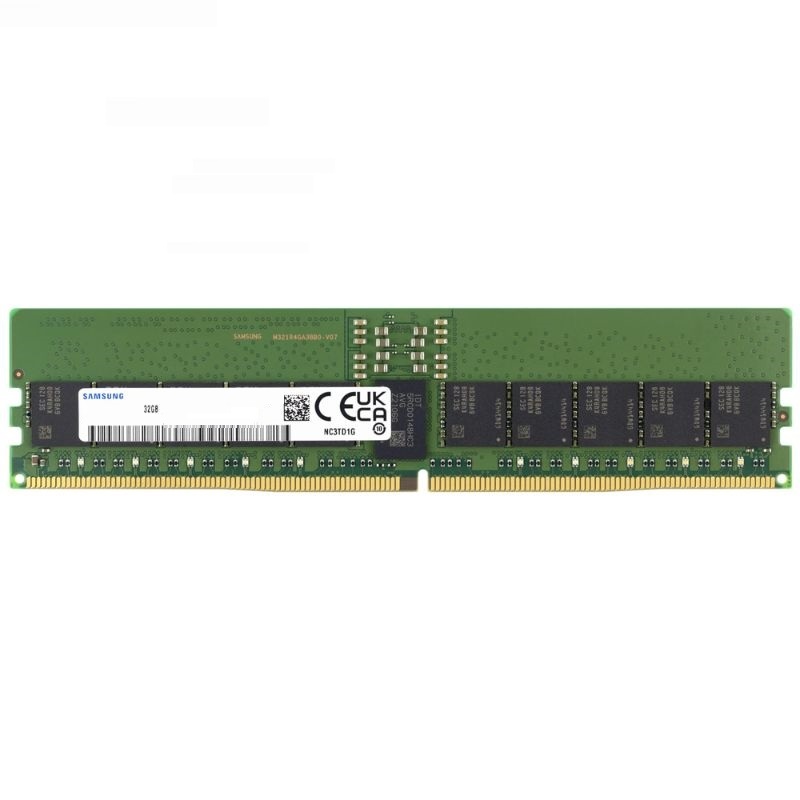


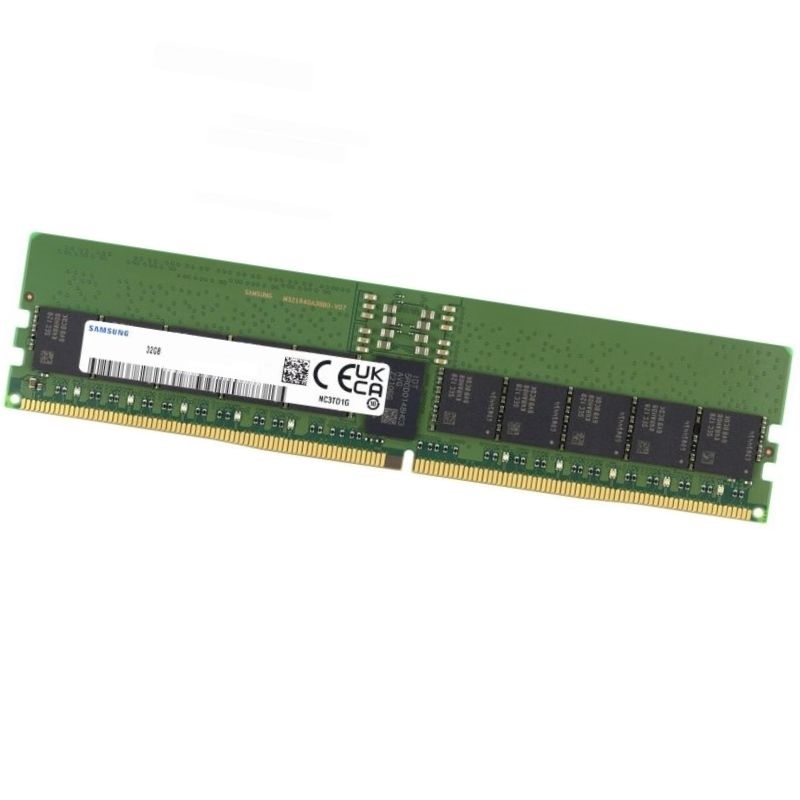
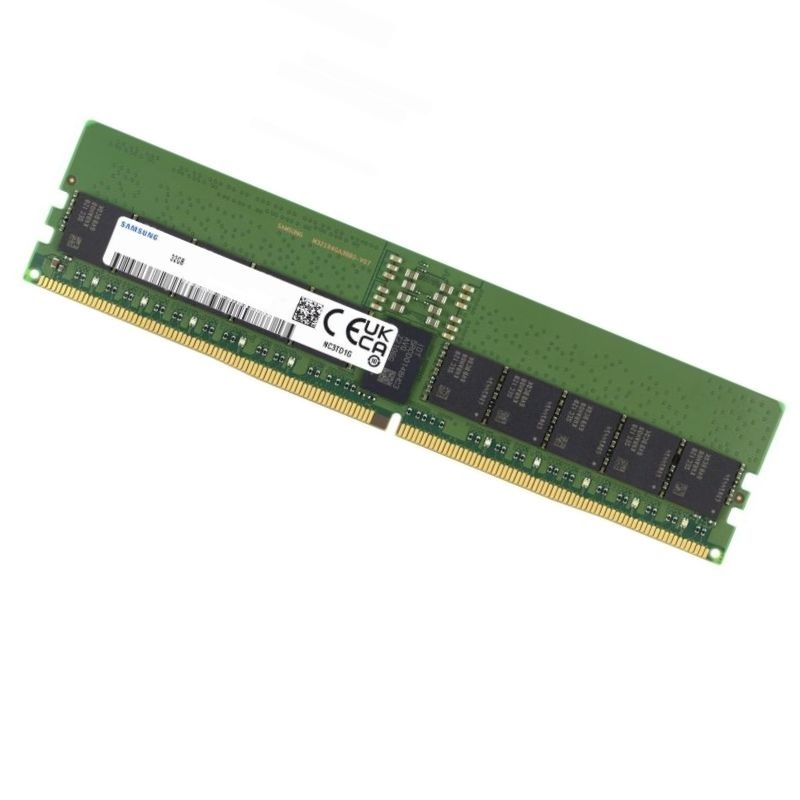
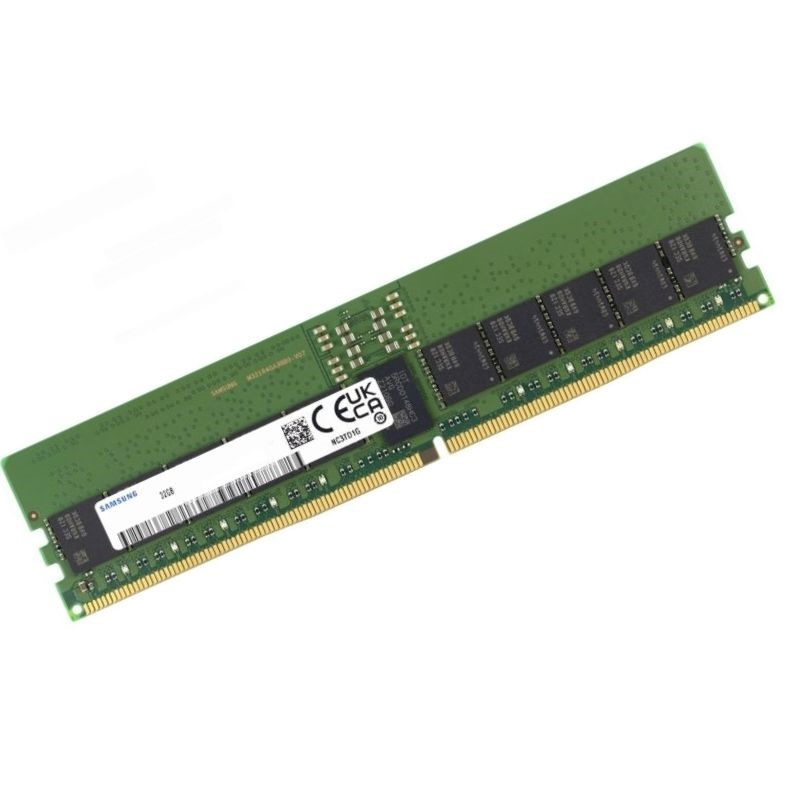
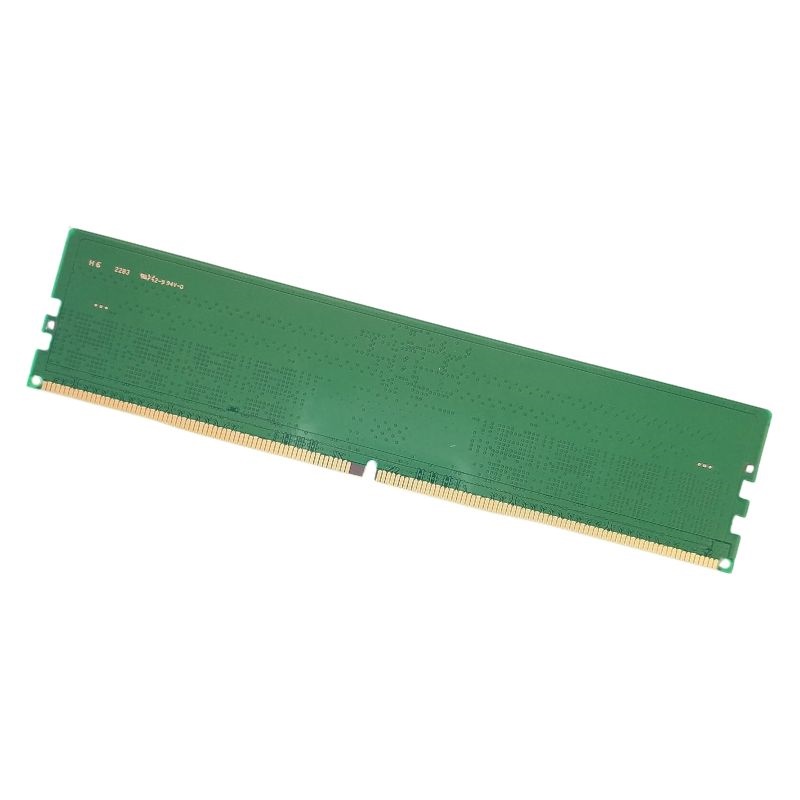
Samsung M321R4GA0BB0-CQKDS 32GB DDR5 SDRAM 4800MHz 288P RDIMM PC5-38400 ECC REG Memory Module. New Sealed in Box (NIB) with 3 Years Warranty
The Samsung M321R4GA0BB0-CQKDS is a high-performance, 32GB DDR5 memory module engineered for professional server environments where data integrity, reliability, and throughput are paramount. As part of Samsung's cutting-edge DDR5 lineup, this module represents a significant leap over previous DDR4 technology, offering enhanced speed, greater capacity per module, improved power efficiency, and advanced error-correction capabilities.
The Samsung M321R4GA0BB0-CQKDS represents a specific and critical component within the server memory hierarchy. It is a 32GB DDR5 Registered ECC RDIMM module engineered for stability, capacity, and performance in demanding enterprise and data center environments. This memory module is not designed for consumer desktop PCs but is a cornerstone for servers, workstations, and storage systems requiring unwavering data integrity and robust error correction. Its specifications—4800 Mbps data rate, PC5-38400 designation, and 1Rx4 configuration—define its role in modern computing infrastructure, balancing speed with high-density memory needs.
Understanding the alphanumeric string in the product name is key to identifying its capabilities and compatibility. Each segment provides specific information about the module's architecture and performance profile.
The part number follows Samsung's internal nomenclature. "M3" typically indicates a DDR5 module. The "21" often relates to the product family and technology. "R4" signifies the module's organization and rank configuration (1Rx4). "GA" can denote attributes like voltage and revision. The suffix "CQKDS" frequently refers to the speed bin (4800Mbps at CL40) and the specific product line.
This module offers a single 32-gigabyte memory capacity on one Dual In-line Memory Module (DIMM). The "1x32GB" clarification is crucial for system configuration, indicating it is one physical stick of memory. In servers, multiple such modules are installed in parallel across memory channels to achieve total system memory (e.g., 256GB across 8 slots). This 32GB density offers a balance, providing substantial per-module capacity for memory-intensive applications while allowing for flexible total memory configurations without overly taxing the server's memory controller.
The "1Rx4" designation is a critical specification. "1R" means the module is single-ranked. A rank is an independently addressable set of DRAM chips on the module. "x4" refers to the physical organization of the memory chips, specifically that they have a 4-bit data width per chip. This x4 organization is fundamental for achieving higher capacities using fewer DRAM chips and is particularly beneficial for server memory as it optimizes for density and can improve signal integrity compared to x8 or x16 configurations, especially when using error-correcting code (ECC).
The performance of server memory is defined by its speed, latency, and bandwidth. These parameters directly impact the throughput of data between the CPU and memory, affecting overall server responsiveness and application performance.
The module operates at a data rate of 4800 Megatransfers per second (MT/s), often abbreviated as 4800 Mbps. This is the number of data operations the module can perform per second on its data pins. The "PC5-38400" is the module's industry-standard name derived from its bandwidth. The bandwidth is calculated as (Data Rate * Bus Width in bytes). For a DDR5 module with a 64-bit (8-byte) bus, 4800 MT/s * 8 bytes = 38,400 MB/s (or approximately 38.4 GB/s) of theoretical peak bandwidth. This "PC5-38400" label ensures quick identification and compatibility matching against server motherboard Qualified Vendor Lists (QVLs).
CAS Latency (CL) is a primary timing parameter, measured in clock cycles. A CAS Latency of 40 (CL40) indicates the delay between the memory controller requesting data and the first piece of data being available from the module. While higher clock speeds (like 4800Mbps) increase bandwidth, CAS Latency affects responsiveness. In server environments, a balance is struck. The CL40 timing at 4800Mbps is a standard and optimized latency for DDR5 server modules at this speed, ensuring stable operation under continuous load without excessive delay.
The Samsung M321R4GA0BB0-CQKDS operates at a nominal voltage of 1.1 volts. This is a significant reduction from the 1.2V common in DDR4 memory and reflects DDR5's improved power efficiency. Lower voltage reduces overall power consumption and heat generation within the server chassis, which is a critical consideration for data centers managing thousands of servers.
This module incorporates specialized technologies that differentiate server-grade memory from consumer-grade products. These features are non-negotiable for business-critical applications where downtime or data corruption is unacceptable.
ECC is a fundamental feature of this memory module. It can detect and correct the most common types of internal data corruption, specifically single-bit errors. When a bit flips unintentionally (a soft error caused by cosmic rays or electrical interference), the ECC circuitry identifies the erroneous bit and corrects it on-the-fly without interrupting server operations. This prevents silent data corruption that could lead to application crashes, calculation errors, or database corruption, ensuring data integrity at the hardware level.
This is a Registered DIMM (RDIMM). It contains a register (or buffer) on the module itself, located between the memory controller and the DRAM chips. This register buffers the command, address, and control signals, reducing the electrical load on the server's memory controller. This allows a server to support a much greater number of memory modules and higher total memory capacity while maintaining signal integrity and system stability. The trade-off is a slight increase in latency (typically one clock cycle) due to the buffering process, which is an acceptable compromise for capacity and reliability in multi-DIMM configurations.
As a DDR5 module, it includes several architectural improvements over DDR4 that benefit server workloads.
A core feature of DDR5 is the inclusion of On-Die ECC. This is an additional, separate error-correction mechanism that operates within each individual DRAM chip. It manages and corrects minor bit errors that occur inside the memory chip itself before the data is even sent to the module-level ECC. This dual-layer ECC approach (ODECC + traditional ECC) significantly enhances chip-level reliability and longevity, reducing the rate of correctable errors that reach the main ECC engine.
DDR5 modules relocate the voltage regulation from the motherboard to the module itself via an integrated PMIC. This provides more stable and cleaner power delivery directly to the DRAM chips. For servers, this means improved signal integrity, better granularity in power management, and potentially reduced electrical noise, which is vital for maintaining stability in dense, multi-CPU server configurations.
The Samsung M321R4GA0BB0-CQKDS is designed for specific server platforms and applications where its features are essential.
This 288-pin RDIMM is compatible with server platforms built around modern Intel Xeon Scalable processors (e.g., Sapphire Rapids, Emerald Rapids) and AMD EPYC 7004 "Genoa" and 8005 "Siena" series processors. It is crucial to verify compatibility with the specific server model's and motherboard's Qualified Vendor List (QVL) or memory compatibility guide. The module is intended for use in systems that explicitly support DDR5, 4800Mbps, Registered (RDIMM), and ECC memory.
The 288-pin edge connector design is the standard for DDR5 modules. The pin layout and key notch position are different from DDR4's 288-pin design (which is also 288-pin but keyed differently), preventing accidental insertion into an incompatible motherboard. The RDIMM form factor is physically similar to other DIMMs but contains the additional register chip that distinguishes it visually and electrically from Unbuffered (UDIMM) or Load Reduced (LRDIMM) modules.
This memory is suited for a wide array of enterprise and data center workloads where capacity, reliability, and data integrity are paramount.
Hypervisors like VMware vSphere, Microsoft Hyper-V, and KVM require substantial, reliable memory to host multiple virtual machines (VMs). ECC protection prevents VM crashes due to memory errors, while the 32GB density allows for efficient memory pooling and allocation across numerous guest operating systems.
Enterprise database servers (SQL Server, Oracle DB, SAP HANA) and Enterprise Resource Planning (ERP) systems frequently cache large datasets in memory for performance. The high bandwidth of DDR5-4800 accelerates query processing, while ECC ensures the absolute integrity of financial and transactional data residing in memory.
Technical computing, simulation inference workloads often process massive datasets. The bandwidth provided by DDR5 modules in multi-channel server configurations is critical for feeding CPUs with data. ECC is especially vital in scientific and financial modeling to guarantee the accuracy of billions of calculations.
Platforms that perform real-time analytics on live data (e.g., Apache Spark, Redis, Memcached) depend on large, fast memory pools. The 32GB capacity per module helps build substantial in-memory databases, and the low-voltage operation improves energy efficiency for large-scale deployments.


 Contact Us
 Information
 Catalog
 Solid State Drives (SSD)
 Network Switches
 Hard Disk Drives
 HBA & Controllers
 PC & Servers
 PC & Server Memory
 CPU & Processors
 Network Routers
 Power Supplies
 Tape Drives & Libraries
 Network Devices
 Computer & Network Cables