(7% discount is applied at checkout)
Cart is empty
Your go-to destination for cutting-edge server products
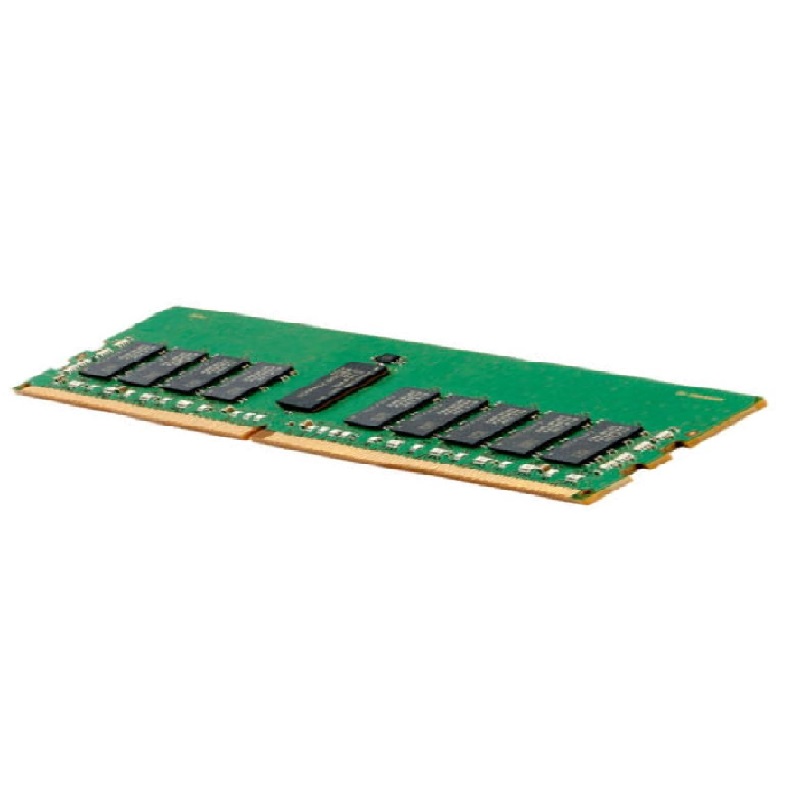


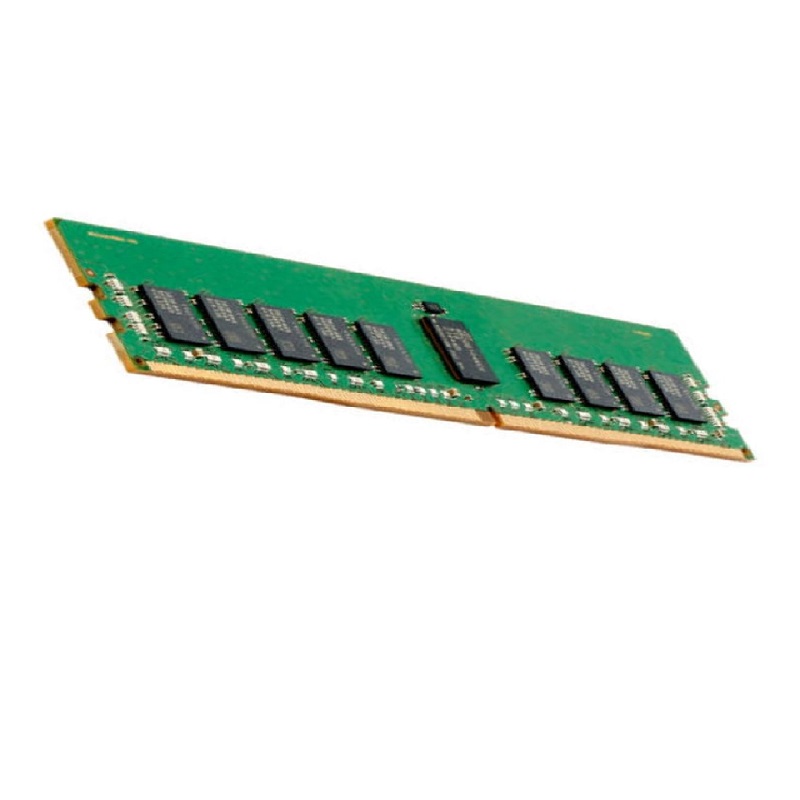
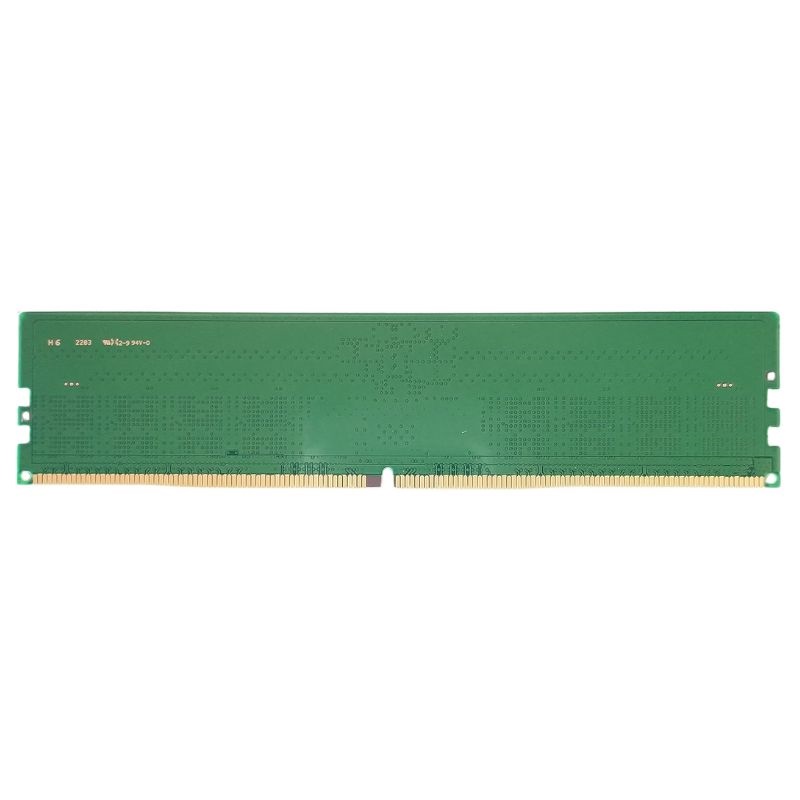
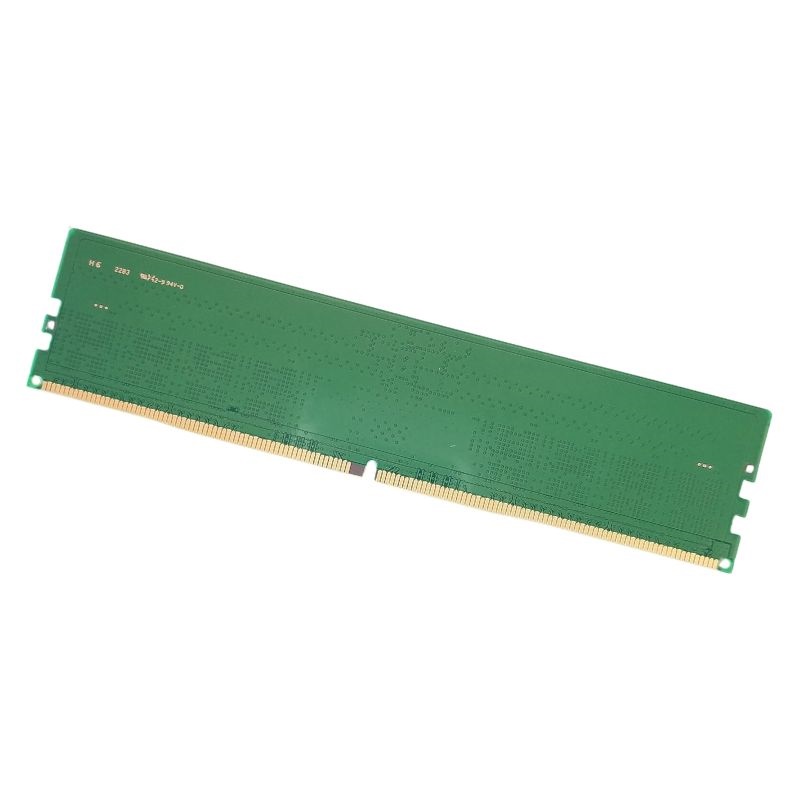
Samsung M321R4GA0EB2-CCPKC 32GB PC5-51200 1RX4 288P RDIMM ECC REG DDR5-6400MHz Memory Module. New (System) Pull with 1 Year Replacement Warranty
The Samsung M321R4GA0EB2-CCPKC is a high-performance 32GB DDR5 SDRAM memory module designed to optimize server operations. Engineered for reliability, this RDIMM module ensures seamless data handling and enhanced processing efficiency for enterprise-grade servers.
The Samsung M321R4GA0EB2-CCPKC represents a pinnacle of DDR5 technology engineered for the demanding environment of modern data centers and enterprise servers. As a 32GB Registered ECC RDIMM, this module is designed to deliver not only high-capacity and blistering speed but also the unparalleled reliability and data integrity required for 24/7 mission-critical operations. This memory module is a key building block for servers handling intensive workloads such as in-memory databases, virtualization, high-performance computing (HPC), and large-scale cloud infrastructure.
At its heart, the M321R4GA0EB2-CCPKC is defined by a set of rigorous specifications that determine its compatibility and performance profile. Understanding these parameters is essential for system architects and IT procurement specialists.
The "32GB (1x32GB)" designation indicates a single module providing a total of 32 gigabytes of memory capacity. This density is ideal for maximizing slot efficiency in multi-socket server platforms, allowing for terabyte-scale memory configurations without excessive slot consumption. The "1Rx4" refers to the module's rank and organization. A single rank (1R) means all memory chips on the module are accessed simultaneously. The "x4" denotes the data width of the individual DRAM chips, which is a common configuration for error-correcting registered modules, optimizing for both capacity and signal integrity.
Samsung's part numbering system provides a wealth of information. While complex, key segments can be interpreted: "M3" often refers to DDR5, "32" indicates 32GB capacity, "R" for Registered (RDIMM), "4G" for 4Gb-based DRAM components, and "A" for the specific revision. The "CCPKC" suffix typically refers to the speed grade (6400 Mbps), timing profile (CL52), and voltage (1.1V). This alphanumeric code is the definitive key for ensuring exact part matching and compatibility.
The module operates at a data rate of 6400 Megatransfers per second (MT/s), often abbreviated as 6400 Mbps. This translates to a peak bandwidth of 51.2 GB/s per module (calculated as 6400 MT/s * 8 bytes / 1000). The industry uses the "PC5" classification for DDR5; the number following it indicates the theoretical maximum bandwidth in MB/s. Therefore, "PC5-51200" confirms this 51.2 GB/s bandwidth (51200 MB/s). This represents a significant leap over previous DDR4 generations, dramatically reducing data transfer bottlenecks for CPU-intensive applications.
What distinguishes server memory like the Samsung M321R4GA0EB2-CCPKC from standard desktop memory are the embedded technologies for stability and correction.
ECC is a non-negotiable feature for enterprise servers. It enables the memory module to detect and correct the most common types of internal data corruption (single-bit errors) on the fly. This happens without any intervention from the operating system or the application, preventing silent data corruption, system crashes, and potential data loss. In an environment where data accuracy is paramount, ECC provides a vital layer of hardware-level protection.
Beyond the standard module-level ECC, DDR5 introduces On-Die ECC. This feature works within each individual DRAM chip to correct bit errors before they even leave the chip. This internal scrubbing enhances reliability at the most fundamental level, improves manufacturing yield for higher-density chips, and contributes to overall system stability by reducing the workload on the main module ECC.
The "Registered" in RDIMM indicates the presence of a register, or buffer, on the module. This register sits between the server's memory controller and the DRAM chips. It buffers the command and address signals, reducing the electrical load on the controller. This allows a server motherboard to support a much greater number of memory modules and higher capacities per channel without signal degradation. While adding a minimal latency penalty (typically one clock cycle), the benefit is vastly superior scalability and stability in multi-module configurations.
Beyond raw speed, the timing parameters define the responsiveness of the memory within a given clock cycle.
CAS Latency (CL) is the number of clock cycles between the memory controller requesting data and the first piece of data being available. The M321R4GA0EB2-CCPKC operates at CL52. It is crucial to understand that latency in nanoseconds is a more direct measure of responsiveness. The formula is (CL / Speed in MHz) * 2000. For this module: (52 / 3200) * 2000 = 32.5 nanoseconds. Despite the higher CL number compared to DDR4, the vastly increased clock speed results in competitive absolute latency while delivering massively improved bandwidth.
DDR5 memory operates at a lower standard voltage of 1.1V compared to DDR4's 1.2V. This reduction, while seemingly small, contributes significantly to lower power consumption and reduced heat output at the module and system level. In a data center with thousands of servers, this efficiency gain translates into substantial operational cost savings and a lower thermal footprint, aligning with modern goals for sustainable computing.
The module's physical design ensures it fits into the correct server infrastructure.
This Samsung module uses the standard 288-pin edge connector layout defined for DDR5 RDIMMs. It is mechanically different from DDR4's 288-pin design (the key notch is in a different position), preventing accidental insertion into an incompatible motherboard. The RDIMM form factor is specifically engineered for server chassis, ensuring proper alignment and secure seating in hot-swap scenarios.
The DDR5 RDIMM design incorporates a Power Management IC (PMIC) on the module itself. This decentralizes power delivery from the motherboard to the DIMM, allowing for more granular and stable voltage regulation. This leads to cleaner power signals, better noise immunity, and improved overclocking potential for performance-optimized servers, all contributing to the module's stability at high speeds.
The Samsung M321R4GA0EB2-CCPKC is targeted at specific high-end computing segments where its combination of features provides tangible benefits.
This is the primary environment for this memory. It is suitable for mainstream dual-socket and multi-socket servers from major OEMs like Dell, HPE, Lenovo, and Cisco, as well as white-box solutions. Its ECC and registered features meet the baseline requirement for data center reliability.
Hypervisors like VMware vSphere, Microsoft Hyper-V, and KVM manage multiple virtual machines on a single physical host. This workload demands high memory capacity, bandwidth, and absolute reliability. The 32GB density allows for efficient consolidation of VMs, while ECC protects the integrity of diverse workloads running concurrently.
Scientific computing, financial modeling, and artificial intelligence training involve processing massive datasets. The high 51.2 GB/s bandwidth of this module helps feed data to high-core-count CPUs (like Intel Xeon Scalable or AMD EPYC processors) faster, reducing compute idle time and accelerating time-to-solution for complex problems.
Platforms such as SAP HANA, Oracle Database In-Memory, and Redis store data primarily in RAM to achieve ultra-low query latency. For these systems, memory is the primary data store, making capacity, speed, and—critically—error correction essential. A single-bit error could corrupt a database index. This Samsung RDIMM is built to provide the trustworthy foundation these applications require.


 Contact Us
 Information
 Catalog
 Solid State Drives (SSD)
 Network Switches
 Hard Disk Drives
 HBA & Controllers
 PC & Servers
 PC & Server Memory
 CPU & Processors
 Network Routers
 Power Supplies
 Tape Drives & Libraries
 Network Devices
 Computer & Network Cables