(7% discount is applied at checkout)
Cart is empty
Your go-to destination for cutting-edge server products
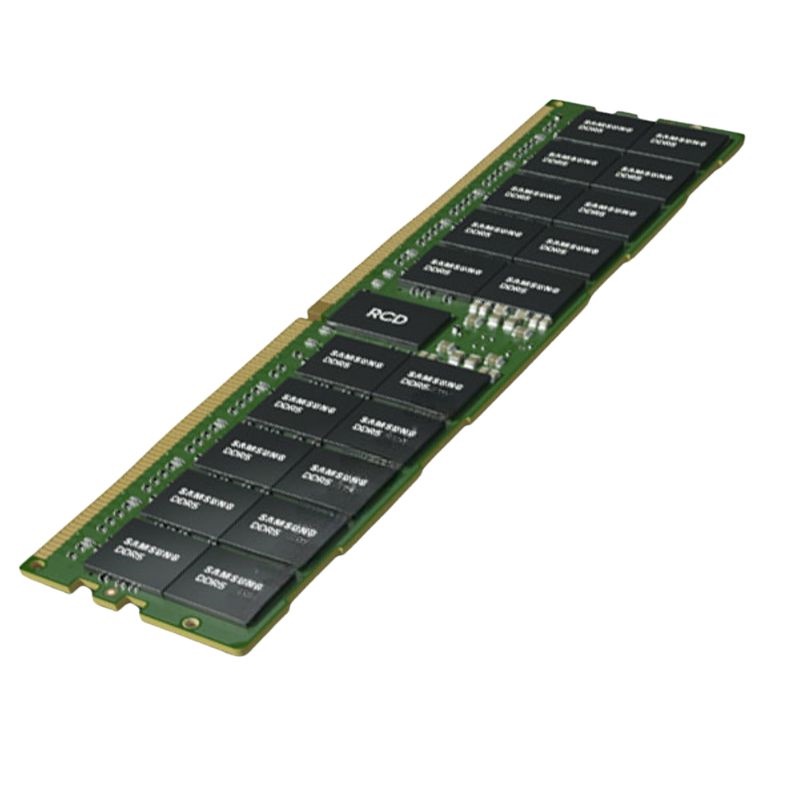


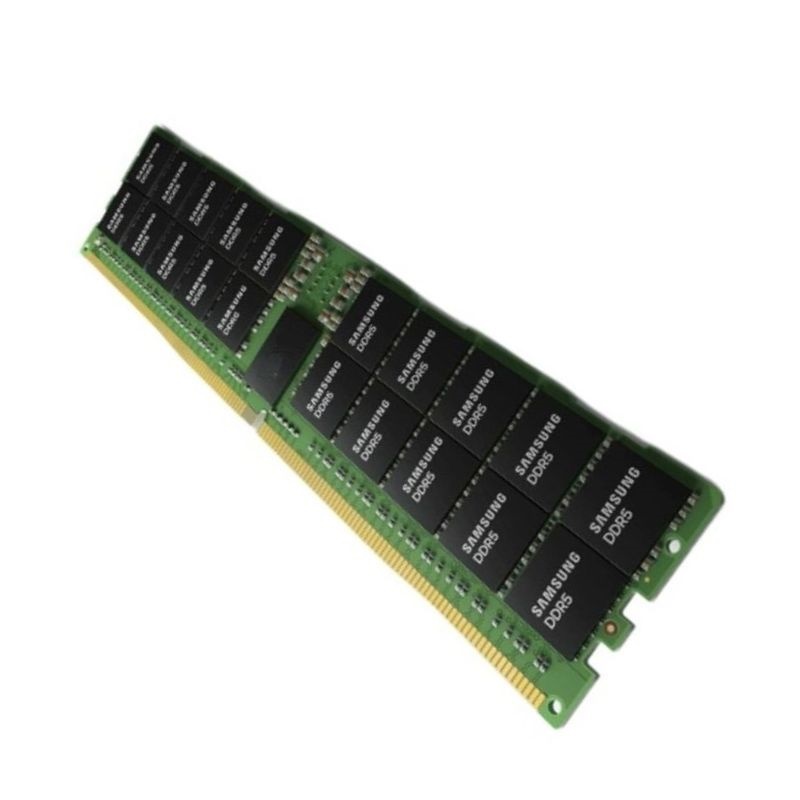
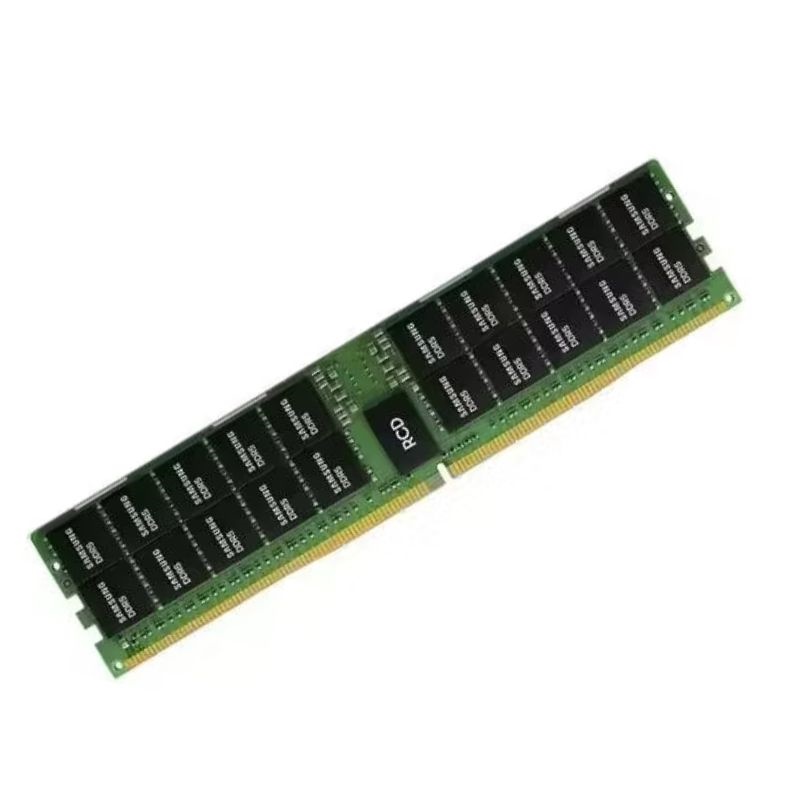
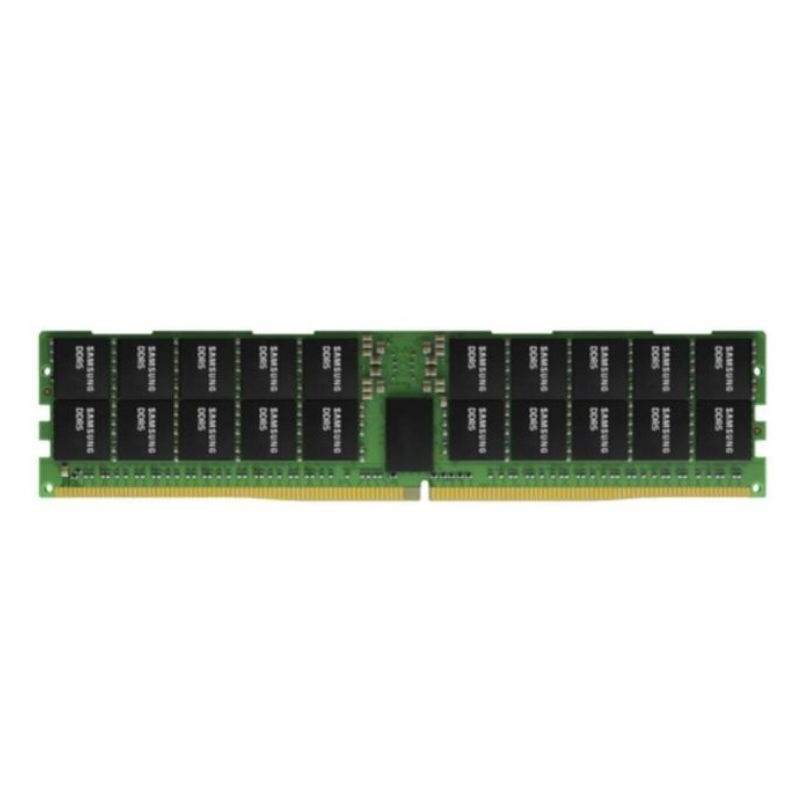
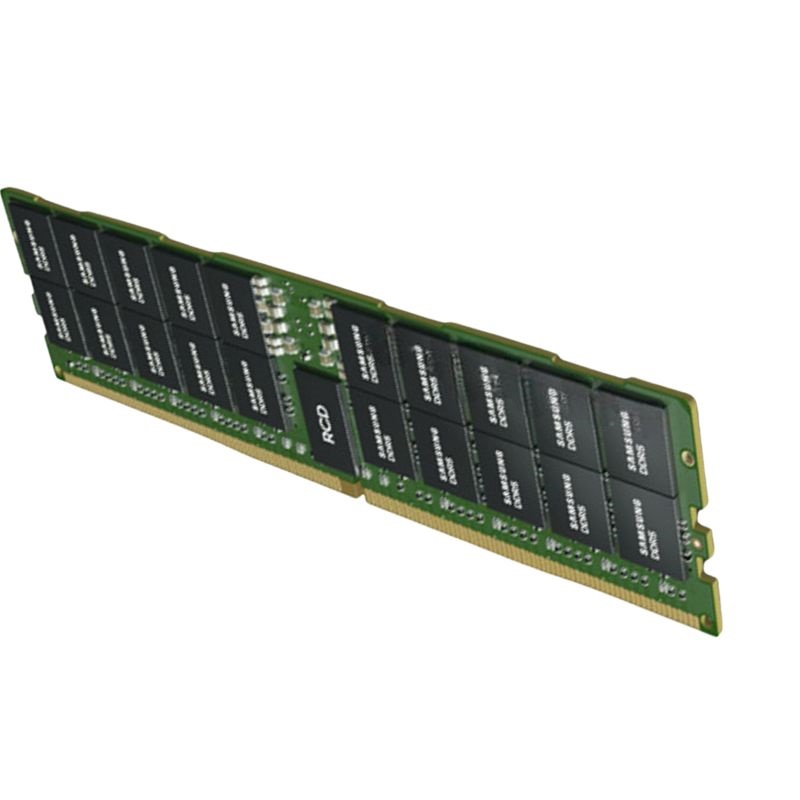
Samsung M321R4GA3EB0-CWMJJ 32GB PC5-44800 2RX8 288P RDIMM ECC REG DDR5-5600MHz Memory Module. New Sealed in Box (NIB) with 3 Years Warranty
The Samsung M321R4GA3EB0-CWMJJ delivers advanced performance and reliability for enterprise-grade systems. Built with next-generation DDR5 SDRAM technology, this 32GB RDIMM is engineered to meet the demands of high-performance computing, virtualization, AI-driven workloads, and data-intensive applications. With a blazing-fast speed of 5600MT/s (PC5-44800) and ECC error-correcting features, it ensures efficiency, precision, and long-term stability for mission-critical servers and workstations.
In the mission-critical world of server infrastructure, memory isn't just about capacity—it's about unwavering reliability, sustained performance, and data integrity. The category of DDR5 ECC Registered RDIMMs represents the pinnacle of these requirements, engineered specifically for servers, high-performance computing, and demanding enterprise applications. Modules like the Samsung M321R4GA3EB0-CWMJJ are the building blocks of stable data centers, cloud environments, and enterprise servers, where system uptime and error-free operation are non-negotiable.
This specific memory classification combines several key technologies. DDR5 is the fifth generation of Double Data Rate SDRAM, offering dramatic leaps in speed and efficiency over DDR4. ECC (Error-Correcting Code) is a crucial feature that detects and corrects common types of internal data corruption, preventing crashes and silent data errors. "Registered" refers to the inclusion of a register (or buffer) on the module that buffers the address and command signals between the memory controller and the DRAM chips. This reduces electrical load on the controller, allowing a system to support a much higher number of memory modules and greater total capacity with stability. An RDIMM (Registered Dual In-line Memory Module) is the physical embodiment of this technology.
The Samsung M321R4GA3EB0-CWMJJ is a quintessential example of modern server-grade memory. Let's dissect its part number and technical specifications to understand its capabilities and intended use case.
This module offers a single 32GB capacity. In server environments, modules are populated in multiples across channels and sockets to achieve total system memory (e.g., 256GB across 8 slots, 1TB across 32 slots, etc.). This 32GB density offers an excellent balance between cost, capacity, and flexibility for a wide range of server configurations.
The "1x32GB" denotes a single module of 32 gigabytes. The "2Rx8" is a critical specification: it means the module is dual-rank (2R) and uses x8 DRAM devices. A rank is an independent set of DRAM chips that can be accessed simultaneously. A dual-rank module effectively interleaves access between two internal sets of chips, often improving performance over single-rank modules in many server workloads. The x8 refers to the data width of each individual DRAM chip; x8 chips are a common and reliable configuration for server memory.
This module operates at a data rate of 5600 Megatransfers per second (MT/s), often referred to as 5600 Mbps. This is the raw speed at which data is transferred. The designation PC5-44800 is the module's standard classification, where "PC5" indicates DDR5 and "44800" refers to the theoretical peak transfer bandwidth in megabytes per second (MB/s). A single 5600MT/s module provides a peak bandwidth of approximately 44.8 GB/s (calculated as 5600 * 8 bytes per transfer / 1024). This high bandwidth is essential for CPU-intensive tasks like virtualization, in-memory databases, and scientific computing.
Latency is as important as bandwidth. CAS Latency (CL46 in this case) is the number of clock cycles between the memory controller issuing a read command and the first piece of data being available. While a lower CL is generally faster, in server DDR5, higher latencies are common due to the increased clock speeds and the additional stability requirements of ECC and buffering. The CL46 timing at 5600MT/s is a standard and optimized timing for reliable server operation.
The module operates at a nominal voltage of 1.1V. This is a significant reduction from the 1.2V common in DDR4, contributing to lower power consumption and reduced heat output in the data center—a critical factor for operational expenses (OPEX) and cooling design. DDR5 modules also feature an integrated Power Management IC (PMIC) on the module itself. This distributes power more efficiently and cleanly to the DRAM chips, improving signal integrity and allowing for more stable overclocking and granular power control.
ECC is not a luxury in servers; it's a necessity. Cosmic rays, electrical noise, and other factors can cause bit flips in memory—a "1" becomes a "0" or vice versa. In a consumer PC, this might cause a crashed application. In a server, it could corrupt a financial transaction, alter scientific results, or crash a critical database. The ECC circuitry on this Samsung module adds extra bits to each data word. It uses sophisticated algorithms (like Single Error Correction, Double Error Detection - SECDED) to identify and correct single-bit errors on the fly and detect multi-bit errors, allowing the system to halt gracefully. This ensures the integrity of data held in memory.
In hypervisor environments, where one physical server runs dozens of virtual machines, a memory error could affect multiple tenants and applications simultaneously. ECC protects the entire memory space, ensuring VM isolation and stability.
Databases constantly read and write data to memory. An uncorrected error could corrupt index tables, financial records, or customer data, leading to severe business logic failures. ECC acts as the first line of defense.
Long-running simulations (climate modeling, finite element analysis) or rendering jobs that take days cannot afford silent data corruption. An error could invalidate the entire computation, wasting thousands of core-hours.
The "Registered" component is what makes large-scale memory configurations possible. The register on the RDIMM acts as a staging area for address and command signals. It reduces the electrical capacitance seen by the server's memory controller. This allows the memory subsystem to drive more modules without signal degradation. In practical terms, a server motherboard that might only support 4-8 unbuffered DIMMs per CPU can often support 16, 24, or even 32 Registered RDIMMs. This is fundamental for building servers with terabytes of memory, such as those used for large in-memory analytics platforms (e.g., SAP HANA) or massive virtualized infrastructures.
Unbuffered DIMMs (UDIMMs) have no register, offering lower latency but severely limiting population capacity. Load-Reduced DIMMs (LRDIMMs) take buffering a step further by also buffering the data lines, allowing for even higher capacities and ranks per channel but at a slightly higher cost and latency. The Registered RDIMM, like this Samsung module, sits in the optimal middle ground for most general enterprise and cloud server workloads, providing excellent capacity support with proven reliability and cost-efficiency.
The module uses a 288-pin edge connector, which is the standard for DDR5. It is physically and electrically incompatible with DDR4's 288-pin layout (the key notch is in a different position). The RDIMM form factor has a specific notch position and presence of the registering clock driver (RCD) chip that identifies it to the system as a registered module. It is essential to ensure your server platform is explicitly designed to support DDR5 Registered RDIMMs.
This memory is designed for servers powered by the latest generations of Intel Xeon Scalable Processors (e.g., Sapphire Rapids, Emerald Rapids) and AMD EPYC 9004 Series (Genoa) and 8004 Series (Siena) processors. These platforms feature memory controllers optimized for DDR5's new architecture, including support for two independent 32-bit sub-channels per DIMM, which further increases memory concurrency and effective bandwidth. Always consult your server manufacturer's Qualified Vendor List (QVL) to confirm compatibility of the specific Samsung M321R4GA3EB0-CWMJJ part number with your motherboard or system model.
The Samsung 32GB DDR5-5600 ECC RDIMM is a versatile component suited for a broad spectrum of enterprise and data center applications where reliability, capacity, and performance intersect.
It serves as an excellent choice for mainstream application servers, file servers, and email servers that require robust, error-resistant memory to ensure continuous business operations without interruption.
For VMware vSphere, Microsoft Hyper-V, or KVM deployments, high-density, reliable memory is the most critical resource. Populating servers with multiple 32GB RDIMMs allows for a high virtual machine density, ensuring each VM has protected, dedicated memory resources.
This module is well-suited for deployment in Microsoft SQL Server, PostgreSQL, MySQL, and mid-scale analytics platforms. The combination of ECC protection and high bandwidth (5600MT/s) supports fast query processing and ensures the integrity of transactional data.


 Contact Us
 Information
 Catalog
 Solid State Drives (SSD)
 Network Switches
 Hard Disk Drives
 HBA & Controllers
 PC & Servers
 PC & Server Memory
 CPU & Processors
 Network Routers
 Power Supplies
 Tape Drives & Libraries
 Network Devices
 Computer & Network Cables