(7% discount is applied at checkout)
Cart is empty
Your go-to destination for cutting-edge server products
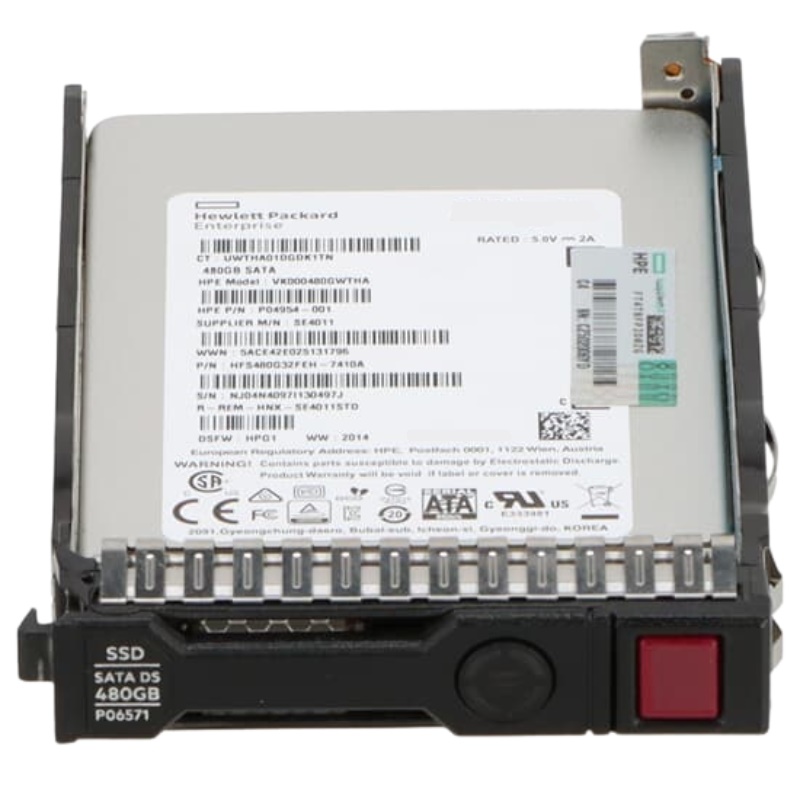


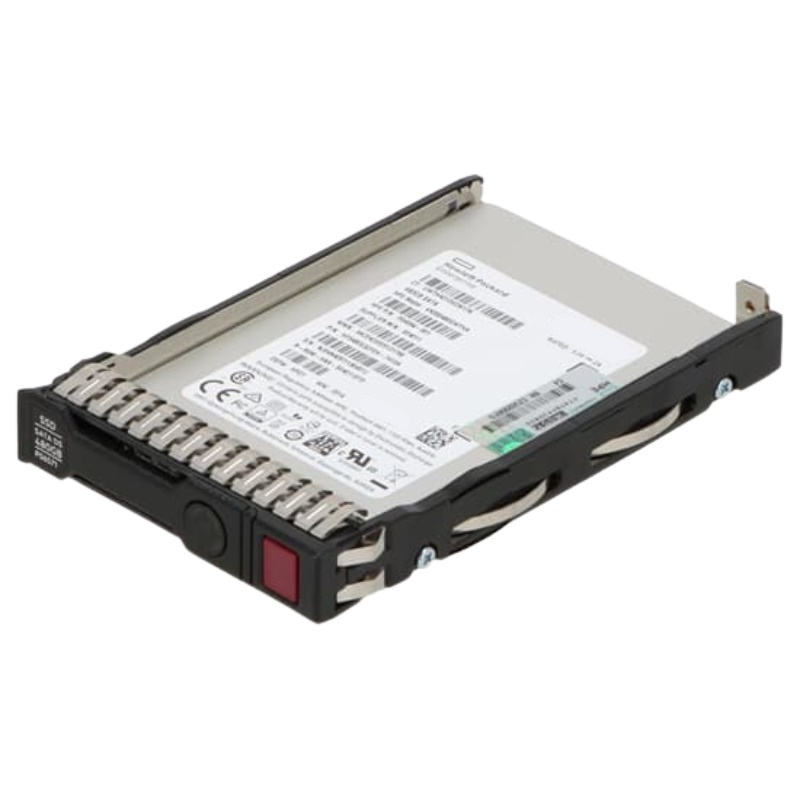
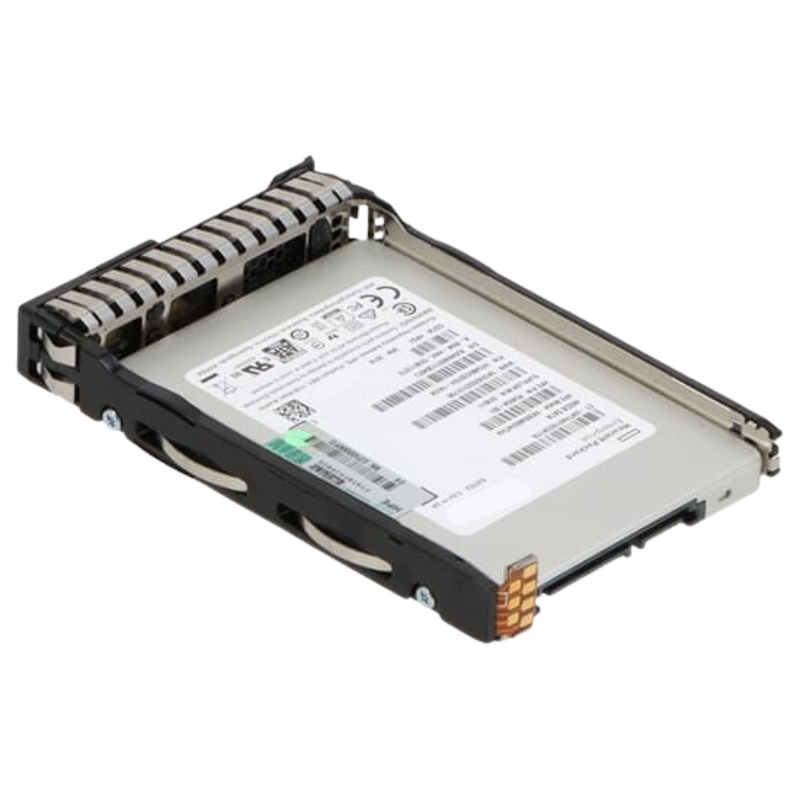
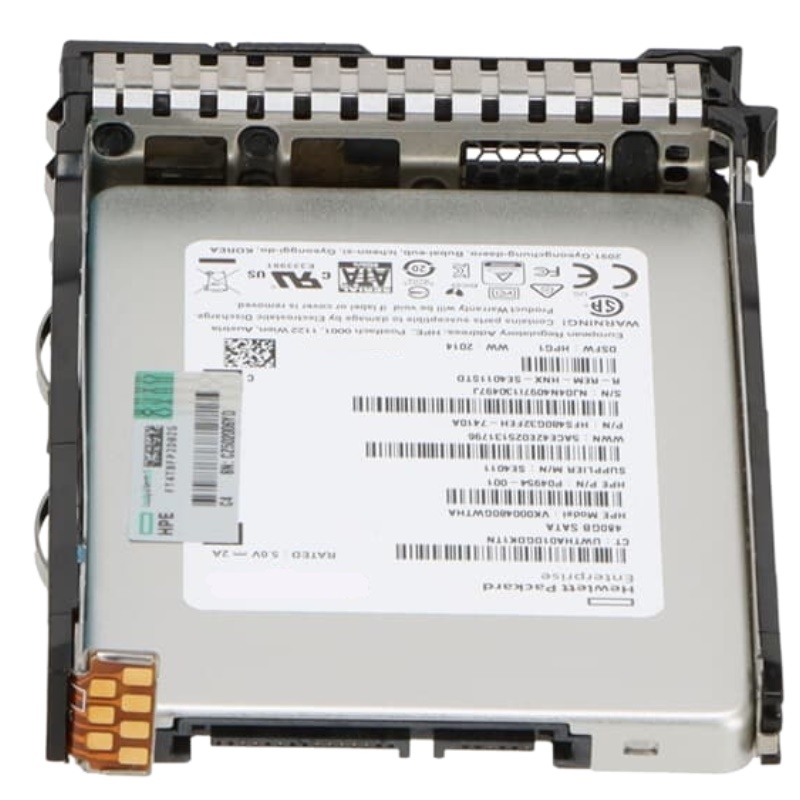
HPE 730045-001 480GB SATA-6GBPS VE Small Form Factor QR PLP Solid State Drive. New (System) Pull with 1-Year Replacement Warranty
The HPE 730045-001 offers a robust and reliable solid-state drive engineered for enterprise-grade systems. With a compact design and advanced data handling capabilities, this 480GB SSD ensures seamless integration into small form factor environments.
Designed for speed and efficiency, this SSD leverages a 6Gbps SATA interface to deliver rapid data access and transfer rates. Its QR PLP (Power Loss Protection) feature enhances data integrity during unexpected power interruptions.
This drive is tailored for demanding applications, offering consistent performance across various server configurations. Its compact footprint makes it ideal for space-constrained deployments without compromising speed or reliability.
Fully compatible with HPE ProLiant servers and other enterprise-grade platforms, this SSD ensures smooth installation and optimal performance. Its standardized SATA interface simplifies upgrades and replacements.
The HPE 730045-001 480GB SATA-6Gbps VE Small Form Factor QR PLP Solid State Drive is engineered for dependable performance in data center and hybrid IT environments that demand low latency, consistent throughput, and strong endurance at a compelling cost per gigabyte. This 2.5-inch Small Form Factor (SFF) hot-plug drive integrates seamlessly with HPE ProLiant servers and HPE storage platforms that support SATA 6Gb/s, offering predictable behavior for mixed workloads such as virtualization, online transaction processing, remote desktop services, VDI, and read-intensive analytics. With power-loss protection (PLP) designed to safeguard in-flight data, and a carrier with quick-release (QR) convenience to streamline serviceability, this drive addresses the practical needs of IT teams balancing budget, performance, and reliability.
Within HPE’s portfolio, “VE” commonly denotes value/endurance positioning intended for read-centric and balanced use cases rather than the most demanding write-intensive tiers. The 480GB capacity tier strikes a pragmatic balance: ample room for operating systems, hypervisors, and key application datasets, while enabling dense deployments across multi-bay servers without excessive power or thermal impact. For organizations standardizing on SATA across edge sites and branch offices, the 730045-001 helps maintain a unified spare and maintenance strategy, simplifying lifecycle management.
Enterprise SATA SSDs like the HPE 730045-001 occupy a critical space between high-performance NVMe tiers and nearline spinning disks. They deliver substantially better random I/O behavior than HDDs while maintaining compatibility and cost characteristics that make large-scale adoption feasible. For many general-purpose and edge deployments, this category provides the sweet spot for latency-sensitive but not ultra-high-throughput tasks. Typical scenarios include virtual machine boot volumes, departmental databases, log ingestion, content repositories, and file services that benefit from flash but do not require PCIe/NVMe burst capabilities or specialized controllers.
In multi-tier designs, SATA SSDs often serve as the “fast operational data” layer. They can feed front-end application servers, accelerate metadata operations, and reduce tail latencies that degrade user experience. Paired with appropriate caching or tiering policies, the 480GB capacity can be strategically allocated to deliver outsized gains relative to cost, especially when administrators align dataset working sets with SSD tiers.
SATA 6Gb/s establishes a stable foundation for consistent throughput, with real-world sequential rates typically constrained below the theoretical interface ceiling but high enough for many enterprise workflows. When optimizing deployments, administrators should consider queue depth, request size, and controller capabilities. Many HPE server platforms include mature SATA controllers with robust firmware support and monitoring—critical for operational visibility and predictive health analytics. While SAS and NVMe can outpace SATA, the 730045-001’s category excels at predictable performance per watt and per dollar, particularly in mixed-use or read-weighted environments where ultra-low latency is helpful but not the sole requirement.
Latency profiles for enterprise SATA SSDs are markedly better than HDDs, especially for small random I/O. The 480GB VE tier commonly pairs sufficient NAND parallelism with enterprise-oriented firmware to maintain consistent delivery even under multi-tenant workloads. For teams targeting a stable user experience during backup windows or patch events, the steadiness of this category often translates into fewer performance surprises.
Endurance in enterprise SSDs is typically expressed in drive writes per day (DWPD) or total bytes written (TBW). In VE tiers, endurance is tuned to align with read-heavy usage and balanced write profiles, enabling attractive cost structures. When coupled with good storage planning—such as separating log-heavy components onto higher-endurance volumes—administrators can prolong SSD longevity and minimize write amplification. For many general-purpose virtualized estates, VE endurance is more than adequate, especially when caching layers absorb bursts and logs roll efficiently.
PLP mechanisms are designed to safeguard data when power is abruptly interrupted. In enterprise drives such as the HPE 730045-001, PLP typically involves onboard capacitors and firmware coordination that allow the SSD controller to complete critical operations and commit in-flight data to non-volatile storage. This capability reduces the risk of metadata corruption and partial write scenarios that could otherwise jeopardize application consistency.
While PLP does not replace backups or journaling at the application level, it is an essential layer in a defense-in-depth strategy. Database systems, filesystems with journaling, and hypervisors benefit from drives that behave predictably under fault conditions. For edge or branch offices susceptible to power fluctuations, PLP contributes to data durability and quicker recovery after an outage.
HPE’s SFF hot-plug carrier simplifies physical management: administrators can replace or add drives quickly, reducing maintenance windows and minimizing risk during hardware interventions. The quick-release (often referenced as QR) design streamlines swaps without tools in supported chassis, an advantage for dense rack environments where speed and ergonomics matter. Consistent carrier designs also reduce technician error, promote consistent labeling, and allow standardized spares programs across sites.
The 730045-001 480GB SATA SSD is designed for HPE ProLiant servers and storage arrays that support SATA 6Gb/s SFF hot-plug drives. Compatibility typically includes a wide set of HPE Gen-series ProLiant platforms, with support dependent on controller firmware, backplane configuration, and system BIOS/iLO revisions. In virtualized clusters, mixing SSD categories should be done thoughtfully: keep similar performance and endurance classes within the same datastore or vDisk pool to ensure consistent behavior under contention.
On VMware, Hyper-V, and Linux KVM environments, these drives commonly support datastores for general-purpose VMs, management nodes, and VDI pools. For storage appliances built on ZFS or Linux MD/DM, align ashift/recordsize/blocksize with workload patterns to optimize I/O. In converged and hyperconverged designs, these SATA SSDs frequently anchor capacity or performance tiers depending on the node mix and caching strategy.
Extracting consistent performance from SATA SSDs is primarily about reducing unnecessary writes, aligning I/O sizes, and monitoring health metrics. Because enterprise SATA has lower parallelism compared to NVMe, getting the fundamentals right pays dividends in latency and throughput stability.
Enterprises rely on layered protection to mitigate risks. For SATA SSD deployments, combine RAID or erasure coding with snapshotting, replication, and regular backups. PLP assists during sudden power events, while RAID guards against device failure. Snapshots and replicas enable fast rollback and disaster recovery. Test restoration workflows regularly.
While NVMe dominates peak performance discussions, SATA SSDs remain a practical mainstay for a large portion of enterprise workloads. Compared to HDDs, SATA SSDs deliver dramatic gains in random I/O and latency, translating into smoother application behavior and improved consolidation ratios. Compared to SAS, SATA can be more cost-effective for read/mixed workloads where dual-port and higher link rates are not mandatory. The HPE 730045-001’s category shines when measured by predictability, manageability, and TCO across typical business applications and edge deployments.


 Contact Us
 Information
 Catalog
 Solid State Drives (SSD)
 Network Switches
 Hard Disk Drives
 HBA & Controllers
 PC & Servers
 PC & Server Memory
 CPU & Processors
 Network Routers
 Power Supplies
 Tape Drives & Libraries
 Network Devices
 Computer & Network Cables