Your go-to destination for cutting-edge server products
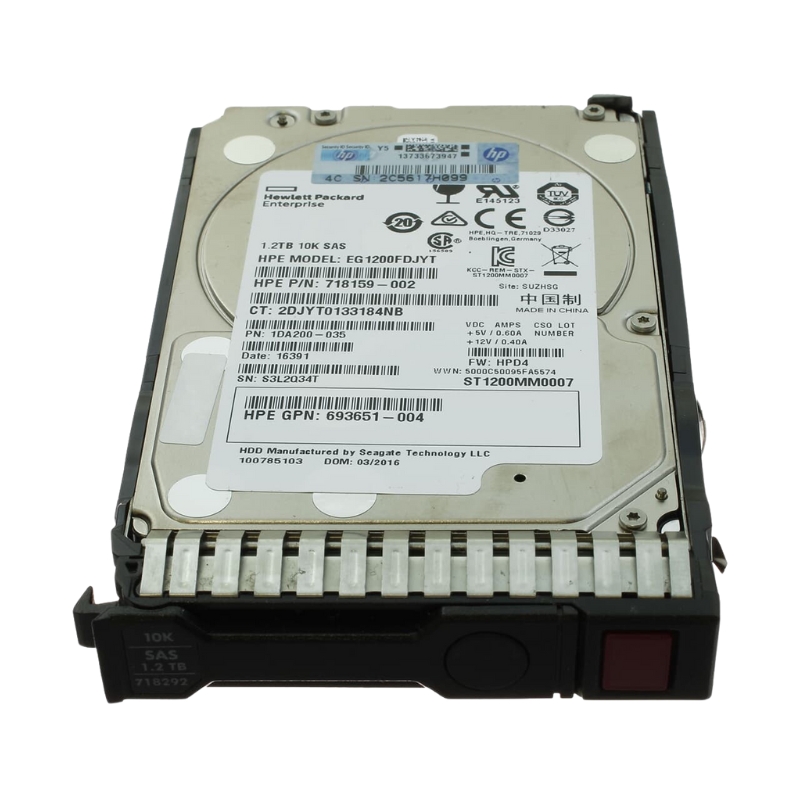
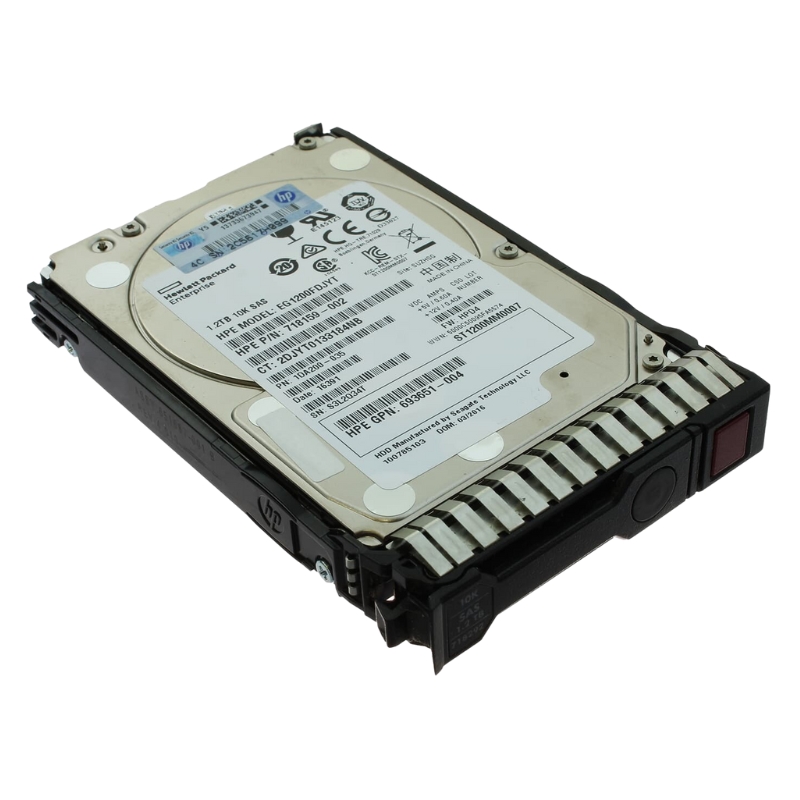
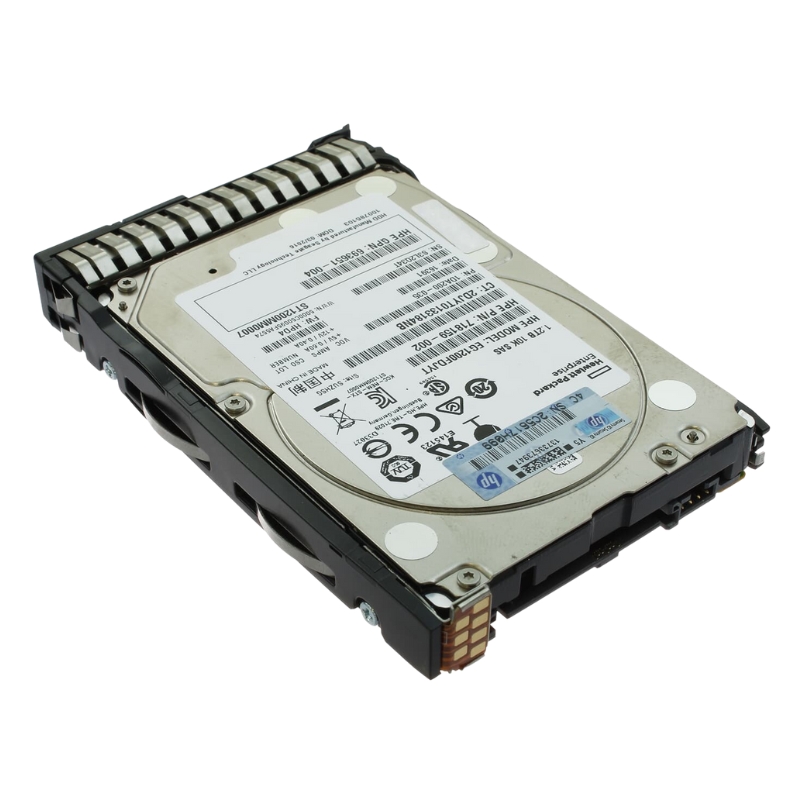
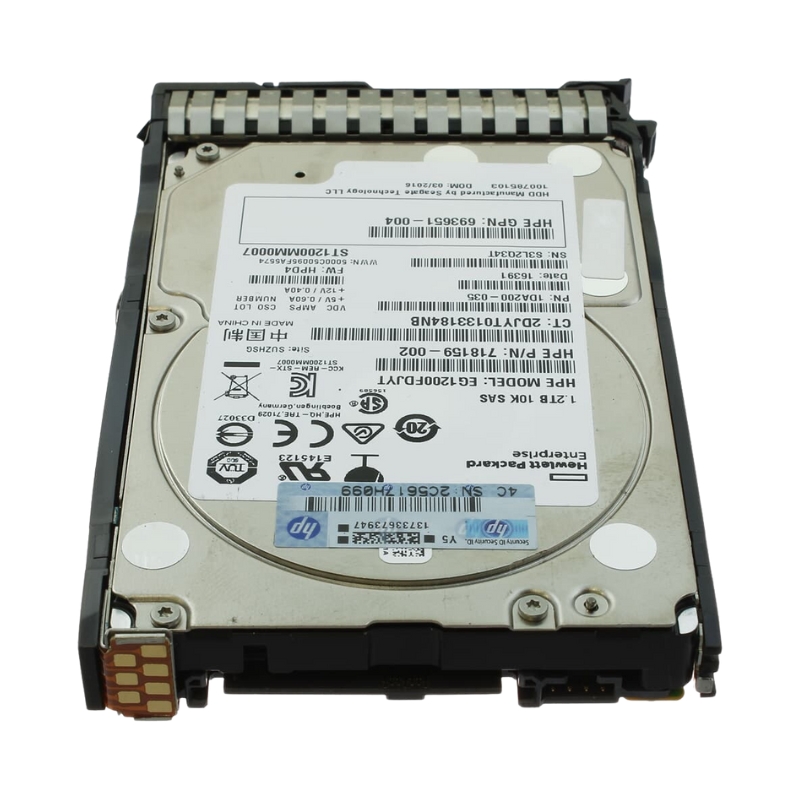
HPE 697578-005 1.2TB SAS 6GBPS 10K RPM Hard Disk Drive.

697578-005
* Product may have slight variations vs. image
Hover on image to enlarge

Brief Overview of 697578-005

HPE 697578-005 1.2TB SAS 6GBPS 10K RPM Small Form Factor SC DP Hard Disk Drive. Excellent Refurbished with 1 year replacement warranty

$81.00
$58.00
You save: $23.00 (28%)
Ask a question
Price in points: 58 points
+
Quote
Additional 7% discount at checkout
SKU/MPN697578-005Availability✅ In StockProcessing TimeUsually ships same day ManufacturerHPE Manufacturer WarrantyNone Product/Item ConditionExcellent Refurbished ServerOrbit Replacement Warranty1 Year Warranty
Google Top Quality Store Customer Reviews
Our Advantages
Payment Options
  • — Visa, MasterCard, Discover, and Amex
  • — JCB, Diners Club, UnionPay
  • — PayPal, ACH/Bank Transfer (11% Off)
  • — Apple Pay, Amazon Pay, Google Pay
  • — Buy Now, Pay Later - Affirm, Afterpay
  • — GOV/EDU/Institutions PO's Accepted 
  • — Invoices
Delivery
  • — Deliver Anywhere
  • — Express Delivery in the USA and Worldwide
  • — Ship to -APO -FPO
  • For USA - Free Ground Shipping
  • — Worldwide - from $30
Description

HPE 697578-005 1.2TB SAS 6Gb/s 10K RPM Hard Disk

The HPE 697578-005 1.2TB SAS Hard Drive is a high-performance storage solution designed for enterprise servers and data centers. With a rapid 10,000 RPM spindle speed and a 6Gb/s SAS interface, this 2.5-inch internal drive delivers reliable, scalable, and efficient data storage for critical applications.

Key Features of HPE 697578-005 Hard Drive

  • Storage Capacity: 1.2TB for ample data storage
  • Cache Memory: 64MB cache ensures faster read/write operations
  • Speed: 10,000 RPM delivers quick access to stored data
  • Interface: SAS 6Gb/s for high-speed data transfer
  • Form Factor: 2.5-inch small form factor, suitable for dense server environments
  • Eco-Friendly: Designed with energy efficiency in mind

Technical Specifications

Drive Type and Compatibility

  • Type: Internal Hard Disk Drive
  • Form Factor: 2.5-inch, ideal for compact server racks
  • Interface: Serial Attached SCSI (SAS) 6Gb/s

Performance Details

  • Rotational Speed: 10,000 RPM for rapid data access
  • Maximum Data Transfer Rate: 6 Gb/s, enabling smooth operation of high-demand applications
  • Cache Memory: 64MB for improved read/write efficiency

Environmental and Assembly Information

  • Eco-Friendly: Yes, designed to reduce energy consumption
  • Assembly: Requires installation in compatible server systems

Advantages of Choosing HPE 697578-005

Reliable Enterprise Storage

This drive ensures high reliability and stability, making it suitable for mission-critical applications and enterprise storage solutions.

High-Speed Data Access

With a 10K RPM speed and a 6Gb/s SAS interface, it supports fast and efficient access to large volumes of data.

Optimized for Servers

The 2.5-inch form factor and SAS interface make it perfect for high-density server environments, offering a balance between performance and energy efficiency.

Enhanced Data Handling

  • Large cache memory boosts system responsiveness
  • Supports quick retrieval and storage of frequently accessed files
  • Reduces latency for database and virtualization workloads

Applications of HPE 697578-005 Hard Disk

  • Enterprise servers and storage arrays
  • Database management systems
  • Virtualization platforms
  • High-performance computing environments
  • Backup and disaster recovery solutions

Design and physical characteristics

Small form factor (SFF) advantages

Small form factor drives such as the HPE 697578-005 are engineered to pack significant storage density into compact slots. The 2.5-inch SFF platform allows system builders and data center operators to increase the number of drive bays per chassis and raise raw capacity and IOPS per rack unit. The compact footprint reduces enclosure size while maintaining enterprise-grade robustness.

Dual-port SAS topology

The dual-port (DP) SAS interface provides two independent SAS ports for enhanced availability and path redundancy. In multipath or dual-controller architectures, each port can be connected to a different controller or HBA, enabling failover, load balancing, and uninterrupted data access in the event of a single-path failure. DP drives are ideal for storage arrays requiring uninterrupted access and automatic path switching without manual intervention.

Interface and protocol: SAS 6 Gbps

Serial Attached SCSI benefits

SAS (Serial Attached SCSI) at 6 gigabits per second (6Gbps) is a proven enterprise interface combining command richness, reliability and scalability. SAS leverages robust error correction, end-to-end data integrity features, and advanced signaling to deliver predictable performance for transactional workloads. Compared to SATA, SAS provides better command queuing, dual-port options, and improved management features, making it the preferred choice for mission-critical servers.

Protocol-level features

  • Out-of-order command handling and tagged command queuing for efficient I/O scheduling.
  • Full-duplex communication on supported topologies for simultaneous read/write operations across ports.
  • Enhanced error reporting (S.M.A.R.T and vendor-specific telemetry) for proactive monitoring.

Capacity and rotational speed

1.2TB capacity rationale

The 1.2TB capacity point balances cost, capacity-per-drive density and rotational speed to serve workloads that require fast access to mid-sized datasets. This capacity is well-suited for database indices, virtual machine images, read/write caching layers, and mixed I/O environments where throughput and responsiveness are prioritized over maximum sequential capacity per spindle.

10,000 RPM performance profile

Operating at 10,000 RPM, this drive offers lower average latency than 7,200 RPM drives while maintaining lower cost per spindle compared with 15,000 RPM options. The 10K spindle speed translates into reduced seek times and higher sustained IOPS for random workloads, making it a dependable option for multi-tenant virtualization hosts, mid-tier databases, and transactional application servers.

Performance characteristics

Random I/O and sequential throughput

The HPE 697578-005 excels in random I/O scenarios with strong IOPS for small-block read/write patterns. Sequential throughput on SAS 6Gbps can approach the maximum practical limits of the interface for large block transfers, making the drive also suitable for streaming workloads when paired with proper RAID and controller configurations.

Latency and response times

With a 10K RPM base, typical seek and rotational latencies are significantly better than lower-spin drives, resulting in improved transaction response times. For latency-sensitive applications—real-time analytics, online transaction processing (OLTP), and interactive virtual desktops—this drive helps shave milliseconds off average response times when compared with consumer-grade alternatives.

Reliability, endurance and enterprise suitability

Mean time between failures (MTBF) and workload rating

Enterprise-class drives are rated for heavier duty cycles and higher MTBF than desktop drives. The 697578-005 is designed to sustain 24/7 operation in datacenter environments, with workload ratings suitable for mixed read/write enterprise workloads. This makes it fit for use in RAID groups inside high-availability arrays, where predictability and longevity are required.

Data integrity and protection

SAS drives commonly support enhanced error recovery controls and robust on-drive caching policies that cooperate with RAID controllers and host software to preserve data integrity. Combined with features like TLER-equivalent behavior (timeout limits for error recovery) and end-to-end CRC, the drive reduces the risk of prolonged parity reconstruction and orphaned I/O states.

Compatibility and form-fit considerations

Enclosure and backplane compatibility

The HPE part number 697578-005 is often cross-referenced to specific HPE server families and storage enclosures. Compatibility checks should include carrier/backplane models, SAS controller firmware, and chassis drive sleds. While many enterprise backplanes support standard SAS SFF drives, verify mechanical mounting, connector orientation, and caddy/ sled kit requirements for a no-surprise installation.

Controller and HBA interoperability

Ensure SAS controllers and HBAs support 6Gbps negotiation and dual-port routing if you plan to utilize both SAS ports. Multipath software (e.g., MPIO, DM-Multipath) and storage management stacks should detect multi-path topologies and present single logical devices while offering path failover capabilities.

Use cases and workload guidance

Ideal workloads

  • Database segments and indices where lower latency and sustained transaction rates are required.
  • Virtualization hosts with high random I/O from multiple virtual machines.
  • Tier-2 storage arrays where cost-per-GB is balanced with performance demands.
  • Backup and restore targets that benefit from fast random access during partial restores.
  • Mixed application servers in mid-sized enterprises — email, web application databases, and analytics nodes.

RAID and data protection strategies

Choosing RAID levels

Selecting the appropriate RAID level depends on the balance between performance, capacity overhead, and fault tolerance:

  • RAID 1/10: Excellent for write-heavy databases and random I/O—mirroring provides fast recovery and low rebuild complexity.
  • RAID 5/6: Offers better capacity efficiency but requires careful rebuild planning and controller capability—RAID 6 affords protection against double-disk failure with modern parity algorithms.
  • RAID 50/60 (striping+parity): Useful for larger arrays where you want parity protection with improved rebuild performance compared to single large RAID 5 sets.

Hot spares, rebuild times and rebuild impact

Rebuild time and the reconstructive stress on remaining spindles is a major consideration. Because this drive is enterprise-rated, combining it with hot-spares and intelligent rebuild throttling can minimize performance impact. Consider spare allocation per enclosure and monitor rebuilds to avoid cascading failures during high load periods.

Thermal, acoustic and power considerations

Power consumption patterns

10K RPM drives typically consume more power than 7.2K variants, especially under sustained I/O. Plan rack power budgets accordingly—calculate peak spin-up currents and steady-state operating power for fully populated chassis. Modern server PSUs and power distribution architectures usually accommodate these drives, but dense arrays require careful thermal and power provisioning.

Heat dissipation and airflow

Maintaining proper airflow across drive trays is essential to ensure drive longevity. Ensure front-to-back cooling, unobstructed air channels, and empirically validated inlet temperatures within the server vendor's recommended range to prevent thermal throttling or overheating. Drive health telemetry should be polled to detect rising internal drive temperatures and take corrective action.

Firmware, monitoring and drive management

Firmware updates and vendor support

Keep firmware updated to benefit from performance optimizations, bug fixes and reliability improvements. Use HPE’s storage management utilities and compatibility matrices to find approved firmware revisions. Firmware updates should be scheduled during maintenance windows and performed in a controlled manner—preferably with vendor guidance to prevent unexpected incompatibilities with controller firmware.

Proactive monitoring and S.M.A.R.T telemetry

Leverage SMART attributes, vendor-specific diagnostics and chassis-level telemetry to establish predictive failure analytics. Common metrics to monitor include reallocated sectors, seek error rates, spin-up time, and internal temperature. Integrate alerts into the existing monitoring stack (Nagios, Zabbix, Prometheus, or vendor tools) for automated incident response.

Security and data sanitization

Secure erase and sanitization methods

Before decommissioning or repurposing drives, apply certified data sanitization procedures. Options include vendor-supported secure erase utilities, controller-based secure wipe, or physical destruction depending on data sensitivity and compliance requirements. Document the sanitization process and keep logs for audit purposes.

Encryption and key management

If data confidentiality is a requirement, consider self-encrypting drive (SED) models or controller-level encryption. Confirm whether the HPE drive SKU supports hardware encryption and integrate with existing key management infrastructure to avoid creating unrecoverable data states.

Comparative landscape and variant subcategories

Similar part numbers and OEM equivalents

Within the HPE 69xxxxx series and across vendor ecosystems, there are multiple capacity and speed variants—some optimized for density (7.2K, higher capacity), others for higher spindle speed (15K) or lower latency (SSD/NVMe). Understand the trade-offs when substituting: capacity-per-dollar vs. latency and IOPS.

Hybrid and all-flash alternatives

For workloads trending toward flash acceleration, hybrid arrays combining 1.2TB 10K SAS spindles with flash caches or tiered storage can deliver cost-effective performance improvements. All-flash arrays yield the highest performance but at a different cost profile—evaluate total cost of ownership (TCO) across hardware, power, cooling, and administrative costs.

Advanced deployment patterns and architecture notes

Multipathing and high-availability topology

Use both SAS ports in dual-controller storage architectures to enable active/passive or active/active access patterns. Multipathing provides transparent failover and can increase aggregate throughput when controllers and software support path aggregation.

Tiering and automated data placement

Implement automated tiering engines to move hot data onto flash tiers and cold data onto the 1.2TB spinning media. This hybrid approach reduces the number of required SSDs while leveraging the drive’s capacity for less-accessed datasets.

Practical maintenance checklist

Routine checks and proactive steps

  • Monitor SMART attributes weekly and set alerts for threshold breaches.
  • Schedule firmware reviews quarterly and apply vendor-approved updates during maintenance windows.
  • Validate RAID parity consistency and run scrub operations during low-load periods.
  • Keep an updated inventory of spares mapped to serial numbers and bay locations.

Environmental and compliance considerations

Disposal and recycling

Follow environmental regulations for electronic waste. For drives that held sensitive information, perform certified sanitization before recycling. Track disposal certificates for audit and compliance requirements.

Regulatory and data protection

If operating under regulated frameworks (PCI, HIPAA, GDPR), ensure data retention and destruction policies incorporate hardware-level procedures. Drive-level encryption and documented sanitization both aid compliance.

Features
Manufacturer Warranty:
None
Product/Item Condition:
Excellent Refurbished
ServerOrbit Replacement Warranty:
1 Year Warranty