(7% discount is applied at checkout)
Cart is empty
Your go-to destination for cutting-edge server products
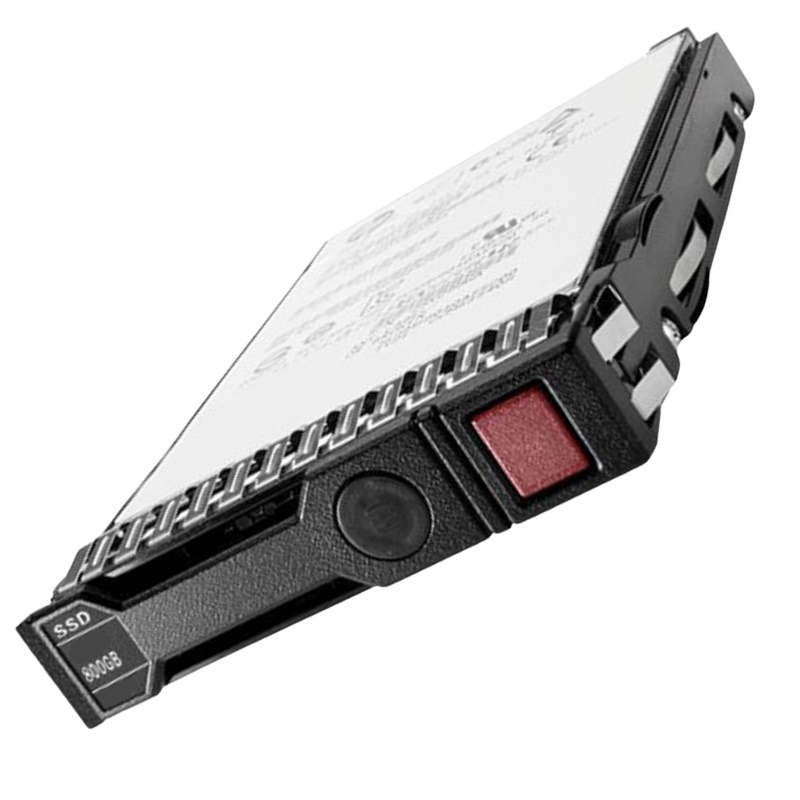


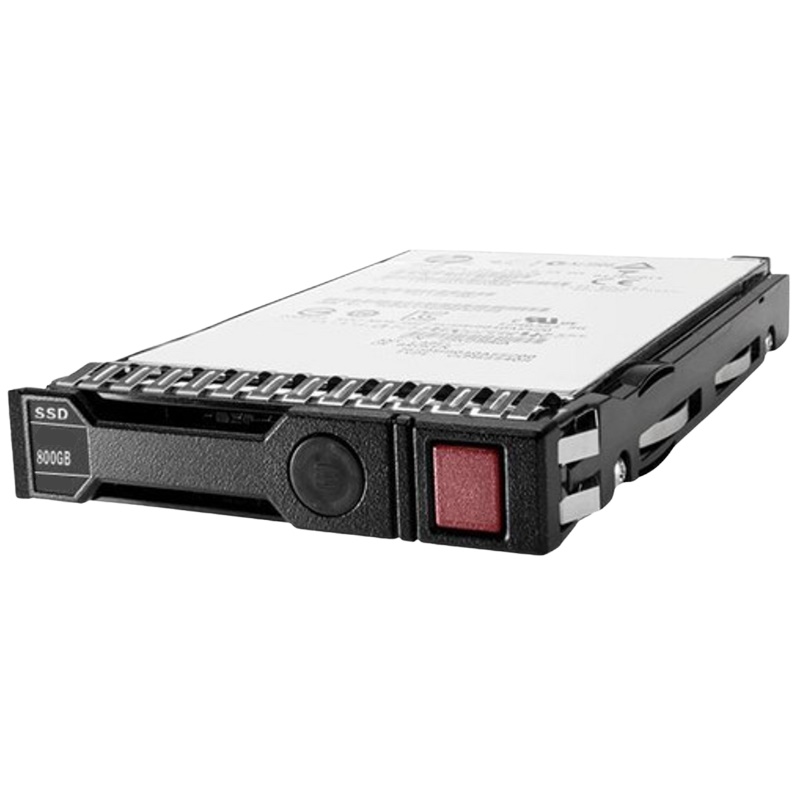
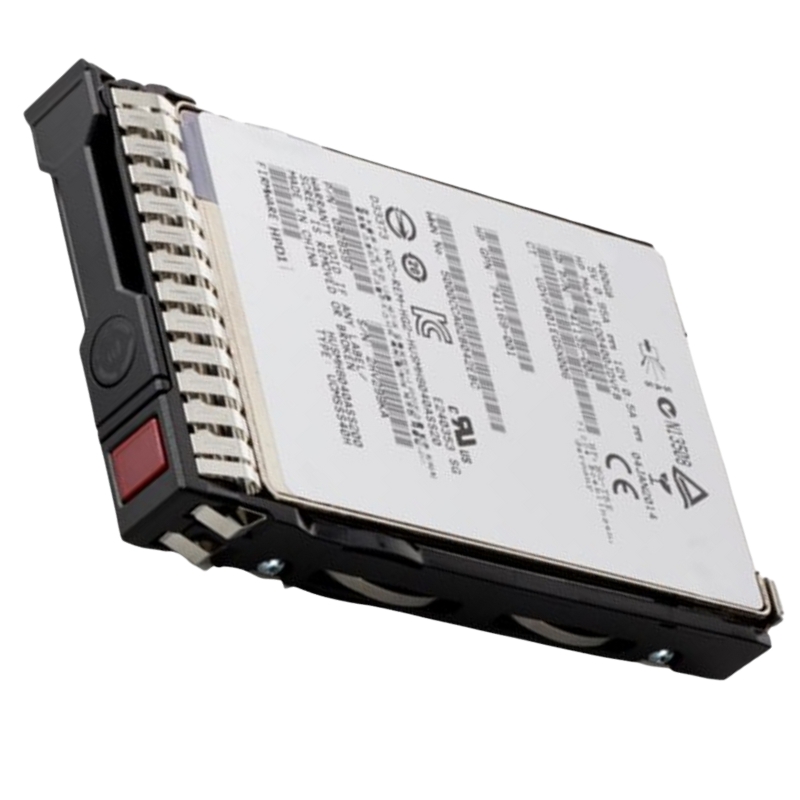
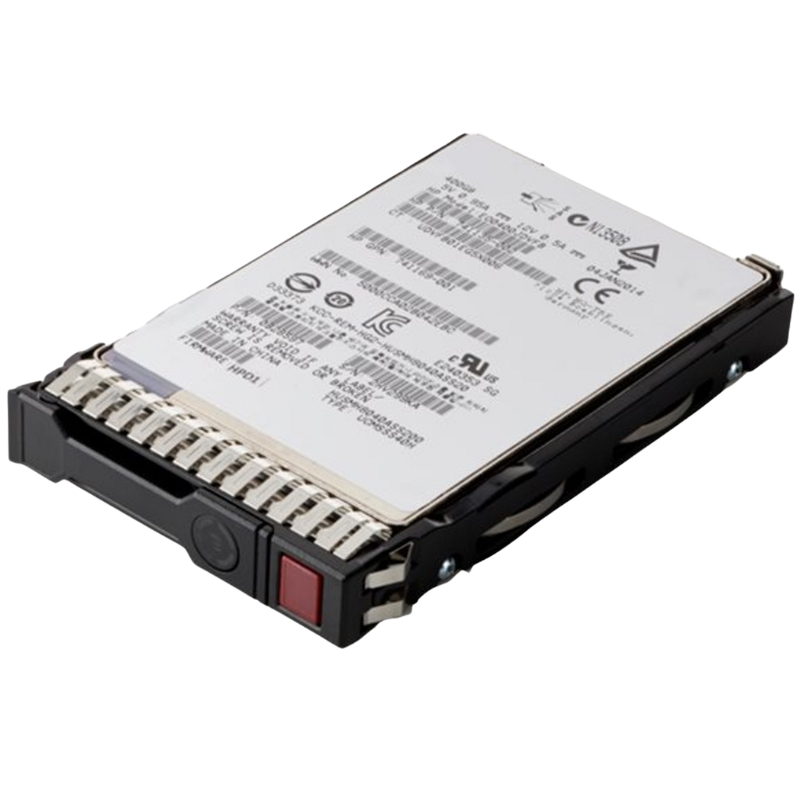
HPE 730154-001 800GB MLC SATA-6GBPS Hot-Swap Mainstream Enterprise SFF Internal Solid State Drive with Smart Carrier. Excellent Refurbished with 1 year replacement warranty
The HPE 730154-001 is a compact yet powerful 800GB solid-state drive engineered for demanding business environments. Designed with Multi-Level Cell (MLC) NAND flash and a 6Gbps SATA interface, it ensures swift data access and reliable throughput for mission-critical applications.
Built for enterprise-grade workloads, this SSD offers consistent performance under pressure. Its MLC architecture balances endurance and speed, making it ideal for read-intensive and mixed-use scenarios.
Featuring hot-swappable capabilities, the drive can be replaced or upgraded without system downtime, ensuring business continuity and operational efficiency.
The Smart Carrier design simplifies drive identification and status monitoring, reducing maintenance time and improving system diagnostics.
The HPE 730154-001 800GB MLC SATA-6GBPS Hot-Swap Mainstream Enterprise SFF Internal Solid State Drive with Smart Carrier sits squarely in the mainstream enterprise SSD category, offering a balance of performance, endurance, and manageability for small-form-factor (SFF) server platforms and storage arrays. This category page focuses on the technical attributes, deployment patterns, and value propositions that guide purchasing and integration decisions for data centers, enterprise IT teams, system integrators, and solution architects.
Drives in this category—represented by the HPE 730154-001—are engineered to deliver consistent performance for mixed workloads, including database transaction logs, virtual machine (VM) boot volumes, application caching layers, and tiered storage pools. The combination of MLC NAND, SATA-III 6 Gbps interface, and a hot-swap Smart Carrier makes these SSDs attractive for straightforward upgrades to legacy SAS/SATA infrastructures without requiring NVMe redesigns.
Drives in this category prioritize low-latency I/O with sustained sequential and mixed random performance suitable for mainstream enterprise workloads. Typical characteristics include strong random read IOPS at low queue depths, and competitive sequential throughput for large file ingest/egress. While SATA-6 Gbps sets a theoretical ceiling on raw sequential bandwidth, enterprise firmware and MLC NAND provide performance stability under steady-state conditions and during garbage-collection cycles.
The HPE 730154-001 800GB is tuned for a read-heavy to mixed workload environment. Read latency and small-block random reads are optimized for database queries, boot volumes, and application binaries. Writes are carefully managed by robust flash translation layer (FTL) algorithms and over-provisioning to mitigate write amplification and maintain predictable performance across the drive’s lifespan.
Enterprise-class controllers typically include QoS features that prevent tail-latency spikes. In practice, this means that the category is chosen when predictable response times are more valuable than peak throughput numbers — for example, in virtualized hosts serving interactive services or scaled web tiers.
The 800GB capacity level represents a balance: dense enough to host multiple VMs or application volumes on a single drive, while leaving sufficient spare area for wear-leveling and over-provisioning. For many mainstream enterprise scenarios, 800GB minimizes rack-level drive counts without pushing endurance or cost into enterprise-high tiers like eMLC or TLC-based high-density NVMe devices.
While endurance figures (TBW — terabytes written) vary by firmware and specific drive binning, MLC-based enterprise SSDs commonly offer endurance characteristics suitable for mainstream mixed workloads (e.g., tens to low hundreds of drive writes per day over a multi-year service life when deployed with appropriate over-provisioning). Capacity and expected workload should be matched — write-heavy caching duties may still benefit from higher-endurance drives or deployment of additional drives in RAID to distribute writes.
The small form factor (SFF) makes these SSDs suitable for high-density bays in rack servers, converged systems, and HPE blade platforms. Compact housing reduces wasted space and facilitates higher storage density per chassis without sacrificing accessibility.
Hot-swap capability is a hallmark of enterprise maintainability. The Smart Carrier design simplifies drive insertion and removal, speeds mean time to repair (MTTR), and reduces the risk of human error during field replacement. For on-site technicians, the carrier’s design provides tactile feedback and clear latch/release mechanics, streamlining drive swaps during maintenance windows.
Although SATA-6 Gbps is widely supported, compatibility varies by server model, RAID controller firmware, and HPE-specific backplanes. The category is intended for environments where compatibility with SATA controllers and HPE platforms is required. Always verify compatibility matrices for the target HPE server or storage array model, and update controller firmware to the recommended revision to ensure full feature support.
For features like secure erase, SMART pass-through, or advanced power management, ensure host firmware and storage controller drivers are up to date. Some features are enabled or disabled depending on host firmware settings, so coordination between hardware and software teams is important during rollouts.
These SSDs are OS-agnostic at the SATA level and work with major Linux distributions, Windows Server editions, and virtualization platforms such as VMware ESXi, Microsoft Hyper-V, and KVM. When used as VM datastores or virtual disk backends, follow vendor guidelines for aligned partitions, filesystem tuning, and queue depth settings to get consistent performance.


 Contact Us
 Information
 Catalog
 Solid State Drives (SSD)
 Network Switches
 Hard Disk Drives
 HBA & Controllers
 PC & Servers
 PC & Server Memory
 CPU & Processors
 Network Routers
 Power Supplies
 Tape Drives & Libraries
 Network Devices
 Computer & Network Cables