(7% discount is applied at checkout)
Cart is empty
Your go-to destination for cutting-edge server products
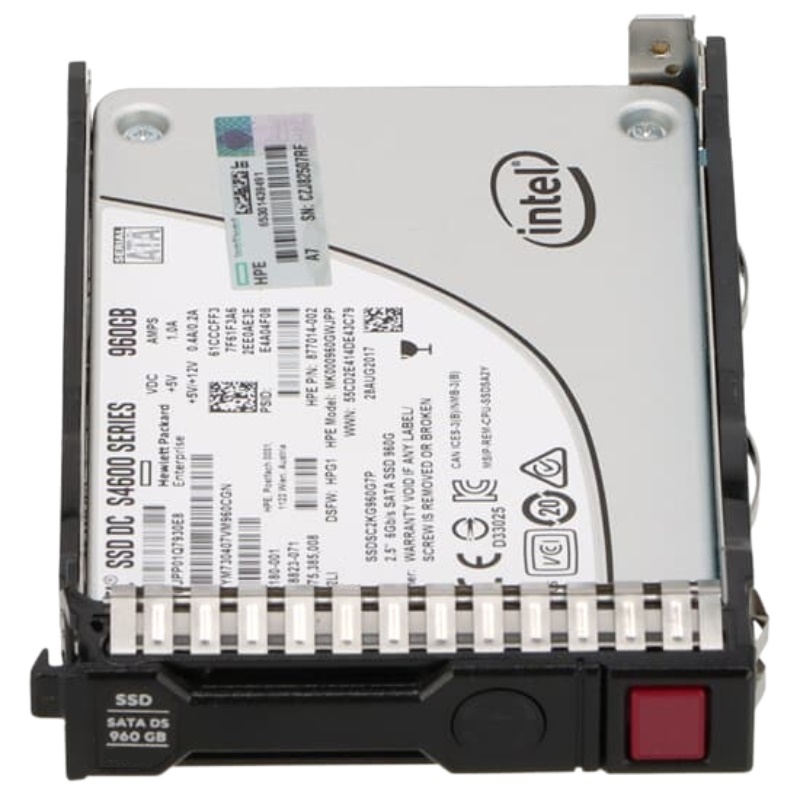


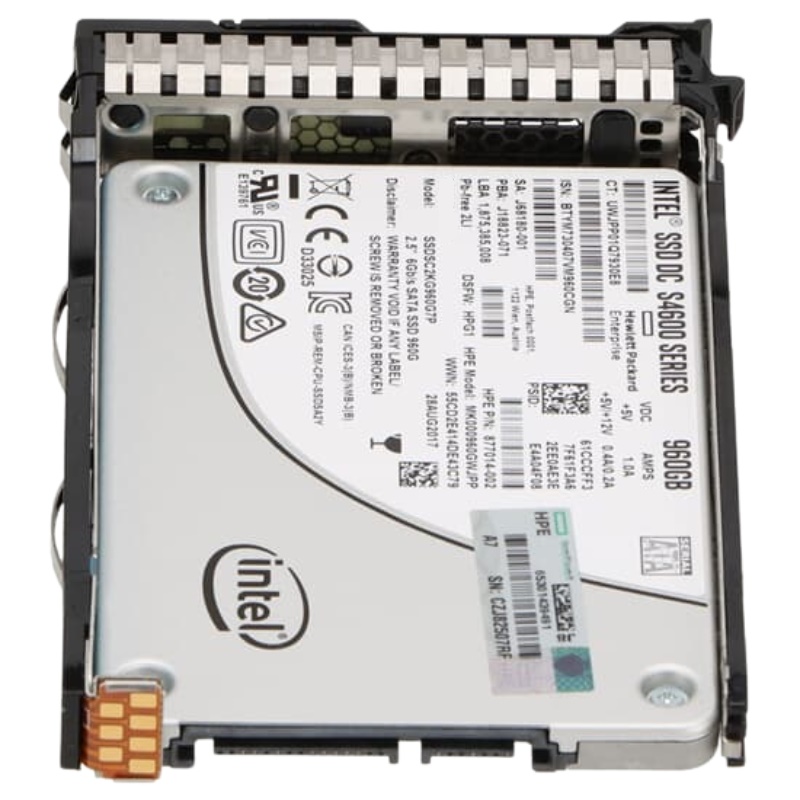
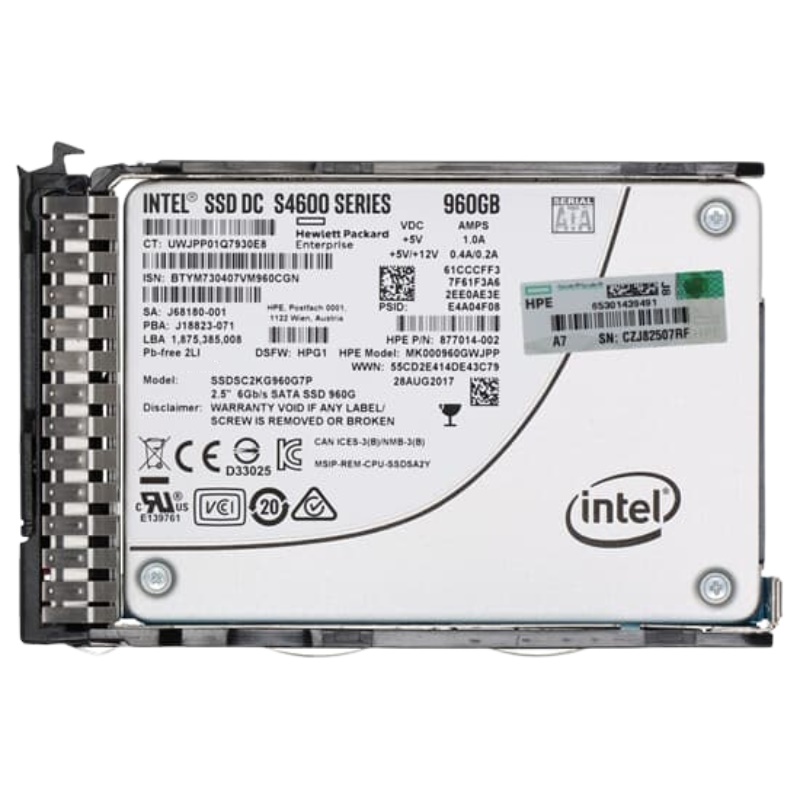
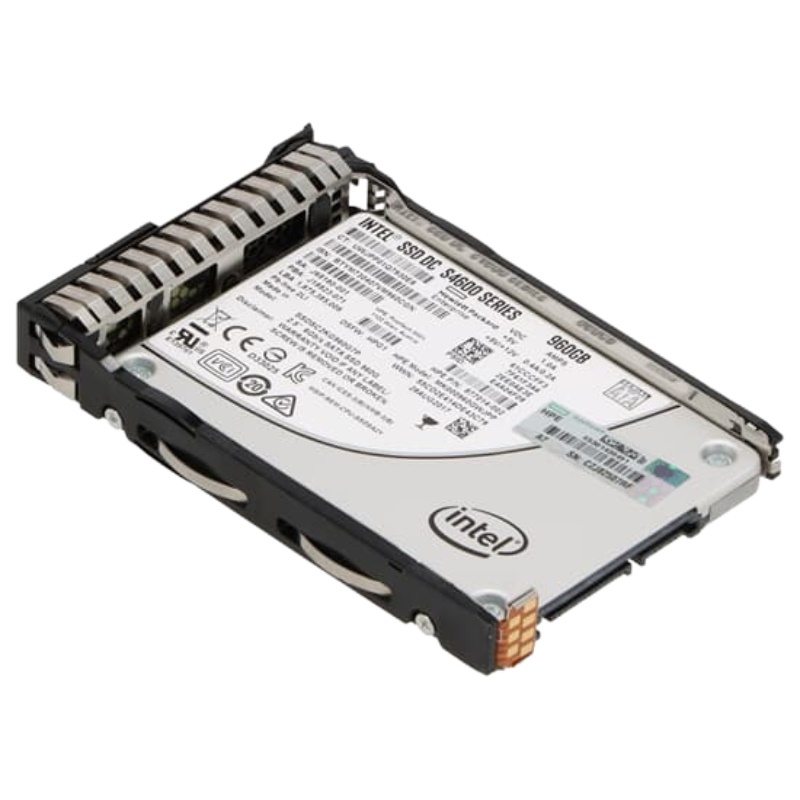
HPE 731034-B21 960GB SATA-6GBPS Value Endurance NHP Small Form Factor Internal Solid State Drive. Excellent Refurbished with 1 year replacement warranty
The HPE 731034-B21 960GB SSD delivers robust performance and reliability for data-intensive environments. Designed for small form factor systems, it ensures efficient space utilization without compromising speed or endurance.
Engineered for consistent throughput and minimal latency, this SSD supports enterprise-grade applications with dependable performance. Its non-hot plug (NHP) configuration ensures secure installation in systems where hot-swapping is not required.
Perfectly suited for HPE ProLiant servers and other compatible platforms, this SSD integrates smoothly into existing setups. Its standardized SATA interface ensures broad compatibility across various enterprise systems.
Whether you're upgrading legacy systems or building new infrastructure, the HPE 731034-B21 SSD offers a cost-effective solution with long-term reliability and performance consistency.
The 731034-B21 HPE 960GB SATA-6Gbps Value Endurance Non-Hot Plug (NHP) Small Form Factor (SFF) Solid State Drive sits in a highly practical corner of HPE’s enterprise SSD portfolio: dependable SATA performance, balanced endurance, and proven compatibility with select HPE ProLiant platforms. This category focuses on read-centric and general-purpose workloads that demand lower latency than spinning disks, predictable behavior, and a favorable cost-per-gigabyte for primary or tiered storage inside enterprise servers, edge appliances, and lab environments. By pairing a 6Gbps SATA interface with HPE’s firmware validation and lifecycle controls, the 731034-B21 delivers a familiar, serviceable option for IT teams that prefer standards-based building blocks without sacrificing enterprise safeguards.
Organizations are continuously optimizing their storage tiers. The 731034-B21 category helps consolidate use cases where reliability, compatibility, and operational simplicity trump absolute top-end performance. It thrives when deployed as a read-focused volume, an OS/application drive with steady transactional pressure, or as part of a cost-aware hybrid tier that offloads hot data from HDDs. With SATA-6Gbps provisioning, administrators can deploy SSD speed across legacy or budget-conscious platforms without introducing a new protocol stack.
HPE’s “Value Endurance” designation typically targets read-intensive or general mixed use cases where drive writes are moderate and predictable. Compared to mixed-use or write-intensive SKUs, Value Endurance models trade peak write durability for a more accessible cost profile while still maintaining enterprise validation, firmware control, and rigorous test coverage that characterize HPE’s server-grade media.
The SFF, 2.5-inch footprint fits standard server drive bays, sleds, and internal mounts, while the Non-Hot Plug (NHP) design is ideal for systems where drive access occurs during planned maintenance windows rather than frequent on-the-fly replacements. NHP drives can reduce mechanical complexity and cost in scenarios that don’t require front-access hot-swap bays, such as certain tower servers, embedded/edge systems, or internally mounted boot-device trays.
SATA-6Gbps (SATA III) provides a mature, widely supported interface recognized across HPE ProLiant generations. While SATA caps peak sequential throughput below SAS and NVMe alternatives, it offers broad compatibility, stable drivers, and predictable behavior—valuable for long-lived deployments and multi-year lifecycle planning.
As with other HPE-branded SSDs, the 731034-B21 category benefits from system-level validation, including compatibility and firmware testing against HPE controllers, backplanes, BIOS revisions, and management utilities. This coordinated validation reduces interoperability risks and simplifies support when you standardize on HPE media inside HPE servers.
Value Endurance SSDs are engineered for lower write amplification and read-heavy duty cycles. In practice, this maps well to workloads such as VDI boot images, content delivery, web front-ends, and data marts where writes are present but not constant. In mixed stacks, they can efficiently serve as tiers for fast reads while transactional write logs live on higher-endurance SSDs or shared storage.
Because SATA operates at 6Gbps and relies on the AHCI stack, its performance ceiling is below PCIe/NVMe. However, compared with hard drives, SATA SSDs deliver vastly improved random I/O and latency. This translates into faster application start-up, snappier OS operations, reduced queue backlogs, and better consolidation density in virtualized hosts. In real clusters, the practical improvement often shows up as shorter job runtimes, decreased boot storms, and smoother end-user experience under load.
SATA SSDs typically draw significantly less power than 10K/15K enterprise HDDs, easing thermal budgets and easing PSU sizing on dense nodes. Lower heat output helps maintain stable internal temperatures, potentially improving overall system longevity and reducing fan noise in edge deployments.
HPE uses structured option kit identifiers and spare part numbers. The 731034-B21 option kit correlates to a specific assembly with defined capacity, interface, endurance class, and form factor. While BOM-level details can change over a product’s life, the field-replaceable unit you receive aligns with HPE’s validated specifications for the category and intended compatibility list.
Depending on channel and lifecycle stage, you may also encounter spare or subcomponent identifiers in documentation or quotes. When in doubt, align the option kit number to ensure the drive matches your platform requirements and firmware baseline.
HPE validates SSDs against specific Smart Array controllers, on-board SATA ports, and backplanes in supported servers. To ensure seamless operation, align firmware versions for the controller and the drive, and confirm your backplane supports SFF SATA devices. NHP mounting typically occurs behind the chassis bezel or inside the server, meaning you’ll schedule changes during maintenance windows rather than swapping live.
Value Endurance SATA SSDs such as the 731034-B21 appear most frequently with select HPE ProLiant servers in generations where SATA SSD boot or data volumes are common. Typical deployments include virtualization hosts, file/application servers, and edge/tower systems that benefit from quiet, efficient internal storage without complex cabling.
Deploying the 731034-B21 as a dedicated boot device separates OS churn from data volumes. This improves predictability and simplifies recovery. With SSD boot, hypervisors and services initialize faster, reducing maintenance windows and speeding host admission into clusters.
Content repositories, code artifact stores, web caches, and BI extracts often read far more than they write. Here, the Value Endurance profile aligns with actual I/O patterns, providing low-latency access without overpaying for unused write durability.
Pair SATA SSDs with larger-capacity HDDs to create a tiered pool: SSD for hot reads and working sets; HDD for colder data and archives. This “warm tier” strategy raises the baseline performance of legacy arrays or internal volumes while containing costs.
Branch servers and compact appliances benefit from low power draw and quiet operation. With a 2.5-inch NHP SATA SSD, you can keep footprints small and service procedures simple, ideal for sites without dedicated IT staff.
On HPE controllers, default queue settings usually suffice for SATA SSDs. If you observe latency spikes, confirm firmware levels first, then evaluate caching policies and stripe sizes. For read-heavy patterns, larger stripe sizes sometimes improve sequential scans; for mixed small I/O, moderate stripes can reduce partial-stripe penalties.
Ensure support for TRIM/UNMAP on your OS and controller path, as it helps the SSD manage free blocks proactively. This minimizes write amplification and sustains performance across the drive’s life. Scheduled filesystem maintenance windows are a good time to confirm these settings and review wear indicators.


 Contact Us
 Information
 Catalog
 Solid State Drives (SSD)
 Network Switches
 Hard Disk Drives
 HBA & Controllers
 PC & Servers
 PC & Server Memory
 CPU & Processors
 Network Routers
 Power Supplies
 Tape Drives & Libraries
 Network Devices
 Computer & Network Cables