(7% discount is applied at checkout)
Cart is empty
Your go-to destination for cutting-edge server products


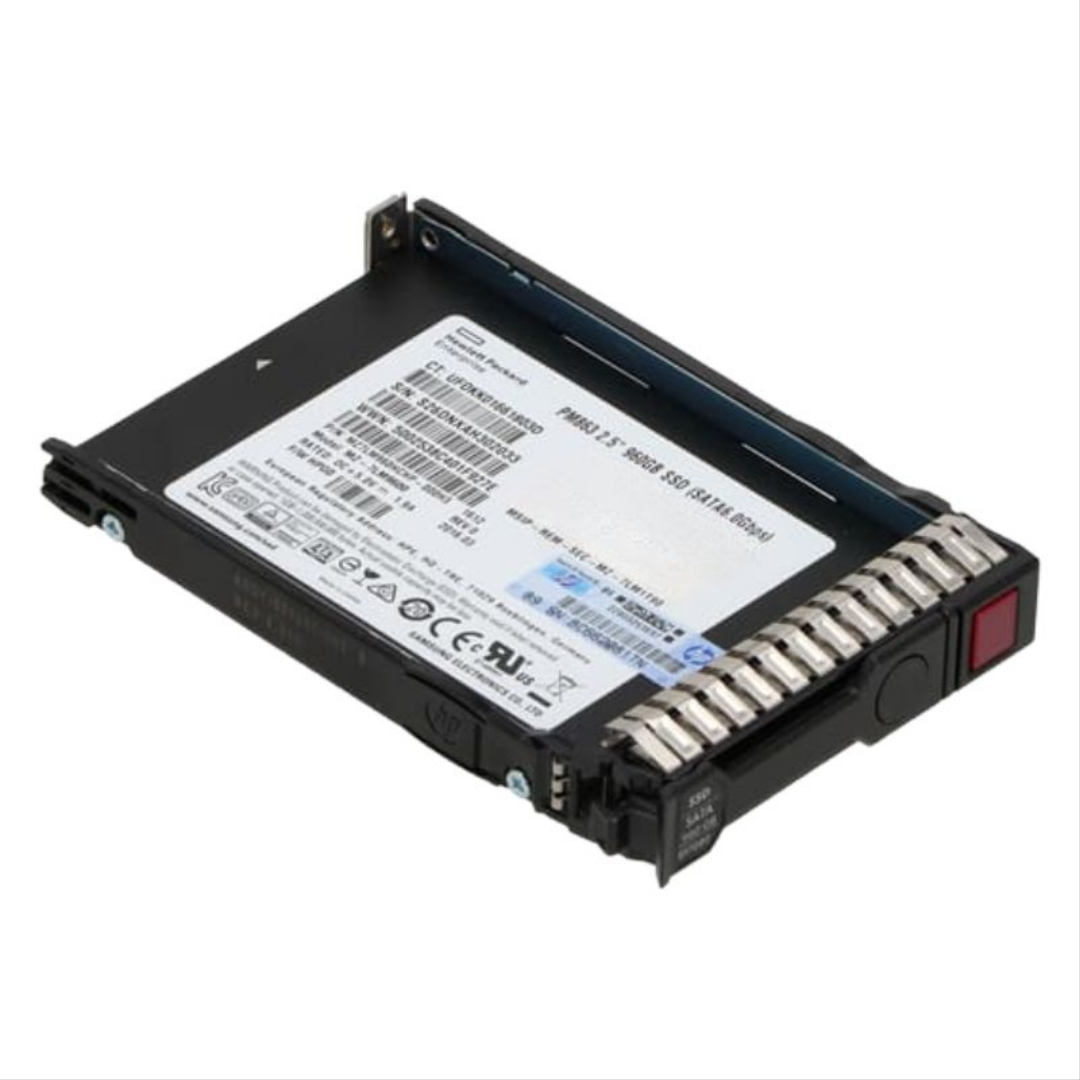
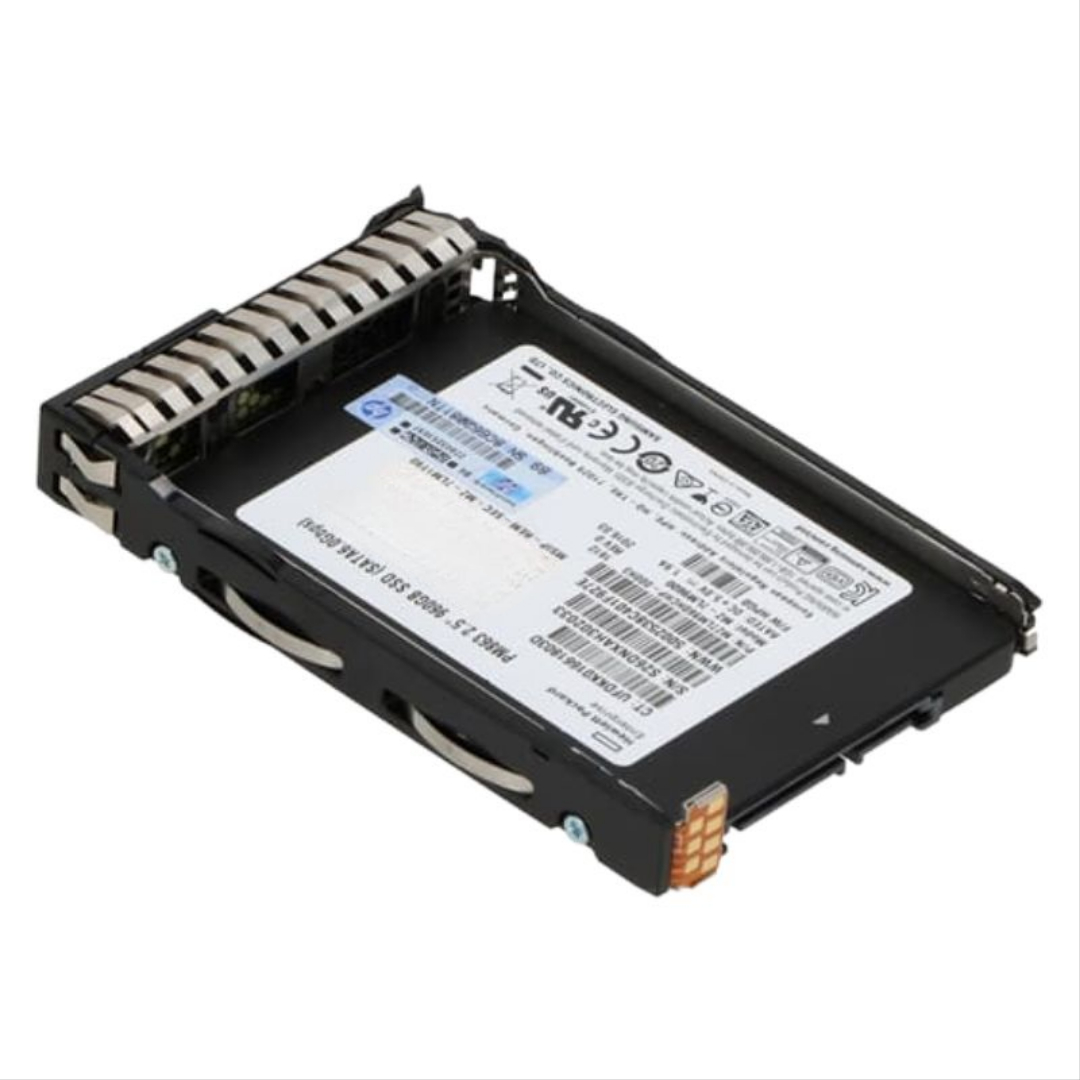
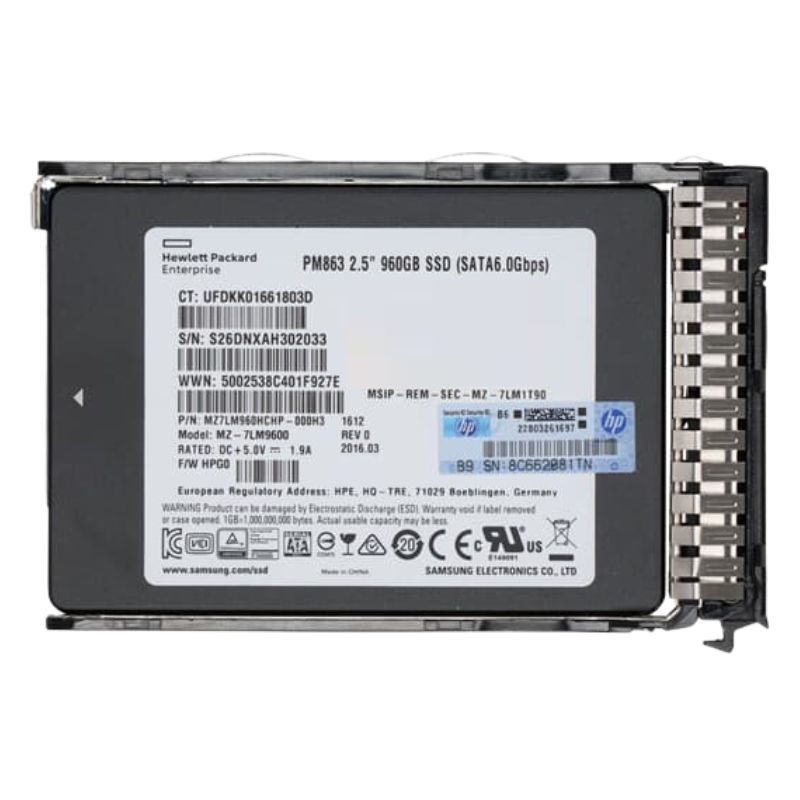
HPE 757233-001 960GB SATA 6GBPS Light Endurance 2.5 Inch Internal Solid State Drive. Excellent Refurbished with 1 year replacement warranty
The HPE 757233-001 is a reliable 960GB 2.5-inch internal solid state drive engineered to enhance server efficiency with a SATA 6Gb/s interface. Designed for compatibility with HP ProLiant Gen8 and Gen9 servers, this SSD offers dependable performance while maintaining eco-friendly compliance.
Enterprise deployments demand assurances that in-flight data is not lost during unexpected power events. Drives in this category commonly include capacitive power-loss protection or firmware safeguards that complete pending writes to NAND and maintain data integrity. End-to-end data path protection further helps ensure that data written by the host reaches the NAND media unchanged, reducing the chances of corruption during transfer across controllers and internal buffers.
This HPE-labeled SKU is intended for easy compatibility with HPE servers and storage systems, but it is also compatible with a broad array of industry-standard SATA controllers and carrier trays. Customers should confirm firmware and compatibility matrices when deploying at scale, and HPE system firmware updates often include drive compatibility and interoperability improvements. Using HPE-certified drives can simplify support and warranty handling when compared to generic or aftermarket SSDs.
Firmware plays a major role in drive behavior, stability, and feature set. HPE often ships drives with firmware tuned for their platforms and may provide lifecycle management through iLO and system utilities. This integration enables proactive monitoring of drive health and sometimes automated firmware updates via HPE management frameworks. For large estates, aligning drive firmware versions across servers reduces variability and helps streamline support procedures.
The 2.5-inch SATA form factor typically resides in hot-swap trays within rack servers. When replacing or upgrading drives, use HPE-approved carriers and follow hot-swap procedures to avoid accidental downtime. Physical carrier compatibility and correct drive caddies help maintain proper airflow, mechanical alignment, and secure electrical connections—factors that contribute to long-term reliability in production environments.
Price-per-gigabyte is a primary consideration for many purchasing decisions, and light endurance SSDs deliver attractive entry points for enterprise-grade flash storage. Total cost of ownership should be measured not only as acquisition price but also as lifecycle costs including expected replacement frequency, administrator time, and potential downtime. For read-centric workloads, the HPE 757233-001 often reduces TCO compared with spinning disk alternatives by delivering lower power consumption, higher performance, and smaller physical footprint per usable capacity.
Planning for drive replacement requires understanding the expected TBW (terabytes written) rating and typical write amplification in your environment. Light endurance drives have lower TBW compared to data center high-endurance counterparts; however, many enterprise workloads fall well within their rated lifespan. Monitoring tools, scheduled maintenance windows, and the use of redundant RAID configurations help mitigate single-drive failures and enable predictable lifecycle replacement without service disruption.
HPE-labeled drives are often available through HPE channels with manufacturer warranty and support. Enterprises that procure through HPE may benefit from consolidated support and easier RMA handling. When buying, consider the length of warranty, support tiers, and whether the seller provides firmware-level updates appropriate for HPE systems. Refurbished or previously used drives can offer cost savings but require careful vetting, especially for endurance-used metrics and SMART history.
When choosing drives for an array of workloads, the HPE 757233-001 960GB SATA Light Endurance SSD sits between consumer SATA SSDs and higher-endurance, higher-performance enterprise NVMe options. Compared to consumer-grade drives, this HPE SKU offers better firmware optimizations, higher reliability expectations, and integration with server management ecosystems. Compared to NVMe drives, the SATA SSD provides lower acquisition costs and broader legacy compatibility while trading off some latency and peak throughput.
SATA SSDs remain relevant when backwards compatibility, cost, and dense 2.5-inch slot coverage are priorities. NVMe drives, available over PCIe, provide significantly higher IOPS and lower latencies but require servers with available NVMe lanes or adapters and may have higher cost per gigabyte. For many mixed workloads that do not demand extreme I/O, a SATA-based internal SSD like the HPE 757233-001 offers a pragmatic compromise that speeds up legacy applications while enabling incremental modernization.
Choosing between light and high endurance SSDs depends on your write intensity. Workloads with constant heavy write streams—such as logging, caching for write-heavy databases, or data ingest appliances—benefit from high endurance drives to avoid premature wear. Conversely, read-oriented operations, large-capacity boot volumes, and mixed virtual machine stores often realize all the benefits of flash without exhausting the write budget of a light endurance drive, making the HPE 757233-001 a cost-efficient choice in such contexts.
For regulated industries and compliance-conscious organizations, ensuring proper data sanitization and secure decommissioning is mandatory. The category covers secure erase procedures supported by the drive's firmware as well as best practices for cryptographic erasure. While hardware-level encryption is sometimes included in enterprise drives, if hardware encryption is not available, ensure that software-based encryption is used to meet data protection policies before drives leave service.
Secure erase features built into enterprise SSDs provide a fast path to render data unrecoverable by resetting internal mappings. When supported, cryptographic erasure offers a quicker alternative by destroying encryption keys. Ensure that whatever method is chosen aligns with your regulatory requirements and that erase operations are logged and auditable for compliance audits. Vendors and third-party tools provide certified sanitization procedures useful for formal data disposition workflows.
Maintaining a documented chain-of-custody for drives that contain sensitive data protects organizations from compliance lapses. Track when drives were removed, who handled them, and what sanitization steps were performed. For high-security environments, physical destruction may be mandated. Consider vendor buyback or recycling programs that provide certificates of destruction to strengthen your compliance posture.


 Contact Us
 Information
 Catalog
 Solid State Drives (SSD)
 Network Switches
 Hard Disk Drives
 HBA & Controllers
 PC & Servers
 PC & Server Memory
 CPU & Processors
 Network Routers
 Power Supplies
 Tape Drives & Libraries
 Network Devices
 Computer & Network Cables