(7% discount is applied at checkout)
Cart is empty
Your go-to destination for cutting-edge server products
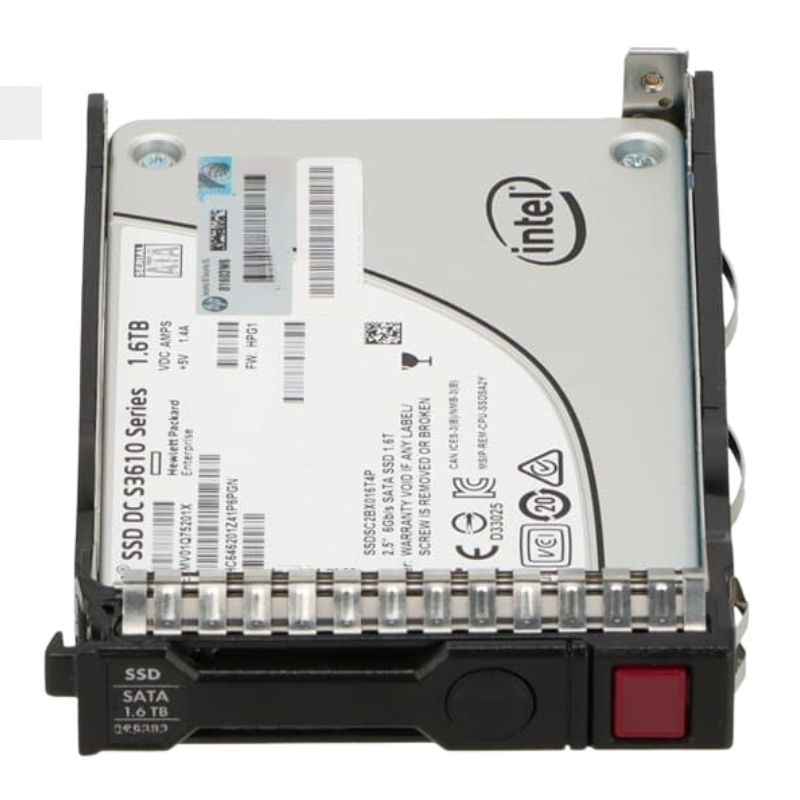


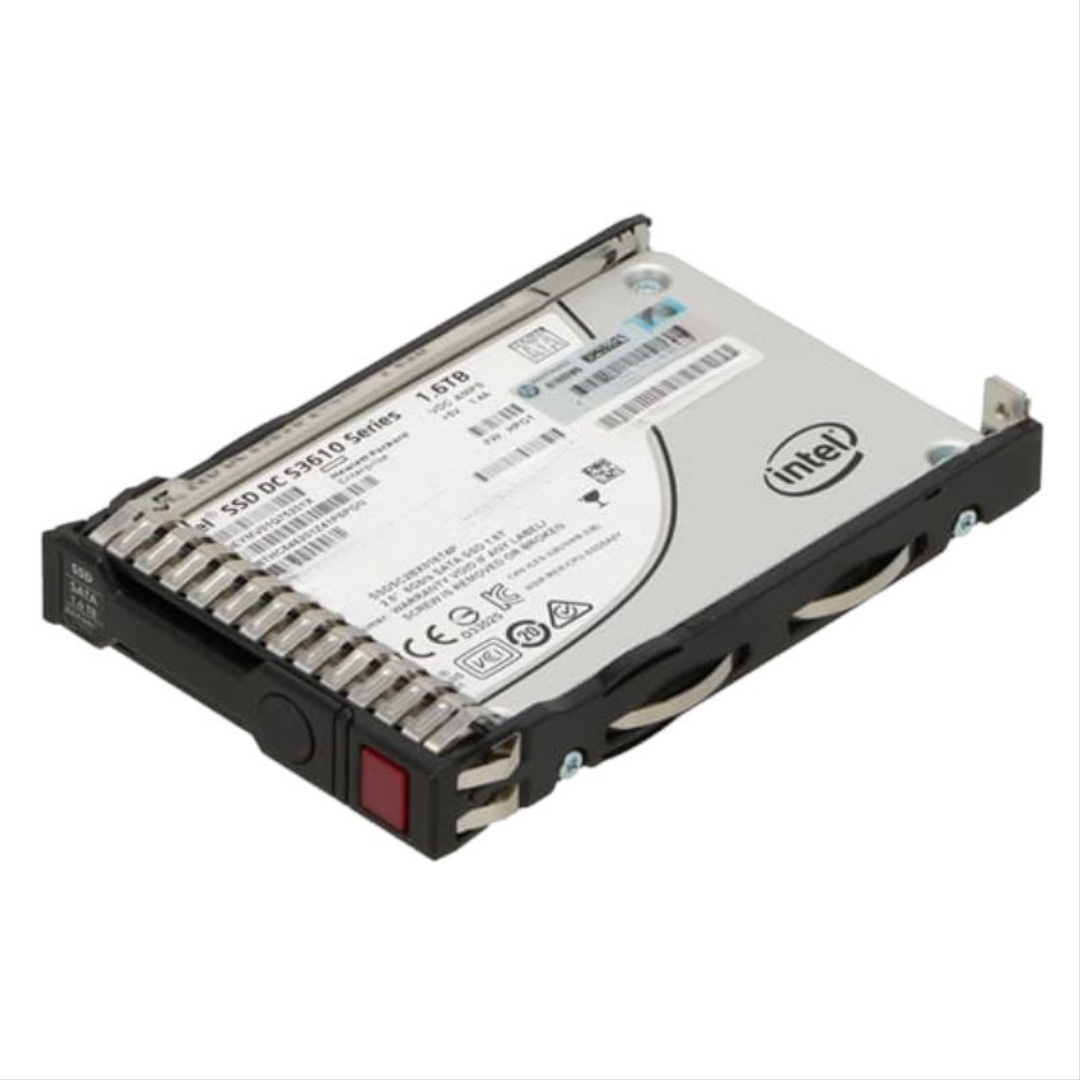
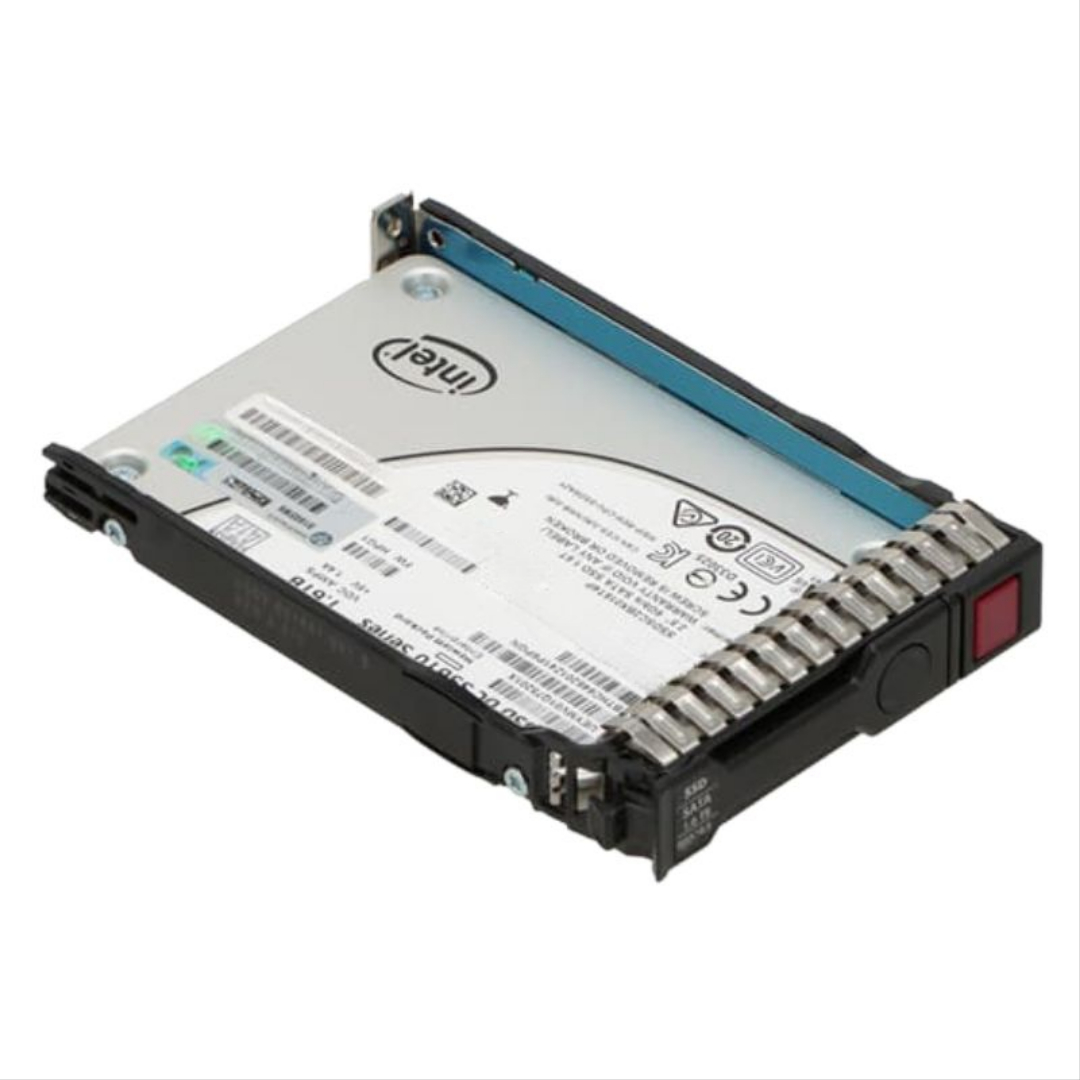
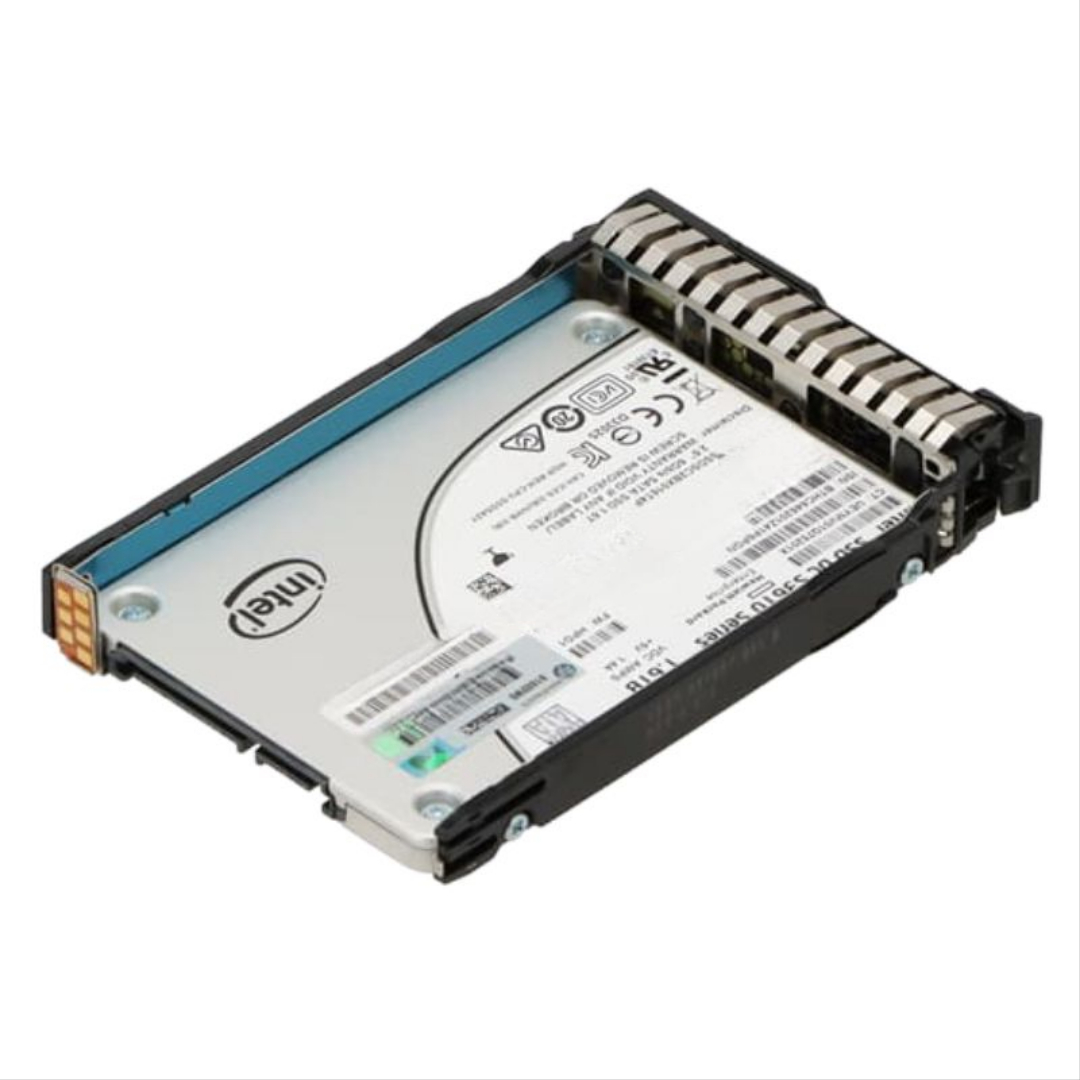
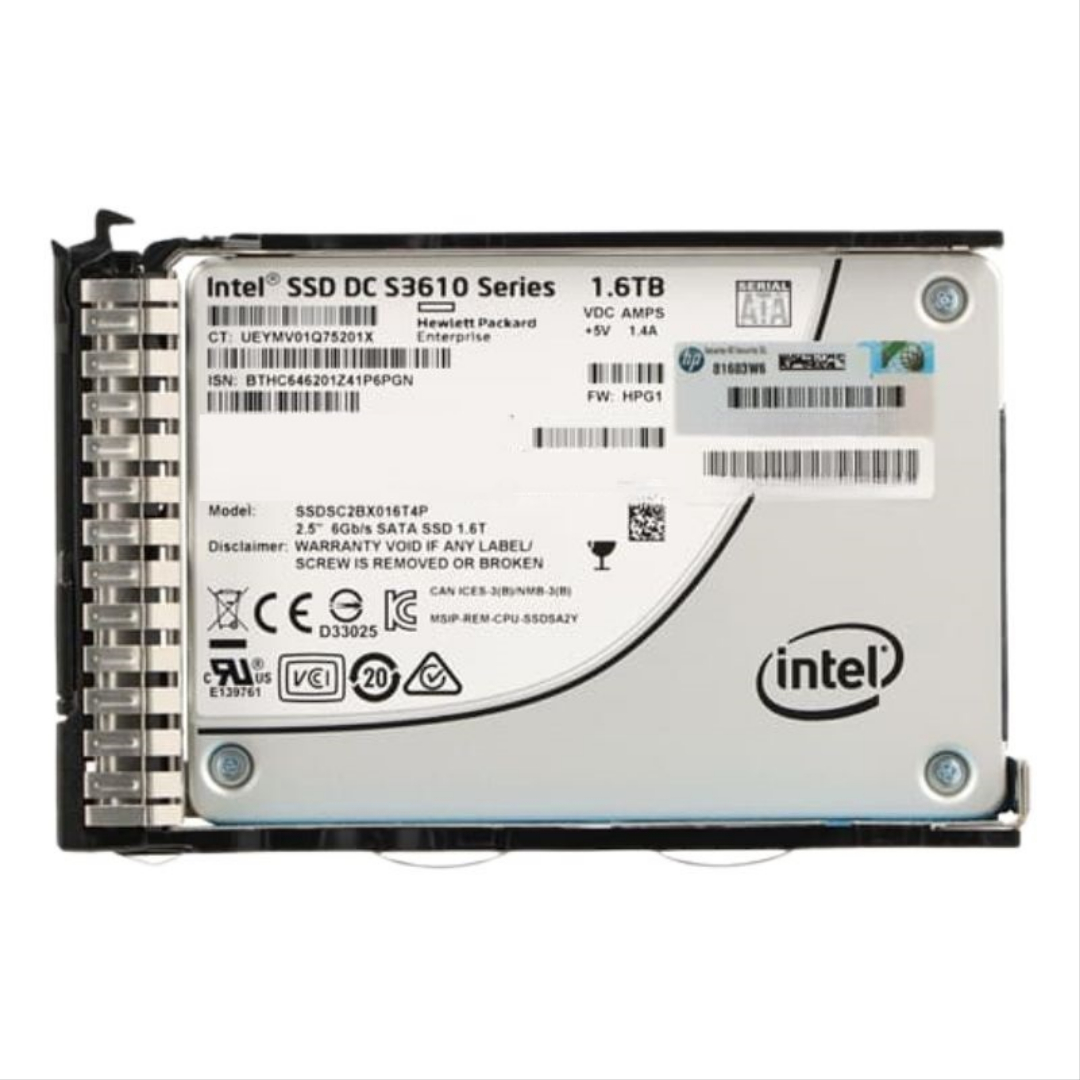
HPE 757345-B21 1.6TB Multi-Level Cell (MLC) SATA 6GBPS Value Endurance 2.5 Inch Solid State Drive. New (System) Pull with 1 year replacement warranty
The HPE 757345-B21 1.6TB Multi-Level Cell (MLC) SATA 6Gbps Value Endurance Solid State Drive delivers enterprise-grade performance and reliability. With its compact 2.5-inch form factor, this storage solution enhances efficiency for data-driven workloads and is perfectly engineered for HPE ProLiant servers.
This SSD is designed to improve server speed and operational consistency. It leverages Multi-Level Cell flash technology for better performance-to-cost ratio.
The SATA 6Gb/s interface ensures smooth data communication and quick access to mission-critical applications. Built for enterprise use, it minimizes downtime and accelerates workloads.
Designed with environmental standards in mind, this SSD complies with WEEE and CE certifications, making it eco-friendly while maintaining dependable quality. Power-saving features help reduce energy costs in enterprise environments.
The HPE 757345-B21 is optimized for HPE ProLiant servers, ensuring seamless integration and maximum efficiency. It is particularly compatible with:
The HPE 757345-B21 1.6TB Multi-Level Cell (MLC) SATA 6Gbps Value Endurance 2.5 inch Solid State Drive belongs to a focused category of enterprise-grade SATA SSDs designed for data center and server applications that require a balance of performance, endurance, and cost efficiency. This product category addresses organizations that want higher reliability than consumer-class drives, predictable service life measured in endurance metrics, and full compatibility with existing 2.5 inch SATA infrastructures. The drives in this category are commonly deployed as boot drives, read-intensive application storage, caching devices, and in tiered storage architectures where endurance class and predictable latency matter more than the absolute top-of-the-line NVMe throughput.
At the heart of this category is a SATA 6Gbps interface, which provides backward- and forward-compatible connections with existing server backplanes and storage enclosures. The 2.5 inch form factor is a standard for server trays and blade systems, and the use of MLC NAND is a deliberate choice that positions these SSDs between low-cost TLC consumer drives and higher endurance SLC/eMLC enterprise parts. The "Value Endurance" designation signals an endurance tier optimized for workloads that are heavier than desktop usage but not as write-dominant as high-intensity database logging or heavy virtualization operations. Important technical considerations in this category include write endurance (often expressed in drive writes per day or total terabytes written over warranty), consistent read latency, power-loss protection features, and health-monitoring support via SMART and vendor management utilities.
Drives in this category use the SATA III (6Gbps) interface to maintain compatibility with a wide range of servers, storage arrays, and external DAS enclosures. While NVMe and PCIe SSDs offer lower latency and higher throughput for new architectures, SATA 6Gbps remains ubiquitous in mixed environments where existing backplanes, hot-swap trays, and legacy controllers are still in service. The 2.5 inch form factor offers a compact footprint, enabling dense storage configurations and plug-and-play replacement in many HPE ProLiant systems and third-party servers. Administrators appreciate the predictable behavior of SATA in environments that prioritize compatibility and easier firmware and driver management.
Multi-Level Cell (MLC) NAND stores two bits per cell and historically provides better write endurance and performance consistency than mainstream triple-level cell (TLC) NAND of the same era. For the HPE 757345-B21 category, MLC helps achieve value-oriented endurance targets without moving into the much higher cost eMLC or SLC segments. This makes the drives appealing for applications such as web hosting, content delivery, software development servers, and moderate virtualization workloads where sustained writes occur but do not reach the extreme levels of high-frequency database logging. MLC also simplifies wear-leveling strategies and typically results in fewer write-amplification surprises when compared to more aggressive consumer-oriented flash architectures.
Performance in this category is characterized by solid sequential throughput levels and consistent low-latency random reads. Because the SATA interface caps raw throughput at roughly 6Gbps (around 600MB/s in ideal conditions), these drives optimize controller firmware and NAND parallelism to approach the theoretical limit for sequential transfers while preserving predictable IOPS for small-block random operations. For administrators, the primary metric is consistent performance under mixed or sustained workloads rather than peak benchmark numbers. Factors that influence real-world results include drive capacity, firmware features like background garbage collection and TRIM support, over-provisioning percentage, and system-level factors such as controller queue depth and RAID settings.
Under sustained read workloads, drives in this category deliver consistent throughput and low latency, making them suitable for hot content and read-heavy application tiers. Write behavior is where endurance considerations become critical. The Value Endurance label implies that these drives are engineered to tolerate moderate sustained writes for their service life, but best practice is to match drive endurance to workload patterns. In mixed read/write workloads, expect reasonably linear performance until the drive reaches states where background compaction and garbage collection are required; however, enterprise-grade firmware and sufficient over-provisioning help minimize performance cliffs and maintain service-level consistency.
The category emphasizes stable random IOPS for small-block sizes, which is crucial for transaction-oriented workloads and boot volumes. While absolute IOPS may not rival modern NVMe SSDs, the latency distribution is often tighter than consumer drives, reducing tail latency spikes that can harm application responsiveness. This makes these SSDs a practical choice for systems where predictable response times are more important than best-in-class throughput.
Organizations deploy this class of SSDs in a variety of scenarios where balance matters. Typical placements include server boot volumes, caching layers in hybrid storage arrays, read-accelerated content services, and remote office or branch office (ROBO) servers that require enterprise reliability without premium NVMe costs. They are also frequently used in dense storage shelves where SATA connectivity is the standard and maximizing capacity per dollar remains a priority. Because these drives come in a 1.6TB capacity point, they fill a niche where capacity and endurance are balanced for moderate datasets that cannot be efficiently served by lower-endurance consumer SSDs.
Compatibility with HPE systems is a core selling point for the category. These SSDs often appear in certified parts lists for HPE ProLiant servers, enabling administrators to use vendor-tested firmware and support channels. Certified compatibility simplifies procurement, reduces deployment risk, and ensures that drive firmware updates are vetted for system-level stability. For IT teams running HPE hardware, using HPE-qualified parts reduces the complexity of maintenance windows and can improve mean time to repair when replacement or vendor support is required.
As part of hybrid storage architectures, drives in this category offer a cost-effective way to introduce flash into existing spinning-disk arrays. By using these SSDs for caching or as a read-acceleration tier, organizations can significantly reduce application response times while preserving cost-per-gigabyte advantages on rotational disks for archival and cold data. Intelligent tiering software and storage controllers can automatically migrate hot data to the SSD tier, improving overall system performance without the dramatic expense of deploying all-flash NVMe arrays.
Endurance planning is a core procurement consideration for this product category. The Value Endurance label indicates endurance levels designed for moderate write workloads, so lifecycle forecasting should account for the anticipated write amplification from the application, any RAID-level write overhead, and the expected growth of data volumes. Organizations should measure actual writes in production and compare them to the rated endurance to plan replacements. Lifecycle management also includes policies for secure decommissioning, secure erase where appropriate, and proper recycling or return-to-vendor procedures for retired drives.
When computing TCO for these drives, factor in not only the acquisition cost but also the expected lifespan under workload, the cost of downtime or degraded performance, and the administrative overhead of monitoring and replacing drives. In many cases, the slightly higher upfront cost of enterprise-grade MLC SATA SSDs is offset by reduced maintenance events and improved application performance compared with consumer-grade options. For deployments using multiple drives, the aggregate reliability improvement can translate to measurable savings in technician hours and operational risk.


 Contact Us
 Information
 Catalog
 Solid State Drives (SSD)
 Network Switches
 Hard Disk Drives
 HBA & Controllers
 PC & Servers
 PC & Server Memory
 CPU & Processors
 Network Routers
 Power Supplies
 Tape Drives & Libraries
 Network Devices
 Computer & Network Cables