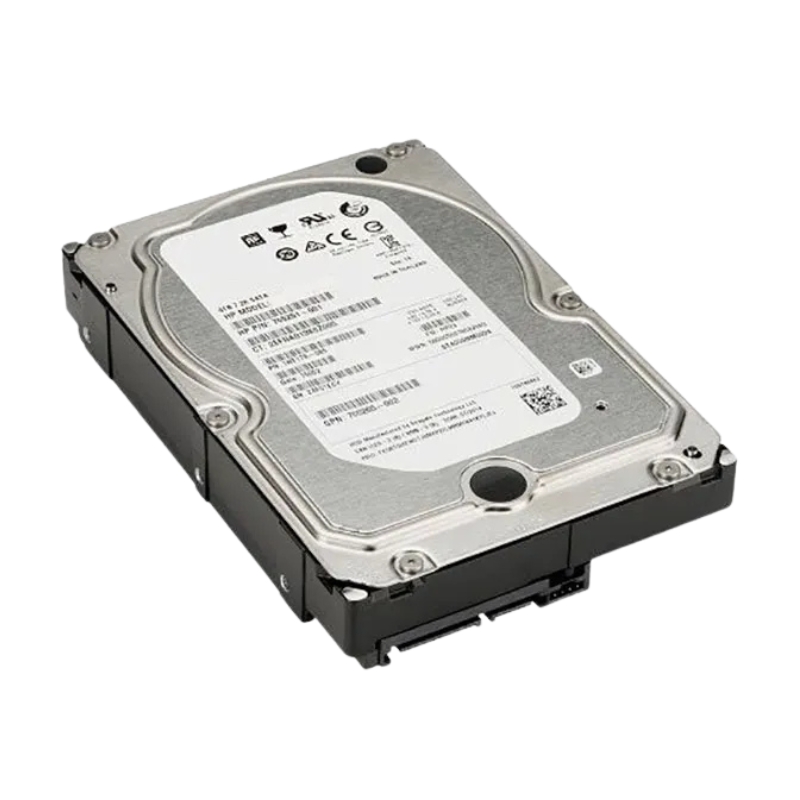
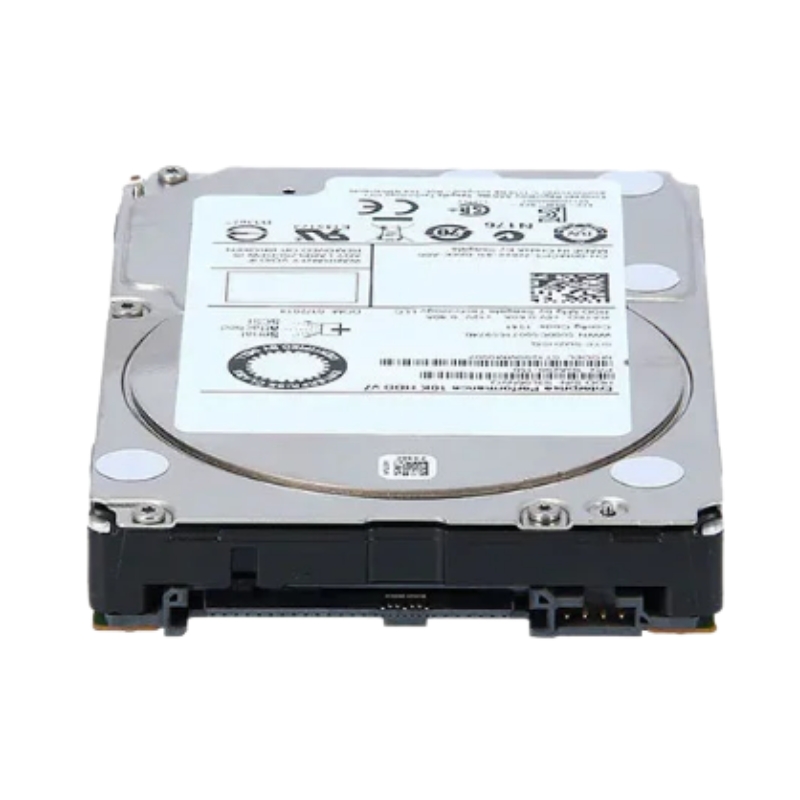
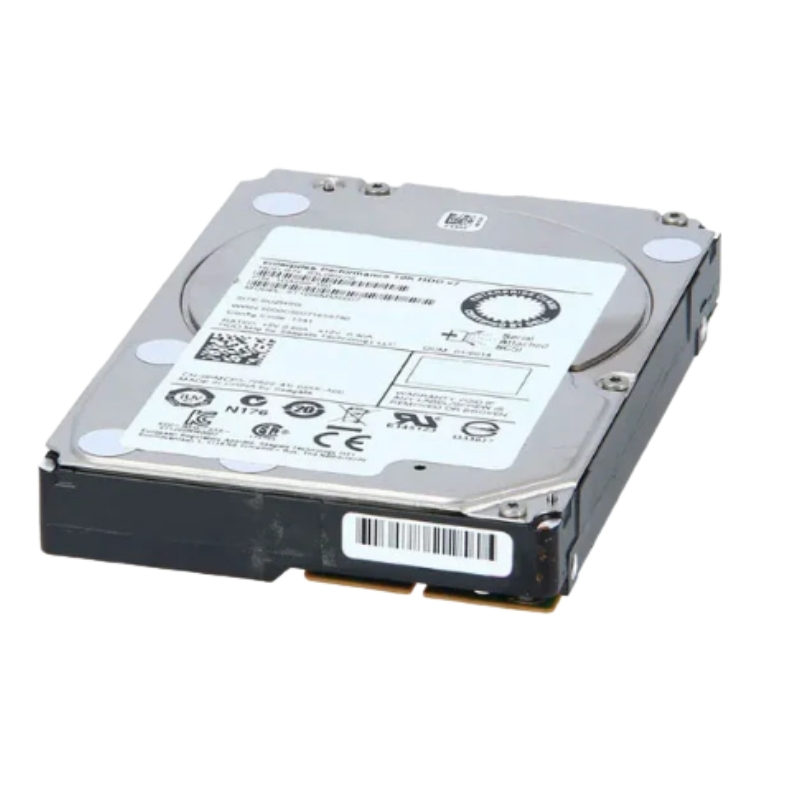
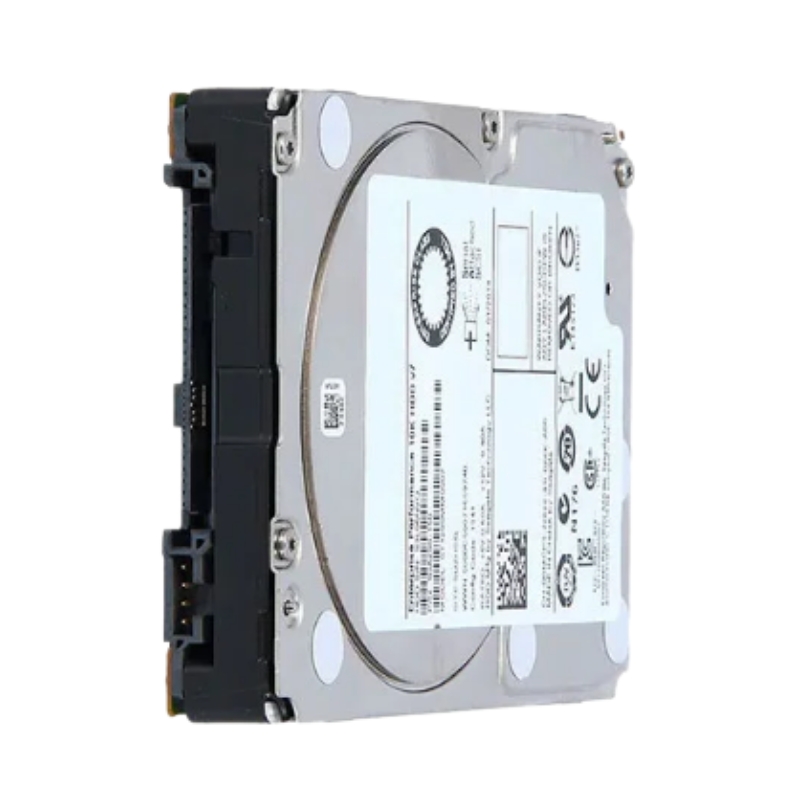
HPE 703328-001 2TB 7.2K RPM SATA 6GBPS LFF Hard Disk Drive.
- — Free Ground Shipping
- — Min. 6-month Replacement Warranty
- — Genuine/Authentic Products
- — Easy Return and Exchange
- — Different Payment Methods
- — Best Price
- — We Guarantee Price Matching
- — Tax-Exempt Facilities
- — 24/7 Live Chat, Phone Support
- — Visa, MasterCard, Discover, and Amex
- — JCB, Diners Club, UnionPay
- — PayPal, ACH/Bank Transfer (11% Off)
- — Apple Pay, Amazon Pay, Google Pay
- — Buy Now, Pay Later - Affirm, Afterpay
- — GOV/EDU/Institutions PO's Accepted
- — Invoices
- — Deliver Anywhere
- — Express Delivery in the USA and Worldwide
- — Ship to -APO -FPO
- — For USA - Free Ground Shipping
- — Worldwide - from $30
HPE 703328-001 2TB 7200RPM SAS Hard Drive
The HPE 703328-001 hard drive is a high-performance 3.5-inch internal storage solution designed for enterprise-grade servers and data centers. With a massive 2TB storage capacity and blazing 7200 RPM speed, this SAS drive ensures fast, reliable data access and enhanced system efficiency.
Key Features of HPE 703328-001 Hard Drive
- High-capacity 2TB internal storage for large-scale data applications.
- Rapid 7200 RPM rotational speed for improved read/write performance.
- Supports 6Gb/s SAS interface ensuring robust and consistent data transfer.
- Hot-swappable design allows easy replacement without downtime.
- Eco-conscious manufacturing process for energy-efficient operation.
- 3.5-inch form factor compatible with standard server bays.
Technical Specifications
Storage Capacity & Performance
- Storage Size: 2 Terabytes (TB) to accommodate enterprise data requirements.
- Rotation Speed: 7200 Revolutions Per Minute (RPM) for faster access to data.
- Maximum Transfer Rate: 6 Gigabits per second (Gb/s) to boost operational efficiency.
Drive Configuration
- Internal drive suitable for rack servers and storage arrays.
- Drive Width: 3.5 inches (LFF) for standard server compatibility.
- Hot-swappable feature enables quick installation and replacement.
Interface & Connectivity
- Drive Interface: Serial Attached SCSI (SAS) for enterprise-grade reliability.
- Interface Standard: 6Gb/s SAS ensures high-speed data throughput.
Additional Information
- Assembly Required: Yes, simple installation process.
- Environmentally Friendly: Manufactured with eco-conscious processes.
Advantages of Choosing HPE 703328-001
- Optimized for enterprise workloads and large databases.
- Enhances server performance with high-speed data access.
- Minimizes downtime with hot-swappable design.
- Reliable SAS interface ensures secure and stable connectivity.
- Eco-friendly design reduces energy consumption.
Applications and Use Cases
- Enterprise-level storage servers and data centers.
- Backup and disaster recovery systems.
- High-performance computing applications requiring fast data retrieval.
- Virtualization platforms and database management systems.
Summary
- 2TB SAS hard drive with 7200 RPM speed.
- 6Gb/s data transfer rate for rapid access.
- Hot-swappable, eco-friendly, and easy to install.
- Perfect for enterprise servers, storage arrays, and data-intensive applications.
HPE 703328-001 2TB 7.2K RPM SATA 6Gbps Hard Disk Drive
The HPE 703328-001 2TB 7,200 RPM SATA 6Gbps 3.5-inch Large Form Factor (LFF) hard disk drive represents a workhorse storage option designed for a wide range of server and storage array deployments. This category focuses on high-capacity SATA drives optimized for mainstream enterprise workloads, providing a balance of capacity, sustained throughput, and cost-effectiveness. On category pages like this one you’ll find in-depth information about product features, technical specifications, compatibility considerations, typical use cases, performance characteristics, and buying guidance to help system administrators, IT procurement teams, and integrators make confident decisions.
Key Attributes of the 703328-001 SATA 2TB 7.2K Drive
The defining attributes of this family of drives emphasize:
- Reliable mechanical design with a 7,200 RPM spindle speed for balanced latency and throughput.
- SATA III (6Gbps) interface for wide compatibility and plug-and-play support in many HPE servers and JBOD enclosures.
- 2TB native capacity per 3.5-inch drive bay, enabling high-density, cost-efficient bulk storage.
- Large Form Factor (LFF) 3.5" dimensions that simplify replacement and upgrade cycles in enterprise hardware.
Technical Specifications and Design Details
Core specifications
- Model: HPE 703328-001
- Capacity: 2TB (2,000 GB usable)
- Spindle speed: 7,200 RPM (typical)
- Interface: Serial ATA (SATA III, 6.0 Gbps)
- Form factor: 3.5-inch (Large Form Factor)
- Typical sector size and native format: 512e or 4Kn depending on firmware/drive revision (check vendor labeling)
- Cache: Manufacturer-specified onboard DRAM cache (varies by production batch)
- MTBF and endurance guidelines: Optimized for enterprise-class duty cycle; designed for consistent server use
Mechanical and electrical considerations
The 3.5" LFF chassis houses mechanical components tuned for server reliability: robust bearings, vibration tolerance, and shock resistance suitable for rack-mounted deployments. Typical enterprise-rated drives include features such as rotational vibration (RV) sensors to maintain performance in multi-bay enclosures and error recovery controls (e.g., TLER/ERC-like behaviors) beneficial to RAID-managed arrays.
Compatibility & Integration
HPE servers and array compatibility
The HPE 703328-001 is specifically engineered, packaged, and sometimes firmware-matched for HPE ProLiant servers, HPE storage controllers, and supported JBOD / SAN units. When integrating into HPE systems, administrators should:
- Verify drive firmware compatibility with the server and controller firmware levels to avoid warnings or reduced functionality.
- Use HPE Smart Array controllers or compatible RAID controllers for best RAID health reporting and drive lifecycle telemetry.
- Reference HPE QuickSpecs and service bulletins to confirm hot-swap tray compatibility and drive carrier fit in specific chassis models.
Interoperability with non-HPE hardware
While the SATA interface is universal, some HPE-labeled drives may include custom firmware for monitoring and reporting. These drives generally work in third-party servers, desktop enclosures, and storage appliances, but advanced telemetry features or vendor-specific health reports may be limited or unavailable on non-HPE controllers.
Performance Characteristics
Sequential throughput and random I/O
7,200 RPM SATA drives provide solid sequential read/write throughput suitable for streaming large datasets, backups, and media storage. Random IOPS performance will be modest compared to SSDs; expected random read/write IOPS fall into the low hundreds under mixed workloads. This category is not intended for high-transaction databases or virtual desktop infrastructure (VDI) primaries without caching layers.
Latency and access times
Average latency for a 7.2K RPM drive hovers around 4.17ms due to rotational speed (half rotation average). When combined with seek latencies, the overall access times are well-suited for sequential and streaming tasks but should be factored into architectural planning for mixed random workloads.
Typical Use Cases and Deployment Patterns
Backup, archive and cold data tiers
One of the most common deployments for 2TB 7.2K SATA drives is in backup and archival arrays where large volumes of data must be retained affordably. Use cases include:
- On-premises backup targets
- Near-line archive arrays
- Media asset repositories (video, audio, images)
- Log retention systems and compliance storage
Capacity expansion and storage consolidation
When upgrading older servers or adding bulk storage to NAS appliances, the LFF 3.5" format provides cost-effective capacity per bay. HPE customers often use these drives to scale capacity in commodity nodes or to provide cold-capacity tiers attached to hybrid arrays that combine SSD caching with HDD bulk storage.
RAID strategies and redundancy
In RAID deployments, mixing drives of different capacities/firmware is discouraged. For predictable rebuild times and consistent performance:
- Use drives from the same model family and similar manufacturing batches where possible.
- Plan for rebuild impact—2TB rebuilds can take hours depending on array load and controller features.
- Consider RAID levels balancing capacity and resiliency (RAID 6 or RAID 10 for better fault tolerance in larger arrays).
Drive Health, Monitoring & Firmware
SMART attributes and proactive monitoring
Modern enterprise HDDs support SMART attributes that provide early indicators of deterioration—reallocated sector count, pending sectors, and read/write error rates among them. In HPE environments, hardware management tools (e.g., HPE Integrated Lights-Out (iLO), HPE Smart Storage Administrator) surface drive health and predictive failure analytics. Regular monitoring and automated alerting reduce unexpected downtime.
Firmware updates and lifecycle management
Firmware updates can improve compatibility, security, and performance. Maintain a firmware baseline that matches HPE recommended versions for your server and controller models. When updating:
- Follow vendor-provided update paths to avoid bricking drives or invalidating support agreements.
- Document current firmware revisions before performing bulk updates.
- Test updates in staging environments when possible, especially for production arrays.
Power, Thermal & Environmental Considerations
Power consumption and efficiency
Enterprise-class 3.5" HDDs have higher active and idle power draw than 2.5" or SSD alternatives. When planning racks populated with many LFF drives, include power provisioning and cooling into capacity calculations. Typical enterprise arrays provide per-bay power budgets; exceeding these can cause stability issues or thermal throttling.
Operating temperatures and reliability
Keep HDD ambient temperatures within manufacturer-recommended ranges—excessive heat accelerates mechanical wear and increases failure probability. Use appropriate airflow management, blanking panels, and temperature sensors to preserve longevity. Vibration control is equally important in multi-drive enclosures.
Comparisons and Alternatives
HDD versus SSD: when HDDs still win
Although SSDs offer superior IOPS and latency, SATA 3.5" HDDs retain advantages:
- Lower cost per gigabyte—ideal for capacity tiers.
- Predictable sequential performance for streaming workloads.
- Long history of operational compatibility in legacy infrastructures.
Use hybrid architectures (SSD caching + HDD capacity) to exploit both technology classes' strengths.
Within HDDs: SATA vs SAS
SATA and SAS drives share mechanical similarities but target different niches. SAS drives often include higher reliability ratings, dual-port connectivity for multipath redundancy, and better command queuing for mixed I/O. SATA remains a cost-effective choice for read-heavy, sequential workloads where SAS premium features are unnecessary.
Security Features and Data Sanitization
Hardware encryption and secure erase
Some enterprise HDD models include hardware-based encryption features. If data confidentiality is a requirement, select drives or controllers that support encryption and secure key management. For end-of-life disposal:
- Use vendor-approved secure erase utilities (e.g., secure erase commands compliant with drive firmware).
- When irreversible sanitization is required, consider physical destruction or degaussing per organizational policy.
Compliance considerations
Organizations bound by regulatory standards (e.g., GDPR, HIPAA) must audit storage lifecycle processes. Track drive provenance, perform secure erasure on retired drives, and maintain records of disposal to demonstrate compliance.
Environmental Sustainability & End-of-Life Considerations
Recycling and responsible disposal
When drives reach end of life, engage certified e-waste recyclers who follow environmental and data-security best practices. Many vendors and resellers offer trade-in or recycling programs that help reduce environmental impact and simplify secure disposal.
Refurbished and secondary-market drives
Purchasing refurbished HPE drives can provide cost savings, but vet the refurbishment process, warranty terms, and health certification. Ask for SMART health reports and any reconditioning documentation to validate reliability claims.
Additional Resources & Related Subcategories
Related product families
- HPE-certified SAS enterprise HDDs (higher IOPS/dual-port models)
- 2.5-inch enterprise HDDs for denser packing in certain enclosures
- HPE OEM SSDs for tiered/hybrid storage solutions
- Refurbished and spare parts (HPE drive caddies and sleds)
Useful documentation
Link to vendor QuickSpecs, compatibility matrices, and support bulletins for up-to-date compatibility and firmware guidance. Maintain easy access to installation guides, RAID best practices, and drive sanitation procedures for buyers and technicians.
Content Blocks to Add for Conversion Optimization
High-intent buyer blocks
Include concise, trust-building sections that increase conversions:
- Availability & lead time: Real-time stock indicators and shipping estimates.
- Warranty & returns: Clear statements on warranty length and RMA process.
- Compatibility checker: Small interactive tool or dropdown to confirm server model compatibility.
- Bundle offers: Drive-matching kits, caddies, or firmware support bundles for large purchases.
Final Technical Considerations (for IT teams)
Performance tuning
For best results, pair SATA 7.2K HDD tiers with caching layers, tiering software, or controller-level write-back caching (with battery-backed cache or equivalent) to accelerate random workloads. Monitor rebuild times and plan capacity expansions to limit performance impact during maintenance.
Summary of the Category Value Proposition
The HPE 703328-001 2TB 7.2K RPM SATA 6Gbps 3.5-inch LFF HDD category delivers pragmatic, cost-efficient bulk storage for enterprise and SMB environments where predictable sequential throughput and capacity density are primary concerns. This category remains indispensable for tiered storage architectures, backup targets, and archival systems while integrating smoothly with HPE management tooling and RAID controllers when deployed in supported systems.
Encourage further exploration
Browse related SKUs, compatibility guides, and bulk procurement options on this category page to identify the optimal mix of capacity, performance, and total cost of ownership for your organization's storage strategy.