(7% discount is applied at checkout)
Cart is empty
Your go-to destination for cutting-edge server products
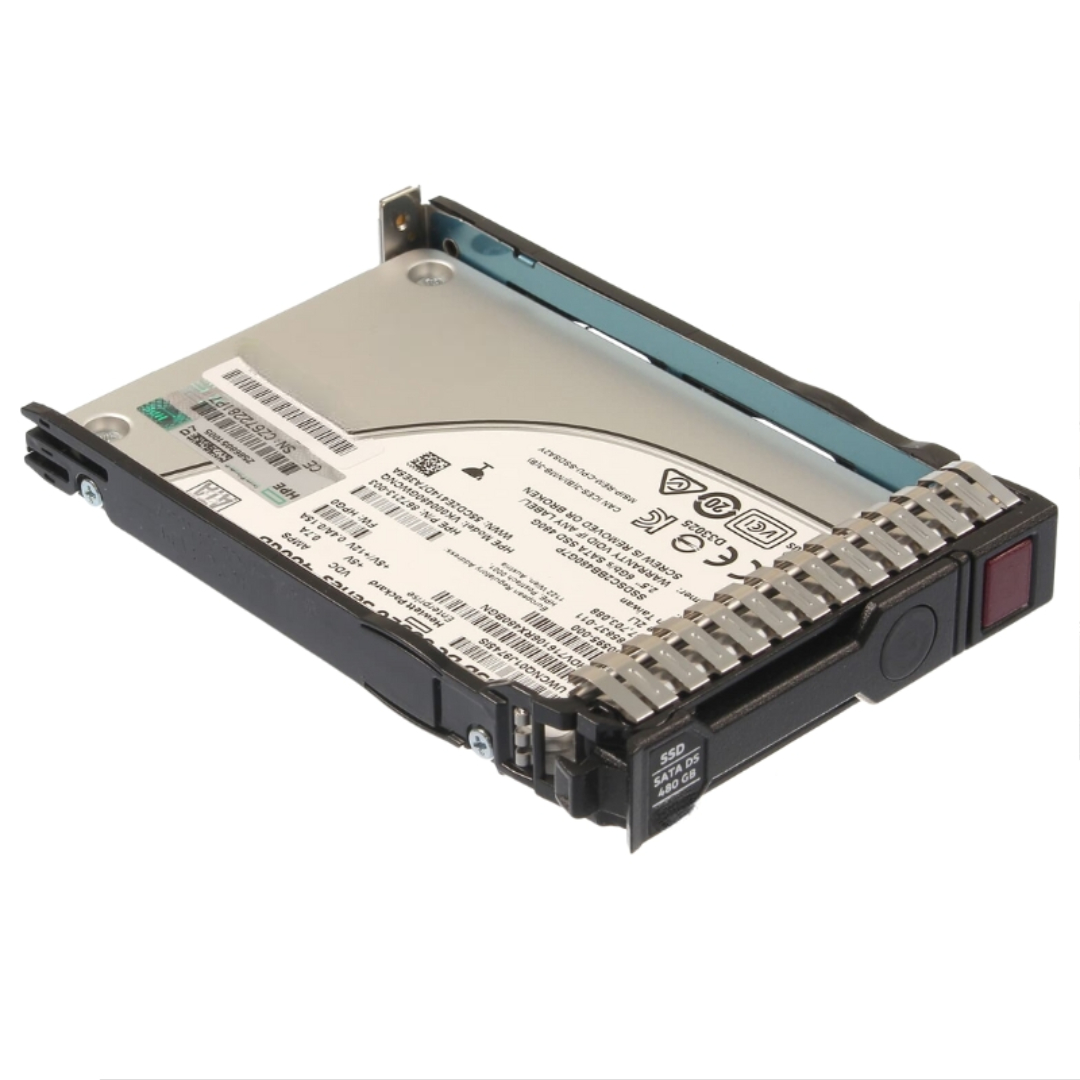


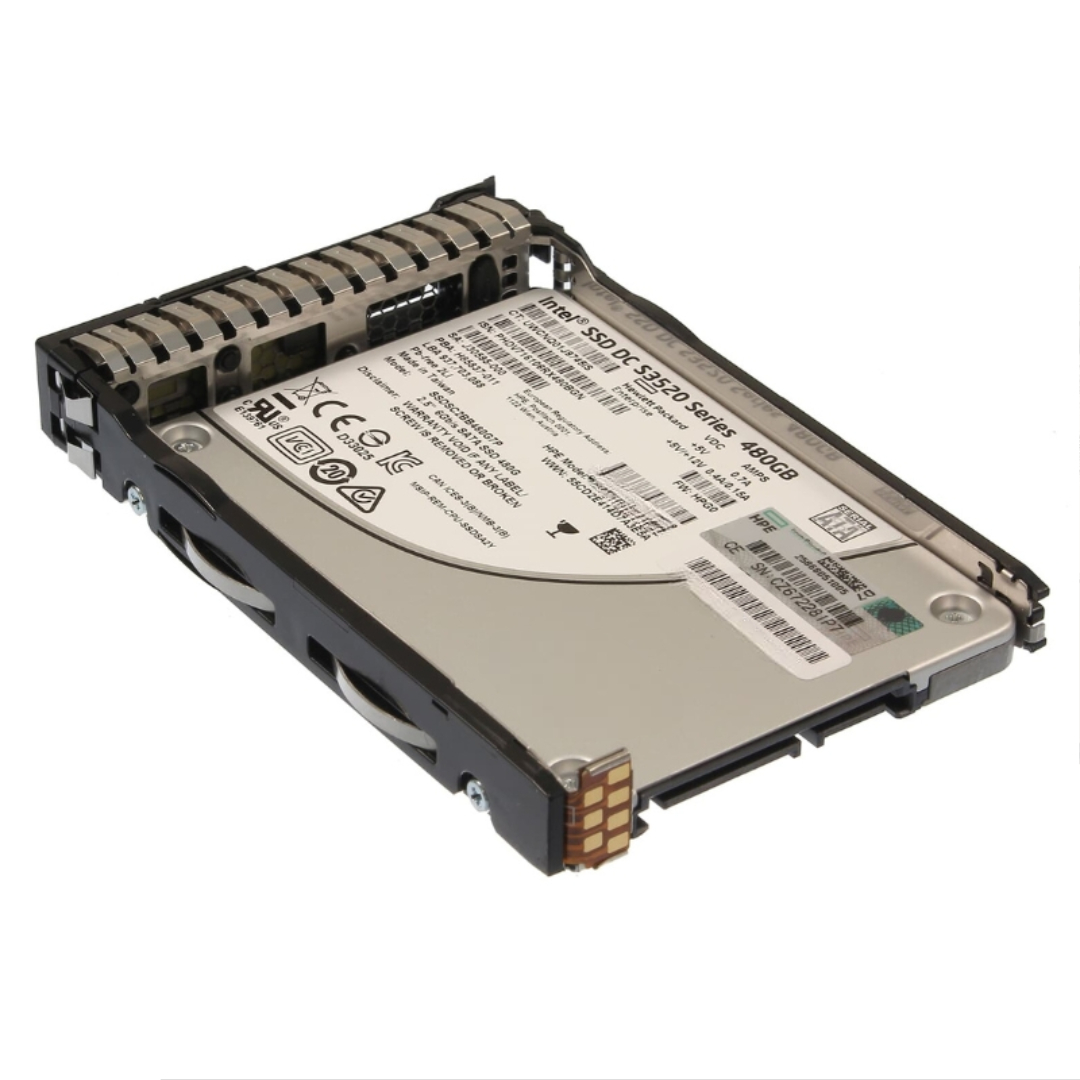
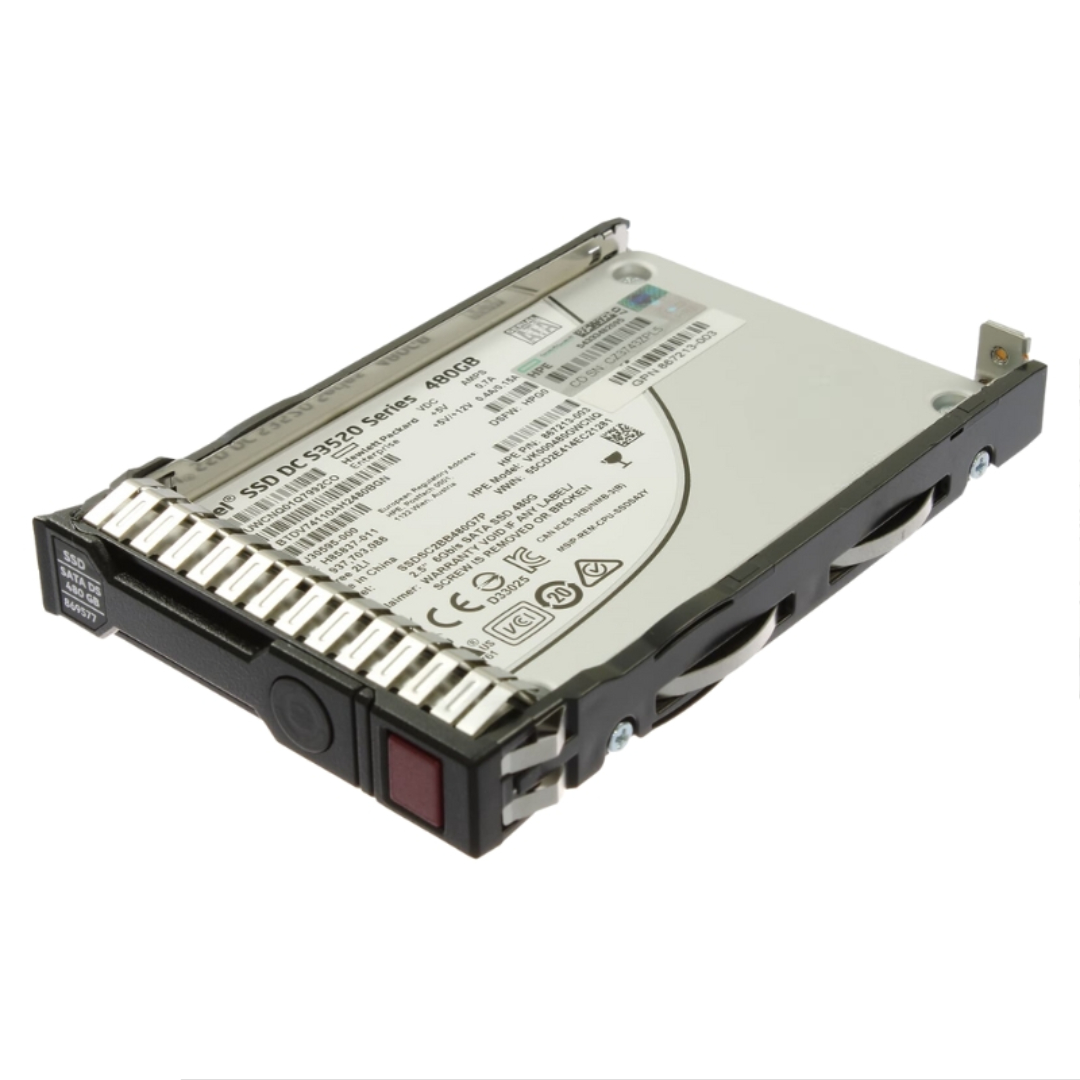
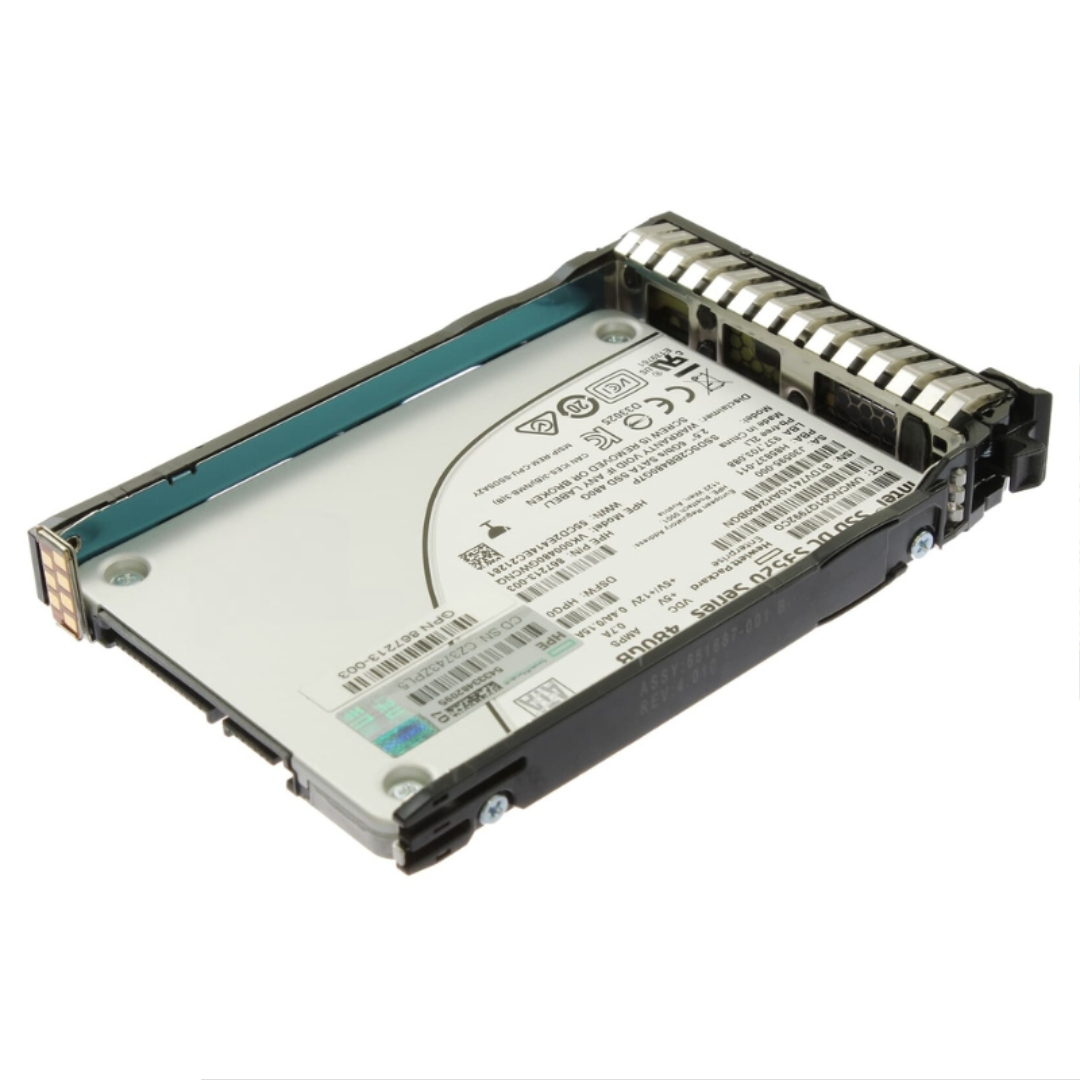
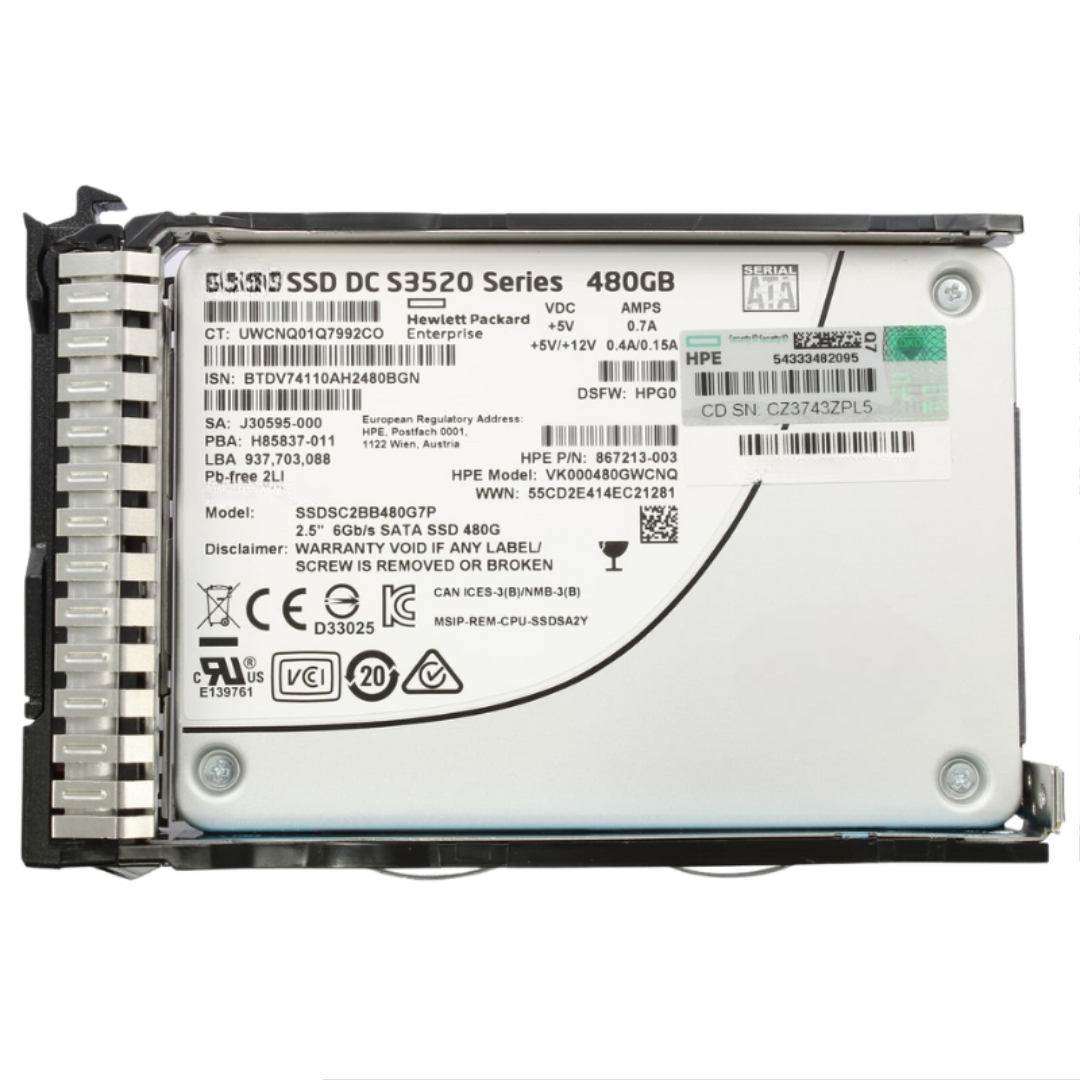
HPE 727823-001 480GB SATA 6GB/s 2.5-inch SFF MLC Internal Solid State Drive. Excellent Refurbished with 1-Year Replacement Warranty
The HP 727823-001 Solid State Drive provides dependable, enterprise-grade storage designed for efficiency and speed. With advanced MLC (Multi-Level Cell) flash technology and a 6Gb/s SATA interface, it ensures rapid data access and seamless system responsiveness for demanding workloads. Its 480GB storage capacity is suitable for a wide range of business-critical applications.
The HP 727823-001 delivers consistent, high-speed performance ideal for enterprise deployments. Its SATA 6Gb/s interface optimizes data transfer, while MLC NAND flash provides stability and endurance for environments where frequent data writing is required.
Built for high-intensity business use, this SSD supports servers, storage arrays, and data centers requiring durable and efficient solid-state storage solutions. Its endurance rating ensures it can handle constant read/write cycles without performance degradation.
The compact 2.5-inch Small Form Factor design enables easy deployment across a range of enterprise hardware. Its lightweight yet durable build ensures compatibility with modern storage systems.
Unlike consumer SSDs, enterprise drives such as the HPE 727823-001 include firmware optimizations, power-loss protection strategies, and compatibility testing to meet the demands of 24/7 operation. This SSD is intended for:
The compact 2.5-inch SFF profile keeps footprint small while enabling easy insertion into HPE drive bays and universal sleds. The SATA 6Gb/s interface provides broad compatibility with existing server backplanes and RAID controllers, enabling painless upgrades from older SATA drives without backplane modifications.
MLC (multi-level cell) flash technology stores two bits per cell, offering stronger write endurance and longer service life than many high-density consumer TLC options. For organizations that require a dependable medium-term retention and higher write-cycle tolerance than low-cost alternatives, MLC is a pragmatic compromise—better suited to enterprise read/mixed patterns while remaining more affordable than some high-end SLC or enterprise NVMe options.
HPE-certified firmware ensures the drive behaves predictably within HPE systems. This includes validated compatibility with HPE’s firmware upgrade processes, system management tools, and server health monitoring utilities—minimizing integration risk and simplifying lifecycle management across HPE fleets.
Small form factor SSDs are optimized for efficient power consumption and heat dissipation. Reduced power usage lowers operating costs and eases cooling demands inside dense server enclosures. The HPE 727823-001 is suitable for multi-drive configurations where cumulative power and heat are a consideration.
Part number 727823-001 denotes the HPE-branded 480GB capacity unit. The drive’s 2.5-inch standard fits HPE SFF drive bays and common universal sleds. This capacity hits a useful middle ground—large enough for OS volumes, many application datasets, and cache layers, while still small enough to retain favorable cost-per-drive economics when deployed in quantity.
The SATA III 6Gb/s link ensures wide interoperability with HBA/RAID controllers, HPE server backplanes, and legacy SATA-capable infrastructure. Because the interface is ubiquitous in enterprise systems, swapping or adding these drives requires little to no change to existing hardware configurations.
Enterprise SSDs pair NAND flash with controllers tuned for consistent I/O latency, wear leveling, and garbage collection schedules that are tuned for server workloads. HPE’s firmware integration ensures that the controller cooperates with server management processes and that the drive responds properly to SMART metrics and system alerts.
SMART attributes are exposed so system administrators can track wear, reallocated sector counts, and other health indicators. HPE management frameworks typically ingest and surface these metrics within system dashboards, allowing proactive replacement before failures affect uptime.
The 480GB MLC SATA SSD is best-suited to:
While SATA SSD performance will not match the raw bandwidth of NVMe, the HPE 727823-001 delivers vastly improved latency and IOPS over spinning disks, especially for random reads. In RAID configurations and caching roles, these drives dramatically accelerate application responsiveness and VM boot times. Administrators should plan the storage topology—RAID level, stripe size, and cache policies—based on the mix of random vs sequential I/O for optimal outcomes.
MLC offers moderate endurance compared to TLC or QLC consumer parts. For write-heavy analytics or logging workloads, administrators should calculate drive Write Amplification and expected TBW (terabytes written) over the deployment window to ensure replacement and warranty windows align with business requirements.
HPE’s 2.5-inch bays across ProLiant rackmounts, rack servers, and blade chassis are compatible with standardized SFF drives. The HPE part number indicates vendor-tested fit and behavior for simplified procurement and predictable support. Using HPE-branded drives can ease troubleshooting because support teams can rely on known drive firmware and histories.
HPE provides consolidated firmware update tools and system management utilities like HPE iLO and HPE Smart Storage Administrator that integrate drive firmware management into normal system maintenance processes. Keeping SSD firmware current ensures compatibility with controller updates and addresses any identified edge-case behaviors.
Before deploying in RAID, confirm the controller’s approved drive list and whether specific HPE microcode is recommended for RAID-level optimization. SATA SSDs perform well in RAID 1, RAID 5, and RAID 10 configurations used for capacity, redundancy, and performance trade-offs—choose according to recovery objectives and throughput needs.
Using a 480GB SSD as the system drive for host OS or hypervisor provides fast boot and host responsiveness, improving maintenance windows and VM migration speed. In clustered environments, faster host boot translates to quicker failover and recovery times.
Implement these drives as a hot tier or cache layer in conjunction with high-capacity HDD arrays. The SSDs will absorb frequent random reads/writes while the HDD tier offers economical bulk storage—this hybrid approach is cost-effective for many enterprises.
For remote or edge locations where compactness and reliability are critical, the 2.5-inch SATA SSD provides a robust storage option that consumes less power and generates less heat than equivalent HDD arrays.
Databases with read-dominant queries or moderate write rates can benefit substantially from the lower latency and consistent IOPS the HPE drive provides, especially when combined with appropriate caching and indexing strategies.
When adding these drives to RAID arrays, match capacities and preferably the same firmware revision for uniform behavior. Consider RAID 10 for mixed read/write workloads and RAID 1 for boot or OS redundancy. If using RAID 5 or RAID 6, account for RAID rebuild stress and ensure controllers support SSD-aware rebuild policies.
Schedule regular checks of SMART attributes and use HPE system logs to detect unusual patterns. Maintain a spare drive inventory to enable quick swaps in case of predicted wear or failure. Document firmware levels and have a plan for rolling firmware updates to avoid cross-component incompatibilities.
Enterprise deployments often require encryption for regulatory compliance. Check if the drive or the host controller supports hardware-based encryption (TCG Opal or similar). If not, software encryption via the OS or a trusted platform module (TPM) can be used to secure sensitive data on the drive.
Before decommissioning or repurposing drives, use vendor-recommended secure erase procedures to remove residual data reliably. HPE documentation and management tools typically provide guidance on secure wipe procedures that meet organizational policies.
For industries with strict data governance, ensure the storage architecture, encryption methods, and data retention policies align with relevant standards and audits. Maintain inventory and lifecycle records for each drive to simplify regulatory reporting.
SSDs consume less power than HDDs in active and idle states, which lowers rack power density and cooling needs. However, cumulative power must be calculated across all drives in dense configurations to ensure power supplies and PDUs are adequately sized.
Proper airflow is essential—install drives in recommended bays, keep front-to-back airflow unobstructed, and monitor internal chassis temperatures. Overheating accelerates wear and can trigger thermal throttling, reducing sustained performance.
Enterprise drives are built to operate within data-center environmental ranges; adhere to manufacturer-specified temperature, humidity, and vibration guidelines for maximum longevity.
Monitor HPE’s firmware advisories and perform updates in maintenance windows. Firmware updates can improve interoperability, fix bugs, and occasionally maximize performance under certain workloads. Always follow HPE’s recommended update procedures to avoid disruptions.
Leverage SMART and system-level telemetry for predictive failure detection. HPE-backed drives typically come with OEM warranties and replacement options—review warranty terms to understand RMA processes, coverage periods, and any return-to-vendor conditions.
Plan for capacity growth and budget for replacement cycles. Track total bytes written (TBW) and projected write rates so drives are replaced before they reach critical wear thresholds, minimizing unexpected downtime.
MLC generally offers higher endurance than consumer-grade TLC, making it preferable for enterprise workloads with moderate write activity. TLC provides higher densities at lower cost but may require more conservative lifecycle management in enterprise contexts.
NVMe delivers far greater bandwidth and lower latency; however, NVMe typically comes at a higher price and may require upgraded backplanes or PCIe slots. For many established HPE deployments where SATA backplanes are prevalent, an enterprise SATA SSD provides a cost-effective performance uplift without major infrastructure changes.
Select capacity based on role: 480GB is often used for OS/root volumes, cache layers, or as part of a RAID array where multiple SSDs combine for larger usable capacity. When buying at scale, assess cost-per-GB versus endurance to decide whether the 480GB SKU meets both performance and budget needs.
For data centers, procure spare drives matching the deployed firmware and capacity to shorten Mean Time To Repair (MTTR). Consider service contracts or HPE support packages that include drive replacement and advance parts shipping.
Before large deployments, verify that the specific HPE part number is supported by the server model and controller firmware revision. Cross-reference HPE compatibility matrices to avoid controller/firmware incompatibilities.
Pair this SSD with certified HPE SATA or HBA controllers; when using RAID, choose controllers that support SSD management features and have proven compatibility with HPE firmware.
Ensure you have compatible drive carriers or sleds for hot-swap operations and ease of service. Purchasing HPE-branded carriers reduces the chance of mechanical fit issues.
Use HPE iLO, HPE Smart Storage Administrator, and other management utilities to monitor drive health, firmware, and performance. These tools assist with alerting and lifecycle tasks important in enterprise operations.


 Contact Us
 Information
 Catalog
 Solid State Drives (SSD)
 Network Switches
 Hard Disk Drives
 HBA & Controllers
 PC & Servers
 PC & Server Memory
 CPU & Processors
 Network Routers
 Power Supplies
 Tape Drives & Libraries
 Network Devices
 Computer & Network Cables