(7% discount is applied at checkout)
Cart is empty
Your go-to destination for cutting-edge server products
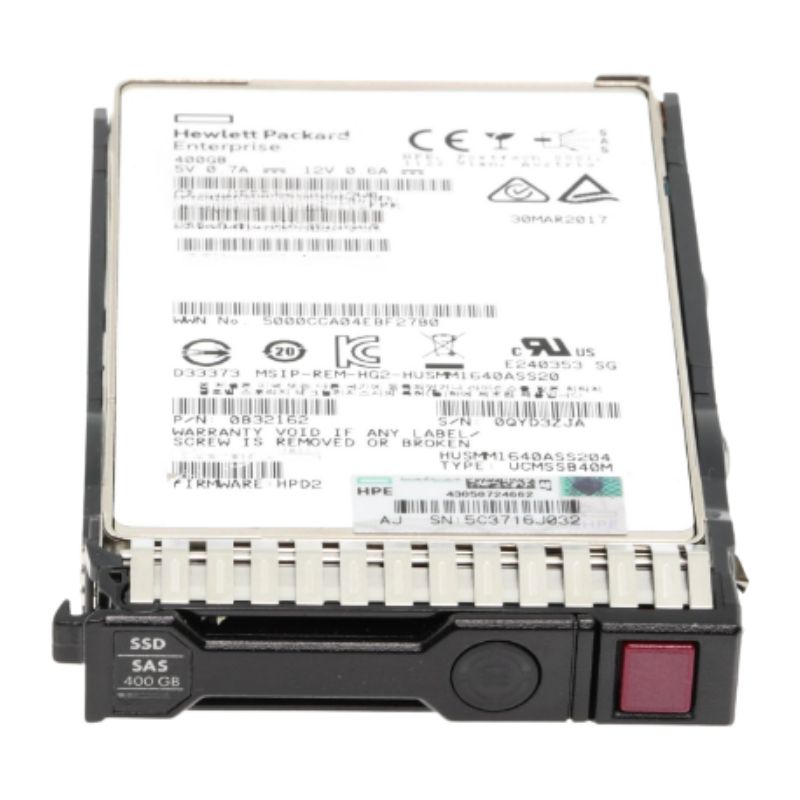


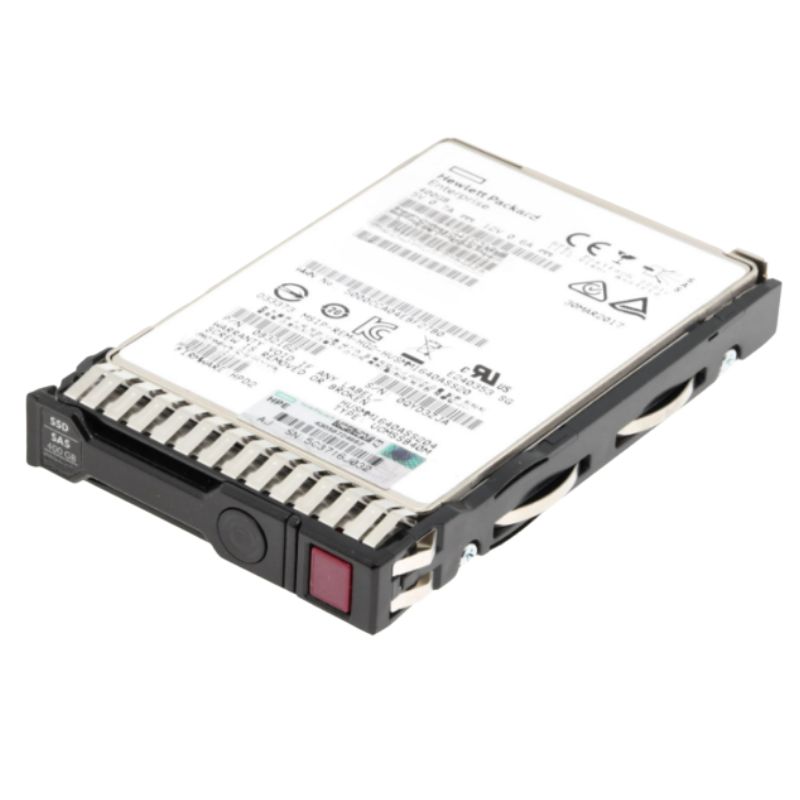
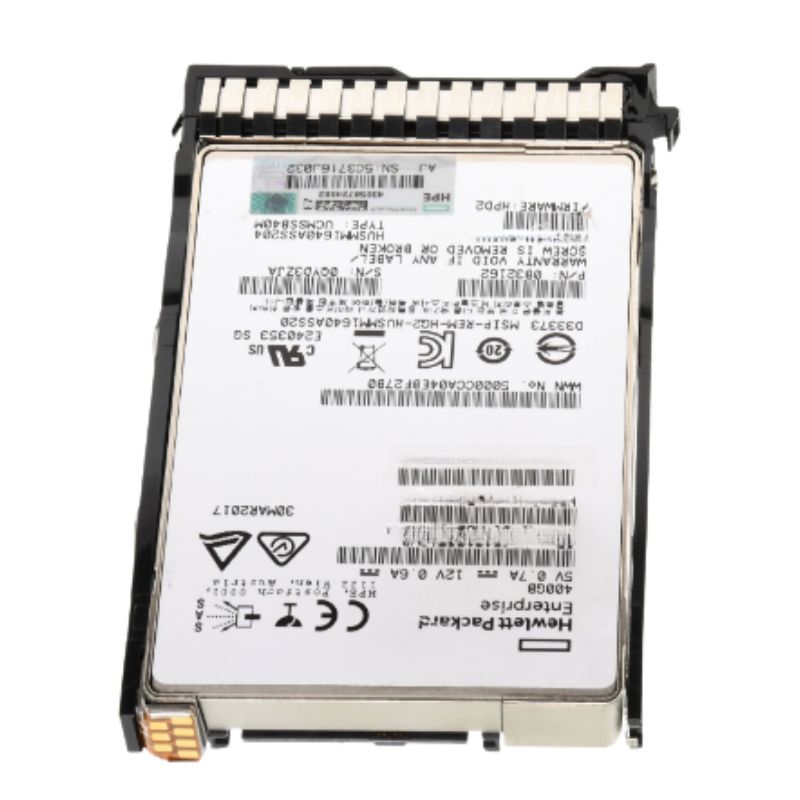
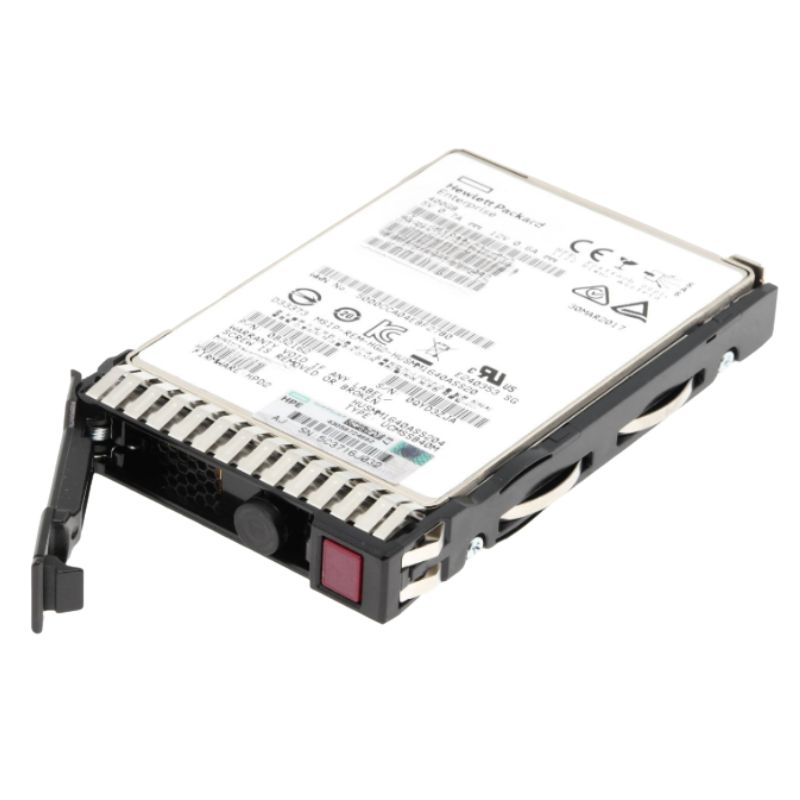
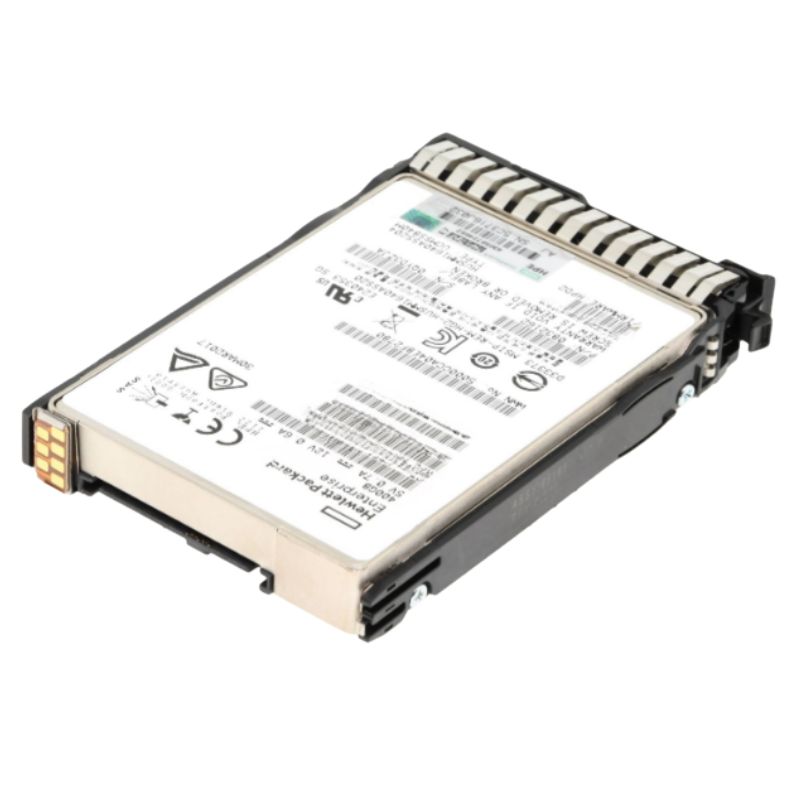
HPE 762259-B21 G8-G10 400GB 2.5 Inch Sff SAS 12GBPS Mixed Use SC Solid State Drive. Excellent Refurbished with 1 year replacement warranty
The HPE 762259-B21 G8-G10 400GB 2.5-Inch SFF SAS 12GBPS Mixed Use SC Solid State Drive is a high-performance enterprise storage solution designed to meet demanding workloads. It is tailored for servers and storage systems, ensuring consistent speed, data reliability, and optimized scalability for business-critical applications.
This HPE SSD ensures durability and consistent uptime for mission-critical systems. Built with advanced error correction, wear leveling, and endurance features, it delivers dependable data protection in enterprise IT environments.
With a storage capacity of 400GB, this enterprise SSD offers balanced performance for both transactional and analytical workloads. It reduces latency, enhances responsiveness, and improves the efficiency of virtualization, cloud computing, and database environments.
The HPE 762259-B21 SSD integrates seamlessly into HPE ProLiant and HPE BladeSystem servers, supporting a wide range of enterprise IT infrastructures. It is fully tested and validated by Hewlett Packard Enterprise, guaranteeing smooth deployment and compatibility.
The HPE 762259-B21 400GB 2.5-inch SFF SAS 12Gbps Mixed Use solid state drive belongs to a category of enterprise-class storage devices engineered for demanding server and datacenter environments. This category emphasizes balanced performance, endurance, and compatibility with HPE ProLiant generations G8 through G10, making these SSDs a core choice for organizations that need predictable I/O, consistent latency, and strong integration with HPE system management tools. When customers search for "HPE 762259-B21", "400GB SAS SSD", "2.5 inch SFF", or "12Gbps mixed use enterprise SSD", they are typically comparing drives on the basis of sustained throughput, mixed read/write workload capability, endurance rating, and compatibility with HPE server platforms. This category page description unpacks those comparison points in detail so purchasing teams, systems architects, and resellers can make informed decisions.
At the heart of this category is a 2.5-inch small form factor (SFF) enterprise SSD that uses the SAS interface operating at 12Gbps. Mixed use drives target environments where both reads and writes occur frequently and the workload profile is neither read-heavy nor write-heavy exclusively. Instead, mixed use SSDs deliver stable performance across heterogeneous workloads typical of virtualized environments, medium-duty databases, boot and application acceleration tasks, and tiered storage designs. Important technical considerations within the category include raw capacity (in this case 400GB), interface speed and protocol (SAS 12Gbps), form factor (2.5" SFF for blade and rack servers), and internal firmware optimizations for mixed workload endurance and quality of service.
The SAS 12Gbps interface provides enterprise-grade features that go beyond raw bandwidth: dual-port connectivity for redundancy and multipath I/O, robust error recovery capabilities, and compatibility with HPE backplanes and RAID controllers used across multiple ProLiant generations. The 2.5-inch SFF footprint makes these drives physically compatible with high-density server enclosures, enabling higher drive counts per chassis, improved thermal characteristics, and easier serviceability. For data centers that prioritize rack density and modular replacement, the 2.5" SAS form factor remains a widely adopted standard.
Mixed use SSDs are tuned to handle a combination of random and sequential I/O patterns, typical of consolidated workloads such as virtual machine hosts, mixed databases, and general-purpose application tiers. Unlike read-optimized or write-optimized enterprise SSDs, mixed use drives attempt to strike a balance between endurance and latency, delivering consistent IOPS while preserving capacity through wear-leveling, error correction, and intelligent over-provisioning. For many IT teams, this balance reduces the need to create separate storage tiers for moderately demanding workloads, enabling consolidation and simplified provisioning.
When evaluating SSDs in this category, buyers focus on several performance metrics: sustained IOPS for both reads and writes at defined block sizes, average and tail latency under mixed I/O, sequential throughput for larger transfer sizes, and performance consistency under full-capacity and high-write conditions. Enterprise SSD categories typically specify endurance in drive writes per day (DWPD) or total bytes written (TBW) over a warranty period. Mixed use drives usually offer endurance levels suited for regular write activity without the premium cost of ultra-high endurance write-heavy SSDs, making them cost-efficient for common datacenter applications.
Quality of Service (QoS) in the enterprise SSD category refers to the predictability of response times—particularly tail latency at the 99th percentile. For mission-critical workloads, occasional latency spikes can degrade application performance; therefore, drives in this category invest firmware and controller resources into minimizing variance in latency. Consistency is also influenced by the controller architecture, NAND type and its management, as well as the presence of features such as power-loss protection and capacitors that help preserve in-flight data during abrupt power events.
One of the key selling points for HPE-branded part numbers is validated compatibility with HPE ProLiant server platforms. The HPE 762259-B21 designation signals integration with HPE’s firmware, management agents, and hardware interconnects across multiple server generations, often from G8 through G10. Compatible firmware and device drivers ensure that health monitoring, predictive failure analytics, and firmware update channels operate smoothly within HPE OneView or the iLO management ecosystem. For purchasing teams, this compatibility reduces deployment risk and shortens validation cycles compared to commodity SSDs.
HPE servers rely on a tight coupling between storage firmware and host management software. Drives in this category typically participate in SMART telemetry reporting through HPE tools, allowing administrators to view attributes such as remaining life, temperature, and error rates centrally. Firmware updates delivered via HPE firmware repositories ensure that drives receive tested enhancements or fixes in lockstep with server platform updates, which is an operational advantage for enterprises that maintain strict change control and uptime SLAs.
Mixed use 400GB SAS SSDs are well suited for a range of enterprise use cases that require a balance between performance and cost. Typical deployments include boot and OS volumes for hypervisor hosts, smaller database shards that require low latency and moderate endurance, cache or tiered storage layers in hybrid arrays, VDI golden images, and log or index storage for search applications. Their predictable performance and HPE integration also make them a common choice for remote office/branch office servers and dense compute nodes where administrators want a single drive type to cover multiple roles.
Virtualized environments benefit from the consistent random IOPS and low latency of mixed use SSDs. When multiple VMs share a host, workload patterns become unpredictable and occasionally bursty; mixed use drives help smooth those bursts while providing enough endurance for regular writes associated with VM snapshots, swap files, and small database transactions. This reduces I/O contention and improves overall VM density per host without resorting immediately to a higher cost write-intensive SSD tier.
In hybrid storage architectures, mixed use SAS SSDs frequently function as a caching or hot tier layer, accelerating reads and writes for frequently accessed blocks while bulk storage remains on higher-capacity HDDs. Because mixed use drives offer a combination of write endurance and read performance, they can reliably absorb cache writes and flush patterns without premature wear. This enables arrays and software-managed tiering solutions to deliver the responsiveness of flash for hot data while controlling costs with magnetic storage for colder data.
Enterprise-class SSDs are evaluated on reliability metrics including Mean Time Between Failures (MTBF), uncorrectable bit error rate (UBER), and endurance ratings. Mixed use drives aim to provide a conservative endurance profile that meets the needs of many enterprise workloads without the price premium of specialized endurance products. Data integrity features such as end-to-end data path protection, robust ECC algorithms, and optional power-loss protection are important differentiators in this category. For mission-critical workloads, the inclusion of hardware-backed power-loss safeguards and advanced error management reduces the risk of silent data corruption and increases confidence in data recoverability.
Endurance planning for mixed use SSDs should account for workload characteristics and projected growth. IT teams should map estimated write amplification and daily write volumes to the drive’s specified DWPD or TBW to calculate expected service life. In many deployments, provisioning a modest spare capacity, ensuring balanced write distribution across drives, and leveraging HPE monitoring tools to track health attributes will ensure predictable retirement planning and prevent surprise replacements during peak business periods.


 Contact Us
 Information
 Catalog
 Solid State Drives (SSD)
 Network Switches
 Hard Disk Drives
 HBA & Controllers
 PC & Servers
 PC & Server Memory
 CPU & Processors
 Network Routers
 Power Supplies
 Tape Drives & Libraries
 Network Devices
 Computer & Network Cables