(7% discount is applied at checkout)
Cart is empty
Your go-to destination for cutting-edge server products


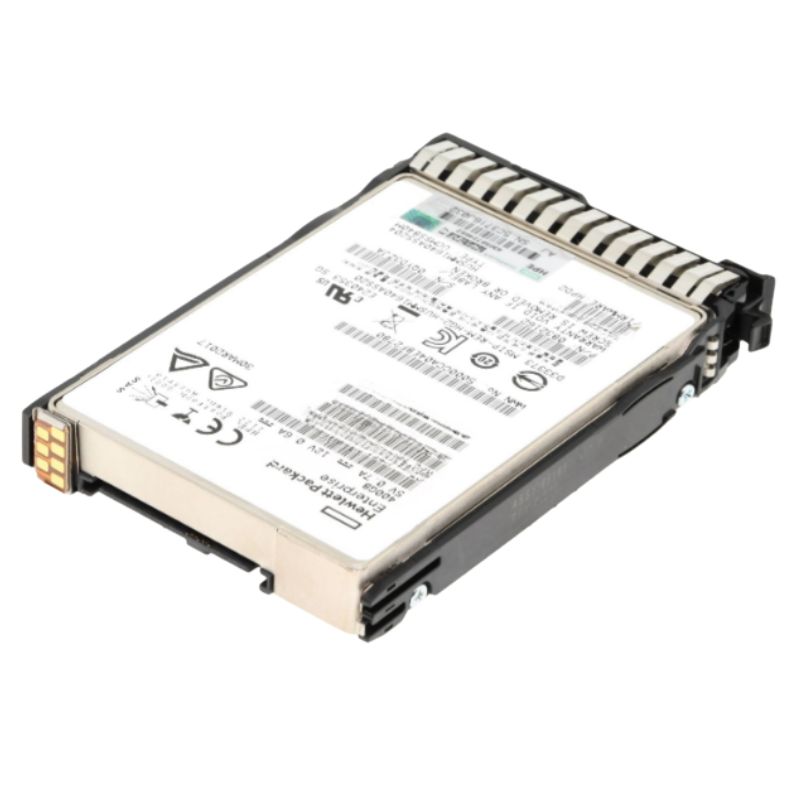
HPE 762268-B21 400GB 3.5 Inch LFF SAS 12GBPS Mixed-Use Digitally Signed Firmware SSD. Excellent Refurbished with 1 Year Replacement Warranty
The HPE 762268-B21 Solid State Drive is a dependable enterprise-grade storage component designed to handle mission-critical workloads. With a storage capacity of 400GB and a SAS 12GBPS interface, this mixed-use (MU) SSD balances performance and endurance, making it suitable for diverse business environments.
Built with digitally signed firmware, the HPE 762268-B21 ensures data integrity and prevents unauthorized access to the drive’s core system. This adds an extra layer of protection for sensitive enterprise data.
This 400GB SAS 12GBPS drive delivers consistent speed for both read and write operations, making it a versatile choice for applications demanding rapid access to data. It supports workloads such as virtualization, databases, and real-time analytics.
The 3.5-inch LFF design ensures compatibility with various HPE storage systems and servers. Its standardized form makes integration into enterprise infrastructures seamless and efficient.
The HPE 762268-B21 400GB 3.5-inch LFF SAS 12Gbps Mixed-Use (MU) DS SSD sits squarely in the enterprise-class storage category built for demanding data center workloads. This description section explores the drive's technical strengths, where it fits in modern storage architectures, the benefits of its mixed-use endurance profile, and the advantages of HPE’s digitally signed firmware (DS). The product name itself is keyword-rich and immediately signals the most important attributes customers search for: HPE brand, 400GB capacity, 3.5-inch large form factor (LFF), SAS 12Gbps interface, mixed-use performance class, and digitally signed firmware. Highlighting these attributes repeatedly but naturally throughout the content helps search engines understand the page focus and improves relevance for buyers seeking reliable, enterprise SSDs for servers and storage enclosures.
At the core of the HPE 762268-B21 is an enterprise-graded 400GB capacity configured on a 3.5-inch LFF platform with a 12Gbps SAS interface. The SAS 12Gbps connection ensures backward compatibility with 6Gbps and provides high-throughput, low-latency access suitable for transactional databases, virtualization, boot and logging volumes, and mixed read/write workloads. The mixed-use (MU) classification designates an optimal balance of endurance and cost for environments that see a blend of random writes and reads rather than write-heavy analytics or read-heavy archival storage. Digitally Signed firmware (DS) adds a layer of device integrity by ensuring firmware authenticity, protecting against tampering and unauthorized firmware updates — an increasingly important attribute in regulated and security-sensitive deployments.
The 3.5-inch LFF form factor provides mechanical compatibility with many server and storage chassis that prioritize density for large drives while retaining enterprise-grade cooling and serviceability. The SAS 12Gbps interface signals the drive is intended for professional deployments where sustained throughput and multi-lane performance are required. Compared to SATA alternatives, SAS provides better command queuing, full-duplex operation when supported, and professional-grade error handling, making the HPE 762268-B21 a preferred choice for mission-critical applications.
While 400GB may appear modest relative to commodity consumer drives, within enterprise mixed-use SSDs it strikes a balance between cost per GB and the endurance headroom necessary for consistent performance. The mixed-use designation indicates this drive is tuned to sustain regular write activity without the premium endurance rating of heavy-write (DWPD) drives, making it an economical choice for virtual machine hosts, application servers, and small to medium database instances where predictable latency and IOPS matter more than maximum capacity.
Enterprise buyers prioritize endurance metrics because sustained throughput must be maintained without unexpected performance degradation. The HPE 762268-B21’s MU class typically provides a guaranteed level of write endurance measured in drive writes per day (DWPD) and a reliable mean time between failures (MTBF) rating. Alongside endurance, quality of service (QoS) characteristics such as latency consistency under load and internal garbage collection algorithms are crucial. HPE-certified SSDs often ship with firmware optimized for predictable behavior in HPE server ecosystems, which reduces variability and simplifies capacity planning and performance tuning for data center operators.
Digitally Signed firmware is one of the defining features of the HPE 762268-B21. DS ensures that the firmware installed on the SSD is cryptographically signed and verifiable, preventing unauthorized or corrupted firmware from running on the device. In enterprise contexts this mitigates attack surfaces related to firmware tampering, supports compliance requirements, and increases trust when deploying at scale. For managed service providers and regulated industries, DS helps meet auditability and security posture expectations by ensuring that all drives in an estate run approved firmware versions only.
Digitally signed firmware also has a supply chain benefit. Organizations procuring drives for multi-site deployments gain confidence that every unit arrives with authentic firmware; this reduces the need for additional mitigations and decreases the operational overhead associated with firmware verification. Compliance frameworks that emphasize secure configurations and integrity checks may find the DS attribute helpful when documenting control implementations for storage hardware.
The HPE 762268-B21 is particularly suited to several common enterprise workloads. First, virtualization hosts running many small VMs require low-latency random I/O and predictable IOPS, attributes aligned with MU-class SAS SSDs. Second, database systems that combine moderate transactional writes with frequent reads will benefit from SAS 12Gbps throughput and low access latency. Third, boot volumes and OS/system partitions in rack servers benefit from the drive’s resilience and fast access times, reducing server boot and recovery windows. Fourth, log aggregation stores where durability and consistent write performance are needed can leverage the mixed-use endurance to keep costs in check while preserving reliability.
In hybrid storage architectures, where SSDs provide hot-tier performance while HDDs act as capacity tiers, the HPE 762268-B21 serves as an ideal hot-tier or cache device. Its 3.5-inch form factor allows data center architectures to consolidate mixed storage devices in the same chassis more easily than 2.5-inch-only designs, and the SAS interface integrates seamlessly with enterprise RAID controllers and storage arrays. Organizations can design policies that push frequently accessed blocks to the MU SSD tier, accelerating application response times without overprovisioning more expensive high-endurance drives.
Virtual Desktop Infrastructure (VDI) deployments are notorious for I/O storms as many endpoints boot or run update tasks simultaneously. The HPE 762268-B21 delivers the IOPS density and low latency needed to minimize the user-perceived lag during peak events. When placed in a properly architected storage pool, mixed-use SSDs like this one provide a cost-effective way to mitigate performance cliffs during boot storms or patching windows while extending the life of the overall storage estate.
As an HPE-branded SKU, the 762268-B21 is designed to integrate smoothly with HPE servers, storage controllers, and management utilities. Integration extends beyond mechanical fit: HPE-tested firmware, drive health reporting, and compatibility matrices ensure predictable behavior when the drive is mounted in ProLiant servers, Synergy chassis, or HPE storage enclosures. Using HPE-certified drives also simplifies support engagements, as vendor support processes will recognize the SKU and its firmware attributes, reducing troubleshooting friction and minimizing mean time to repair in production environments.
Because the drive uses digitally signed firmware, administrators should follow vendor-recommended update paths using HPE management tools. Firmware updates can deliver performance improvements, bug fixes, and security patches; however, in enterprise change control processes, updates must be applied methodically to avoid service interruptions. HPE management suites typically provide staged firmware rollouts and reporting features to inventory firmware versions and certify compliance across server fleets.
Enterprise-grade drives expose monitoring metrics that integrate with data center telemetry. SMART attributes, power-on hours, media error counts, and remaining life estimates are common signals administrators use to plan replacements and prevent unplanned downtime. The HPE 762268-B21 provides these diagnostic outputs, which can be consumed by HPE InfoSight, iLO, or third-party monitoring systems, enabling predictive maintenance strategies and extending the reliability of storage deployments.
While synthetic benchmark numbers provide a baseline for peak IOPS and throughput, real-world behavior — especially under mixed-use workloads — determines the actual value of an SSD in production. The HPE 762268-B21 is tuned to deliver consistent latency under realistic enterprise loads. When deployed in RAID configurations or within RAID offload-capable controllers, the drive’s internal characteristics such as write amplification, background garbage collection, and power-loss protection mechanisms interact with controller behavior to shape performance. Purchasing decisions should therefore consider both isolated drive metrics and system-level benchmarks that reflect the intended workload.
Using SSDs in RAID introduces considerations that differ from HDD deployments. Rebuild times, rebuild impact on performance, and controller caching behavior all influence the optimal RAID level choice. For mixed-use SSDs the trade-off often balances faster rebuilds against the cost and overhead of higher redundancy. HPE’s ecosystem supports a range of RAID levels and offers controller-level features to accelerate rebuilds and minimize performance penalties during degraded states. Proper planning around RAID stripe sizes, hot spares, and firmware consistency is essential to maintain predictable behavior.
Storage buyers commonly choose between read-optimized, mixed-use, and write-intensive SSDs depending on workload characteristics. Read-optimized drives maximize read throughput and are ideal for read-heavy caches or content delivery, while write-intensive drives invest in high endurance for logging or heavy analytics. The HPE 762268-B21’s MU profile places it in the middle: higher endurance than read-optimized devices but lower cost than write-intensive models. For teams seeking balanced performance and cost-efficiency across a variety of production workloads, MU-class SSDs often represent the best value.
When evaluating SSDs, raw cost-per-gigabyte is only one piece of the puzzle. Total cost of ownership (TCO) accounts for performance density, power consumption, cooling requirements, provisioning flexibility, and administrative overhead. The 3.5-inch LFF form factor sometimes offers advantages in rack-level capacity planning due to chassis compatibility, and SAS interface robustness can lower operational risk. For enterprise buyers, the predictable behavior and HPE certification that accompanies the 762268-B21 can reduce support costs and the risk of unscheduled downtime, improving long-term TCO even if per-GB pricing is not the lowest.
Deploying the HPE 762268-B21 effectively requires alignment with data protection strategies, cooling and power planning, and firmware lifecycle management. Install drives in chassis positions flagged for high-performance tiers when possible, and segregate mixed-use SSDs from write-intensive devices to avoid cross-tier performance interference. Make sure RAID controllers have the latest certified drivers and firmware, and document firmware versions to ensure consistency across arrays. Finally, enable monitoring for key SMART attributes and configure automated alerts for early signs of wear or failure.
Enterprise SSDs operate within strict environmental envelopes. Maintaining recommended inlet temperatures and airflow is essential to prevent thermal throttling. Because SSDs can exhibit performance throttling when temperatures rise, ensure server cooling and airflow pathways are unobstructed and that drive bays are not overloaded with heterogeneous devices that could create hot spots. In addition, power-loss protection mechanisms should be validated against the chosen controller and power architecture to ensure data integrity during unexpected events.
Even with reliable enterprise SSDs, data protection remains a cornerstone of resilient architectures. Implement frequent backups, test failover plans, and consider replication policies for critical datasets. The HPE 762268-B21 can play a role in performance-sensitive tiers while archival and long-term retention can rely on lower-cost HDD tiers or object storage solutions. Lifecycle policies that migrate cold data off SSD tiers reduce write pressure and extend drive life, preserving the MU SSDs for workloads that truly need their performance characteristics.


 Contact Us
 Information
 Catalog
 Solid State Drives (SSD)
 Network Switches
 Hard Disk Drives
 HBA & Controllers
 PC & Servers
 PC & Server Memory
 CPU & Processors
 Network Routers
 Power Supplies
 Tape Drives & Libraries
 Network Devices
 Computer & Network Cables