(7% discount is applied at checkout)
Cart is empty
Your go-to destination for cutting-edge server products
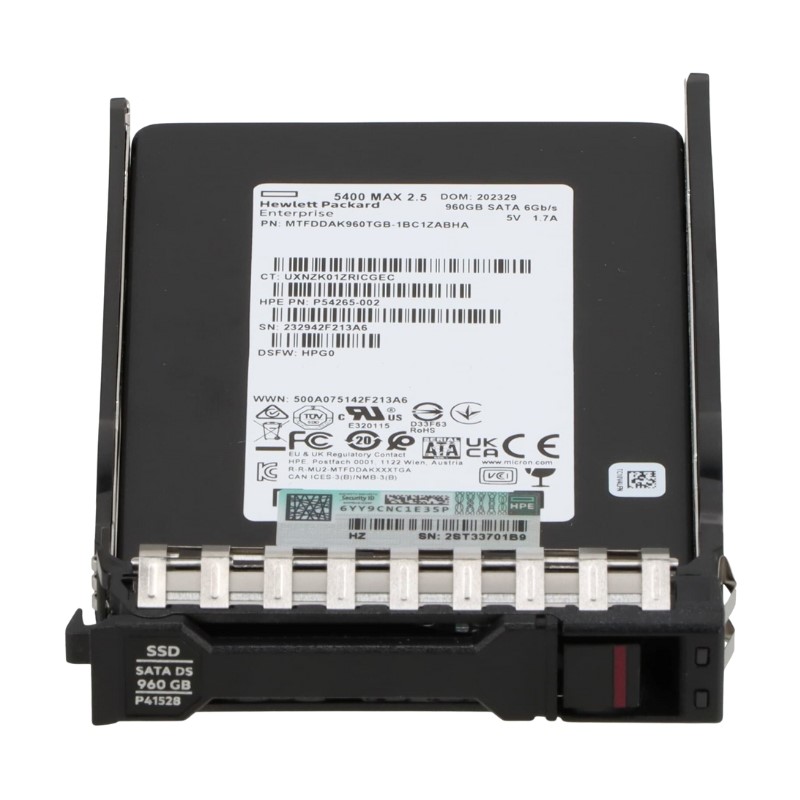


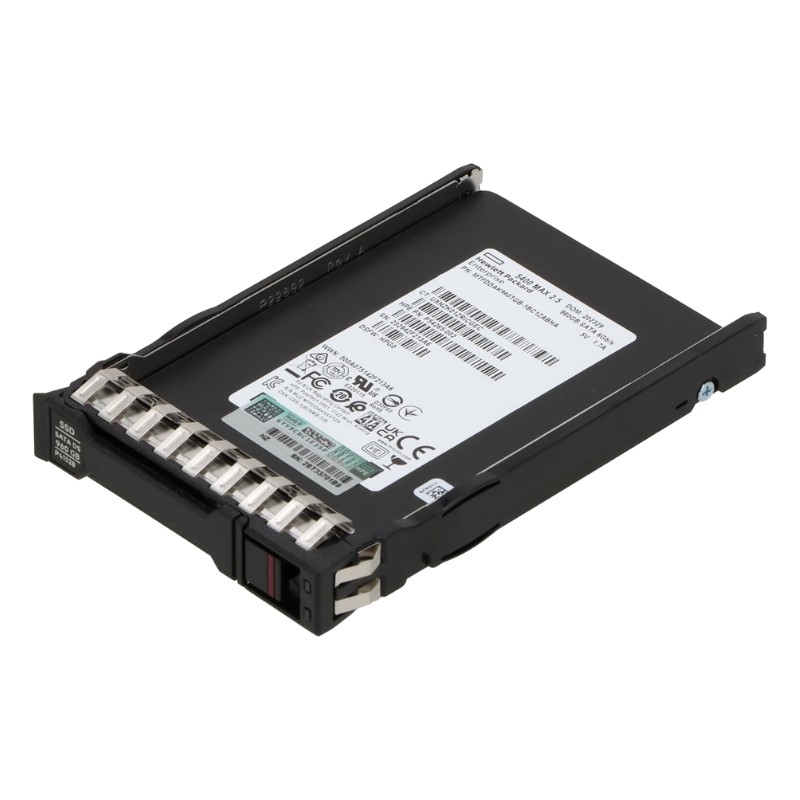
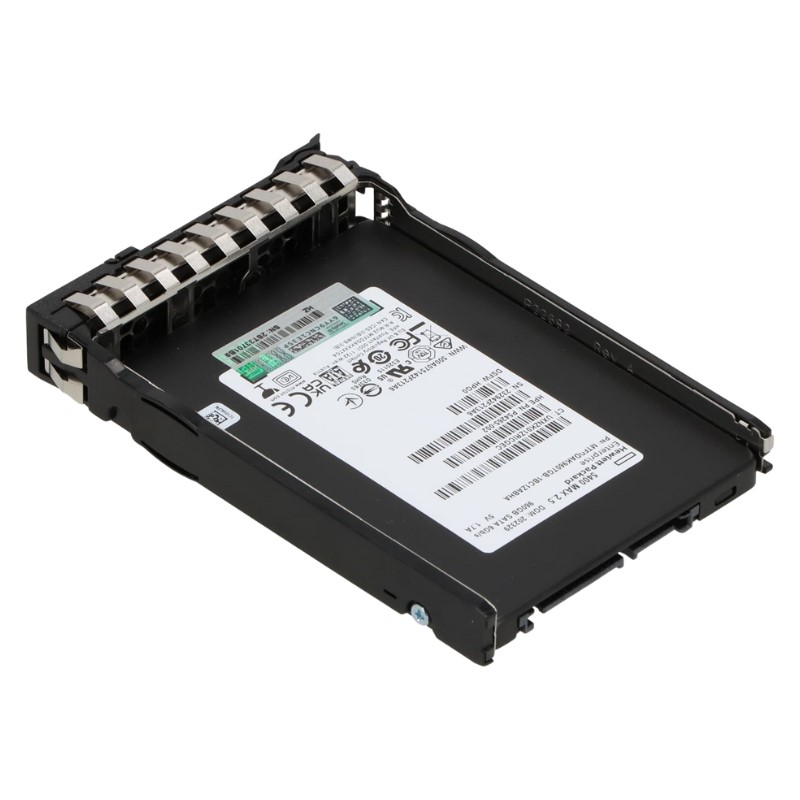
HPE 817110-001 960GB SATA 6GBPS MU Small Form Factor PLP SC Solid-State Drive. Factory-Sealed New in Original Box (FSB) with 3 Years Warranty
The HPE 817110-001 960GB SATA 6GBPS Solid-State Drive is a high-endurance storage solution engineered for enterprise workloads that demand consistent performance and exceptional data reliability. Designed for mixed-use environments, this SSD combines high speed, durability, and power-loss protection to ensure stable operation under heavy workloads.
Designed for enterprise applications, the HPE 817110-001 SSD provides an ideal balance of read and write operations for transactional workloads. Its advanced architecture and Power Loss Protection (PLP) ensure dependable data retention even during abrupt power interruptions.
This HPE enterprise-class SSD delivers superior speed and endurance for applications requiring constant uptime and dependable I/O performance. The mixed-use design ensures balanced efficiency for database management, virtualization, and high-performance computing environments.
The HPE 817110-001 SSD integrates seamlessly into a wide range of HPE ProLiant servers and storage arrays. It supports various mixed workloads where both read and write performance are equally important.
One of the key features of this SSD is its built-in Power-Loss Protection (PLP), which safeguards critical data during unexpected power outages. This feature ensures that all pending write operations are completed, maintaining full data integrity and system stability.
Compact yet durable, the 2.5-inch Small Form Factor chassis allows easy installation and efficient airflow in rack-mounted server systems. Its solid build quality and heat management enable continuous, stable operation even in demanding environments.
The HPE 817110-001 960GB SATA 6Gbps MU Small Form Factor PLP SC Solid-State Drive sits within a class of enterprise-focused mixed-use SATA solid-state drives designed to deliver a balanced combination of performance, endurance, and cost efficiency for HPE servers and storage arrays. This category targets data center administrators, systems integrators, and IT procurement teams who need solid-state reliability in a small form factor for mainstream enterprise workloads. The drive's 960 gigabyte capacity positions it as a versatile option for operating system volumes, virtual machine storage, database caching tiers, and application acceleration layers where predictable low latency and consistent throughput are essential. In category terms, this SKU represents a practical middle ground between high-end write-intensive SSDs and lower cost read-optimized models, giving organizations an attractive price-to-performance ratio while preserving enterprise features such as power loss protection (PLP), S.M.A.R.T. telemetry, and vendor firmware support.
This mixed-use small form factor (SFF) drive is optimized for environments that mix reads and writes across many small, random I/O operations typical of virtualization, database middleware, mail servers, and general application servers. It is equally suitable for hyperconverged infrastructures where each node requires reliable local storage, and for tiered storage architectures where the drive acts as a mid-tier cache between ultra-fast NVMe layers and high capacity HDD tiers. Organizations deploying HPE ProLiant servers, HPE storage enclosures, or certified third-party platforms will find the drive useful for boot volumes, VM density increases, and as an acceleration medium for software defined storage solutions. The SATA 6Gbps interface ensures broad compatibility with legacy backplanes while delivering the throughput needed for many mixed workloads.
Reliability is central to this category. The presence of PLP, or power loss protection, helps safeguard in-flight data and metadata during unexpected power events, minimizing the risk of filesystem corruption and improving recovery times after outages. In addition, enterprise SSDs in this category typically include rigorous wear leveling, error correcting code (ECC), and background media management to maintain performance and endurance across the drive's life. Firmware designed for enterprise environments prioritizes consistent latency and predictable behavior under sustained load, making these drives preferable to consumer parts in production settings. Many drives in this family also provide S.M.A.R.T. attributes and vendor health reporting which integrates with HPE management tools to surface predictive failure indicators and simplify lifecycle operations.
Purchasing within the HPE 817110-001 category typically requires attention to compatibility with HPE server generations and backplane configurations. Administrators should verify drive firmware compatibility and server firmware revisions to ensure full functionality, including support for TRIM, S.M.A.R.T. reporting, and any HPE specific health indicators. The SATA 6Gbps interface provides wide interoperability with existing controllers and RAID cards, but mixed populations of SATA and SAS drives or the introduction of SATA drives onto SAS backplanes may require controller settings adjustments or firmware updates. For seamless deployment, certified HPE part numbers and vendor firmware can reduce cross-compatibility surprises and simplify support escalation when needed.
Mixed-use SATA drives in this class are engineered to deliver consistent random I/O performance while maintaining acceptable sequential throughput for larger file transfers. Compared with NVMe drives, SATA 6Gbps SSDs have lower peak bandwidth but can still provide significant gains over mechanical drives thanks to near-zero seek times and higher sustained IOPS. The 960GB capacity offers favorable internal parallelism allowing the drive to maintain steady I/O under concurrent workloads. Importantly, enterprise mixed-use drives are tuned to avoid sharp performance degradation during sustained writes, delivering predictable latency curves that are critical to application SLAs. For designers planning storage tiers, these drives are often specified where cost per gigabyte and predictable behavior are more important than raw top-end throughput.
Endurance planning for mixed-use drives should be proactive and based on application I/O profiles. Unlike consumer SSDs, enterprise mixed-use drives have endurance ratings that reflect daily enterprise workloads and include provisioning for wear leveling and spare area to extend usable life. IT teams should monitor write amplification, provision spare ratios, and plan capacity expansion to avoid exceeding endurance budgets. The 960 gigabyte model provides a generous capacity cushion for many use cases, allowing administrators to manage write cycles across a larger address space and thereby reduce per-cell wear. Lifecycle planning also benefits from firmware updates and drive retire policies that align with vendor recommendations.
Architects commonly position mixed-use SATA SSDs like the HPE 817110-001 within a multi-tier storage strategy. One pattern places NVMe or high-performance flash as the top cache tier for extremely latency-sensitive operations, mixed-use SATA drives as a mid-tier for general application storage and high VM density, and HDDs for bulk capacity and archival. Another pattern uses these SSDs as local acceleration in hyperconverged nodes, enabling higher consolidation ratios without imposing the cost of all-NVMe configurations. The drives can be configured in RAID arrays to provide redundancy while preserving throughput and reducing rebuild times compared to HDD arrays. When designing arrays, balancing RAID level, stripe width, and rebuild considerations ensures the right tradeoff between capacity efficiency and resiliency.
Selecting the correct RAID level is critical when using mixed-use SSDs. RAID 1 or RAID 10 may be preferred for latency-sensitive OS and database volumes to minimize write amplification from parity calculations. For larger application volumes where capacity efficiency matters, RAID 5 or RAID 6 provides a compromise but requires careful attention to rebuild performance. SSDs, due to their high throughput, reduce the time required for rebuilds, but rebuilds can still be resource intensive and impact application performance. HPE controllers and software RAID implementations incorporate features to throttle rebuilds and reschedule operations to maintain serviceability during maintenance windows. Administrators should test rebuild scenarios and account for worst-case rebuild times in their recovery plans.
From a total cost of ownership perspective, mixed-use SFF SSDs often deliver lower operational costs compared to large arrays of HDDs. Reduced power draw, decreased cooling requirements, and higher density mean less infrastructure overhead per IOPS delivered. Upfront cost per gigabyte may be higher than HDDs, but when factoring in performance gains, lower management overhead, and the avoidance of costly downtime, the effective TCO often favors an SSD-centric mid-tier. Procurement teams should model costs across expected refresh cycles, factoring in endurance, warranty coverage, and any potential support premiums for vendor certified SKUs.


 Contact Us
 Information
 Catalog
 Solid State Drives (SSD)
 Network Switches
 Hard Disk Drives
 HBA & Controllers
 PC & Servers
 PC & Server Memory
 CPU & Processors
 Network Routers
 Power Supplies
 Tape Drives & Libraries
 Network Devices
 Computer & Network Cables