(7% discount is applied at checkout)
Cart is empty
Your go-to destination for cutting-edge server products
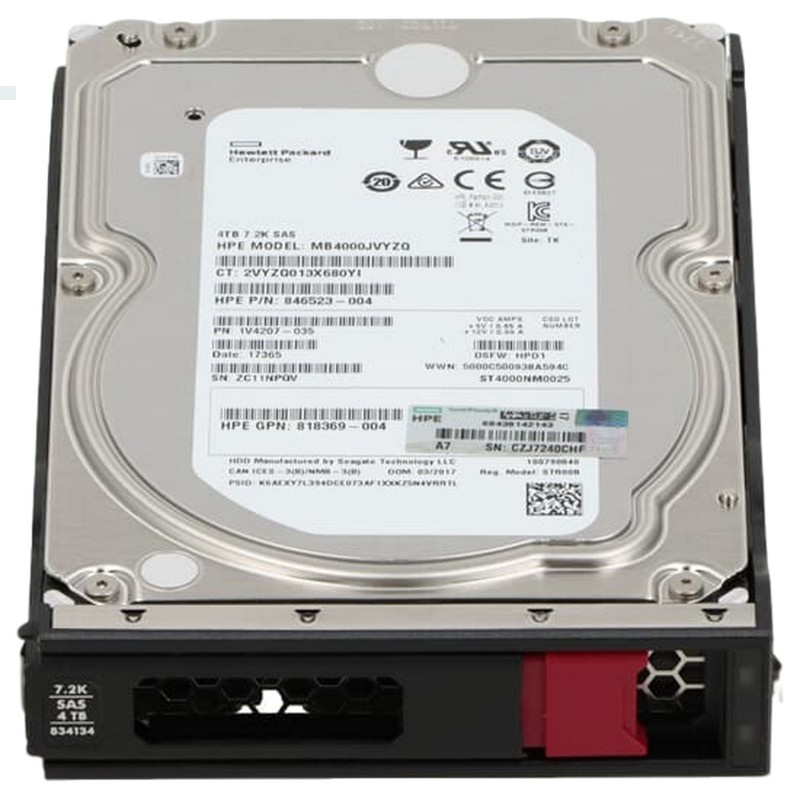


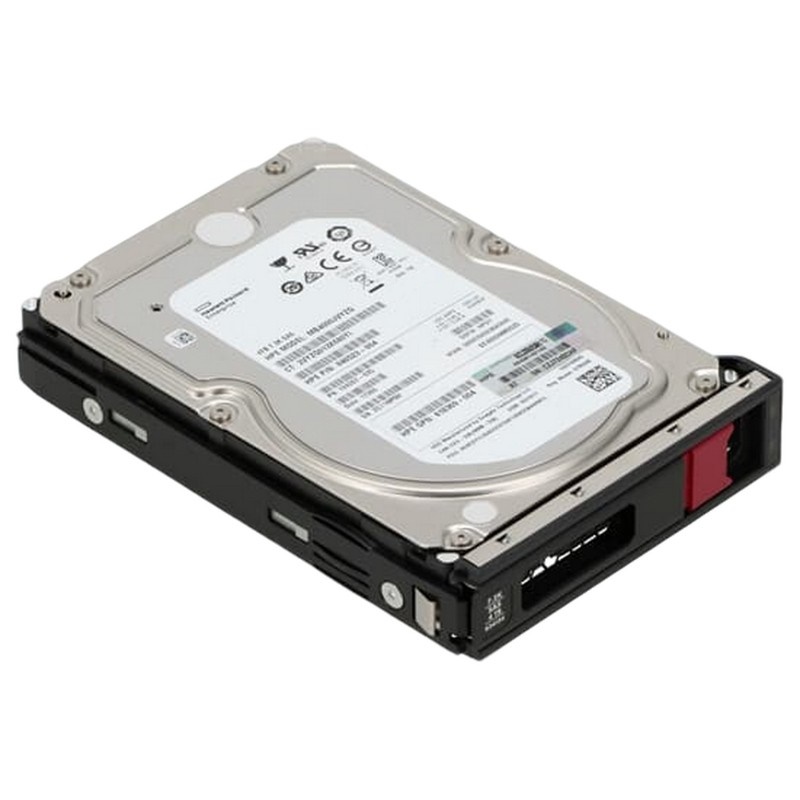
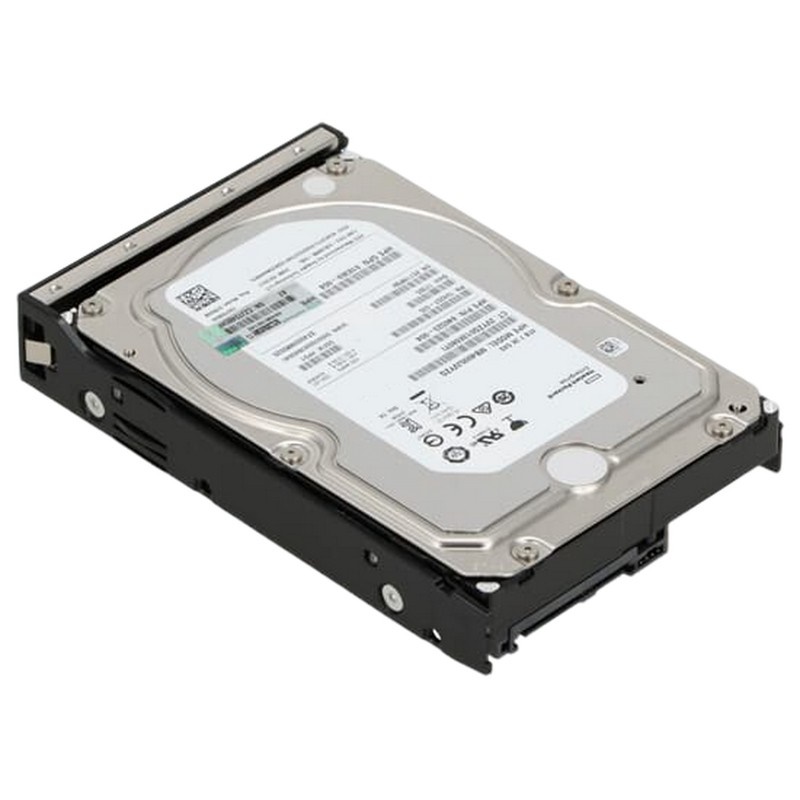
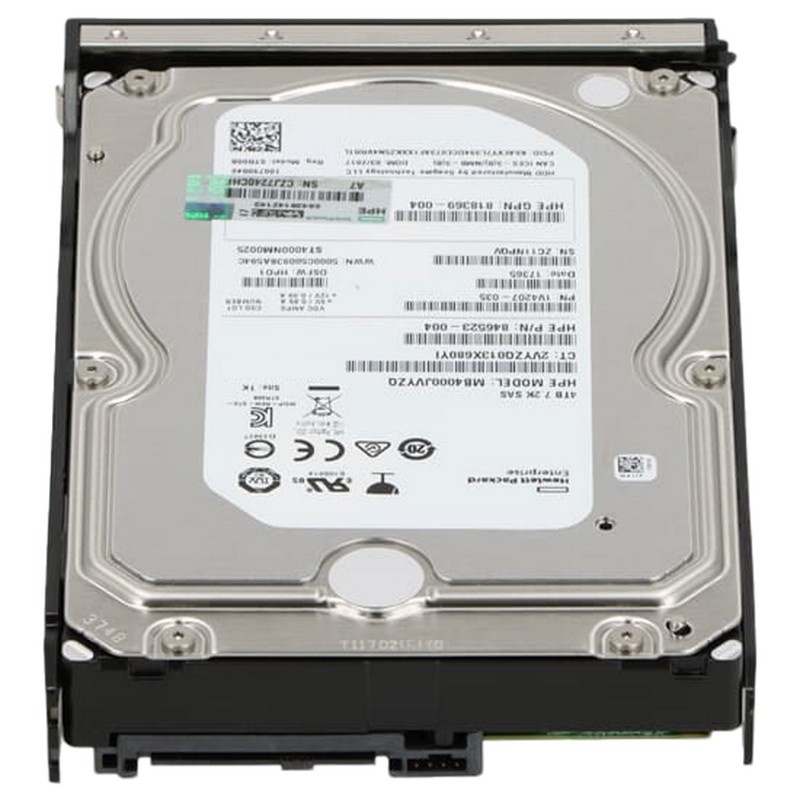
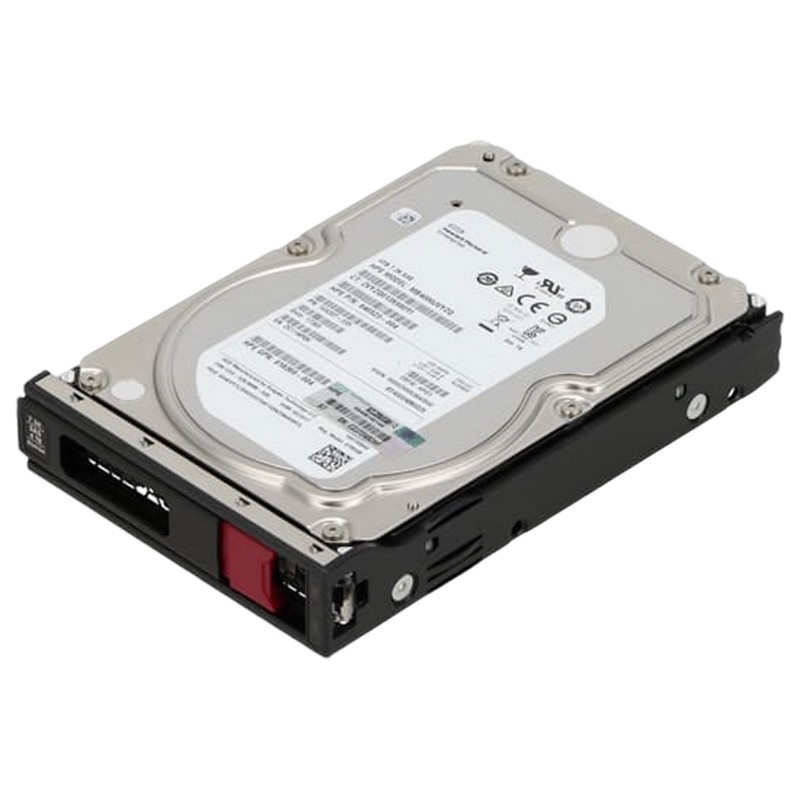
HPE 868101-B21 4TB SAS 12GBPS 7.2K RPM Hot Pluggable 3.5-inch Midline Internal Hard Disk Drive. Excellent Refurbished with 1 year replacement warranty
This overview provides key specifications for a robust, high-capacity data storage solution designed for enterprise and server environments.
HPE 868101-B21 represents a class of Midline internal hard disk drives engineered for balance — offering large-capacity storage with reliable rotational media performance for archival, backup, and cold-to-warm tier applications. Designed to operate at 7,200 revolutions per minute and to interface over 12Gb/s SAS, this 3.5-inch drive provides a sensible mix of throughput, capacity, and enterprise features that make it attractive for storage arrays, tower and rack servers, and nearline storage appliances.
Delivering steady sequential read and write throughput, the 4TB Midline drive excels in streaming workloads and large-block transfers common to backup/restore operations, media streaming, and bulk data ingestion. While not competing with high-RPM or NVMe devices on random I/O, these drives provide predictable performance for cold and warm datasets where cost per gigabyte matters more than IOPS.
Built with enterprise-class components and qualified by HPE for use in HPE storage systems and ProLiant servers, the 868101-B21 features firmware tuned for RAID environments and multi-drive enclosures. Error recovery controls, stable rotational mechanics, and vibration tolerance are part of its design emphasis, enabling long-term reliability in dense drive populations.
Designed to be hot pluggable and to fit a standard 3.5-inch drive bay, the HPE 4TB Midline drive is compatible with many HPE servers and storage arrays when used with the correct HPE carrier/tray and firmware set. Integration into chassis backplanes and RAID controllers is simplified by the 868101-B21 SAS 12Gb/s interface that supports wide compatibility and backward interoperability with 6Gb/s SAS controllers.
HPE-qualified firmware ensures predictable behavior within HPE systems; administrators should verify vendor compatibility matrices and firmware versions prior to large-scale deployment. Proper firmware alignment can improve drive longevity, optimize rebuild times, and reduce the risk of erroneously dropping healthy drives in vibration-prone enclosures.
The mechanical assembly of a 3.5-inch midline disk is engineered for effective thermal transfer and consistent operation across typical datacenter ambient ranges. Stable airflow patterns within server racks and properly configured cooling policies are essential to keep drive temperatures within manufacturer-specified limits, which supports longevity and reduces the risk of thermal-related error rates.
Enterprise midline drives include design elements to mitigate the effects of chassis vibration and shock. These design elements are particularly important in high-density enclosures or clustered deployments where multiple drives operate closely together. Selecting drive models rated for multi-drive vibration environments helps ensure fewer read/write interruptions and sustained reliability.
When using the 868101-B21 4TB 7.2K Midline drives in RAID arrays, administrators commonly select RAID levels that balance capacity efficiency and redundancy, such as RAID 6 or RAID 10 depending on performance and fault-tolerance needs. Because rebuilds of large-capacity HDDs can be lengthy, choosing a RAID configuration and rebuild policy that minimizes exposure during rebuild windows is essential.
Proactive drive monitoring using S.M.A.R.T. attributes, vendor diagnostic tools, and storage system alerts enables administrators to detect degradation early. Predictive failure analysis and scheduled replacement strategies help maintain high availability. Regularly scheduled scrubs and consistency checks within the storage system further reduce the risk of silent data corruption.
While spinning media consumes more rack power and generates more heat than solid-state solutions on a per-GB basis in some configurations, the trade-off is often worthwhile for datasets that do not require ultra-low latency. Effective density planning includes calculating watts per terabyte, cooling budget, and the physical drive bay availability across the server and storage fleet.
Implementing staged replacement and drive rotation practices can smooth capacity upgrades and limit unplanned downtime. Drives approaching their recommended operational bounds should be scheduled for replacement during maintenance windows. Lifecycle management also includes firmware updates and compatibility checks to avoid introducing regressions that could impact drive behavior in arrays.
Because midline drives serve as a sensible nearline tier, coupling them with snapshot and backup strategies ensures that cold data remains available without sacrificing recoverability. Automated tiering can move hot datasets to higher-performance SSD tiers while retaining colder blocks on midline disks.
Enterprises often require data-at-rest protection to meet compliance mandates. While not all midline HDDs include built-in self-encryption, many storage arrays and HPE server platforms support encryption at the controller or array level. Where data security is required, choose deployment approaches that integrate encryption key management and support regulatory frameworks.
When decommissioning drives, follow secure erase and sanitization practices that meet organizational policy and legal standards. Wiping drives using certified utilities or employing cryptographic erase (when using self-encrypting hardware) reduces the risk of data leakage when hardware is retired or repurposed.
Compared to 10K and 15K drives, 7.2K midline disks trade raw IOPS for higher areal density and lower power consumption per terabyte. For random I/O-intensive applications like high-transaction databases, higher-RPM drives or SSDs remain preferable; however, for sequential or capacity-oriented workloads the midline drive is more economical.
SSDs provide dramatically higher random IOPS and lower latencies but at a much higher cost per gigabyte. Hybrid architectures that combine SSD tiers for hot data and midline HDD tiers for archival data are a common pattern to achieve performance where needed while keeping long-term storage costs under control.
Where sustainability and operational cost are priorities, plan for energy-aware configurations. Power capping, intelligent cooling policies, and automated spin-down (when appropriate for the workload) help reduce the environmental footprint and operational expense of large-capacity HDD deployments.
At end of life, drives should follow responsible recycling protocols and data sanitization practices. Asset recovery programs or secure refurbishing channels can extend the value of physical hardware while aligning with corporate environmental policies.
The 868101-B21 leverages a 12Gb/s SAS interface in a 3.5-inch form factor spinning at 7,200 RPM with capacities around 4TB. Administrators should confirm the exact specification sheet for parameters such as sustained throughput, average latency, acoustic levels, shock tolerances, and MTBF figures to ensure alignment with project requirements.


 Contact Us
 Information
 Catalog
 Solid State Drives (SSD)
 Network Switches
 Hard Disk Drives
 HBA & Controllers
 PC & Servers
 PC & Server Memory
 CPU & Processors
 Network Routers
 Power Supplies
 Tape Drives & Libraries
 Network Devices
 Computer & Network Cables