(7% discount is applied at checkout)
Cart is empty
Your go-to destination for cutting-edge server products
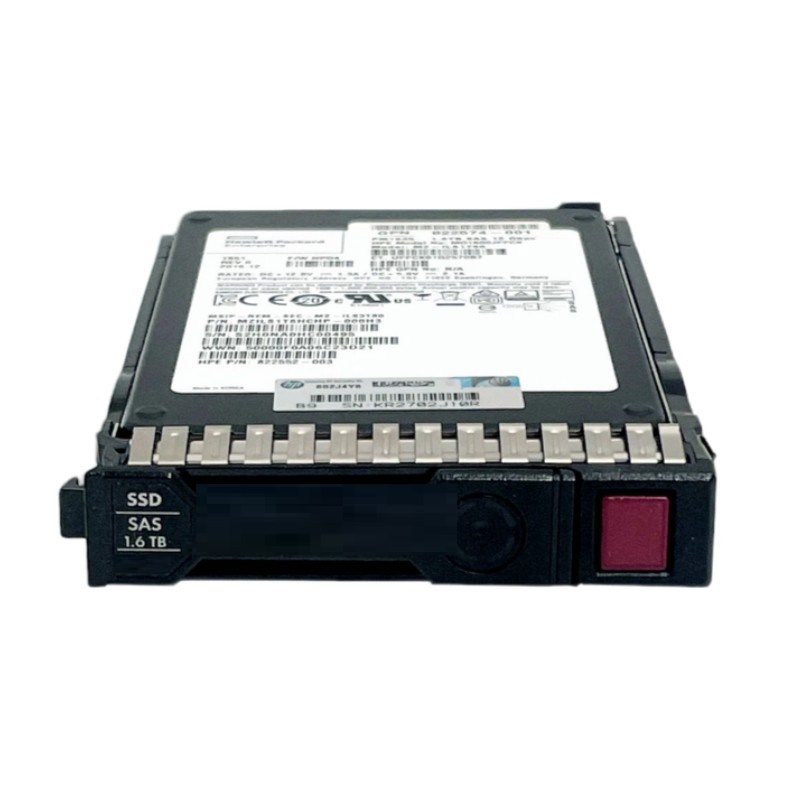


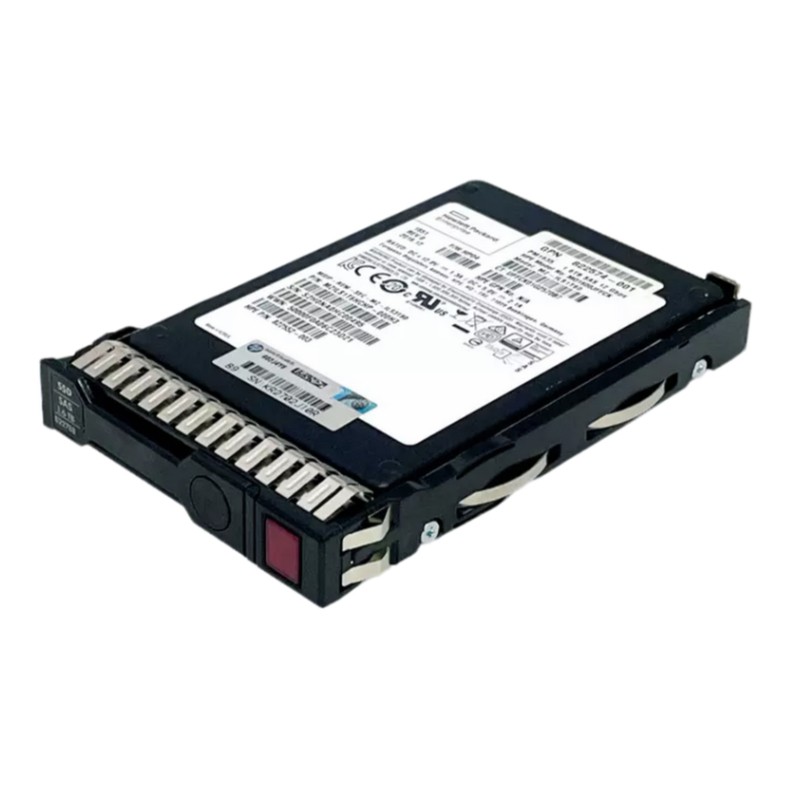
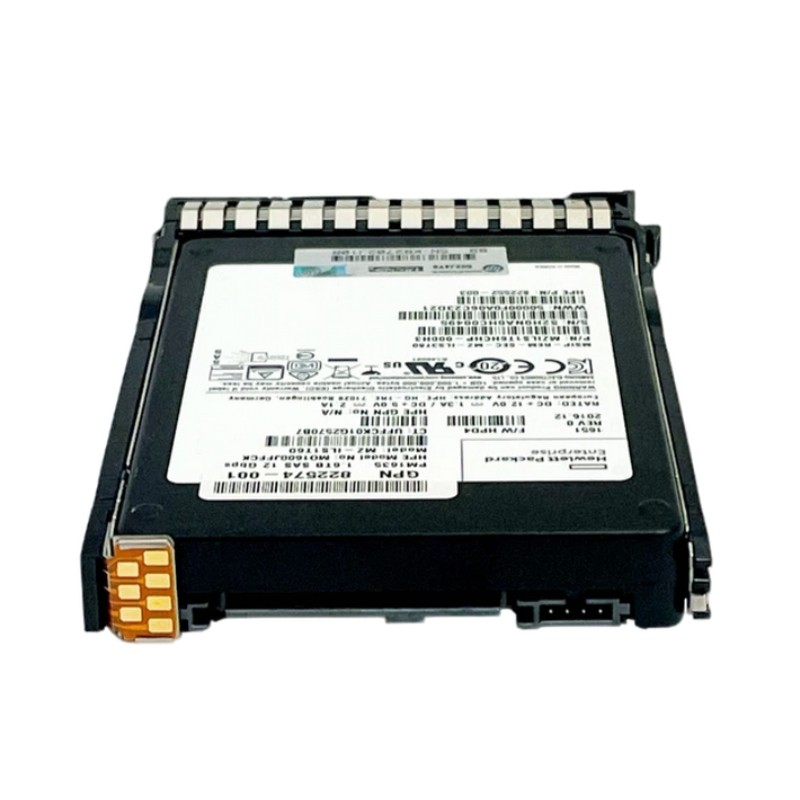
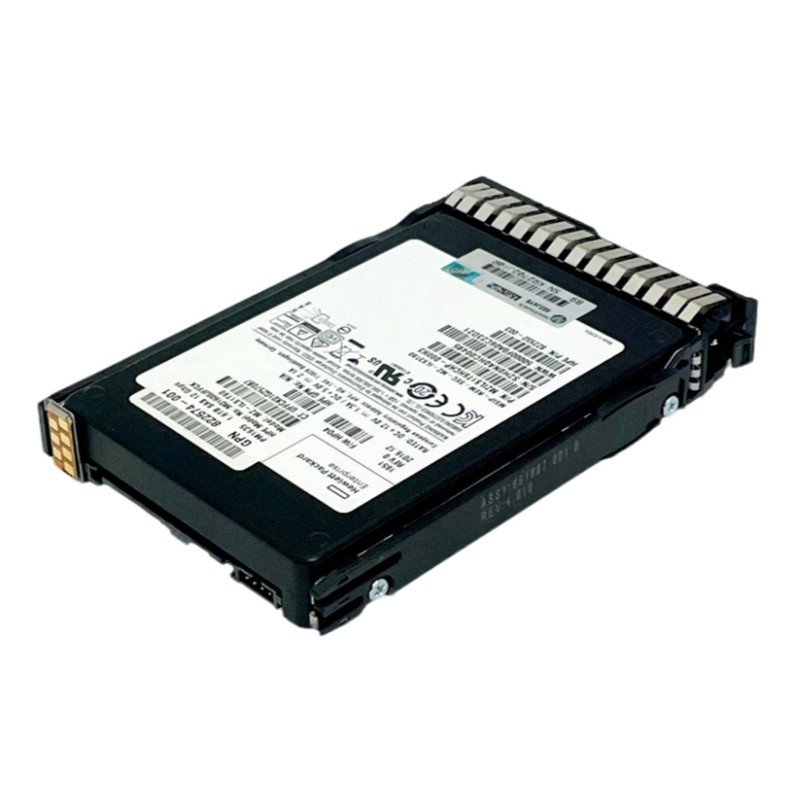
HPE 868649-003 1.6TB SAS 12GBPS MLC Hot Swap Write Intensive 2.5-inch Internal Solid State Drive. Excellent Refurbished with 1 Year Replacement Warranty
This entry details the HP 868649-003, a high-performance internal solid-state drive engineered for demanding write-heavy environments. Designed as a 2.5-inch drive with enterprise-grade Multi-Level Cell (MLC) flash, it pairs high capacity with a fast SAS 12.0 Gbps interface to deliver reliable throughput for data center and server deployments.
This model is categorized as write-intensive, meaning it is optimized for applications that perform frequent large or sustained write operations. Typical use-cases include:
Enterprise SSDs like the 868649-003 emphasize longevity and data integrity. While exact endurance (DWPD/TBW) and MTBF figures should be confirmed with HP product documentation, the MLC media and SAS interface typically include:
Discover performance and endurance engineered for modern enterprise workloads with the 868649-003 HPE 1.6TB SAS 12Gbps MLC Hot Swap Write Intensive 2.5-inch Internal Solid State Drive. Built to deliver predictable latency, sustained throughput, and enterprise-level reliability, this drive targets data centers, virtualized servers, high-transaction databases, and write-heavy application stacks where consistent write endurance and SAS fabric compatibility are non-negotiable. Designed as an internal 2.5-inch form factor, the drive delivers a compelling balance between capacity and write-cycle resilience, making it a top choice for IT teams optimizing storage tiers for performance-sensitive workloads.
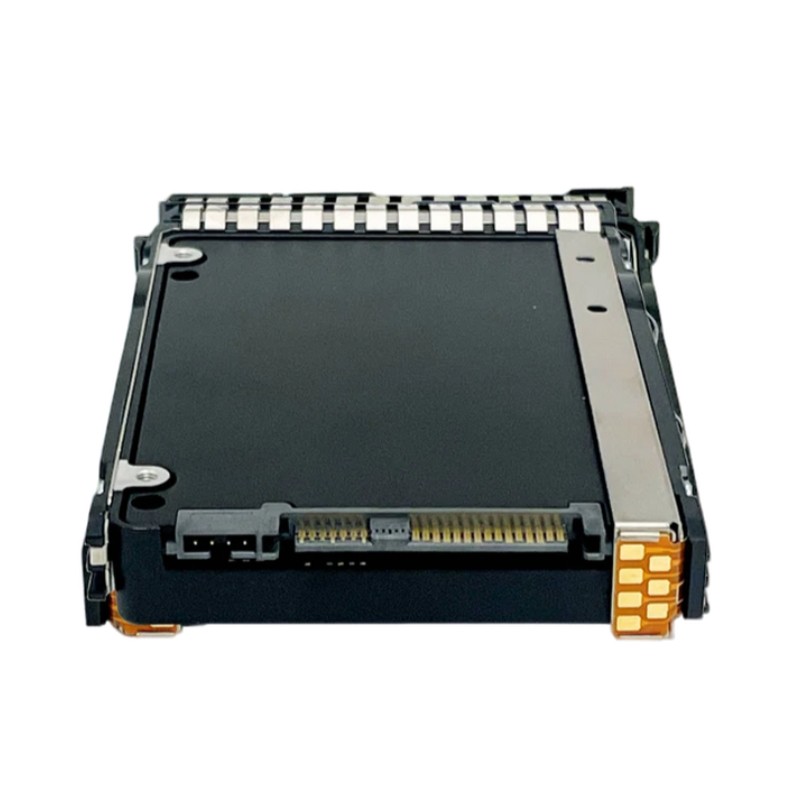
The drive uses a SAS 12Gbps interface to integrate seamlessly with HPE server backplanes, RAID controllers, and storage enclosures. SAS architecture provides full-duplex communication, robust error handling, and enterprise-grade link management that are essential for multi-pathing and high-availability environments. The 868649-003 2.5-inch form factor enables dense server and storage designs while remaining hot-swap capable, allowing administrators to replace or upgrade drives without powering down systems. This combination of 12Gbps SAS speed and hot-swap readiness helps reduce maintenance windows and improve overall system uptime.
The internal controller and firmware are tuned for steady-state behavior under intensive write workloads, with features such as power-loss protection, error-correction code (ECC) algorithms, and advanced wear-leveling. Firmware is commonly optimized for predictable performance in RAID arrays and virtualization hosts, avoiding large latency spikes during sustained writes. Compatibility with HPE ProLiant servers and HPE storage platforms is a core design target, with the drive often appearing on HPE compatibility matrices and designed to work with common RAID controllers and HPE Smart Storage features. Ensure controller firmware and HPE platform firmware are kept current to realize the drive’s full performance and reliability potential.
This write-intensive MLC SSD emphasizes sustained random write throughput and write endurance metrics rather than solely peak sequential speeds. For environments such as database transaction logs, caching layers, email servers, analytics ingestion, and virtual desktop infrastructure, steady write performance is critical. The drive’s MLC (multi-level cell) NAND is selected to balance cost, endurance, and performance—offering greater program/erase cycles compared with QLC alternatives while retaining superior cost per gigabyte compared with SLC or eMLC options.
Designed to deliver low and consistent latency under heavy I/O pressure, the drive is well-suited for applications where unpredictable latency would degrade user experience or transaction throughput. IOPS performance is optimized for mixed and random small-block workloads that are typical of OLTP databases and virtualization hosts. Sequential throughput remains important for bulk operations and background processes; however, the principal design goal is to minimize performance variability when sustained writes occur.
Quality of service (QoS) is a key advantage of enterprise-grade SSDs like this HPE model. Deterministic behavior under multi-tenant server consolidation helps operators maintain predictable service levels. Predictability is achieved through firmware-level garbage collection strategies, over-provisioning, and thermal/power management that prevent long stalls during heavy write cycles. For service providers and enterprises enforcing strict SLAs, these characteristics reduce the risk of noisy-neighbor problems on shared hosts.
Write-intensive class SSDs are engineered with enhanced endurance ratings and robust data-protection mechanisms. This HPE SKU emphasizes a program/erase cycle allowance and drive write workload (DWPD/total terabytes written) appropriate for environments that perform frequent host writes. Coupled with features like power-loss protection capacitors and media management algorithms, the drive helps avoid data corruption in the event of unexpected power disruptions and maintains consistent media health over its lifecycle.
MLC NAND offers a sensible middle ground between endurance and capacity. Compared with QLC, MLC provides higher write endurance and better sustained performance during repeated writes. While more costly per gigabyte than QLC, the long-term reliability and lower risk of write amplification make MLC the preferred choice for write-heavy enterprise tiers. System architects should map workloads to endurance profiles; transactional log volumes and tier-one databases are better placed on write-intensive MLC drives to reduce replacement frequency and maintenance overhead.
The 868649-003 1.6TB capacity and write-intensive rating position this drive for a variety of enterprise use cases. It is a strong fit for database master nodes, write caches in hybrid storage arrays, virtual machine data stores in high-density server clusters, and logging or ingestion nodes in big-data pipelines. Because the drive supports hot-swap operation, it can be used in serviceable rackmount servers and storage trays where quick field replacement is required. Its form factor and interface also make it an ideal candidate for tiered storage pools where administrators allocate the fastest and most durable media to the most critical workloads.
Databases with high write amplification—such as transaction processing systems, financial ledgers, and e-commerce platforms—benefit from the drive’s endurance profile. By placing write-heavy tables, transaction logs, and temporary tablespaces on write-intensive SSDs, administrators can minimize latency spikes and improve transaction commit times. When paired with appropriate RAID configurations and battery-backed cache on controllers, the drive helps maintain ACID properties and reduces the performance impact of disk-bound operations.
In virtualized infrastructures, where many VMs coexist on the same physical host, write-intensive drives reduce contention for write bandwidth and improve VM responsiveness. Storage architects often use such drives for VM home datastores, swap and paging areas, and intensive application VMs to prevent noisy-neighbor interference. Integration with software-defined storage layers and hypervisor-aware caching solutions further amplifies the benefits by leveraging the drive for hot data and write buffering.
Effective storage tiering places the fastest, most durable media where it produces the greatest business value. Write-intensive SSDs are reserved for hot datasets and transactional components, while colder datasets may reside on read-optimized SSDs or HDDs for capacity. This drive’s combination of moderate capacity and high endurance allows architects to optimize mixed workloads by creating a predictable performance layer that services the most demanding write patterns.
To maximize reliability, drives of this class are frequently deployed in RAID groups with hot spares and over-provisioning configured at the array level. Over-provisioning increases available spare blocks for garbage collection and wear leveling, improving sustained performance and extending drive life. IT teams should plan for spare capacity and rebuild performance when sizing arrays, as rebuilds involving many SSDs can saturate backplane bandwidth and impact QoS if not accounted for.
The 868649-003 2.5-inch form factor allows for dense server designs and efficient airflow within rackmount chassis. Thermal characteristics and power consumption are tuned for server-class environments, and drives often conform to enterprise thermal and shock/vibration tolerances. Operating temperature ranges and power profiles should be reviewed against the target server’s cooling capabilities to ensure long-term reliability. Hot-swap mechanics and standardized caddies make field replacement straightforward for on-site technicians.
Thermal throttling mechanisms protect the drive under extreme conditions, but consistent cooling remains the best way to preserve performance and longevity. Placement within drive bays, appropriate chassis airflow design, and monitoring via platform management tools help maintain optimal operating temperatures. Integration with data center environmental monitoring and automated alerts ensures that potential thermal issues are detected before they affect drive health or performance.
Hot-swap capability simplifies maintenance windows and allows technicians to replace failed units without powering down hosts. HPE-branded drives are typically supported by HPE service and warranty programs, which may include replacement services and compatibility support. Ensuring that drives are installed in certified HPE caddies and that the system firmware is within supported versions is critical to maintain warranty coverage and vendor supportability.
Security features on enterprise SSDs can include self-encrypting drive (SED) options, secure erase commands, and cryptographic protection for data at rest. For regulated industries and organizations with strict compliance requirements, such capabilities reduce the risk associated with decommissioning drives and moving media between jurisdictions. When SED functionality is required, verify that the drive supports industry-standard encryption protocols and that key management integrates with existing security infrastructure.
Proper end-of-life handling is important for compliance and data security. Drives with secure sanitize commands or hardware encryption allow administrators to render data unrecoverable before reuse or disposal. Documented procedures for media destruction or cryptographic erasure should be embedded in policy frameworks to satisfy auditors and to reduce the risk of data leakage when drives are retired from production.
For organizations in finance, healthcare, or government sectors, ensuring that storage solutions meet regulatory data handling standards is vital. The use of enterprise SSDs with security features simplifies compliance with data protection regulations when implemented alongside broader organizational controls and documentation.
Keeping storage controller firmware, server BIOS, and HPE platform firmware up-to-date reduces the risk of interoperability issues and unlocks performance improvements. Validate firmware compatibility matrices and apply vendor-recommended updates during planned maintenance. Avoid mixing firmware revisions across a RAID group unless vendor guidance permits it, as inconsistent firmware can complicate diagnostics.
Before wide-scale deployment, run synthetic and application-level benchmarks that mirror production activity. Capture latency percentiles as well as average IOPS and throughput to understand worst-case behavior. Use burn-in tests for new drives to detect early-life failures and to establish baseline health metrics. Regular capacity scans and periodic integrity checks further help maintain predictable storage performance over time.


 Contact Us
 Information
 Catalog
 Solid State Drives (SSD)
 Network Switches
 Hard Disk Drives
 HBA & Controllers
 PC & Servers
 PC & Server Memory
 CPU & Processors
 Network Routers
 Power Supplies
 Tape Drives & Libraries
 Network Devices
 Computer & Network Cables