(7% discount is applied at checkout)
Cart is empty
Your go-to destination for cutting-edge server products
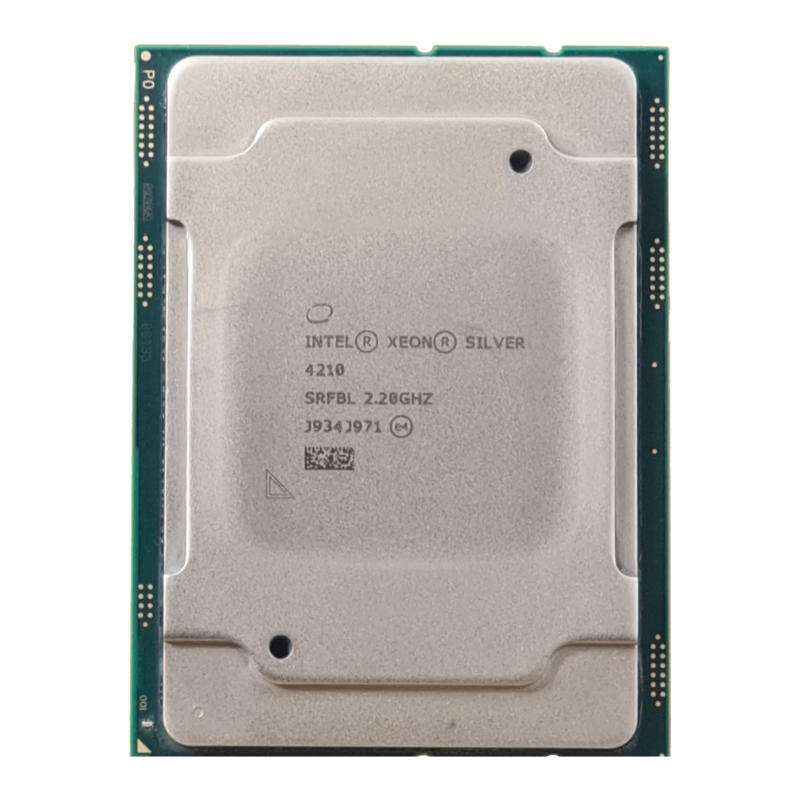


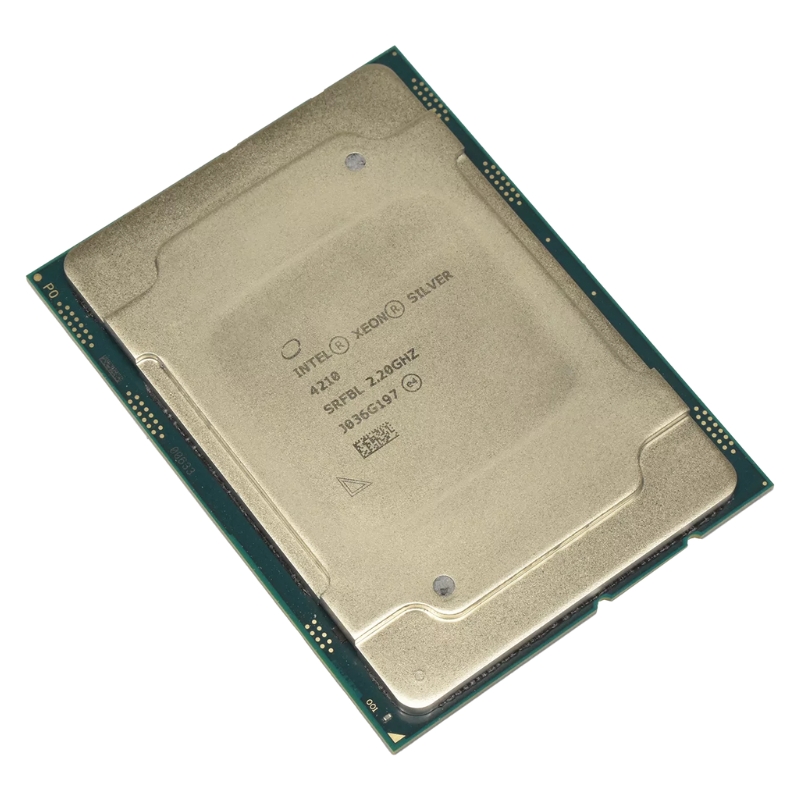
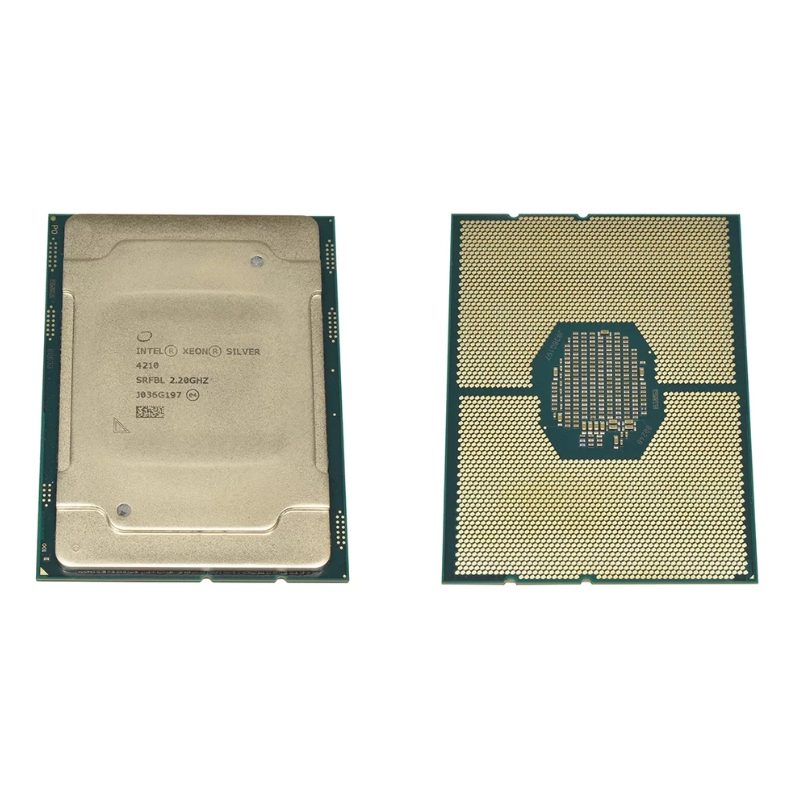
HPE 866530-B21 2.20GHz Intel Xeon Silver 4114 10 Core UPI L3 Cache Socket Processor. New (System) Pull with 1 year replacement warranty
The HPE 866530-B21 Intel® Xeon® Silver 4114 is a powerful ten-core processor designed for enterprise-class workloads. With a base frequency of 2.20GHz and support for multi-threading across 20 threads, it delivers balanced performance, energy efficiency, and reliability for data centers and business-critical applications.
Enterprises choosing the HPE 866530-B21 benefit from:
The Intel Xeon Silver 4114 enables efficient server utilization, delivering the performance necessary for virtualization, storage, and data center consolidation.
With multiple cores and substantial cache memory, this processor excels in handling large datasets, real-time analytics, and business-critical applications.
The Xeon Silver 4114 supports scalable cloud infrastructures, offering both reliability and efficiency for hybrid and private cloud deployments.
The most important technical facts buyers and system architects reference are the CPU clock, core count, cache size, socket type, and interconnect architecture. Below are the core specifications of interest for HPE 866530-B21 (Intel Xeon Silver 4114):
The Xeon Silver 4114 is tuned for throughput across multiple concurrent threads rather than single-thread peak frequency. Its 10 cores paired with Hyper-Threading make it ideal for moderate parallelism: orchestration tasks, multi-tenant virtualization, containerized microservices, and general purpose compute nodes.
With 10 physical cores and Hyper-Threading, the CPU can efficiently handle many simultaneous virtual CPUs (vCPUs), improving consolidation ratios on virtualized platforms. For environments running dozens of lightweight VMs or many container instances, the HPE 866530-B21 balances core availability and cache sharing to reduce context switching and memory pressure.
The Xeon Silver family supports multiple memory channels and ECC memory, enabling higher reliability and performance for memory-bound applications. When configuring an HPE server with the 866530-B21 part, prioritize matched memory modules (RDIMM/LRDIMM) to take advantage of maximum throughput and error correction.
HPE parts like 866530-B21 are tested for compatibility with defined HPE ProLiant and Synergy platforms. Before ordering or upgrading a CPU, verify the target server model’s supported CPU list, BIOS/firmware version requirements, and mechanical constraints (heatsink, retention bracket). HPE server firmware updates often include microcode and power/performance optimizations for specific Intel CPU steppings.
Proper thermal management is essential when deploying the HPE 866530-B21. Intel Xeon Silver processors are designed to fit within data-center thermal envelopes, but ambient temperature, chassis airflow, and rack density significantly affect sustained performance and longevity.
While the Xeon Silver 4114 targets efficiency over raw single-thread speed, it’s important to account for total cost of ownership (TCO). Evaluate whether higher core counts at the same or lower power (via Silver/Gold families) provide better consolidation and lower per-VM energy costs than fewer, higher-frequency cores.
Intel Xeon processors integrate hardware security features — such as Intel® AES New Instructions (AES-NI) for accelerated encryption and various boot and firmware protections — to harden server platforms. When combined with HPE security features (Secure Boot, iLO authentication, firmware signing), the HPE 866530-B21 forms part of a hardened server stack suitable for sensitive workloads.
Whether installing a new HPE 866530-B21 or replacing a failed unit, follow industry and HPE procedures: power down the server, discharge static safely, use the correct socket retention tool, and apply the recommended thermal interface material (TIM). HPE’s maintenance manuals describe torque specifications and sequence to ensure socket integrity.
The Intel Xeon lineup includes Bronze, Silver, Gold, and Platinum tiers. The Silver 4114 sits in the midrange: it offers more cores and better performance than Bronze chips while remaining more cost-effective and energy efficient than many Gold or Platinum parts. Choosing between tiers depends on the workload profile — number of threads, memory capacity, I/O demands, and budget constraints.
The HPE 866530-B21 complements modern storage stacks — NVMe, SAS, and SATA arrays — by delivering sufficient CPU cycles for I/O processing, software RAID, and storage virtualization. Its AES acceleration benefits encrypted storage and high throughput networking appliances.
HPE server management tools such as iLO provide detailed telemetry for CPU utilization, thermal state, power draw, and firmware updates. Regularly apply HPE cumulative firmware and microcode updates to ensure stability, performance optimizations, and security patches for the Intel Xeon Silver 4114.
When purchasing HPE parts such as the 866530-B21, buy from authorized HPE resellers or HPE Direct to ensure warranty coverage and access to firm support channels. HPE typically provides hardware warranty and replacement options; extended warranty and support contracts (Care Packs) are recommended for production environments requiring guaranteed response times.
Align hypervisor and OS kernel versions with HPE and Intel recommendations to benefit from scheduler improvements, cache management, and security hardening. This alignment often yields better throughput and fewer anomalies under sustained load.
For a small datacenter running business applications, multiple HPE ProLiant servers with the 866530-B21 can host virtualized workloads such as web tiers, middleware, and database replicas. Balancing core counts per VM and distributing I/O across storage nodes yields predictable performance and scalability.
In edge locations where power and cooling are constrained, the Xeon Silver 4114 can provide reliable compute with modest power draw. Use cases include local caching, WAN optimization appliances, and secure gateway/VDI hosts for small offices.
Plan maintenance windows for firmware and microcode updates; track CPU inventory and lifecycle status as part of your configuration management database (CMDB). Replace or upgrade processors in coordinated waves to avoid unexpected compatibility issues.
Monitor HPE and Intel lifecycle notifications. When planning a refresh, evaluate whether newer Xeon generations offer improved performance per watt, larger memory capacity, or additional features that justify migration costs.
Use HPE-approved components and follow local regulations for electronic waste and data center safety. Keep firmware updated for security compliance, and document any changes to hardware configuration for audit and compliance purposes.


 Contact Us
 Information
 Catalog
 Solid State Drives (SSD)
 Network Switches
 Hard Disk Drives
 HBA & Controllers
 PC & Servers
 PC & Server Memory
 CPU & Processors
 Network Routers
 Power Supplies
 Tape Drives & Libraries
 Network Devices
 Computer & Network Cables