(7% discount is applied at checkout)
Cart is empty
Your go-to destination for cutting-edge server products
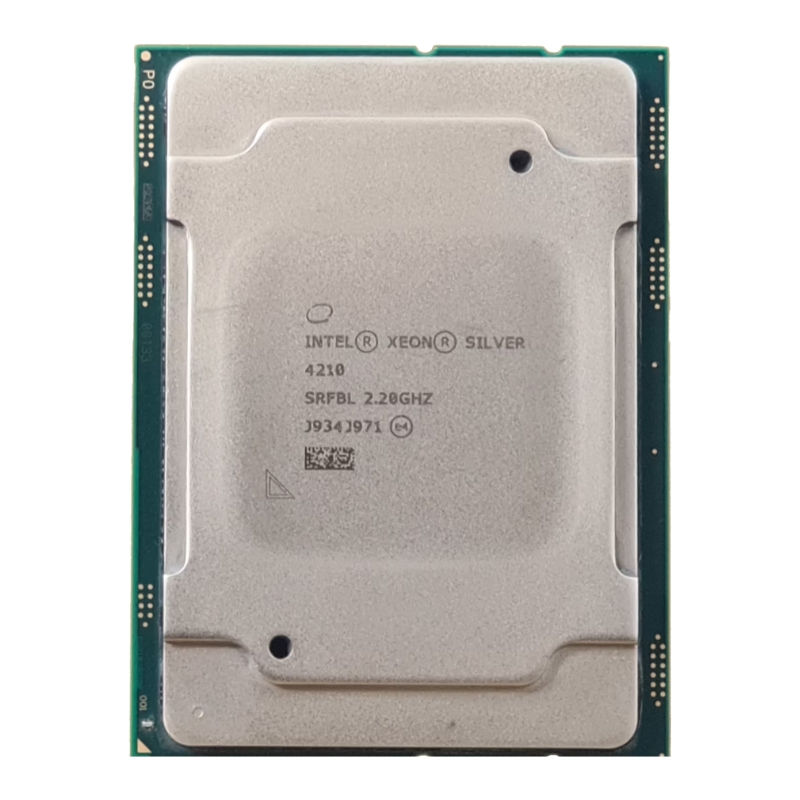


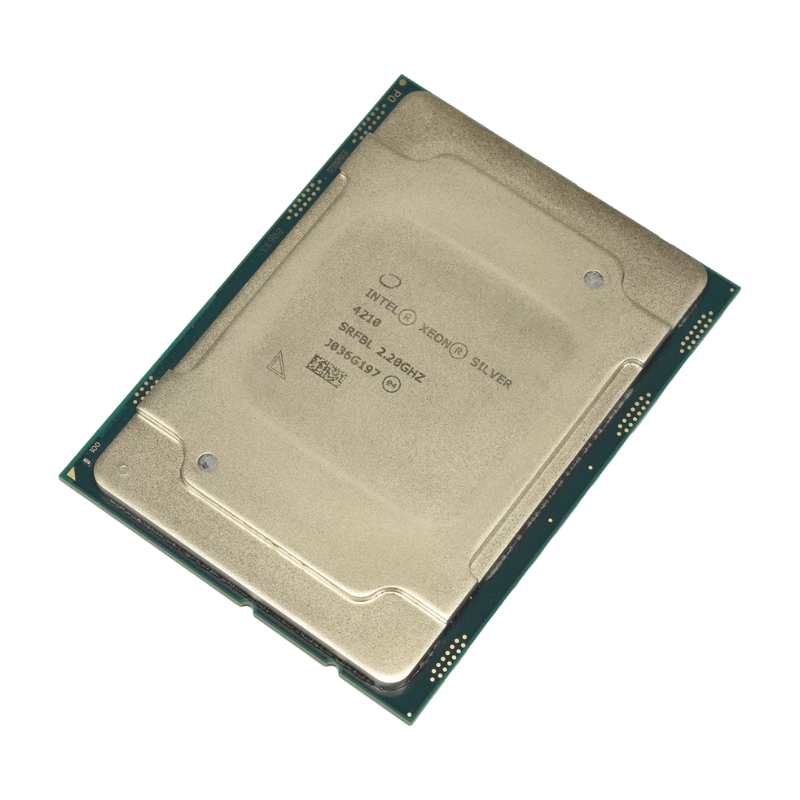
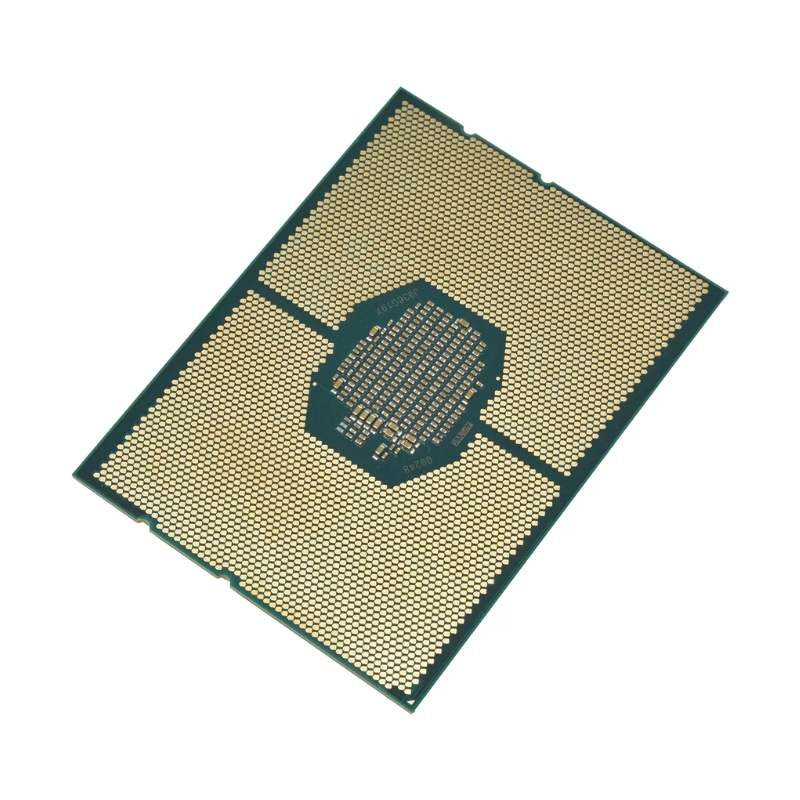
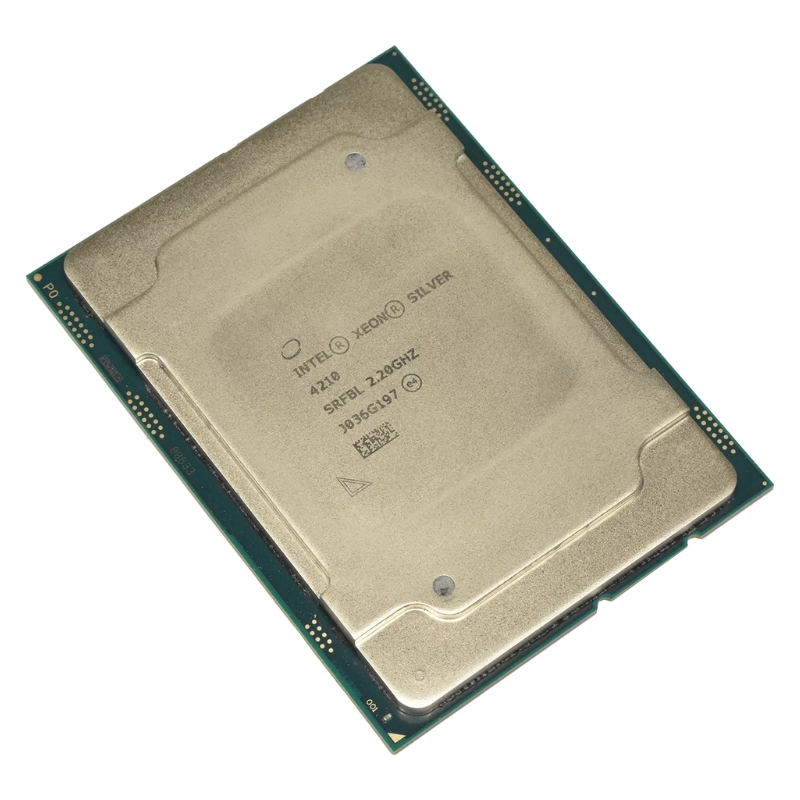
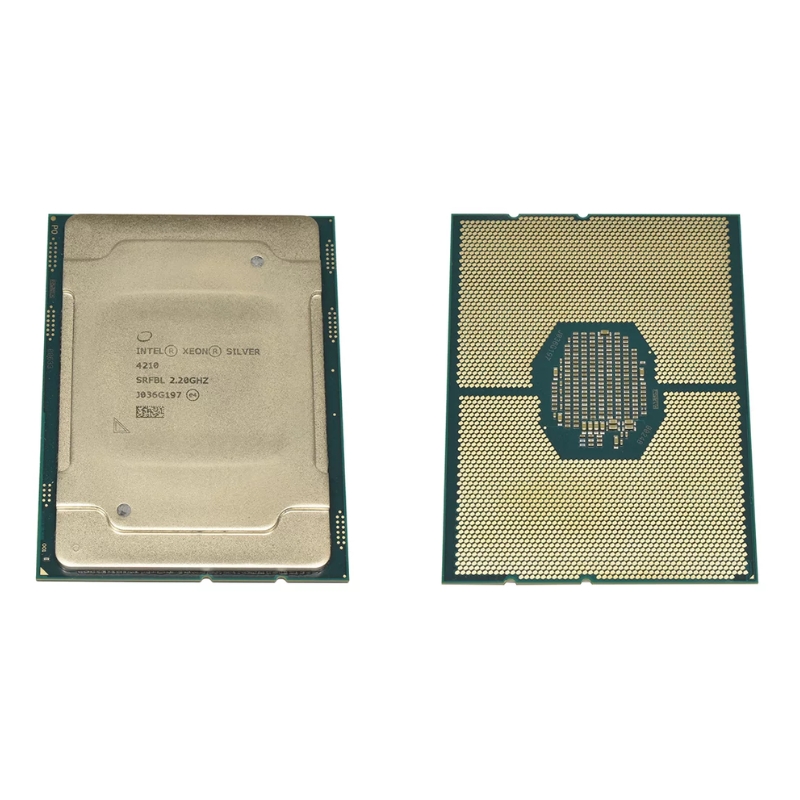
HPE 866530-L21 ML350 Gen10 Intel Xeon Silver 4114 2.2GHz 10 Core 85W FIO Processor. New (System) Pull with 1 year replacement warranty
The Intel Xeon Silver 4114 belongs to the Xeon Silver product line, designed for enterprise-level computing with a balance of performance and energy efficiency. It is part of the distinguished Xeon Silver 4100 series, optimized for workloads that demand reliability and scalability.
The Xeon Silver 4114 processor is engineered to deliver smooth performance for multitasking, virtualization, and advanced business applications.
The processor is built with a thermal design that ensures stable operations under demanding workloads, reducing overheating risks.
With an optimal power envelope, the Xeon Silver 4114 supports energy-conscious infrastructures while delivering dependable output.
This microprocessor is part of Intel’s 2nd Generation Xeon Scalable family, offering improved architecture, security features, and support for advanced server solutions.
The Xeon Silver 4114 is ideal for mid-range servers and enterprise environments where reliability and scalability are crucial.
The Intel Xeon Silver 4114 is a mid-range data center CPU designed for balanced throughput and energy efficiency. In the context of the HPE ML350 Gen10, the 4114's 10 physical cores and 2.2GHz base clock provide meaningful multi-threaded performance for multi-VM and database-lighter workloads while its 85W thermal design power (TDP) keeps power draw and cooling requirements moderate. This balance is especially valuable in tower servers deployed in offices, branch sites, and edge compute locations where acoustic and thermal constraints matter.
The ML350 Gen10 chassis offers expandability and resilience. Key platform-level features typically emphasized in this category include:
Memory configuration in the ML350 Gen10 typically supports multiple channels per CPU; configuring matched DIMMs across channels yields optimal bandwidth. For users planning virtualization or in-memory caching, prioritizing higher-capacity RDIMMs and populating channels symmetrically will deliver better sustained throughput and lower memory latency.
For OLTP and mid-sized database workloads:
Applications that require sustained compute (batch jobs, analytics) will benefit from maximizing thermal headroom: choose power and cooling configurations that avoid thermal throttling under prolonged load. If workloads are highly parallel, adding a second CPU (if chassis supports dual-socket variants) or selecting higher-frequency Xeon processors may be more effective than aggressive core overcommitment.
The ML350 Gen10 supports a wide range of storage media. Typical options include:
Network interfaces can be tailored to project needs — from 1GbE NICs for basic connectivity up to 10/25/40/100GbE cards for modern networking demands. PCIe expansion allows for additional storage controllers, GPU/accelerator cards for ML inference, or specialized NICs for SR-IOV and DPDK acceleration.
HPE ProLiant servers commonly include integrated management capabilities that ease deployment and maintenance. Relevant management features for this category include:
Hot-plug drive bays, modular PSUs, and accessible DIMM/CPU trays make on-site maintenance faster and less disruptive. For 24/7 operations, choose configurations with redundant power and hot-spare drives to minimize planned downtime.
Security in enterprise servers spans firmware, hardware root of trust, and runtime protections. For this ML350 Gen10 category:
Establish a firmware update cadence aligned with vendor advisories. For production systems, test firmware updates in a staging environment first and then deploy using automated tooling (HPE Scripting Toolkit, OneView) to reduce human error.
For many SMBs, an ML350 Gen10 equipped with the Xeon Silver 4114 is an excellent general-purpose server for:
In branch offices, the ML350's tower footprint and quieter operation (relative to higher-TDP systems) combined with the Xeon Silver 4114's efficient performance make it suitable for local caching, application hosting, and localized data processing.
Paired with fast storage and ample memory, this configuration supports transactional databases, middleware, and application stacks used by mid-market enterprises. Performance gains are most pronounced when storage I/O and memory are prioritized alongside CPU selection.
The CPU core count and memory expandability make the ML350 Gen10 a good candidate for hyperconverged or small virtualization clusters. When running container orchestration platforms (Kubernetes, OpenShift), consider network and storage readiness for clustered storage backends.
Buyers can choose between new OEM configurations, refurbished units, or certified pre-owned hardware. Key decision points include warranty coverage, support level, and total cost of ownership. Refurbished systems may offer cost savings but ensure updated firmware and verified component health before deployment.
HPE and authorized resellers typically offer factory-configured SKUs that bundle processors, memory, drive trays, and PSUs. Custom builds allow for precise tailoring to workload needs — for example, maximizing SSD capacity for storage-heavy workloads or adding acceleration cards for AI/ML inference.
Because the Xeon Silver 4114 is rated at 85W TDP, power planning is simplified relative to higher-wattage CPUs. Still, total system power must account for drives, memory population, add-in cards, and peak utilization. When designing data closets or small server rooms, allocate adequate AC capacity and airflow to prevent hotspots and ensure acoustic comfort.
Estimate peak draw (including redundant PSU overhead) when sizing UPS to ensure safe shutdowns during outages and to support graceful failover where needed. Use manufacturer power calculators or empirical measurements during pilot runs to refine sizing.
Decide whether to scale vertically (upgrading this server with more RAM, storage, or CPU in supported configurations) or scale horizontally (adding more ML350 nodes) based on application architecture and redundancy requirements. For stateless microservices, horizontal scaling may be cheaper and more resilient; for single-instance database servers, vertical scaling might be easier.


 Contact Us
 Information
 Catalog
 Solid State Drives (SSD)
 Network Switches
 Hard Disk Drives
 HBA & Controllers
 PC & Servers
 PC & Server Memory
 CPU & Processors
 Network Routers
 Power Supplies
 Tape Drives & Libraries
 Network Devices
 Computer & Network Cables