(7% discount is applied at checkout)
Cart is empty
Your go-to destination for cutting-edge server products
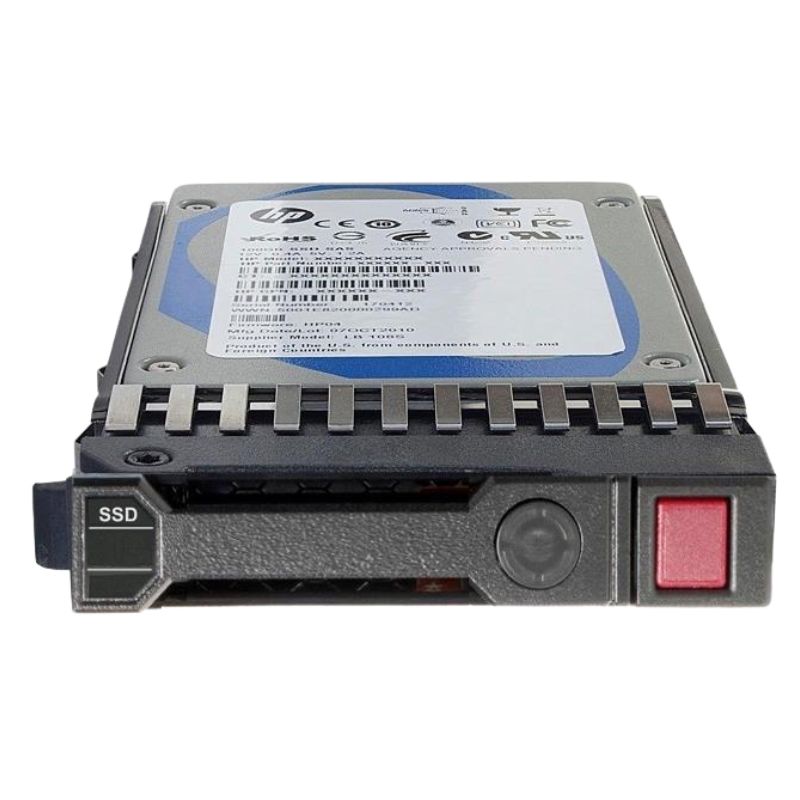


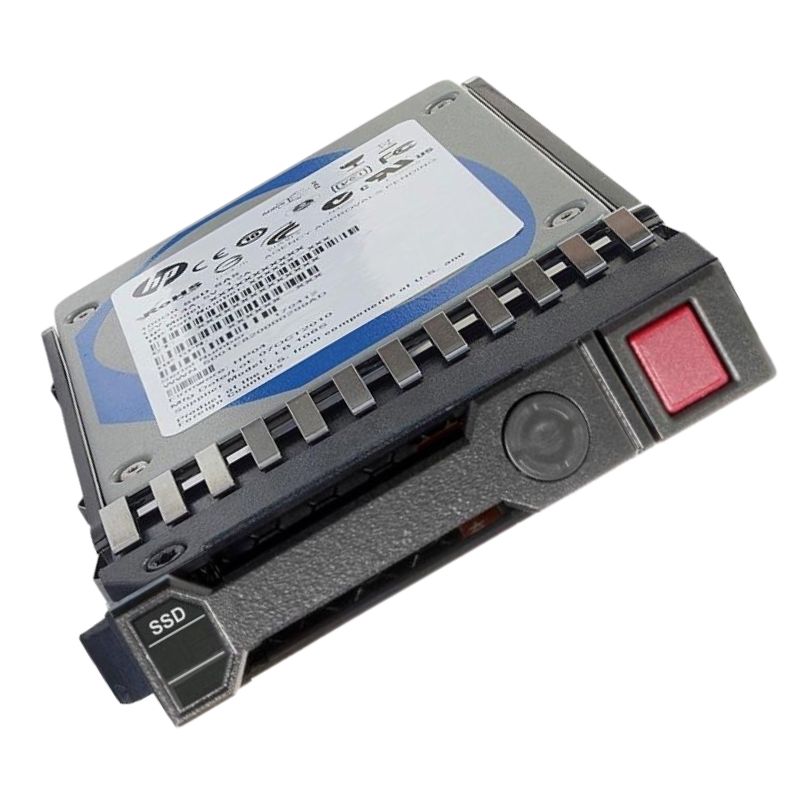
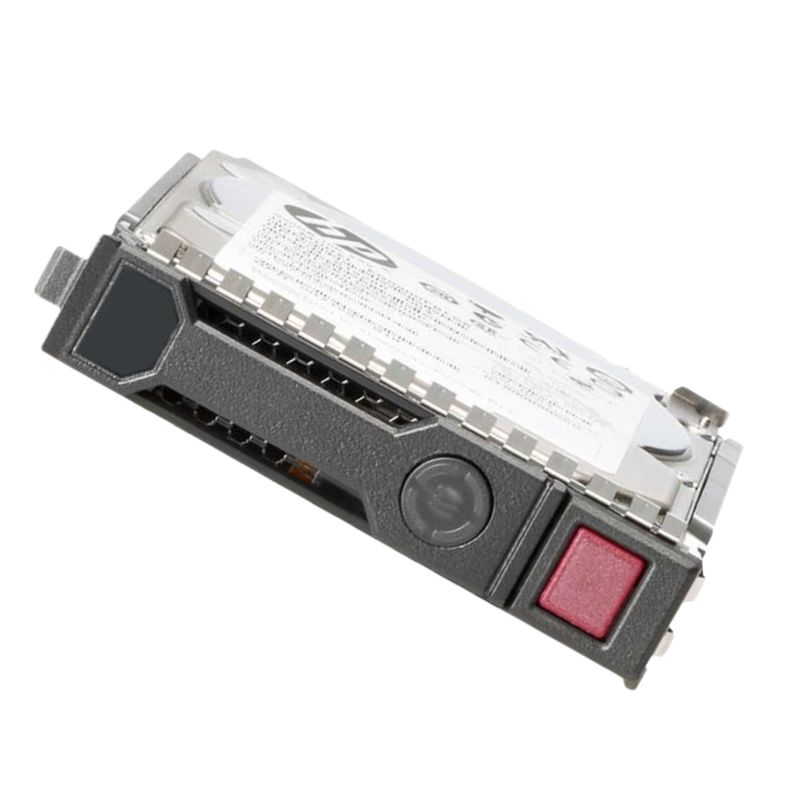
HPE 840993-B21 1.6TB Multi-Level Cell (MLC) SATA 6GBPS Read Intensive 3.5-Inch Solid State Drive. Excellent Refurbished with 1 Year Replacement Warranty
The HPE 840993-B21 is a 1.6TB internal solid-state drive (SSD) built for read-intensive workloads. Engineered with Multi-Level Cell (MLC) flash and a 3.5-inch form factor, this SATA drive delivers up to 6 Gb/s interface throughput and dependable performance for legacy bays, storage arrays and server platforms that require a high-capacity, low-latency storage medium.
This HPE SSD balances storage density and cost-effectiveness while focusing on read-heavy application patterns. It is ideal for archival, content delivery, database reads, and virtualization tasks where sustained read performance and data integrity are priorities.
Designed for environments dominated by read operations, the HPE 840993-B21 focuses on consistent read throughput and predictable latency. While write endurance will be lower than enterprise mixed-use or write-intensive SSDs, the drive offers ample reliability for cache offload, large file reads, and sequential access patterns.
Multi-Level Cell technology stores multiple bits per cell, increasing capacity while keeping cost per GB lower than single-level cell (SLC) solutions. For read-dominant use cases, MLC offers an attractive tradeoff: higher density with sufficient endurance and latency characteristics to replace traditional hard drives in many server and storage configurations.
The HPE 840993-B21 is suitable in multiple contexts where high capacity and read performance matter more than extreme write endurance:
Because the drive uses the standard SATA III interface and a 3.5-inch mechanical envelope, it integrates easily into many HPE and third-party servers and storage enclosures that provide 3.5" drive bays or adapter brackets for 2.5" to 3.5" conversion.
With a nominal usable capacity of 1.6TB, the 840993-B21 sits in the high-capacity side of HPE's read-intensive SATA LPc SSD family, providing a balance between raw storage density and cost per gigabyte when compared to higher-end NVMe or enterprise SLC/QLC tiers. Its 3.5-inch (large form factor) profile and LPc carrier make it compatible with server trays and sleds intended for LFF drives.
The drive uses the SATA interface and conforms to SATA/600 (6Gb/s) electrical and protocol standards. Nominal sequential throughput tops out at the SATA lane's practical limits — vendors list the data transfer rate at approximately 600 MB/s — which makes the device suitable for sequential reads and moderate writes but optimized for small random read operations typical of many server workloads.
The 840993-B21 employs multi-level cell (MLC) NAND flash and is characterized as a Read-Intensive (RI) drive. MLC provides a middle ground between cost and endurance compared with SLC/ eMLC and higher-density flash types; in HPE's configuration this translates into firmware and wear-management tuned to favor read performance and predictable latency for read-dominant applications. For use-cases that perform many small reads (for example, virtual desktop infrastructure read caches, content distribution nodes, and metadata stores), an RI MLC SSD is often the most cost-effective option.
Published random I/O figures for the device indicate very healthy small-block read performance: manufacturers and distributors list 4KB random read IOPS on the order of ~75,000 IOPS and 4KB random write IOPS of roughly ~11,000 IOPS, figures that highlight the product's strength in read-heavy workloads where latency and request throughput matter more than raw sequential bandwidth. These numbers are representative vendor figures and will vary with controller firmware, queue depth and system integration.
Compared to high-end NVMe devices, SATA RI SSDs typically deliver lower cost per GB while still massively improving request latency and throughput when compared with spinning media. For environments where reads dominate (analytics nodes, web caches, content repositories), the 840993-B21 can be a way to accelerate application performance without the premium of NVMe storage tiers.
Because the drive is tuned for read-dominant workloads, system architects can rely on steady, repeatable read latency under realistic production loads. This predictability simplifies performance budgeting — you can consolidate more read-heavy virtual machines or containers onto fewer storage devices while retaining acceptable response times.
The 1.6TB density in a 3.5-inch carrier enables straightforward capacity planning for racks and enclosures that accept LFF devices. When compared with multiple smaller drives of lower capacity, a fewer-drive approach reduces points of failure and can simplify RAID/erasure coding layouts, provided you follow HPE best practices for redundancy and rebuild performance.
The HPE 840993-B21 is widely listed as compatible with ProLiant ML and DL family servers; vendors and resellers typically call out explicit model support for Gen10/Gen11 systems and earlier platforms that accept LFF SATA LPc SSDs. Confirm chassis compatibility and backplane support — most HPE server backplanes that support SATA LPc SSDs will handle this drive, but mixed carrier/backplane versions exist and should be validated during procurement.
Enterprise SSDs rely on firmware tuned for endurance, garbage collection and thermal management. When deploying at scale, plan a firmware maintenance policy: check HPE's support channels or your server management stack (Integrated Lights Out — iLO — or HPE OneView) for recommended firmware revisions and update procedures. Firmware updates can improve stability, performance and compatibility but must be tested in staging prior to wide rollout.
The low profile carrier (LPc) and 3.5-inch format enable hot-swap capability in many HPE hot-plug enclosures — essential for enterprise operations that require drive replacement without server downtime. Ensure you use proper ESD handling and follow HPE replacement instructions for safe insertion and removal.
In hybrid architectures where NVMe or SSD layers front a tier of high-capacity HDDs, the 840993-B21 makes an excellent read cache. Its high random read IOPS and MLC reliability allow frequently accessed blocks to be served quickly while write-back or tiering policies move less-frequently read blocks to HDD layers.
Databases with read-heavy query profiles (OLAP indexes, reporting nodes, readonly replicas) benefit from the SSD's small-block random read performance. When used for database indexes, lookups and materialized views, the lower latency reduces query response times and increases concurrency. Properly configure database I/O queues and alignment to extract maximum value.
VDI read storms (when many desktops boot or perform I/O simultaneously) can be smoothed by placing golden images and persistent read structures onto fast read-optimized SSDs. The 1.6TB capacity allows consolidation of many images on a single drive or RAID set, lowering management complexity while improving user experience.
SSD performance is highly sensitive to queue depth. For small random reads, deeper queues generally increase IOPS until the controller is saturated. In contrast, write performance and sustained throughput may require larger buffers or slower background garbage collection behaviors; for read-intensive drives like the 840993-B21, optimize the host I/O profile toward read concurrency where possible.
When using RAID, select levels and stripe sizes according to the workload: RAID5/6 improves capacity efficiency but can impact write performance due to parity calculations, while RAID10 provides better write latency at the expense of capacity. For primarily read workloads, RAID5 may be acceptable; for mixed or write-sensitive workloads, prefer RAID10. Always leave spare capacity for rebuild operations and test rebuild times since SSD rebuilds differ from HDD rebuild semantics.
Monitor drive temperature in dense enclosures. Enterprise SSDs include thermal guards that throttle performance under high heat to protect NAND. Plan airflow, fan policies and ambient temperature targets to avoid sustained throttling in heavy read scenarios.
As an MLC Read-Intensive SSD, the 840993-B21 is optimized for workloads that issue many more reads than writes. This class of drive generally provides moderate endurance suitable for index and cache roles rather than heavy write logging. As always, calculate lifetime in drive-writes-per-day (DWPD) or total bytes written (TBW) relative to your workload to ensure the selected drive meets your retention and refresh cycles.
When ordering, confirm the exact HPE part number (840993-B21) to avoid mismatches. Some resellers list internal or substitute part numbers for packaging (SUB PN/BULK listings), so always cross-check the SKU and physical carrier type to guarantee tray compatibility.
Drives can be shipped in factory sealed bags, static shielding trays or OEM hot-swap carriers. Verify packaging to ensure drives arrive with the required sleds or adapters for immediate insertion into your server chassis; some aftermarket listings sell drives without carriers to reduce cost but this may introduce integration work.
When migrating from HDDs to SSDs in existing systems, plan for changes in capacity planning, RAID rebuild behavior and thermal management. SSDs deliver far superior random I/O; however, they can expose CPU or memory bottlenecks previously masked by slower disk. Test representative workloads to validate the overall stack after migration.
The 840993-B21 is a natural fit for a read cache tier in hybrid storage arrays or software-defined storage solutions that allow policy-based tiering. Because it is tuned for reads, it accelerates cache hits with little added write amplification — an important consideration in tiered systems where writes may be redirected to persistent higher-end layers.
Plan refresh cycles based on metric-driven thresholds (SMART warnings, TBW, performance drift, and firmware end-of-support announcements). Maintain a phased replacement schedule so that capacity and performance remain consistent across clusters during refresh windows.
HPE's SATA RI MLC class sits below eMLC/SLC offerings in raw endurance and write performance but is much more cost competitive on a per-GB basis. For write-heavy database logging or high-frequency transactional systems, eMLC or NVMe enterprise drives are preferred; for read caches, cold-hot split tiers and content delivery nodes, RI MLC is frequently the best value.
NVMe drives exceed SATA in latency and parallelism, offering significantly higher IOPS and lower CPU overhead. However, NVMe typically costs more per GB and may require NVMe capable backplanes and host controllers. If your workload is bottlenecked by small random reads and you can afford higher tiers, NVMe is better; if you need density and cost control with good read performance, the 840993-B21 remains an attractive option.


 Contact Us
 Information
 Catalog
 Solid State Drives (SSD)
 Network Switches
 Hard Disk Drives
 HBA & Controllers
 PC & Servers
 PC & Server Memory
 CPU & Processors
 Network Routers
 Power Supplies
 Tape Drives & Libraries
 Network Devices
 Computer & Network Cables