(7% discount is applied at checkout)
Cart is empty
Your go-to destination for cutting-edge server products
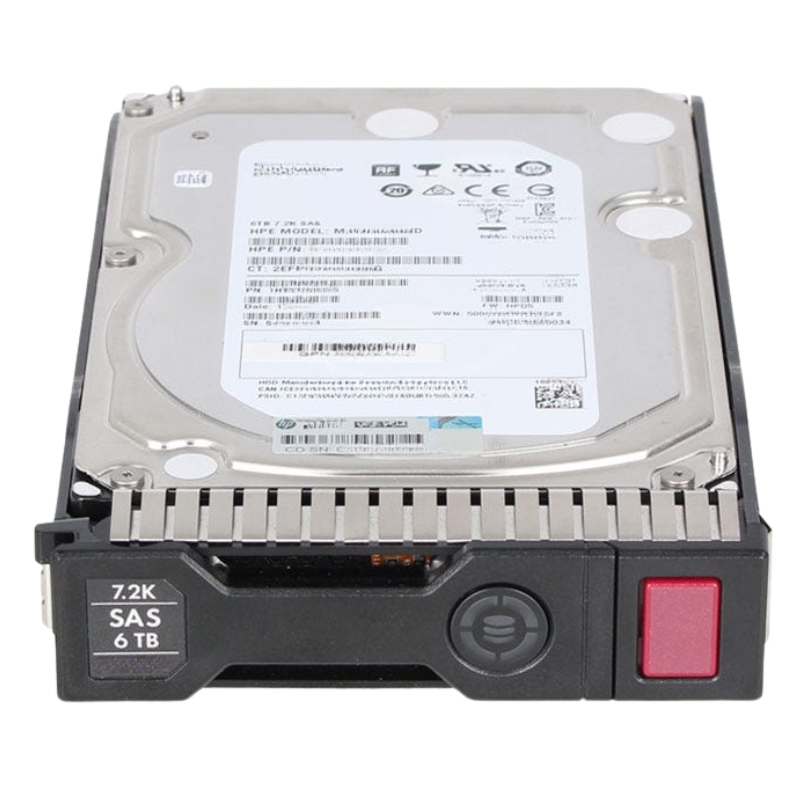


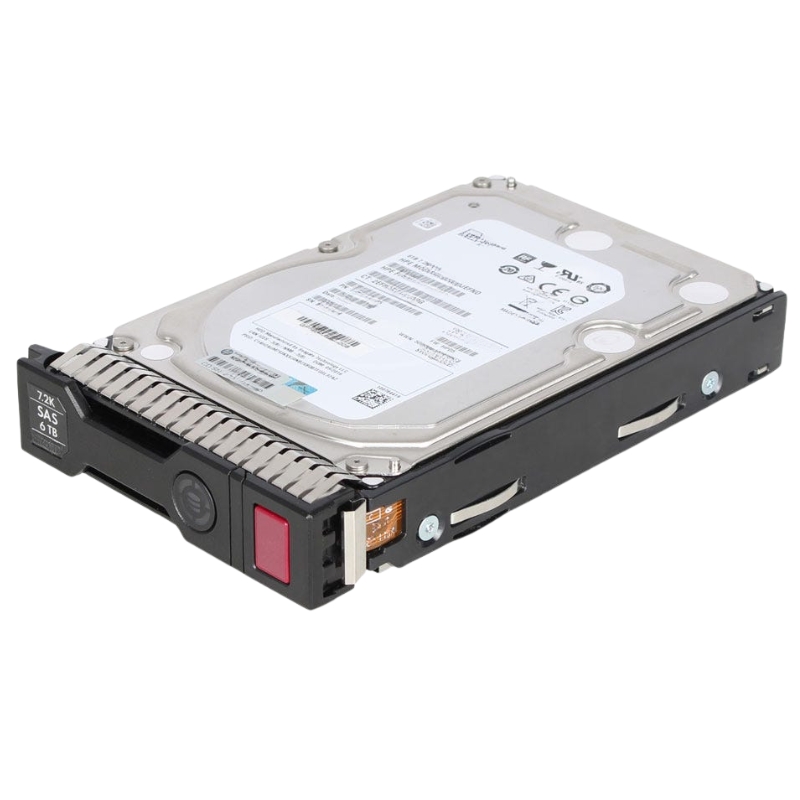
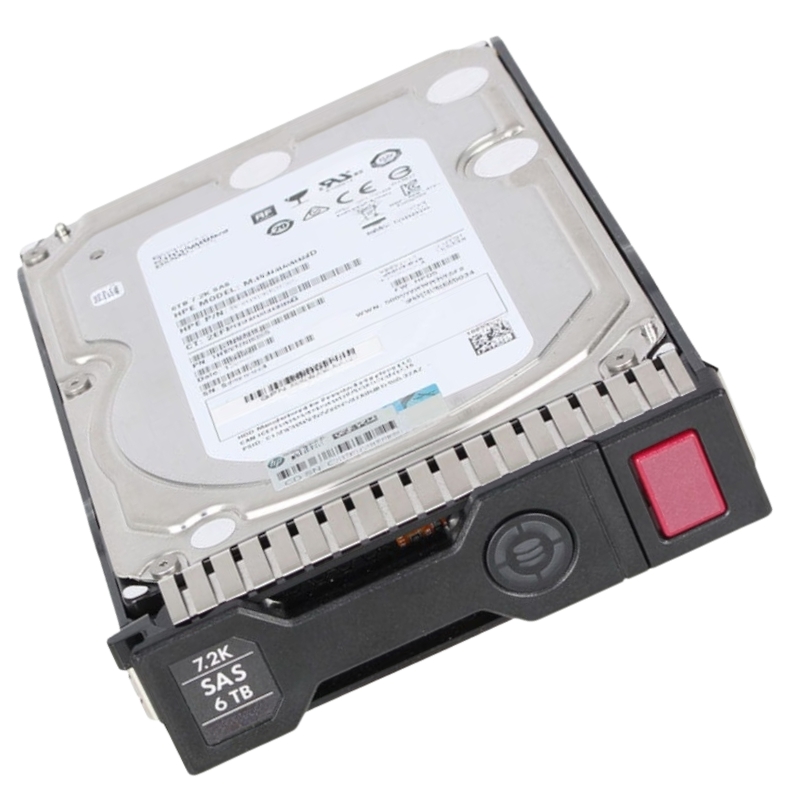
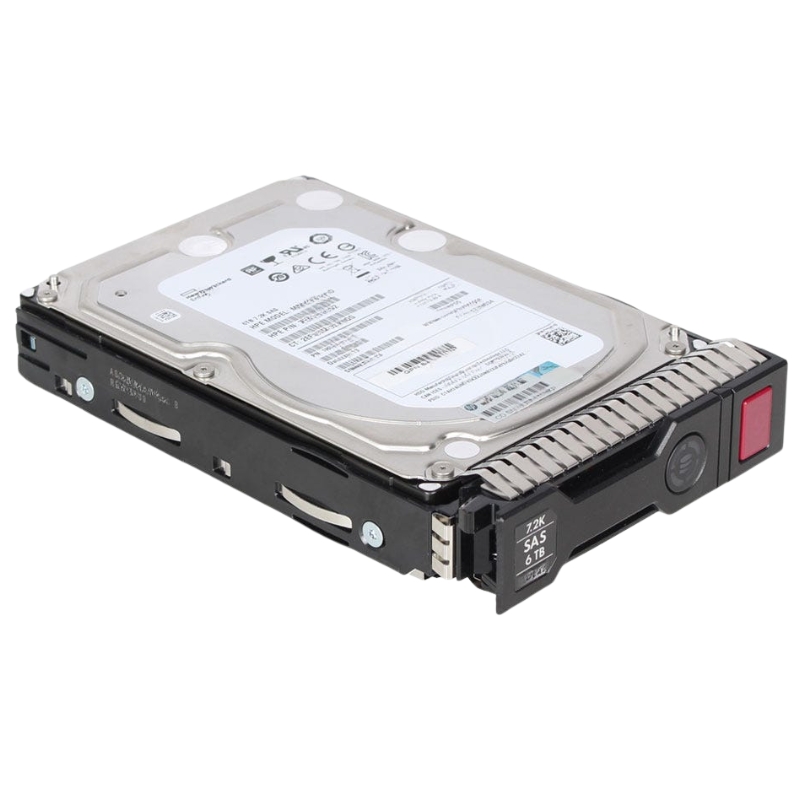
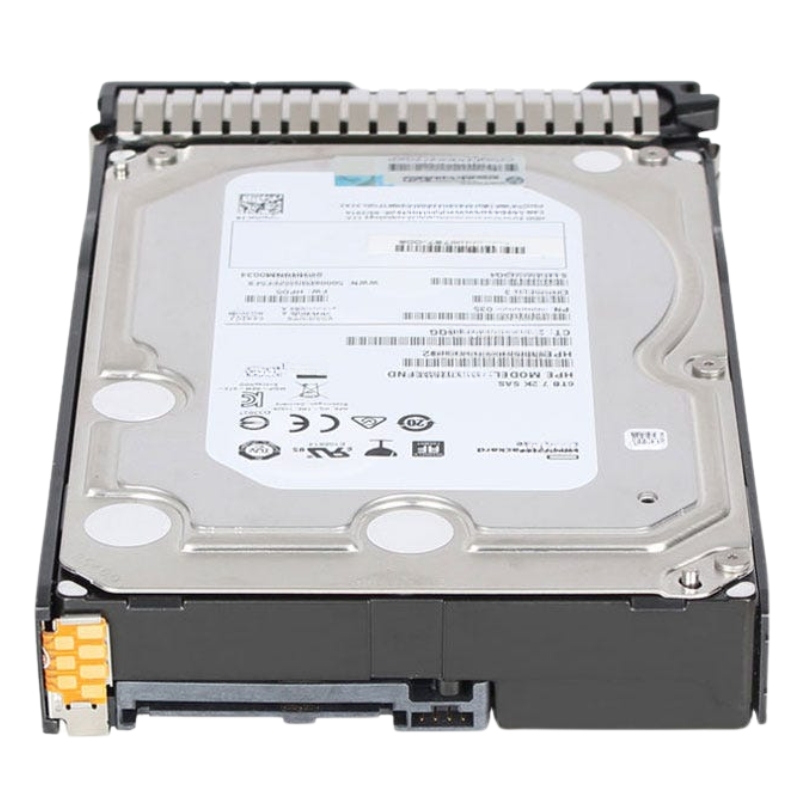
HPE 846519-001 6TB SAS 12GBPS 7.2K RPM 3.5Inch LFF LP DS HDD. Excellent Refurbished with 1-Year Replacement Warranty
The HPE 846519-001 6TB SAS Hard Drive is a high-performance enterprise storage solution designed for data-intensive workloads, server environments, and scalable storage infrastructures. This midline SAS hard disk drive delivers a balance of capacity, reliability, and efficiency, making it suitable for business-critical applications in ProLiant servers and enterprise storage systems.
Also known as an enterprise-grade midline SAS HDD, this drive ensures stable data throughput, enhanced durability, and consistent performance under continuous workloads. It is engineered to meet the demands of modern data centers requiring dependable and cost-effective storage expansion.
The HPE 846519-001 6TB SAS 12Gbps 7.2K RPM 3.5 Inch LFF LP DS HDD represents a highly reliable and performance-optimized enterprise storage solution designed for demanding server environments. Built by Hewlett Packard Enterprise, this hard disk drive is engineered to deliver consistent throughput, enhanced data integrity, and long operational lifecycles in mission-critical infrastructures. As data centers evolve to support cloud computing, virtualization, big data analytics, and high-availability applications, storage components like this SAS hard drive play a vital role in maintaining system stability and performance continuity.
This category of enterprise storage drives is specifically designed to meet workloads that require a balance between capacity, speed, and durability. With a capacity of 6TB, a rotational speed of 7200 RPM, and a 12Gbps SAS interface, this HDD is optimized for scalable enterprise environments where data availability and reliability are essential. The 3.5-inch Large Form Factor (LFF) further enhances storage density and compatibility with HPE ProLiant servers and storage arrays.
The 12Gbps Serial Attached SCSI (SAS) interface is one of the most important attributes of the HPE 846519-001 drive. SAS technology is widely adopted in enterprise systems due to its dual-port connectivity, higher reliability compared to SATA, and improved error handling capabilities. The 12Gbps bandwidth ensures rapid data transfer rates between the storage device and the server backplane, reducing latency and improving application responsiveness.
In enterprise workloads where multiple users access data simultaneously, the SAS interface ensures consistent throughput and minimal bottlenecks. This makes the HPE 6TB SAS HDD ideal for virtualization environments, database servers, and transactional applications where data consistency and speed are critical.
Operating at 7200 revolutions per minute, the HPE 846519-001 HDD offers a balanced combination of performance and energy efficiency. While higher RPM drives may offer faster access times, 7200 RPM enterprise drives are optimized for sustained workloads and reduced heat generation. This ensures long-term durability and consistent operation in dense server environments.
The rotational speed plays a crucial role in determining access latency and data retrieval efficiency. In this drive category, 7200 RPM is strategically selected to support a wide range of enterprise workloads while maintaining a lower power footprint compared to higher-speed alternatives. This balance is particularly beneficial in large-scale deployments where hundreds or thousands of drives operate simultaneously.
The 6TB storage capacity of the HPE 846519-001 HDD provides enterprises with ample space for structured and unstructured data. This capacity is suitable for workloads such as backup repositories, archival storage, virtual machine hosting, and large-scale file systems. As organizations continue to generate exponential data growth, high-capacity drives like this enable efficient storage consolidation.
The integration of high-capacity disks in server environments reduces the need for excessive drive arrays, thereby optimizing rack space utilization and lowering overall infrastructure costs. Additionally, it simplifies storage management by reducing the number of physical drives required to achieve large-scale capacity targets.
Enterprise storage systems require not only capacity but also reliability and data integrity. The HPE 846519-001 HDD is designed with enterprise-grade firmware and error correction mechanisms to ensure consistent data accuracy. In environments where data corruption can lead to significant operational disruptions, these reliability features are essential.
A key feature of this HDD is its digitally signed firmware, which ensures that only verified and authenticated firmware can be installed or executed on the drive. This prevents malicious firmware modifications and enhances overall system security. In enterprise environments, firmware integrity is critical to maintaining compliance and safeguarding sensitive data.
Digitally signed firmware plays a vital role in preventing unauthorized changes that could compromise storage behavior or data integrity. By ensuring firmware authenticity, organizations can maintain a secure storage ecosystem that aligns with modern cybersecurity standards and enterprise IT governance policies.
The 3.5-inch Large Form Factor (LFF) design of the HPE 846519-001 HDD is widely used in enterprise storage systems due to its ability to accommodate higher storage capacities and improved thermal management. LFF drives are typically installed in server racks and storage arrays where space optimization and airflow efficiency are critical.
This form factor allows for greater physical disk surface area, enabling higher data density compared to smaller 2.5-inch drives. As a result, organizations benefit from reduced hardware complexity while maintaining high storage capabilities within a single chassis.
Enterprise-grade storage environments demand minimal downtime during maintenance or upgrades. The HPE 846519-001 HDD supports hot-swap functionality when used in compatible HPE server systems. This allows IT administrators to replace or upgrade drives without shutting down the entire system, ensuring uninterrupted business operations.
Hot-swap capability is particularly important in environments that require 24/7 uptime, such as cloud service providers, financial institutions, and enterprise databases. The ability to replace drives without system interruption significantly enhances service availability and reduces maintenance windows.
The HPE 846519-001 6TB SAS HDD is engineered to support virtualized infrastructures where multiple virtual machines operate simultaneously on shared storage resources. Its consistent throughput ensures stable performance even under heavy I/O loads, making it suitable for hyper-converged infrastructure setups.
Virtualization platforms benefit from the drive’s ability to handle random and sequential read/write operations efficiently. This ensures smooth performance for applications running across multiple virtual instances without significant latency spikes.
Enterprise databases require storage systems that can handle frequent read and write operations with minimal delay. The SAS 12Gbps interface combined with 7200 RPM performance allows this HDD to support structured database workloads effectively.
In transactional systems, the ability to process logging data and retrieve records quickly is essential. This HDD provides stable performance for such workloads, ensuring that database operations remain consistent even during peak usage periods.
The HPE 846519-001 HDD incorporates advanced error correction technologies that help detect and correct data inconsistencies during read and write operations. These mechanisms ensure that data integrity is maintained even in high-stress operational environments.
Enterprise workloads often involve continuous data processing, making error correction essential for preventing data corruption. This drive is optimized to maintain high levels of accuracy across long operational cycles.
Efficient thermal management is critical in large-scale storage deployments. The 7200 RPM speed and optimized internal architecture of this HDD help reduce excessive heat generation, contributing to improved system stability and longer hardware lifespan.
Energy efficiency is a major concern in enterprise IT infrastructure. The HPE SAS HDD is designed to operate within controlled power consumption ranges, helping organizations reduce operational costs while maintaining high performance standards.
The HPE 846519-001 HDD is specifically designed for compatibility with HPE ProLiant servers and enterprise storage systems. This ensures seamless integration without requiring additional configuration or compatibility adjustments.
HPE’s ecosystem approach ensures that storage devices, servers, and management tools work together efficiently, providing IT administrators with centralized control and monitoring capabilities.
Scalability is a key requirement in modern data centers. This SAS HDD supports expansion within storage arrays, allowing organizations to increase capacity as data demands grow. Its consistent performance characteristics ensure predictable scaling behavior across large deployments.
Organizations can deploy multiple units of the HPE 6TB SAS HDD to build high-density storage systems that maximize capacity per rack unit. This approach reduces physical footprint while increasing overall storage efficiency.
Cloud service providers rely on stable and high-capacity storage systems to support customer workloads. The HPE 846519-001 HDD is well-suited for such environments due to its reliability, scalability, and consistent performance under load.
Backup systems require large storage capacity and long-term reliability. The 6TB capacity of this HDD makes it ideal for storing backups, archival data, and disaster recovery snapshots in enterprise environments.
In archival scenarios, data must remain accessible and intact over extended periods. The durability and firmware integrity of this HDD ensure that stored information remains reliable for long-term retention strategies.


 Contact Us
 Information
 Catalog
 Solid State Drives (SSD)
 Network Switches
 Hard Disk Drives
 HBA & Controllers
 PC & Servers
 PC & Server Memory
 CPU & Processors
 Network Routers
 Power Supplies
 Tape Drives & Libraries
 Network Devices
 Computer & Network Cables