Your go-to destination for cutting-edge server products
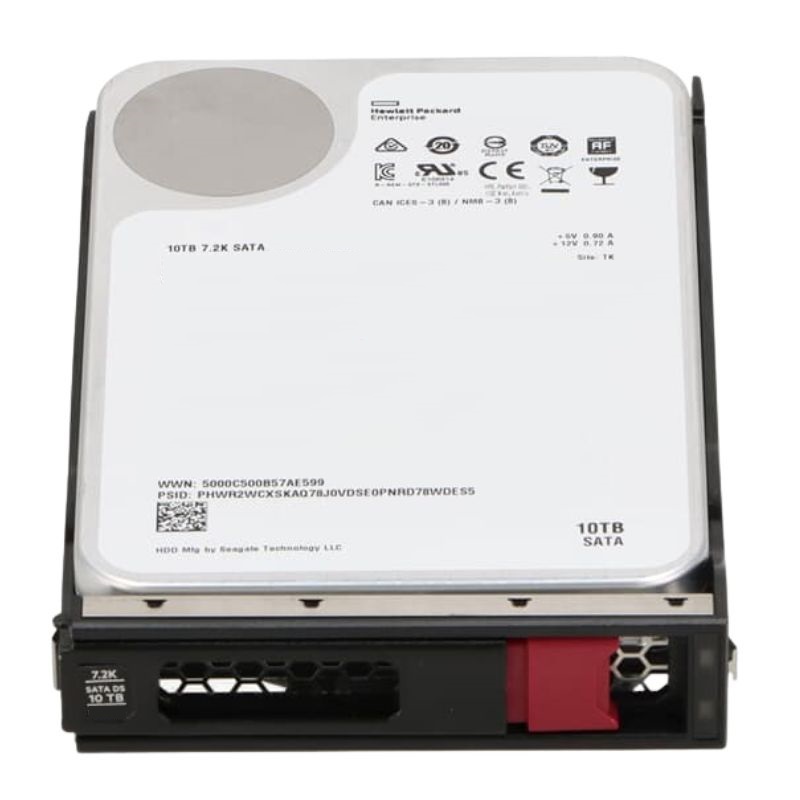
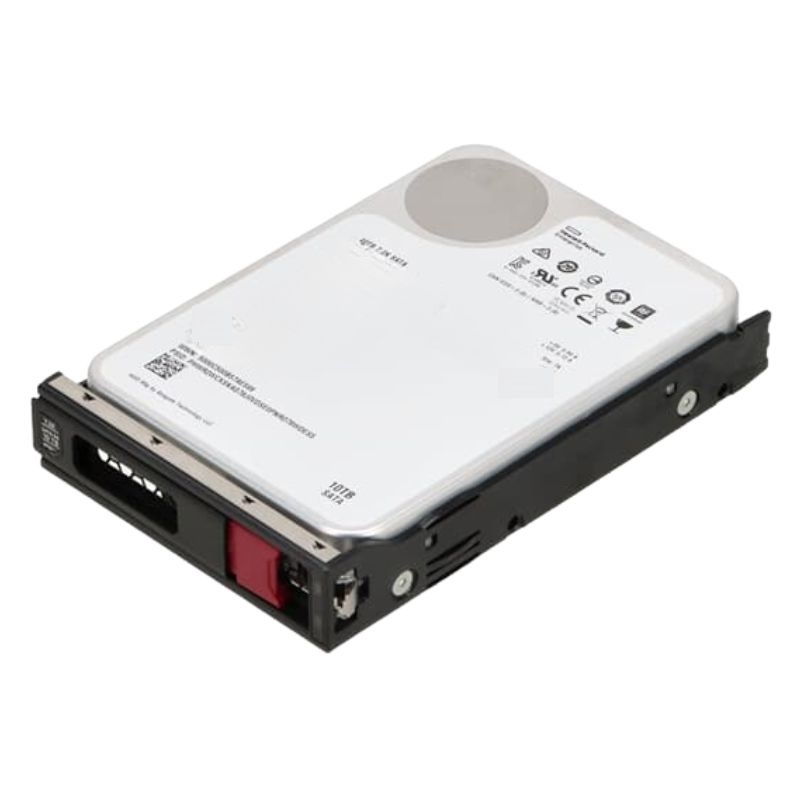
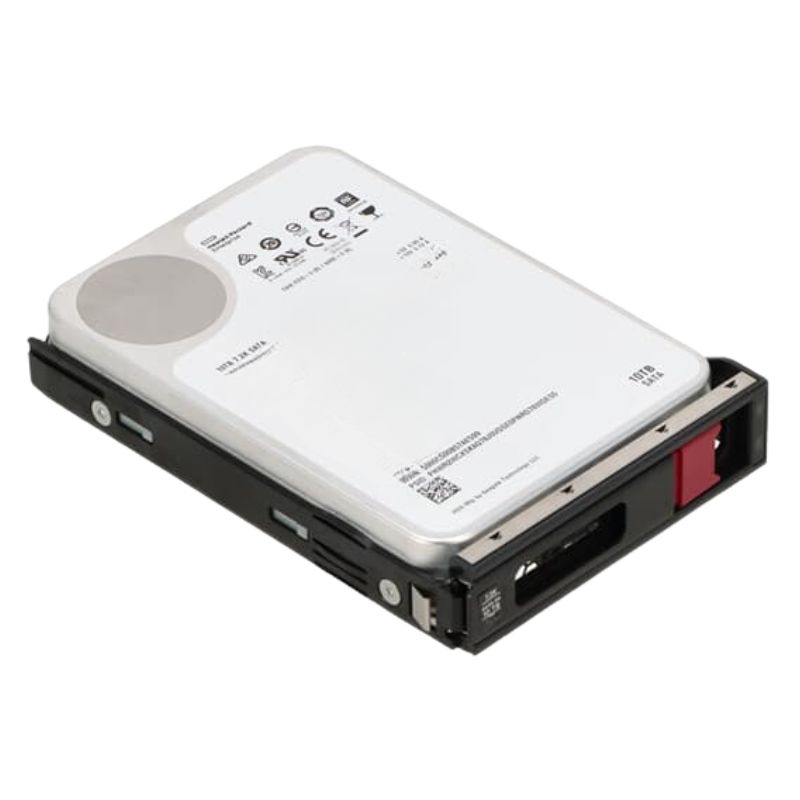
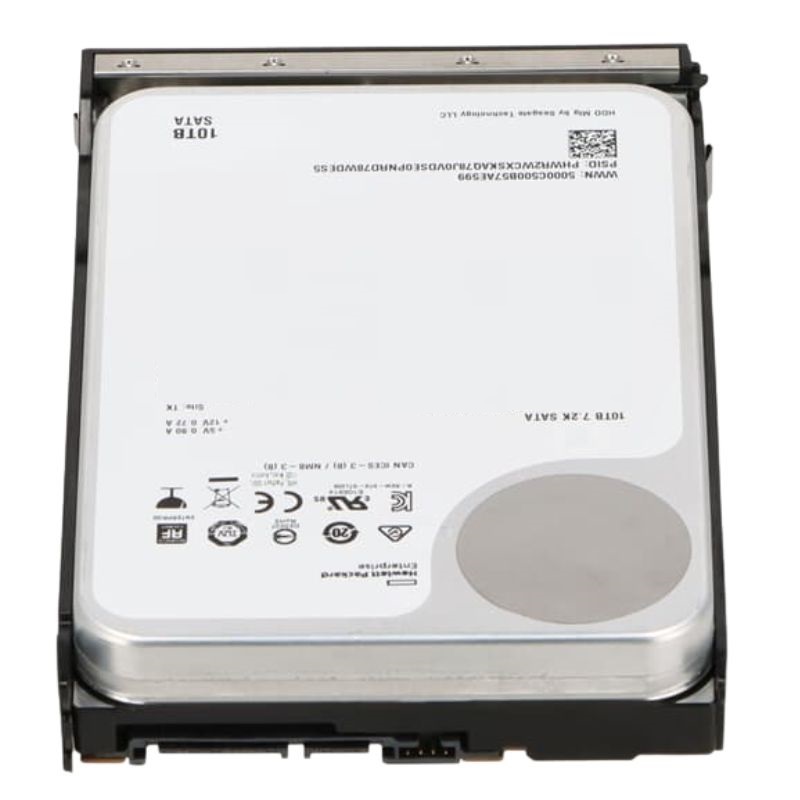
HPE 860036-B21 10TB 7.2K RPM SATA 6GBPS LFF Hot Swappable Hard Drive.

860036-B21
* Product may have slight variations vs. image
Hover on image to enlarge

Brief Overview of 860036-B21

HPE 860036-B21 10TB 7.2K RPM SATA 6GBPS 3.5-Inch LFF Hot Swappable Hard Disk Drive. New Sealed in Box (NIB) with 3 Years Warranty

$720.90
$534.00
You save: $186.90 (26%)
Ask a question
Price in points: 534 points
+
Quote

Additional 7% discount at checkout

SKU/MPN860036-B21Availability✅ In StockProcessing TimeUsually ships same day ManufacturerHPE Manufacturer Warranty3 Years Warranty from Original Brand Product/Item ConditionNew Sealed in Box (NIB) ServerOrbit Replacement Warranty1 Year Warranty
Google Top Quality Store Customer Reviews
Our Advantages
Payment Options
  • — Visa, MasterCard, Discover, and Amex
  • — JCB, Diners Club, UnionPay
  • — PayPal, ACH/Bank Transfer (11% Off)
  • — Apple Pay, Amazon Pay, Google Pay
  • — Buy Now, Pay Later - Affirm, Afterpay
  • — GOV/EDU/Institutions PO's Accepted 
  • — Invoices
Delivery
  • — Deliver Anywhere
  • — Express Delivery in the USA and Worldwide
  • — Ship to -APO -FPO
  • For USA - Free Ground Shipping
  • — Worldwide - from $30
Description

HPE 860036-B21 10TB Hard Drive

The HPE 860036-B21 10TB 7.2K RPM 3.5-Inch LFF SATA Hard Disk Drive is engineered to deliver high-capacity storage solutions with reliable performance for enterprise applications, especially optimized for Cloudline CL2200 G3 servers. Its design combines efficiency, scalability, and durability, making it suitable for both business and data center environments.

Main Information About HPE 860097-001

  • Manufacturer: Hewlett Packard Enterprise (HPE)
  • Part Number/SKU: 860097-001
  • Product Type: Enterprise-grade Hard Disk Drive
  • Subtype: 10TB 7.2K RPM SATA 6Gbps

Technical Specifications and Capabilities

Drive Construction

  • Drive Category: Internal storage
  • Form Factor: 3.5-Inch Large Form Factor (LFF)
  • Capacity: 10 Terabytes
  • Rotational Speed: 7200 RPM for efficient read/write operations
  • Swappable Design: Hot-swappable for fast replacement and upgrades

Data Transfer Performance

  • Interface Type: Serial ATA (SATA)
  • Interface Speed: 6 Gigabits per second
  • Optimized For: High-speed access in enterprise workloads

Functional Advantages of HPE 860036-B21

Enterprise-Ready Storage

This HDD is designed for large-scale storage infrastructures, providing massive capacity while maintaining efficiency and consistent uptime.

Key Benefits

  • Hot-plug feature ensures seamless maintenance and upgrades
  • Enhanced workload support with optimized SATA interface
  • Reliable for long-term use with data center durability
  • Designed to complement HPE Cloudline CL2200 G3 servers

Eco-Friendly and Practical Design

  • Eco Certified: Meets environmental standards
  • Assembly Requirement: Easy installation and integration

Applications in Data-Intensive Environments

Cloud and Virtualization

The HPE 860097-001 hard drive is optimized for cloud hosting, virtualization, and high-capacity archiving, making it a suitable choice for growing enterprises.

Recommended Usage Scenarios

  • Business data archiving and secure backup
  • Enterprise-level storage expansion
  • Server optimization for high-availability workloads
  • Support for database-intensive applications

HPE 860036-B21 10TB 7.2K RPM SATA 6GBPS LFF Hard Drive

The HPE 860036-B21 10TB 7.2K RPM SATA 6Gbps 3.5-inch LFF hot-swappable hard disk drive is designed specifically for high-density Cloudline server environments such as the Cloudline CL2200 G3. Built as an enterprise-class SATA III drive with a 10 terabyte capacity, the drive combines large storage capacity with data center reliability features that make it appropriate for cloud storage tiers, backup repositories, archival nodes, and distributed object storage platforms. The drive's 7,200 revolutions per minute spindle speed balances power consumption and sustained sequential throughput, enabling predictable performance when handling large media files, cold-to-warm object workloads, and bulk dataset operations where consistent streaming and high capacity matter more than ultra-low latency random IOPS.

Balanced Performance: Sustained Throughput and Energy Efficiency

The 7,200 RPM spindle speed of this HPE drive is intentionally selected to provide a balanced trade-off between sustained sequential throughput and energy consumption. For workloads characterized by large, streaming reads and writes—such as media repositories, backup restores, and large-scale data ingestion—sustained transfer rates are crucial. The drive's SATA III interface enables up to 6 gigabits per second link speed, which pairs with the mechanical characteristics of the drive to deliver consistent streaming performance. Meanwhile, the lower rotational speed compared to 10K or 15K RPM enterprise disks reduces power usage per terabyte, leading to lower cooling demands and an improved overall total cost of ownership for capacity-first storage tiers.

Reliability, Endurance, and Enterprise Features

Reliability is a cornerstone of enterprise hard disk design, and the HPE 860036-B21 adheres to rigorous quality and testing standards suitable for modern cloud environments. Enterprise features typically include vibration tolerance for multi-drive enclosures, power-loss protection mechanisms at the drive firmware level, and advanced error recovery controls that help maintain RAID array stability. These drives are engineered for the sustained duty cycles of data center operation, with improved mean time between failures (MTBF) and workload ratings that reflect their intended use in 24/7 cloud infrastructures. Operators deploying the Cloudline CL2200 G3 can expect these drives to contribute to predictable long-term operation when paired with proper RAID configurations and monitoring.

SMART Monitoring and Firmware Management

Self-Monitoring, Analysis and Reporting Technology (SMART) attributes provide early indicators of drive health, enabling proactive maintenance and replacement strategies. The HPE 860036-B21 exposes critical SMART parameters—such as read error rates, reallocated sector counts, and spin-up times—that administrators can ingest into monitoring systems to detect anomalies before they escalate into service-impacting failures. Firmware management is another vital aspect: drives shipped through HPE are often validated with specific firmware revisions to ensure interoperability with HPE server controllers and backplanes. Keeping firmware coordinated across a cluster reduces the risk of firmware-induced incompatibilities, so administrators should follow HPE's published firmware guidance when updating drives in Cloudline systems.

Compatibility with Cloudline CL2200 G3 and HPE Ecosystem

Compatibility is central to category-level purchasing decisions. The HPE 860036-B21 is specified for use with HPE Cloudline CL2200 G3 servers and compatible HPE storage backplanes. This compatibility reduces integration complexity and eliminates many of the unknowns that come with mixing aftermarket drives. When drives are qualified for the Cloudline platform, customers benefit from pre-validated interoperability with HPE controllers, sleds, and management software. For large-scale rollouts, this reduces deployment risk and speeds time-to-production while simplifying support channels since vendors can reference validated configurations during troubleshooting.


Firmware and Controller Interoperability

When selecting drives for Cloudline or other HPE systems, pay attention to firmware compatibility with the RAID controller or HBA in use. HPE often tests drives with specific controller firmware releases to ensure stable array behavior, especially under RAID rebuild or degraded array conditions. Drives that are HPE-branded or HPE-qualified typically include firmware tested for HPE platforms, which eases the administrative burden of testing and validation. Properly matched firmware reduces the chance of drive dropouts under heavy load and helps improve array rebuild times through optimized profiling of the drive's operational characteristics.

Hot-Swappable Design and Serviceability

Hot-swappable drive design is a practical necessity in enterprise servers where uptime matters. The HPE 860036-B21 features a mechanical and electrical interface that supports hot removal and insertion without powering down the server, enabling rapid replacement in the field. The drive is commonly mounted in tool-less sleds or trays that fit Cloudline CL2200 G3 drive bays, so technicians can perform service operations quickly and safely. This serviceability reduces scheduled maintenance windows and aligns with modern operational practices like rolling hardware refreshes and live replacement during RAID rebuilds.

Performance Characteristics and Use Case Alignment

Understanding the performance envelope of the HPE 860036-B21 is important when designing storage tiers. This drive is optimal for workloads that rely on high sequential throughput and large capacity rather than low-latency random IOPS. Use cases that align well include cold and warm object stores, long-term backups and snapshots, large media libraries, content delivery caches for non-latency-critical content, and other capacity-oriented layers within a multi-tier storage architecture. For hot transactional databases or virtual machine datastores that require high random IOPS, consider supplementing with SSD tiers; for capacity-centric pools, 10TB 7.2K drives strike a compelling balance between economics and throughput.

RAID Configurations and Data Protection Strategies

Deploying these drives into RAID arrays is a common operational pattern to protect against individual drive failure while preserving usable capacity. RAID levels such as RAID 6 or erasure coding in scale-out object stores are effective strategies for balancing redundancy and storage efficiency when using high-capacity drives. Because rebuild times for multi-terabyte drives can be lengthy, selecting RAID levels and spare strategies that consider the time-to-rebuild is essential. Many architects remedy long rebuild durations by reserving hot spares, using higher-performance caches for rebuild activity, or leveraging erasure coding schemes that allow distributed rebuilds across nodes to reduce rebuild duration and risk.

Impact of Drive Capacity on Rebuild and Maintenance

The 10TB capacity means that, in the event of a rebuild, a large volume of data must be reconstructed and re-synced across remaining drives or nodes. This extended rebuild window can increase exposure to additional failures if the underlying array is stressed. Best practices include ensuring adequate backplane and controller throughput to handle rebuild traffic, adopting monitoring to watch rebuild progress and thermal conditions, and planning maintenance during lower-traffic windows. Tiering policies and off-peak rebuild throttles can help minimize customer impact, and integration with HPE system management software facilitates controlled, observable rebuilds.

Thermal, Power, and Mechanical Considerations

Operating environment considerations are central to long-term drive performance. High-capacity mechanical drives produce heat that data centers must dissipate to maintain optimal ambient conditions. The Cloudline CL2200 G3 platform supports high airflow configurations designed to cool multiple LFF drives; however, administrators should still validate rack-level airflow, fan policies, and inlet temperatures. Power consumption per drive is another factor that impacts rack power density and cost. The 7,200 RPM drives offer a more favorable watts-per-terabyte metric compared to higher-RPM enterprise disks, which is advantageous when optimizing for capacity energy efficiency.

Vibration Tolerance and Multi-Drive Stability

Multi-drive enclosures concentrate physical vibration that can affect mechanical drive performance over time. Enterprise drives like the HPE 860036-B21 are engineered with vibration mitigation, such as rotational vibration sensors and drive-level compensation, to maintain performance and reduce error rates in dense enclosures. Nevertheless, architects should consider the cumulative vibration effects when mixing drive models or when populating enclosures to ensure homogeneous behavior. Monitoring for increased reallocated sector counts and read-write error trends helps detect early signs of vibration-related wear.

Environmental Specifications and Data Center Standards

Adhering to data center environmental standards—temperature, humidity, and shock and vibration limits—extends drive longevity. HPE provides guidance and published operating ranges for drives used in Cloudline systems; following these parameters reduces the risk of premature failures and improves warranty coverage prospects. When integrating drives into edge or non-standard environments, validate environmental tolerances and consider additional cooling or shock isolation if installation conditions deviate from typical data center norms.

Features
Manufacturer Warranty:
3 Years Warranty from Original Brand
Product/Item Condition:
New Sealed in Box (NIB)
ServerOrbit Replacement Warranty:
1 Year Warranty