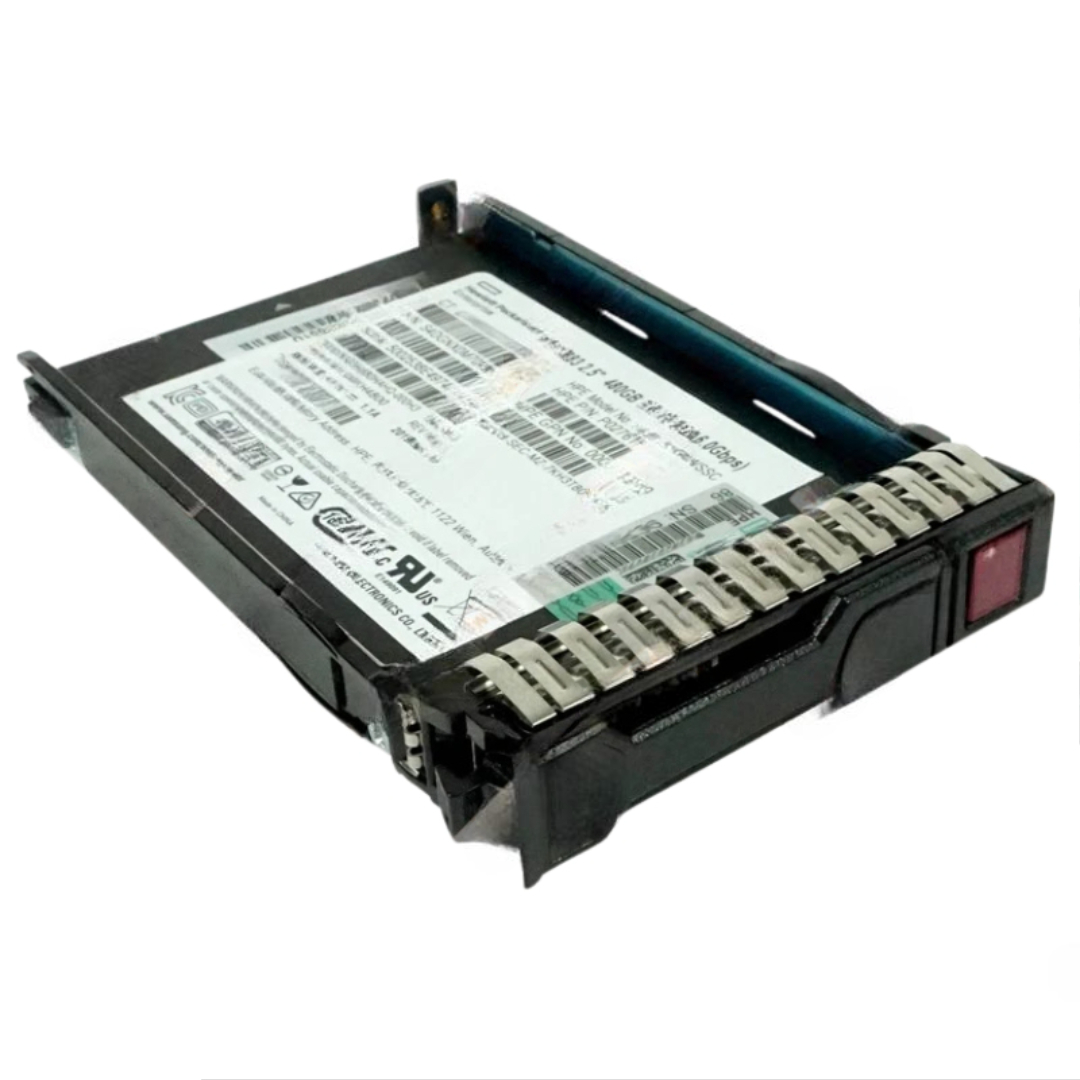
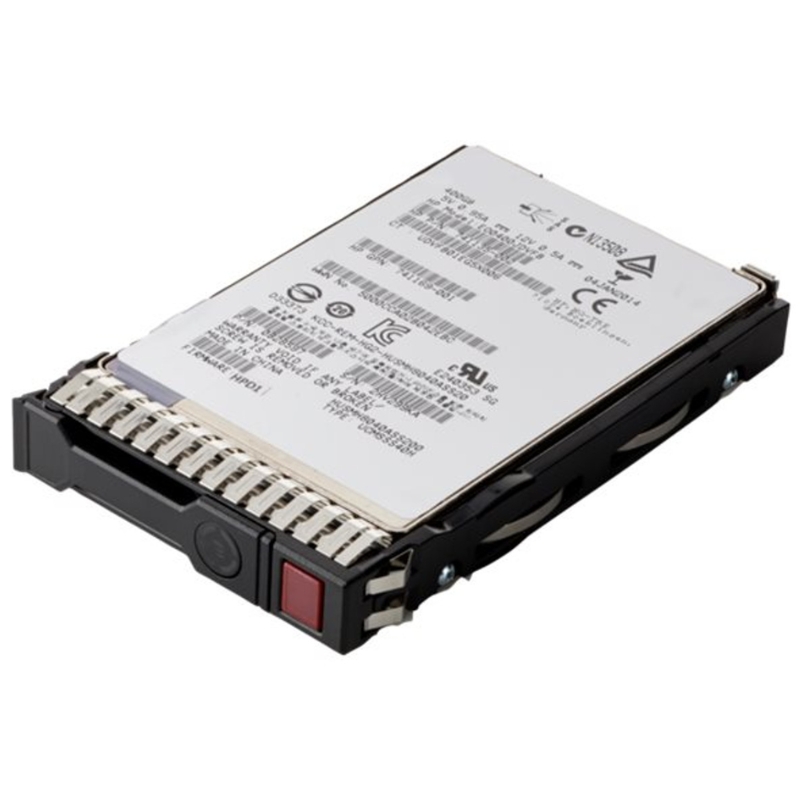
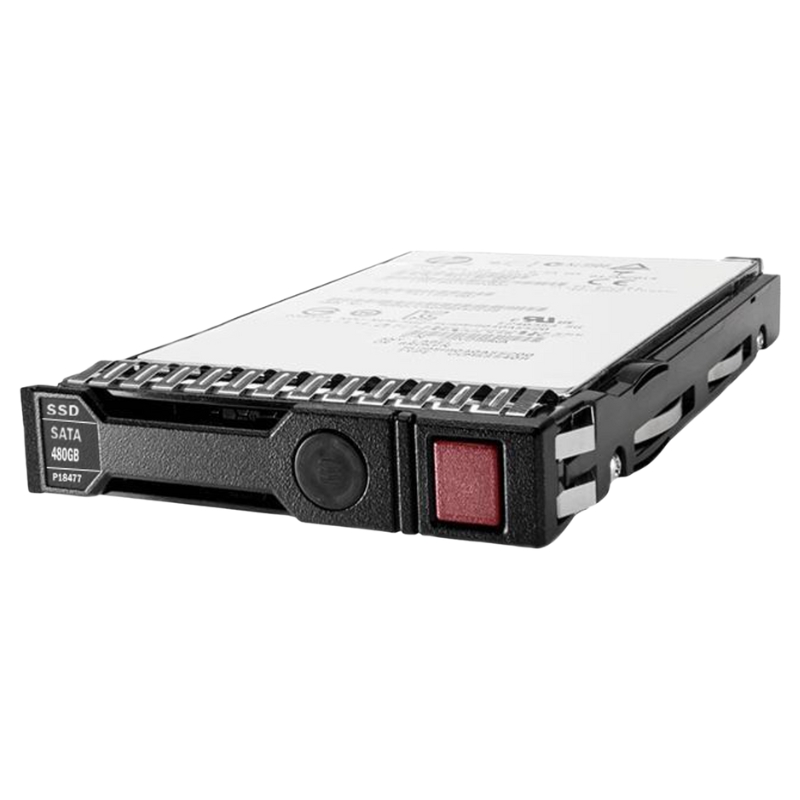
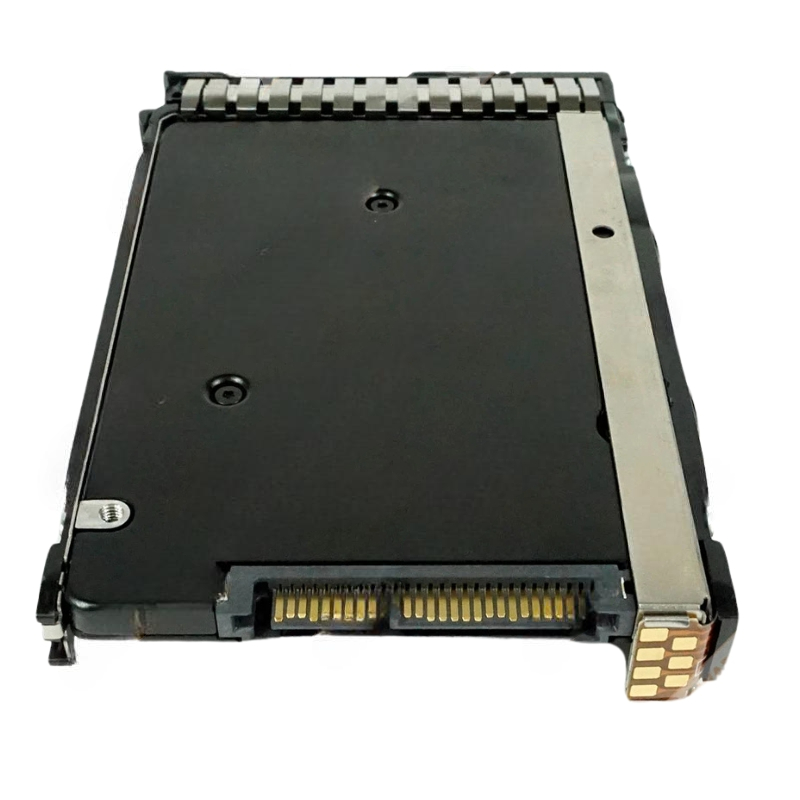
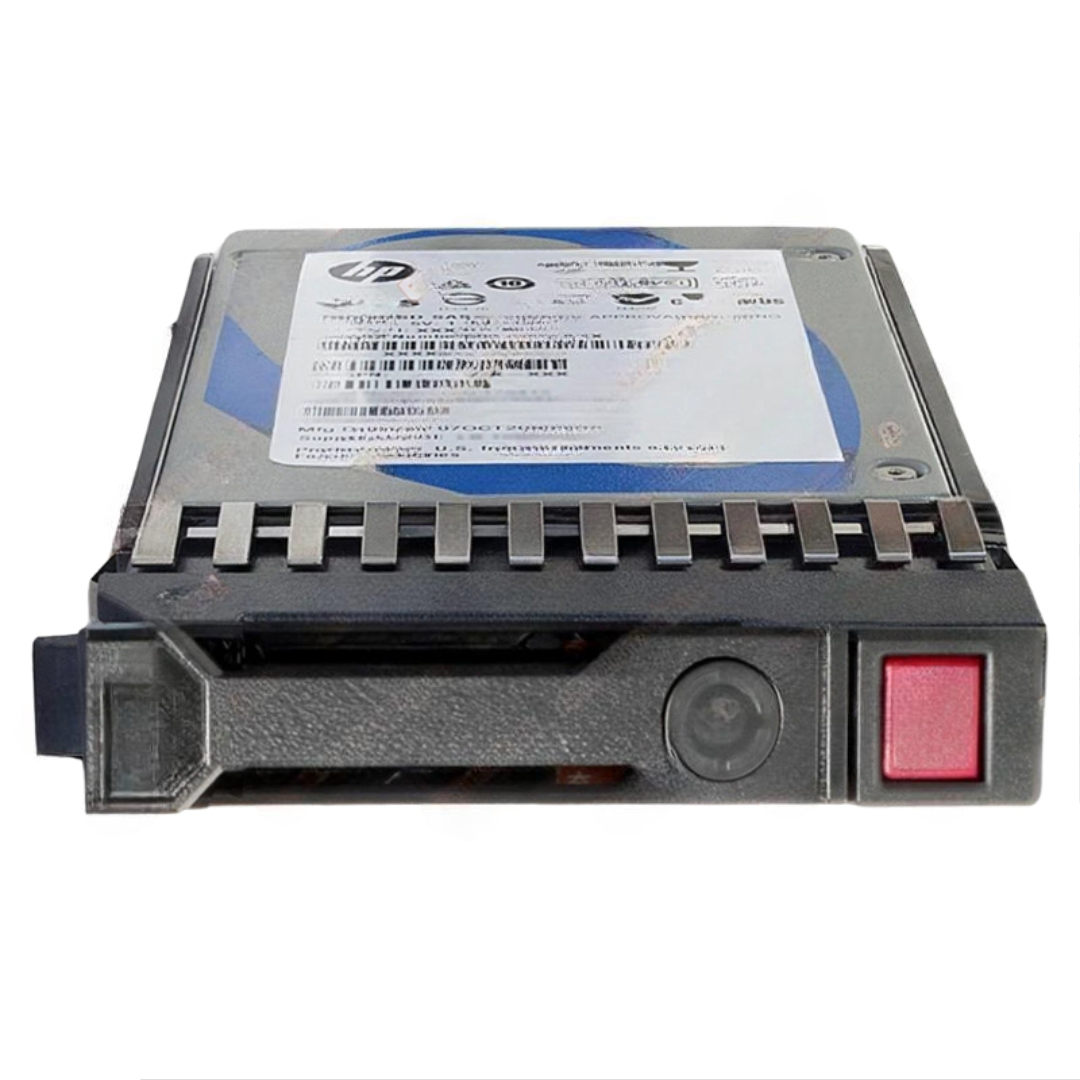
HPE N9X86A SV3000 1.6TB SAS 12Gbps MU SFF DS SSD — Product Overview
The HPE N9X86A Solid State Drive delivers reliable enterprise-grade performance with optimized features designed for data-intensive environments. With advanced SAS interface technology, this storage solution enhances system responsiveness and ensures efficient data management.
Technical Specification:
- Model: HPE N9X86A SV3000 1.6TB MU SFF DS SSD
- Capacity: 1.6TB (format/usable capacity subject to vendor specification)
- Interface: SAS 12Gbps
- Form Factor: 2.5" SFF
- Endurance: Specified in DWPD / TBW (see vendor datasheet for exact numbers)
- Power-Loss Protection: Yes (capacitor-backed flush)
- ECC/Data Path Protection: End-to-end protection with advanced ECC
- SMART Support: Yes — drive health and telemetry exposure
- Operating Temperature: Enterprise-rated range (check datasheet for exact limits)
- MTBF: Enterprise-class MTBF rating
- Warranty: Vendor warranty with RMA service (duration per vendor policy)
Drive Structure
- Drive Type: Internal storage drive
- Storage Capacity: 1.6TB optimized for business workloads
- Data Transfer Speed: Up to 12Gb/s for smooth operations
- Endurance: Ideal for mixed-use applications
- Flash Memory: Multi-Level Cell (MLC) architecture
- Form Factor: 2.5-inch design for compact server compatibility
Interface and Connectivity
- Interface Standard: SAS 12Gb/s protocol
- Drive Interface: SAS for enhanced data reliability
Performance and Reliability
Key Advantages
- Efficient handling of high-demand workloads
- Consistent throughput for business-critical operations
- Strong endurance rating suitable for daily enterprise applications
- Improved latency and system responsiveness
Durability and Efficiency
- Eco-friendly design contributes to sustainable IT environments
- Manufactured with energy-efficient technology
- No assembly required for deployment
Compatibility and Integration
Deployment Benefits
- Seamless integration with HPE servers and storage systems
- Compact 2.5-inch format suitable for a wide range of configurations
- Designed for performance-driven business infrastructures
- Supports both read-intensive and mixed-use applications
Why Choose HPE N9X86A SSD?
- High-capacity storage in a space-efficient form factor
- Enterprise reliability backed by HPE innovation
- Advanced SAS 12Gb/s interface for faster data throughput
- Eco-conscious, durable, and optimized for business continuity
Interface and Form Factor
The SV3000 series uses a SAS 12Gbps interface, offering a robust point-to-point protocol designed for enterprise-class reliability and multi-lane throughput. The SFF 2.5-inch form factor enables higher drive density in server and storage chassis, allowing maximized usable capacity per rack unit.
Interface Benefits
- 12Gbps SAS provides lower protocol overhead and better multi-device management compared to SATA in large arrays.
- Full-duplex SAS links result in improved simultaneous read/write performance in multi-initiator environments.
- SAS supports dual-pathing and multipathing for higher availability in SAN and direct-attach configurations.
Controller and NAND Technology
Under the hood, SV3000 drives utilize enterprise-grade controllers optimized for mixed-use NAND management and advanced firmware features. Typical design priorities include:
- Efficient wear leveling and garbage collection to maximize endurance.
- Advanced error correction (ECC) and data path protection to ensure data integrity.
- Power-loss protection capacitors that flush volatile cache to NAND on sudden power events.
NAND & Endurance Profile
The 1.6TB MU SSDs are generally engineered with higher-quality NAND (e.g., TLC with enterprise grading or eTLC variants) and tuned for a balanced endurance rating suitable for mixed-use workloads — often expressed in Drive Writes Per Day (DWPD) or total bytes written (TBW) over the warranty period. This ensures consistent performance during sustained random IO operations commonly seen in enterprise applications.
Performance Characteristics
IOPS and Latency
Mixed-use SAS SSDs in the SV3000 family are optimized to deliver high random read and write IOPS while maintaining low and predictable latency. Typical benefits include:
- High random read IOPS for database queries and VM boot storms.
- Strong random write performance to support transaction logging, swap and write-heavy workloads.
- Consistent tail latency that helps maintain SLA-level responsiveness for multi-tenant services.
Throughput and Sequential Performance
For workloads that need throughput (large file transfers, backups, streaming ingest), the SAS 12Gbps interface allows solid sequential throughput when compared to lower-speed interfaces. Performance will scale with controller, RAID configuration and the host system, but you can expect the SV3000 MU SSD to meaningfully outperform traditional HDD arrays used in the same capacity envelope.
Real-world Benchmarks (Typical)
- Random 4K read/write IOPS in the tens to hundreds of thousands depending on queue depth and RAID setup.
- Sequential throughput measured in several hundreds of MB/s up to the physical interface limits under optimal conditions.
- Consistent performance under mixed 70/30 or 60/40 read/write ratios due to MU firmware optimizations.
Endurance, Reliability and Data Protection
Endurance Metrics
Endurance is a crucial metric for SSD selection in enterprise environments. The SV3000 MU SSDs typically come with specified endurance ratings which can be represented as:
- DWPD: Drive Writes Per Day over the warranty period.
- TBW: Total Terabytes Written over the warranty life.
- MTBF: Mean Time Between Failures — showcasing operational reliability.
Data Path Protection & Power-Loss Protection
Enterprise-class drives include end-to-end data path protection ensuring that data transferred from host to NAND is protected by ECC checks and CRCs at multiple stages. Power-loss protection (PLP) hardware and firmware are designed to preserve in-flight writes during an unexpected power failure — a key feature for transactional systems and databases.
SMART & Manageability
Self-Monitoring, Analysis and Reporting Technology (SMART) attributes are exposed to allow administrators to track drive health, remaining life, error rates, and important telemetry. Integration with HPE system tools ensures smooth firmware upgrades, diagnostics and replacement workflows.
Compatibility & Integration
Server and Storage Ecosystem
The HPE SV3000 series is engineered to integrate seamlessly with HPE ProLiant servers and HPE storage arrays, offering validated compatibility that simplifies procurement and support. Compatibility highlights include:
- HPE ProLiant Gen9/Gen10/Gen11 servers (validate exact firmware and carrier support).
- HPE Smart Array controllers and supported RAID firmware.
- HPE storage enclosures and hybrid array platforms where SAS SSDs are supported.
Firmware and Driver Considerations
For optimal operation:
- Always use HPE-validated firmware for both drives and controllers to ensure compatibility and to enable vendor support.
- Confirm RAID controller compatibility lists and driver levels before deployment.
- Plan a firmware update policy to keep drives and host firmware synchronized with the vendor's recommended releases.
Use Cases & Deployment Patterns
Database Servers and Transactional Applications
In OLTP workloads, where thousands of small, random I/O operations occur per second, the SV3000 1.6TB MU SSD provides the low latency and sustained random IOPS required for consistent transaction rates. Typical deployments include:
- Relational database engines (e.g., Oracle, SQL Server, PostgreSQL).
- High-performance NoSQL systems (e.g., Cassandra, MongoDB) that need reliable write performance.
- Transaction log storage layers or journal devices to accelerate commit latency.
Virtualization and VDI
Virtual desktop infrastructure (VDI) and virtualized server farms benefit from the SV3000 category due to fast boot storms, rapid clone/placement operations and sustained IO from concurrent virtual machines.
Cache/Tiering Layers and Hybrid Arrays
Use the SV3000 as a performance tier in tiered storage architectures or as a cache layer in hybrid arrays to accelerate hot data sets while keeping colder data on high-capacity HDDs. This approach offers a cost-effective route to high-performance storage without fully migrating to an all-flash array.
High-Availability & Scale-Out Architectures
Because SAS supports multipathing and robust host connectivity, these drives fit well in clustered and scale-out storage architectures where path redundancy and predictable rebuild times are prioritized.
Capacity Planning & Density Considerations
Drive Density and Rack Efficiency
The SFF 2.5" format enables denser storage configurations, allowing more drives per chassis compared to 3.5" options. This matters for:
- Rack space limited environments where maximizing TB per U is essential.
- Blade or half-height server designs that prioritize compact drive bays.
Performance per TB and Cost Efficiency
When planning capacity, consider:
- Performance per TB — SSDs deliver far higher IOPS per TB than HDDs, which can reduce the number of drives required for a given performance target.
- Total cost of ownership (TCO) — include power, cooling, rack space, and operational benefits when comparing SSD and HDD deployments.
Management, Monitoring and Lifecycle
Firmware Management & Monitoring Tools
HPE provides firmware and management utilities compatible with their drives. Best practices include:
- Regular health scans and SMART telemetry reviews.
- Scheduling planned firmware updates during maintenance windows.
- Using HPE OneView, Insight Tools, or integrated systems management to centralize monitoring and alerts.
Security & Compliance Features
Data Sanitization and Secure Erase
For decommissioning or repurposing drives, use vendor-provided secure erase or crypto-erase features to meet data sanitization policies and compliance requirements. Proper erase procedures help meet regulatory standards and reduce data leakage risk.
Encryption and Key Management
Some HPE SSDs and systems support self-encrypting drive (SED) features or integrate with server-based encryption solutions. Validate support for:
- On-drive encryption capabilities and standards (e.g., FIPS level where applicable).
- Integration with enterprise key management and HPE's security management features.
Comparison: SV3000 MU vs. Other HPE SSD Categories
MU (Mixed-Use) vs. Read-Intensive (RI) vs. Write-Intensive (WI)
Understand the workload profile:
- Read-Intensive (RI): Optimized for workloads dominated by reads with lower write endurance requirements — typically lower cost per GB but not ideal for write-heavy tasks.
- Mixed-Use (MU): Balanced endurance and performance for environments with both significant read and write activity — the SV3000 category fits here.
- Write-Intensive (WI): Highest endurance and firmware optimizations for heavy write workloads (analytics, caching) but at a higher cost per GB.
Choosing the Right Tier
Select MU drives like the SV3000 when your environment has balanced reads and writes, needs predictable performance, and must support enterprise-level reliability without paying the premium for WI-class devices.
Deployment Best Practices & Configuration Tips
RAID & Array Configuration Recommendations
- Choose RAID levels based on required redundancy vs. usable capacity (RAID 10 and RAID 6 are common choices for mixed workloads; RAID 10 balances performance and rebuild speed).
- Consider hot spares and proactive monitoring to reduce rebuild windows.
- Adjust stripe size and cache settings to match typical IO sizes for your applications.
Thermal & Power Considerations
High-density SSD deployments require airflow and thermal management planning. Ensure:
- Proper chassis airflow and monitoring to avoid thermal throttling.
- Power budgets account for peak drive power consumption; SSDs typically use less power than HDDs but SP/PLP systems and high-density arrays can still generate significant power draw.
Testing & Verification
Before full production rollout:
- Run load tests that simulate expected mixed read/write ratios and queue depths.
- Benchmark with realistic workloads (database benchmarks, VDI boot storms, or mixed-IO synthetic tests) to validate configuration choices.
- Measure rebuild duration and impact on performance under degraded states to ensure acceptable recovery SLAs.
Procurement, Pricing and Lifecycle Considerations
Buying Tips
When procuring SV3000 drives:
- Buy HPE-branded and validated SKUs if you require vendor support and simplified RMA.
- Request quantity pricing when buying in bulk for data center deployments.
- Consider bundled support options (proactive replacement, firmware services) if uptime is critical.
Refresh and Technology Roadmap
Plan for future refresh cycles by tracking endurance vs. workload growth and by architecting for non-disruptive replacement. As NAND and controller technologies evolve, later generations often deliver higher density and better price/performance; keep an eye on vendor roadmaps when planning long-term capacity.





 Contact Us
 Information
 Catalog
 Solid State Drives (SSD)
 Network Switches
 Hard Disk Drives
 HBA & Controllers
 PC & Servers
 PC & Server Memory
 CPU & Processors
 Network Routers
 Power Supplies
 Tape Drives & Libraries
 Network Devices
 Computer & Network Cables