(7% discount is applied at checkout)
Cart is empty
Your go-to destination for cutting-edge server products
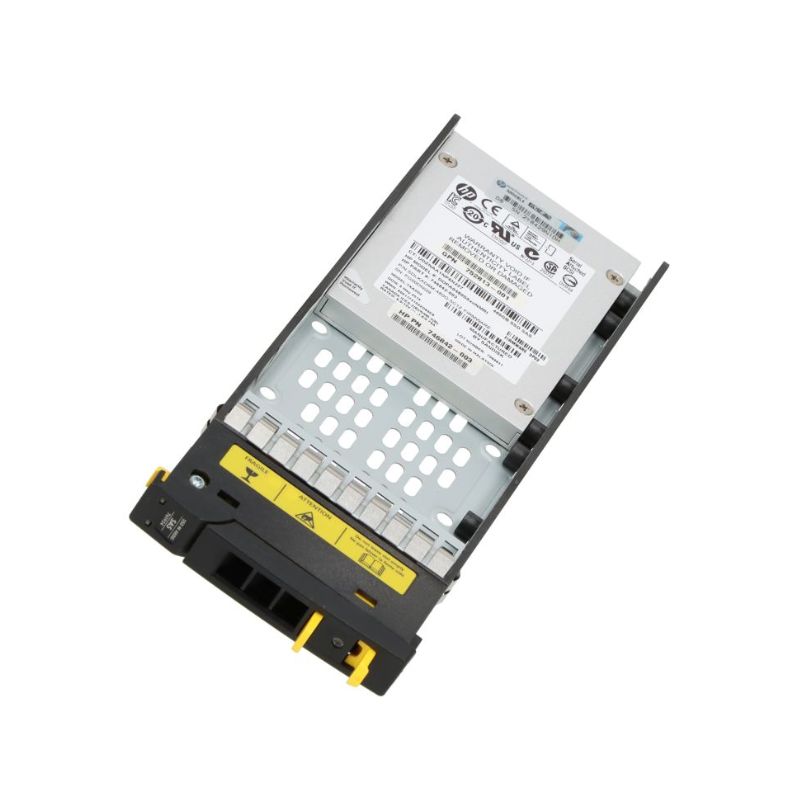


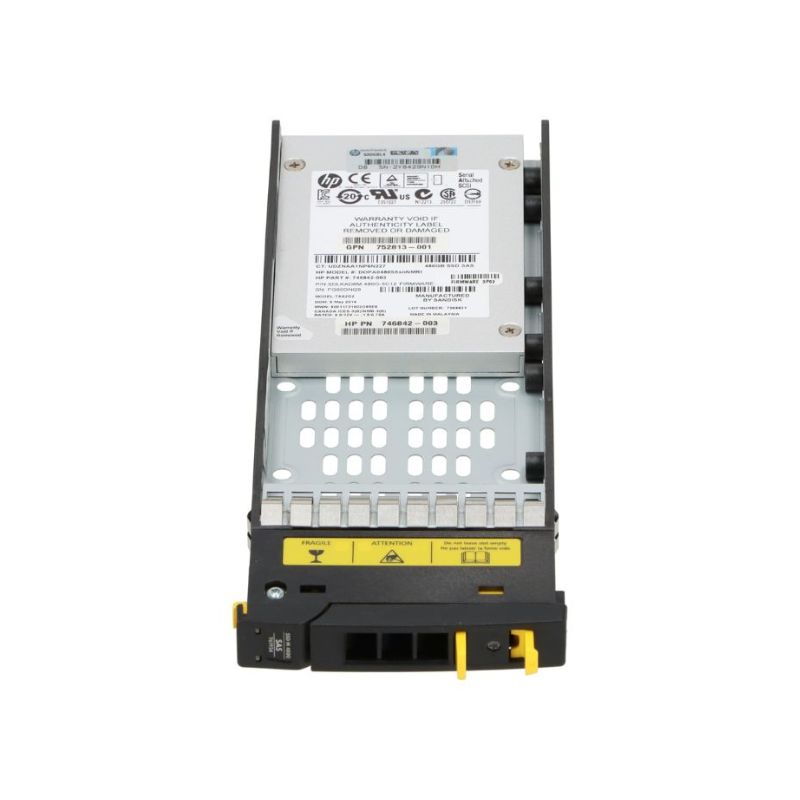
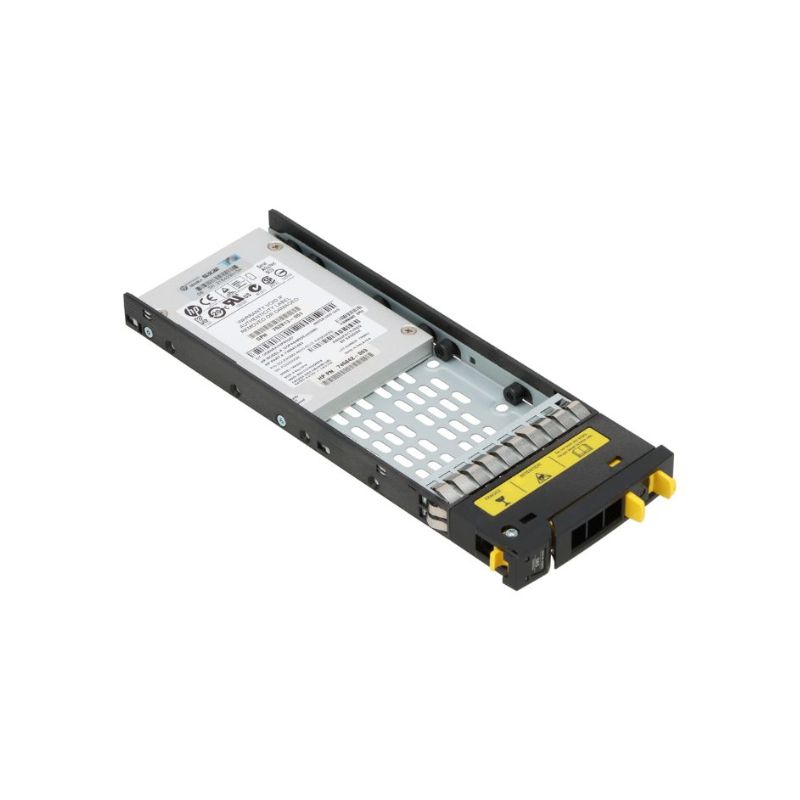
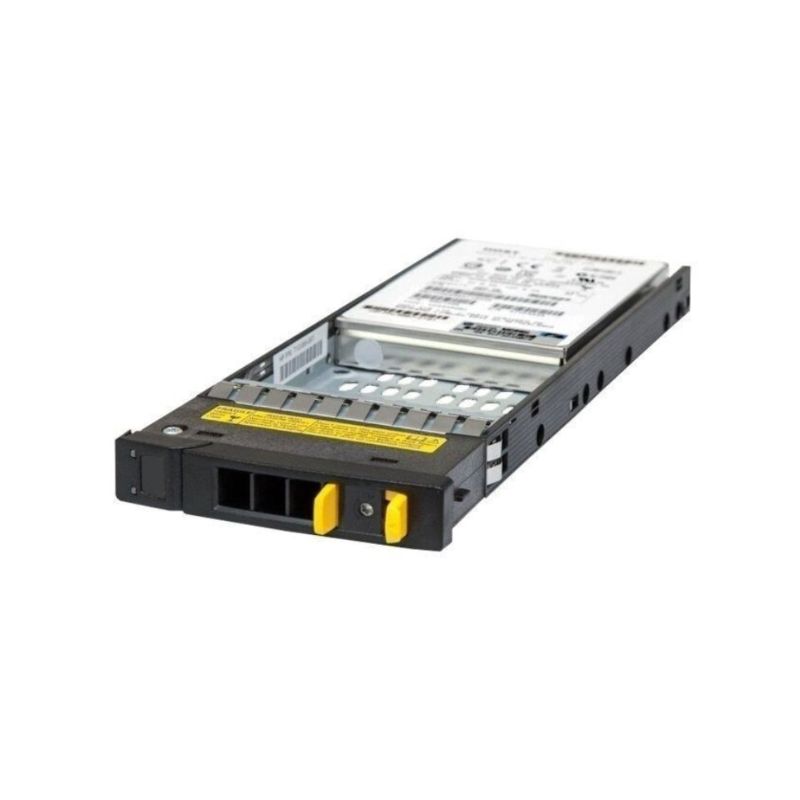
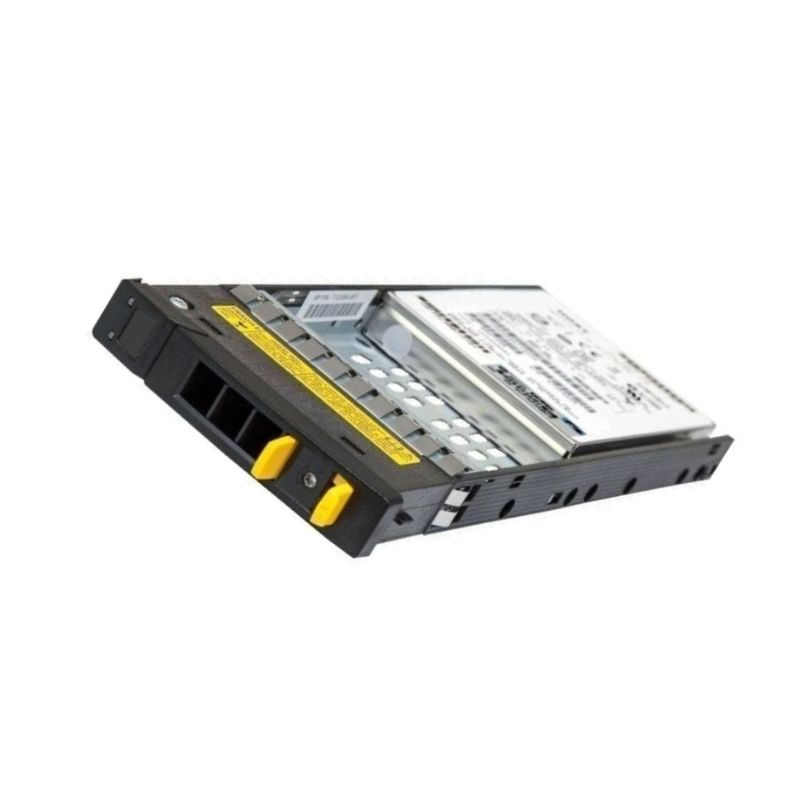
HPE DOPA0920S5XNNMRI 920GB MLC SAS 6GBPS 2.5-inch Internal Solid State Drive. Excellent Refurbished with 1 year replacement warranty
HPE DOPA0920S5XNNMRI Product overview and positioning
The HPE DOPA0920S5XNNMRI is a 920GB MLC-based SAS internal solid state drive engineered for demanding enterprise environments. Designed in a 2.5-inch form factor and leveraging the SAS 6.0Gb/s interface, this drive serves as a resilient, high-throughput storage building block for servers, storage arrays, and RAID systems. It balances capacity and performance to support virtualization, database workloads, caching layers and mixed read/write enterprise applications.
This HPE SSD emphasizes durability and consistent performance. MLC NAND provides an advantageous mix of endurance and cost-efficiency compared with consumer TLC flash; meanwhile the SAS link ensures enterprise-class command queuing, dual-port capabilities on compatible controllers, and robust error handling suited to 24/7 datacenter operation.
While exact throughput figures vary by controller, host configuration and workload mix, SAS 6Gb/s connectivity enables sustained sequential transfers that fit between SATA and newer higher-speed NVMe tiers. The DOPA0920S5XNNMRI is most effective when used in applications that need strong random I/O performance at low latency — for example, OLTP databases, virtual machine boot volumes, and read-/write-cached layers in hybrid storage arrays.
Enterprise SAS drives like this HPE model are built to maintain low, predictable latency under sustained load. Quality-of-service (QoS) stability is especially critical for multi-tenant or latency-sensitive software stacks, and the drive’s firmware is tuned to minimize jitter and to handle background media management without large performance drops.
MLC NAND commonly delivers higher write endurance than consumer-grade TLC, making it a practical choice where heavier write cycles occur. The HPE DOPA0920S5XNNMRI aligns with enterprise expectations for write durability, with internal wear-leveling and power-loss protection features typically integrated to preserve data consistency.
Manufacturers of enterprise SSDs usually publish MTBF (Mean Time Between Failures) and DWPD/ TBW endurance metrics — these are useful when planning replacement cycles and RAID group sizing. For procurement and lifecycle planning, align the drive’s rated endurance with your projected daily write volume to ensure the drive meets required service life.
The DOPA0920S5XNNMRI is intended to plug into HPE systems and compatible SAS backplanes. Because it uses standard SAS signaling, it will also work with a wide range of enterprise controllers and HBAs, provided firmware and driver compatibility checks are satisfied.
HPE frequently issues firmware updates and compatibility advisories. When adding drives to production clusters, consult HPE’s interoperability matrix or release notes for confirmed platform support; matching firmware versions across inventory can improve stability and minimize surprises during IO-heavy events.
In hybrid arrays, this SSD can serve as a high-speed tier that absorbs hot data, reducing latency for frequently-accessed blocks while spinning disks handle capacity-oriented storage. The balance between cost and performance makes 920GB MLC drives a cost-effective acceleration option.
Deploying enterprise SAS SSDs as system or OS boot drives reduces server boot times and improves orchestration workflows during mass provisioning or rolling updates. The drive’s reliability and sustained performance characteristics are beneficial where boot storms or parallel restarts are common.
Enterprise SSDs are sensitive to sustained high temperatures. Maintain adequate airflow, ensure drive bays are unobstructed, and monitor device temperature sensors through management interfaces. Thermal throttling may occur if the drive repeatedly exceeds designed thermal thresholds, which can temporarily reduce performance to protect flash health.
Compared to spinning disks, solid state drives typically offer lower active power use and higher performance-per-watt. Nevertheless, in large arrays, cumulative power draw matters; account for drive idle and active power figures when planning datacenter power and HVAC capacity.
HPE and third-party management tools can surface SMART attributes, endurance indicators, and predictive failure warnings. Regularly harvest telemetry for trending — tracking parameters such as media wear percentage, uncorrectable error counts, and write amplification can give early warnings for replacements before failures impact uptime.
When comparing the DOPA0920S5XNNMRI to other options, weigh the total cost of ownership: initial price, expected service life based on endurance ratings, support/warranty coverage, and administrative overhead. MLC enterprise SSDs often hit a sweet spot between purchase cost and lifecycle durability.
Confirm HPE warranty terms, support service levels and RMA logistics. Enterprise procurement should include contingencies for rapid replacement and ensure spares are on-hand or covered by a support contract to reduce Mean Time To Repair (MTTR).
Many enterprise SSDs support hardware-based encryption and secure erase functions. If regulatory requirements or data governance policies demand crypto erase or FIPS-level features, validate the drive’s capabilities and how they integrate with your storage controller or KMS (Key Management System).
SAS SSDs offer robust enterprise features and are widely compatible with legacy server infrastructures. Compared with SATA, SAS typically provides better command handling and dual-port availability. NVMe SSDs deliver higher bandwidth and lower latency but may require newer platform investment; thus SAS MLC SSDs remain a practical compromise for many fleets.
If ultra-low latency, higher parallel IOPS, or extreme bandwidth are primary objectives, evaluate NVMe/U.2 or NVMe-over-Fabrics solutions. For bulk archival or infrequently-accessed capacity, high-capacity HDDs still offer a lower cost per TB.
Yes — its latency characteristics and consistent performance make it appropriate for virtualization workloads, particularly for boot volumes, metadata stores and frequently accessed data within guest VMs.
Yes — many deployments use SSDs as an acceleration tier alongside HDD pools; however, configure RAID and tiering policies carefully to avoid suboptimal write amplification and to preserve endurance.
Monitor SMART attributes and vendor-reported media wear indicators through HPE’s management utilities or third-party monitoring platforms to track remaining write endurance and predict replacements.
Adopt a proactive replacement cadence that aligns with endurance forecasts rather than waiting for drive failure. Maintain an inventory of compatible spares and keep firmware and system images ready to accelerate replacements and minimize service disruption.
Use the above sections to build product pages, procurement specs, or technical briefs that help system architects, procurement teams and datacenter operators evaluate the HPE DOPA0920S5XNNMRI for enterprise deployments. The content emphasizes the drive’s intended roles, operational considerations, and planning guidance to support confident purchasing and stable long-term operation.
Drives in this category are designed for enterprise-class applications: database servers (OLTP/OLAP), mail and messaging systems, virtual desktop infrastructure (VDI), web servers, caching layers, metadata servers in distributed filesystems, and high-transaction e-commerce platforms. They are especially well-suited as boot/system drives for mission-critical servers, as cache tiers in hybrid storage architectures, or as high-performance capacity in RAID-protected pools.
Understanding the critical specifications helps IT teams match the HPE DOPA0920S5XNNMRI to the right workload. The following details are core to evaluating this SSD for enterprise deployment.
The 2.5-inch standard ensures broad compatibility with server sleds, storage enclosures, and hot-swap bays commonly found in modern rack servers. Its compact size enables higher drive density per chassis compared to 3.5-inch alternatives.
The Serial Attached SCSI (SAS) 6Gbps interface delivers a robust, enterprise-class link layer with advanced error handling, command queuing, and multi-path I/O support. SAS is preferred in enterprise servers for its reliability and support for dual-port configurations, enabling multipath redundancy and higher availability.
Multi-Level Cell (MLC) flash stores two bits per cell and balances cost, endurance, and performance. In enterprise environments, MLC provides significantly better program/erase cycle durability compared to consumer TLC NAND when managed with enterprise firmware, wear-leveling, and over-provisioning strategies.
Endurance is typically expressed as drive writes per day (DWPD), total bytes written (TBW), and MTBF. For decision-making, weigh the drive’s rated DWPD against expected write volume: caching and heavy transactional databases may consume higher write cycles, whereas read-heavy workloads will extend longevity. Over-provisioning, firmware optimizations, and proper RAID configurations further improve endurance in production deployments.
The 920GB capacity is optimized for enterprise allocation, offering a near-terabyte tier suitable for OS volumes, VM hosts, or mid-sized application datastore needs. Consider effective usable capacity after RAID, filesystem overhead, and reserved over-provisioning for endurance and consistent performance.
Enterprise SAS SSDs of this class deliver tens of thousands of IOPS for random read workloads and strong random write performance with optimized firmware. Sequential throughput on SAS 6Gbps typically reaches multiple hundreds of MB/s under optimal conditions. For architecture planning, benchmark with representative workloads (e.g., fio, Vdbench) to measure IOPS, latency percentiles (p95, p99), and throughput under concurrency.
Compatibility is a major reason enterprises choose HPE-branded SSDs. The DOPA0920S5XNNMRI is validated for HPE server platforms and integrated management stacks.
HPE SSDs often ship with vendor-optimized firmware and integrate with tools like HPE iLO, HPE Smart Storage Administrator (SSA), and HPE OneView for health monitoring, firmware updates, and predictive failure analysis. Use these tools to configure SMART thresholds, monitor temperature, track endurance counters, and schedule non-disruptive firmware updates where supported.
SMART attributes report critical drive health metrics—reallocated sectors, media errors, power-on hours, and temperature—allowing proactive replacement before failures impact availability. Combine SMART telemetry with HPE management alerts for an automated maintenance pipeline.
This SSD category emphasizes reliability with features that improve availability and minimize data loss risks in enterprise environments.
Enterprise SSDs commonly include power-loss protection (PLP) capacitors or firmware mechanisms that ensure in-flight write data is committed to NAND during unexpected power events. Coupled with end-to-end data protection, error-correcting code (ECC), and robust garbage collection algorithms, PLP reduces the risk of data corruption and supports RAID rebuild scenarios with increased predictability.
While the 2.5-inch single-unit form may or may not be dual-ported depending on SKU, SAS technologies support multi-pathing. Where dual-port functionality is present, servers can configure multipath I/O for redundant paths, enabling failover in the event of controller or fabric disruptions—critical for SAN and clustered configurations.
Enterprise-class MTBF ratings (mean time between failures) and warranty terms are important procurement factors. HPE typically offers enterprise warranties with advanced replacement options, subject to regional terms. Consider extended service agreements (e.g., HPE Foundation Care) for mission-critical environments to reduce downtime and procurement risk.
To extract consistent low-latency performance, apply deployment and tuning practices tailored to SAS-based enterprise SSDs.
Reserving additional spare area via over-provisioning can improve sustained performance and endurance. Many administrators allocate a percentage of capacity as reserved SSD space or rely on the drive’s factory over-provisioning. For write-heavy workloads, increase over-provisioning to reduce write amplification and extend usable life.
Properly tuning queue depth at the host/driver level and selecting an IO scheduler optimized for SSDs (or using none/blocked in certain kernels) reduces latency. For virtualization hosts, align queue depth with the underlying drive’s capabilities and consider VMware, Hyper-V, or KVM recommendations.
Choose RAID levels suited to your availability and performance needs: RAID 10 for low-latency random writes and fast recovery, RAID 6 for higher capacity efficiency with dual-parity protection, or RAID 5 for read-heavy workloads where write penalty is acceptable. Use controllers and firmware that support SSD-friendly rebuild throttling to prevent rebuild storms from impacting production performance.
Maintain hot spares to accelerate rebuilds and reduce risk windows. Leverage predictive failure alerts from HPE management tools to schedule replacements during maintenance windows.
Thermal considerations are vital for maintaining SSD performance and longevity. The 2.5-inch drive’s thermal envelope must be respected in high-density server environments.
Use HPE-certified carriers and backplanes that provide proper retention, electrical contact, and airflow. Some carriers include heat spreaders or thermal pads to assist heat dissipation. Validate that the chosen server chassis maintains adequate intake and exhaust to keep drive temperatures within manufacturer-recommended thresholds.
High ambient temperatures can trigger thermal throttling to protect the NAND and controller. Monitor temperature telemetry and design chassis cooling (fans, baffles) to prevent performance degradation in sustained heavy workloads.
Enterprise storage security includes hardware-level, firmware-level, and administrative features to protect data confidentiality and regulatory compliance.
Some enterprise SSD SKUs support Self-Encrypting Drive (SED) capabilities compliant with TCG Opal standards. SED-enabled drives provide hardware-based encryption without host CPU overhead, simplifying key management and decommissioning procedures to ensure data at rest is protected.
Follow certified secure erase procedures or use vendor-supplied utilities to sanitize drives prior to disposal or re-purposing. Adhere to organizational data destruction policies and regulatory requirements for sanitization.
Effective lifecycle management extends beyond initial procurement to include proactive firmware updates, monitoring, and scheduled replacements based on endurance consumption.
Use HPE’s validated firmware bundles and release notes. Firmware updates can improve performance, fix corner-case bugs, and enhance interoperability with host controllers. Always test firmware updates in a staging environment before rolling out to production to prevent compatibility or unexpected behavior.
Plan refresh cycles based on DWPD, TBW consumption, and support lifecycle notifications. Consider drive replacement before warranty expiration if SMART telemetry or endurance counters indicate elevated risk.
When selecting an SSD in this category, compare the HPE DOPA0920S5XNNMRI 920GB MLC SAS 6Gbps 2.5-inch against alternatives by balancing price per GB, endurance, performance, and validated compatibility with your HPE environment.
NVMe drives provide higher raw performance and lower protocol latency but require NVMe-capable controllers, backplanes, and often different server integrations. SAS SSDs like this HPE SKU offer straightforward drop-in replacements in SAS-enabled server fleets and storage arrays with broad compatibility and established management ecosystems.
SAS offers superior error handling, enterprise features, and often higher performance than SATA. SATA drives can be cost-effective for read-heavy or archival workloads, but SAS is the preferred choice for enterprise mission-critical systems.
Evaluate TCO by factoring in drive longevity, warranty and support, power consumption, cooling requirements, and the potential for improved application performance (which can reduce server count and licensing costs). Enterprise SSDs often deliver a lower TCO in high-performance environments despite higher upfront cost compared to commodity SSDs.
HPE part numbers (SKUs) carry embedded information about capacity, interface, and support options. Verify the exact SKU — DOPA0920S5XNNMRI — against procurement lists, HPE part catalogs, or contract-specific order forms to ensure you receive the correct firmware revision, carrier type, and warranty program.
OEM-branded HPE drives include vendor validation, firmware tuned to HPE platforms, and direct support from HPE. Channel variants or third-party equivalents may be cheaper but might not include the same validation, firmware compatibility, or warranty coverage. For critical deployments, prioritize genuine HPE parts to reduce interoperability risk.
Confirm packaging includes anti-static protection, shock absorption, and clear labeling for inventory and asset management. Verify return material authorization (RMA) processes and advanced replacement terms if covered by the purchase agreement.
Check for thermal throttling, background garbage collection or trim operations, controller queue saturation, and host-side congestion. Correlate with host CPU, memory, and storage controller metrics to isolate the source.
Validate backplane connectivity, SAS cabling, firmware compatibility, and carrier seating. Test the drive in a known-good slot or server to determine whether the issue is drive-specific or related to the chassis or controller.
Use this checklist to ensure a smooth deployment of the HPE DOPA0920S5XNNMRI 920GB MLC SAS SSD in enterprise environments.
Yes. It is commonly deployed in RAID arrays. Choose RAID levels and controllers designed for SSDs and ensure controller firmware supports SSD-specific features such as TRIM passthrough and SSD-aware rebuild policies.
Use HPE management tools (iLO, OneView, Smart Storage Administrator) and host monitoring solutions to track SMART attributes, temperature, power-on hours, and TBW/DWPD counters. Integrate alerts into centralized monitoring for proactive replacement.
Replace drives based on a combination of SMART error indicators, endurance consumption metrics, vendor recommended lifecycle thresholds, and predictive alerts. Maintain an inventory of hot spares for critical systems to reduce rebuild windows.
For fully supported deployments, consider pairing this SSD with HPE-certified items: 2.5-inch drive carriers/backplanes, SAS HBAs/RAID controllers, chassis cooling upgrades, and HPE management licenses. Also evaluate compatible SSDs with higher endurance ratings or NVMe options if extremely low latency is the top priority.
Always use carriers validated by HPE for mechanical fit, signal integrity, and thermal contact. Mismatched carriers can cause detection issues or thermal hotspots.
Select controllers that support SAS 6Gbps and are listed in HPE compatibility guides. Firmware interoperability between controller and drive significantly influences rebuild times and sustained performance.
Enterprise drives must comply with regional environmental and electronic standards. Verify RoHS, WEEE, and other applicable certifications. Additionally, confirm operating temperature ranges and shock/vibration tolerances to meet data center or edge site environmental constraints.
Follow local regulations for electronic waste and data sanitization. Use certified recycling channels and ensure secure erasure to meet privacy and compliance requirements.
For procurement, confirmation of compatibility, and support, contact HPE sales channels or certified HPE partners to gain access to the latest compatibility matrices, firmware bundles, and warranty programs. Document asset tags and maintain an inventory of firmware versions and deployment histories to streamline support escalations.
Include Product schema with attributes: name, model, brand, sku, description, image, offers (price, availability), and aggregateRating where applicable. Use technicalSpecification structured blocks to expose capacity, interface, form factor, and endurance data to search engines, improving visibility for technical queries.


 Contact Us
 Information
 Catalog
 Solid State Drives (SSD)
 Network Switches
 Hard Disk Drives
 HBA & Controllers
 PC & Servers
 PC & Server Memory
 CPU & Processors
 Network Routers
 Power Supplies
 Tape Drives & Libraries
 Network Devices
 Computer & Network Cables