(7% discount is applied at checkout)
Cart is empty
Your go-to destination for cutting-edge server products
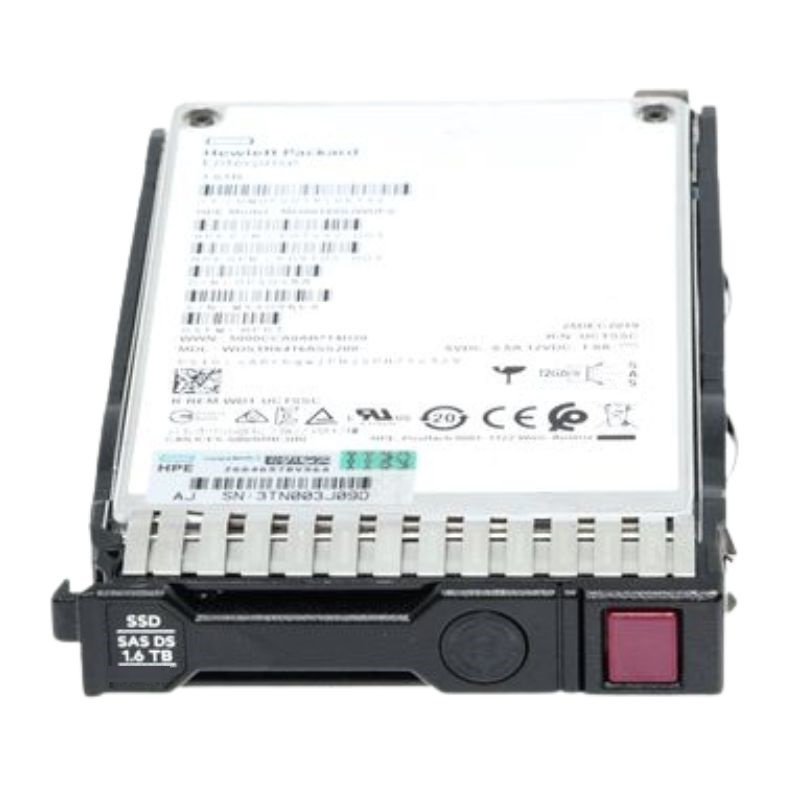


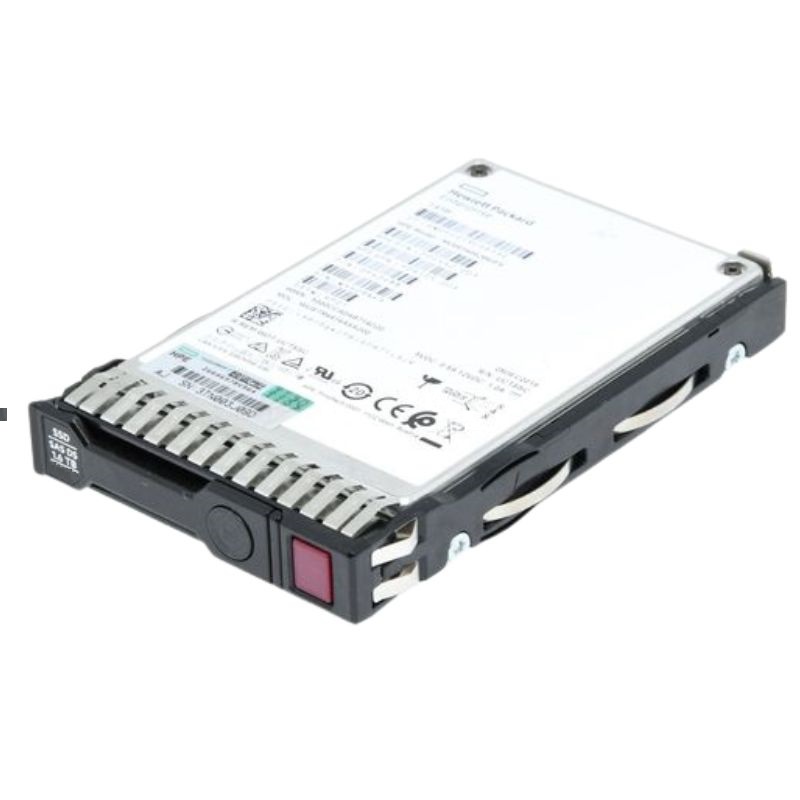
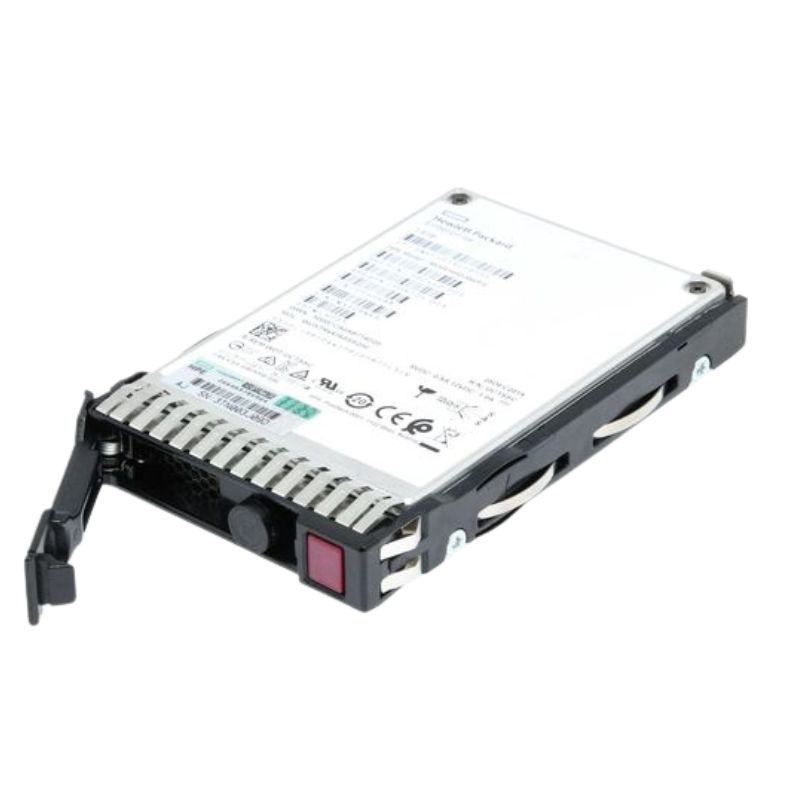
HPE 873565-001 SAS 12GBPS 1.6TB Write Intensive SFF DS Hot-plug SSD. Excellent Refurbished with 1 year replacement warranty
The HPE 873565-001 SAS 12Gbps 1.6TB Write-Intensive SFF DS Hot-Plug SSD is designed for enterprise-grade workloads requiring exceptional speed, reliability, and endurance. Built for HPE ProLiant Gen8, Gen9, and Gen10 servers, this 2.5-inch Small Form Factor (SFF) drive ensures seamless integration with HPE Smart Drive Carriers (SC). Offering digitally signed firmware for enhanced security, this SSD is engineered to handle write-intensive operations while maintaining peak performance over time.
Key Features
Because of its write-intensive design, this SSD is highly recommended for workloads that generate a large number of write operations daily. Some examples include:
The HPE 873565-001 SAS 12Gbps 1.6TB Write Intensive SFF DS Hot-plug SSD category encompasses enterprise-grade solid-state drives engineered for high-throughput, low-latency storage tiers in data center and mission-critical server environments. These drives are optimized for write-intensive workloads—transactional databases, logging services, analytics ingestion, and virtual machine swap/activity—where sustained write bandwidth and endurance are essential. This category emphasizes devices that combine the reliability and manageability expected from HPE-branded components with the performance advantages of modern SAS (Serial Attached SCSI) 12Gbps interfaces and the space-efficiency of Small Form Factor (SFF) designs.
The SAS 12Gbps interface delivers full-duplex signaling and enterprise-grade features such as multipath I/O, error recovery, and better command queuing compared to consumer SATA. In practice, SAS 12Gbps substantially reduces bottlenecks when many concurrent streams are accessing the drive, and it supports complex storage topologies used in enterprise racks and blade chassis.
Small Form Factor (SFF) 2.5" drives allow higher rack density and improved thermal management. The compact footprint enables more drives per enclosure, which is particularly valuable in high-density, multi-node compute clusters and storage shelves.
The 1.6TB capacity is a practical choice for write-intensive tiers—large enough to host significant working sets or serve as cache/accelerator layers, yet sized to balance cost per GB and endurance provisioning. For architectures using RAID or erasure coding, 1.6TB drives deliver predictable rebuild times and manageable fault domains.
When evaluating write-intensive SSDs, pay attention to endurance metrics typically expressed as DWPD (Drive Writes Per Day), TBW (Terabytes Written), or a specified workload-rated program/erase cycle count. HPE-classified write-intensive drives generally offer higher DWPD ratings—suitable for 24x7 write-heavy operations—and include robust wear-leveling algorithms to maximize usable life.
Enterprise SSDs operate in thermally constrained server bays. The 873565-001 family will typically include power draw specifications for active and idle states and will be built to withstand higher operating temperatures than consumer devices. Efficient thermal dissipation and adherence to JEDEC/ASHRAE operating ranges ensure sustained performance without thermal throttling.
Lower latency improves application responsiveness. SAS 12Gbps with enterprise SSDs provides low command latency and predictable response under load. Applications sensitive to latency—databases, high-frequency trading platforms, and interactive VDI sessions—benefit from the deterministic behavior of drives in this category.
Controllers, RAID levels, and caching strategies alter perceived drive performance. Write-intensive SSDs paired with battery-backed controller caches or NVRAM can accelerate small writes and reduce latency. When planning deployments, consider how RAID stripe width and reconstruction times will impact performance during a drive failure or rebuild.
Drives labeled with HPE part numbers (873565-001) are validated for compatibility with HPE ProLiant servers, HPE storage arrays, and specific firmware ecosystems. Purchasing HPE-qualified drives reduces firmware mismatch risks and simplifies support escalation with HPE technical teams. Compatibility considerations include:
While many enterprise SSDs follow standardized interfaces and connector pinouts, using OEM-labeled drives in mixed-vendor environments can introduce firmware and support complexity. If deploying HPE-labeled drives in heterogeneous racks, confirm controller guidelines and test with representative loads before large-scale rollouts.
SAS is generally backward compatible with older link speeds (e.g., 6Gbps). The drive will negotiate link speed with controllers that don’t support 12Gbps. However, to realize full performance, ensure controllers and interconnects support 12Gbps end-to-end.
RAID configuration impacts performance and rebuild time. For write-intensive deployments, RAID 10 offers excellent write performance and faster rebuilds, while RAID 6 provides capacity efficiency and double parity at the cost of higher write amplification during parity updates. Choose based on desired balance between capacity, redundancy, and performance.
Firmware updates can include performance optimizations, bug fixes, or improved telemetry. Use HPE Service Pack for ProLiant (SPP) or the HPE Smart Component pipeline for validated firmware bundles to ensure safe updates. Avoid mixing unsupported firmware versions across mixed OEM drives unless explicitly validated.
The defining difference is endurance and media tuning. Write-intensive drives allocate more robust NAND provisioning, stronger ECC, and firmware tuned to minimize write amplification. Read-optimized drives may offer higher capacity and better cost-per-GB but lower DWPD ratings—unsuitable for sustained logging or heavy database commit workloads.
HPE and industry-standard procedures for secure erase (cryptographic erase if SED enabled) when decommissioning drives to comply with data disposal policies. Physical destruction is the last-resort option when regulatory requirements demand absolute ability.
Plan drive replacement windows according to endurance forecasts and operational criticality. Use telemetry-driven lifecycle management to replace drives proactively before performance or reliability degrades.
Use HPE Integrated Lights-Out (iLO), HPE Smart Storage Administrator, and drive-level SMART utilities to gather telemetry. Export logs for HPE support when opening an RMA to accelerate troubleshooting.
Before large-scale rollout, verify firmware compatibility with host controllers and test representative workloads. Align firmware updates across controllers and drives using validated HPE update bundles to avoid unexpected behavior.
Design drive bays with sufficient airflow and monitor temperature sensors. Include drive-level power draw in the server’s power budget calculations—SSDs consume less peak power than HDDs, but in aggregate they may still require careful planning in high-density enclosures.
Even with enterprise-grade SSD reliability, implement layered data protection: RAID, replication, and off-site backups. Frequent snapshots and replication protect against accidental deletion and logical corruption.
Use manufacturer-compatible carriers and caddies to ensure proper drive retention and thermal contacts. Verify backplane lane alignment and SAS topology to prevent link negotiation or performance issues.
Consider upgrading to controllers that fully support SAS 12Gbps and provide robust caching mechanisms (BBU or NV-RAM) to complement the drive’s performance. Controller firmware often plays a pivotal role in achieving consistent performance and fast rebuilds.
Adhere to manufacturer-specified temperature and humidity ranges. Long-term storage at extremes risks accelerated wear or initial performance issues on first power-up.
Retire drives according to organizational data-sanitization policies. Use certified e-waste recycling channels for disposal. If the drive includes SED functionality, cryptographic erase offers a fast, auditable sanitization route when supported.
When budgeting for HPE 873565-001 drives, account for total cost of ownership (TCO): upfront unit price, warranty and support contracts, expected drive life (endurance), and potential downtime costs during rebuilds and replacements. Bulk procurement may qualify for OEM support bundles or extended warranty options. Verify spare-part compatibility and ensure spares are kept in-stock for critical arrays.
Look for compliance with JEDEC, SCSI, and relevant environmental standards (RoHS, WEEE) that indicate the drive adheres to industry reliability and environmental practices. HPE-labeled parts typically carry cross-certifications for validated use in HPE chassis and arrays.
While SAS 12Gbps remains a solid enterprise technology, architecture teams should plan for eventual migration to NVMe and fabric-attached NVMe where lower latency and higher parallelism are necessary. Maintain modular designs and use bridges or mixed-controller architectures where phased migration is planned.
Use automated tiering to place write-hot data on the HPE 873565-001 drives, while moving read-cold datasets to high-capacity, lower-cost media. Intelligent tiering optimizes cost, reduces wear on write-intensive drives, and delivers performance where it matters most.


 Contact Us
 Information
 Catalog
 Solid State Drives (SSD)
 Network Switches
 Hard Disk Drives
 HBA & Controllers
 PC & Servers
 PC & Server Memory
 CPU & Processors
 Network Routers
 Power Supplies
 Tape Drives & Libraries
 Network Devices
 Computer & Network Cables