(7% discount is applied at checkout)
Cart is empty
Your go-to destination for cutting-edge server products


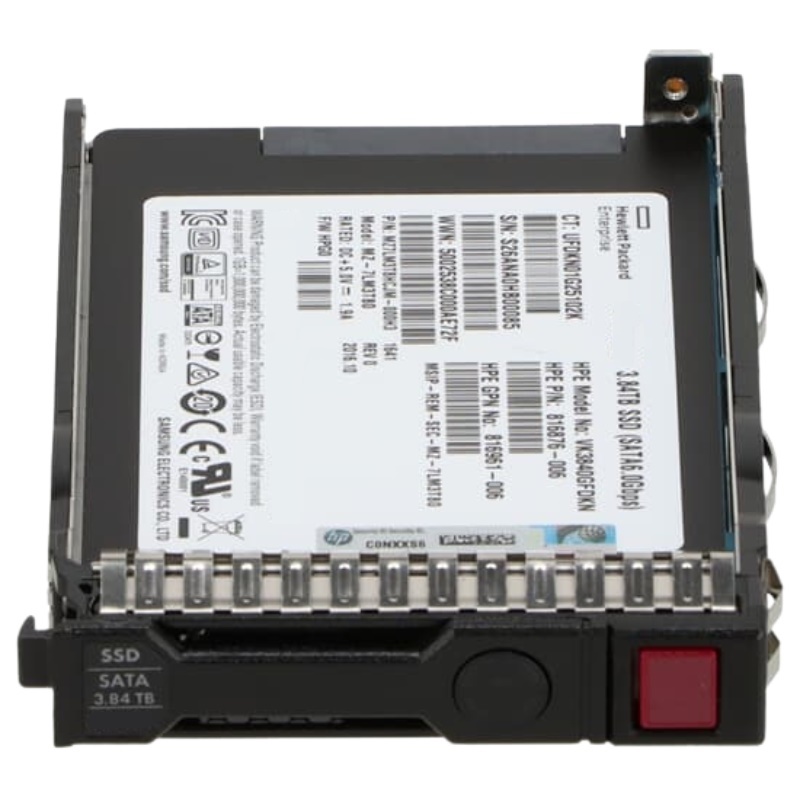
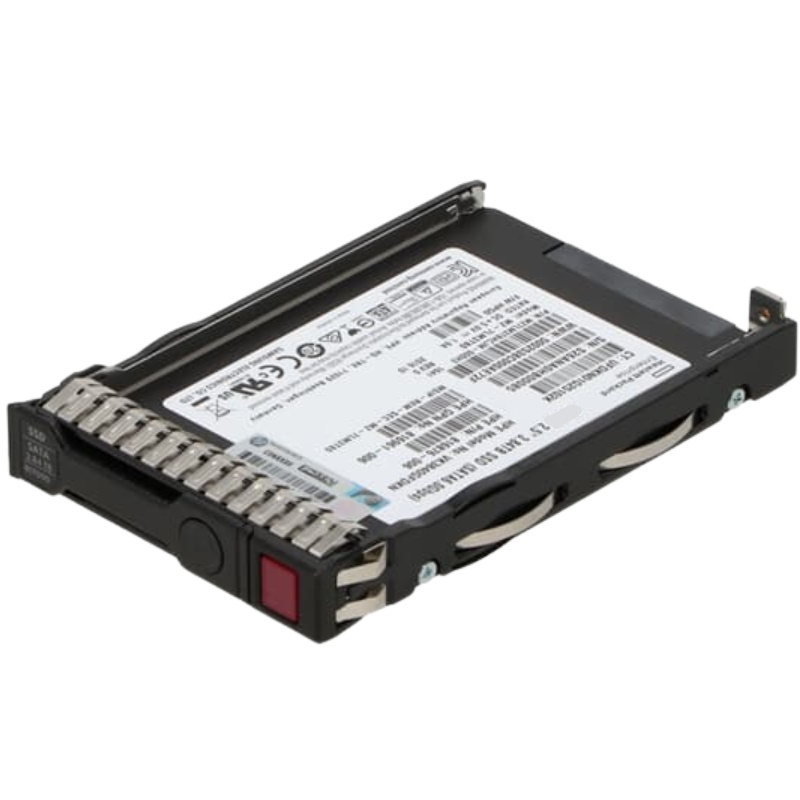
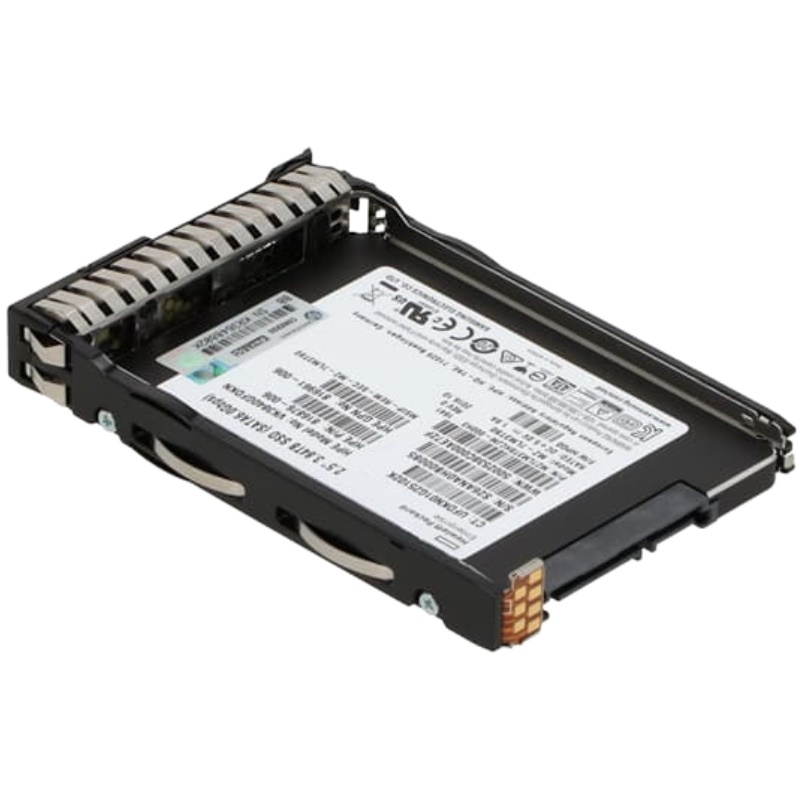
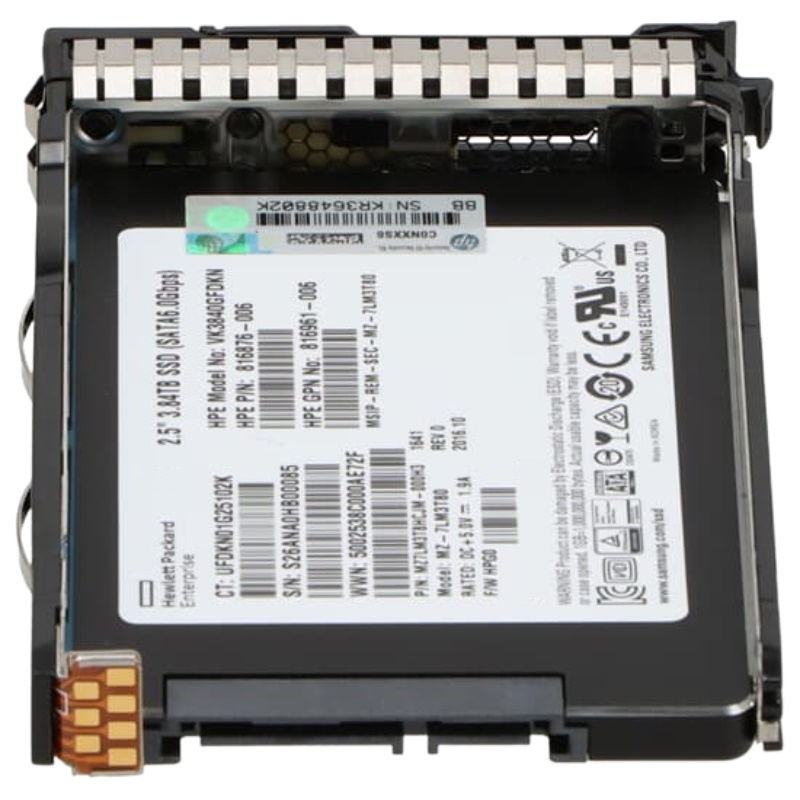
HPE 877766-B21 3.84TB SATA-6GBPS Read Intensive SFF Smart Carrier DS Solid State Drive. Excellent Refurbished with 1 Year Replacement Warranty
The HPE 877766-B21 3.84TB SATA-6GBPS Read-Intensive SFF Smart Carrier DS Solid State Drive represents a focused class of enterprise storage designed for heavy read workloads, consistent low-latency access, and efficient integration into HPE server and storage platforms. This category centers on drive modules that combine high capacity with SATA 6Gb/s interface reliability, small form factor engineering for dense server environments, and a “smart carrier” design that eases installation, identification, and hot-swap operations. The pages in this category describe not only the specific traits of the 3.84TB SKU but also the broader family characteristics: enterprise-grade endurance selections, firmware optimizations for read-intensive applications, compatibility considerations for modern server architectures, and operational practices that maximize value from these drives in mixed storage estates.
Drives labeled as read-intensive are engineered with a workload profile that prioritizes long sequences of read operations, predictable response times, and firmware routines that minimize write amplification for scenarios where write operations are less frequent. The HPE 877766-B21 reflects this approach by calibrating internal wear-leveling, error correction, and caching strategies to extend usable life under read-dominant loads. In practical terms, this means the drive is especially well suited to use cases such as large-scale virtualization read caches, content distribution, boot and OS volumes, analytic query loads where data is accessed repeatedly, and cold or warm data tiers where retention is important but write throughput is not the primary concern. Architects choosing read-intensive SSDs should exploit their strengths in read throughput and latency while applying higher-endurance media where write density is elevated.
The SATA 6Gb/s interface remains a widely compatible and cost-effective option for integrating SSDs into diverse server and storage systems. The HPE 877766-B21’s SFF packaging offers a balance of density and cooling efficiency; its mechanical design fits into standard 2.5-inch bays commonly found in HPE ProLiant servers, storage enclosures, and drive sled architectures. For IT managers, SATA brings the advantage of broad platform support and simplified migration paths from legacy SATA drives. Although NVMe and SAS alternatives can offer higher raw performance, SATA 6Gb/s SSDs like this model are valuable for predictable read behavior, simplified cabling requirements, and lower total cost of ownership when the workload profile aligns with read-intensive characteristics.
Endurance metrics for read-intensive SSDs focus on drive write endurance expressed in drive writes per day (DWPD) over a warranty period, and on total terabytes written (TBW) ratings that indicate the amount of data that can be sustainably written during the drive’s lifetime. While read-intensive models typically have lower DWPD thresholds compared to mixed-use or write-intensive enterprise SSDs, they are engineered to support long service lives in environments where reads dominate. Lifecycle planning should combine endurance numbers with the organization’s expected write rates, provisioning overhead, and RAID or erasure coding strategies, to determine when to schedule proactive replacements. Good monitoring tools will correlate SMART attributes and vendor telemetry to forecast end of life with precision and avoid unexpected capacity reductions in production clusters.
This family of drives is built for seamless integration into HPE compute and storage systems. The smart carrier design typically includes LED indicators and mechanical features that match HPE caddies, ensuring that tray insertion, hot-swap, and firmware updates operate smoothly under standard HPE management workflows. HPE’s system management suites often surface drive health, firmware revisions, and performance counters at the chassis and array level, making it straightforward to maintain fleet consistency. Compatibility notes should always be checked before procurement, but these drives are commonly validated for use in ProLiant servers, MSA and other HPE storage arrays, and selected HPE synergy frames. IT teams are advised to pair the drive with HPE-recommended firmware versions and to follow firmware update advisories to benefit from ongoing reliability improvements.
The smart carrier is a physical design that simplifies operational tasks. Integrated status LEDs provide a quick visual for drive health and activity without server power-down or intrusive diagnostics. The sled facilitates tool-less insertion and removal, reducing Mean Time To Repair (MTTR) during drive swaps. In high-density racks where technicians frequently replace or reassign drives, the carrier's ergonomics and standardized mounting reduce human error. From an inventory control perspective, the carrier also provides a physical canvas for labeling and asset tracking, ensuring that high-value SSD assets are easy to identify during audits and maintenance cycles.
There are several deployment patterns where the 3.84TB SATA read-intensive SSD yields clear value. In virtual desktop infrastructure (VDI) and large VM hosts, read-heavy master images and repeated read access patterns benefit from the drive’s rapid access times. Content delivery and caching layers in web and application tiers find that read-intensive SSDs minimize serving latency for static and semi-static assets. Analytics platforms that perform many repeated queries against indexed datasets will experience faster query responses when hot data resides on read-optimized drives. Additionally, boot volumes for hypervisors and system OS partitions often see excellent return on investment with this drive class due to their high read frequency and comparatively low write churn.
Integrating read-intensive SSDs into tiered storage architectures is an effective way to align cost and performance. These SSDs function as an intermediate tier between ultra-fast NVMe layers and high-capacity spinning disks, delivering a “sweet spot” of capacity and read latency. In hybrid arrays, caching algorithms can promote frequently accessed blocks to the SSD tier, reducing pressure on slower media and improving aggregate system responsiveness. Enterprises using software-defined storage should configure cache policies to favor read caching for this tier while reserving higher endurance drives for heavy write or log volumes. The combination of large capacity and read optimization encourages consolidation of many read-dominant datasets into a single, manageable tier.
Practical examples illustrate the typical value proposition. In virtualization hosts, placing frequently read VM images on read-optimized SSDs improves boot and snapshot operations for large fleets of VMs. Database architectures that rely on read replicas can store read-frequent datasets on these drives to accelerate replication query responses and reduce contention on primary storage. In caching layers, whether implemented as system-level cache or as part of storage appliances, read-intensive SSDs provide a high-capacity buffer to hold hot datasets, reducing load on slower capacity tiers and improving application throughput.
Organizations planning upgrades should weigh capacity needs against latency targets. If an application’s performance is bounded by read latency and the environment is cost conscious, the HPE 3.84TB SATA read-intensive SSD is a compelling middle ground. For workloads that subsequently require higher parallelism or write endurance, plan migration paths to NVMe or high-end SAS models with minimal downtime by adopting flexible storage virtualization or data mobility tools. Documenting migration triggers—such as sustained write patterns exceeding endurance budgets or new application SLAs requiring lower tail latency—enables predictable evolution of the storage estate.


 Contact Us
 Information
 Catalog
 Solid State Drives (SSD)
 Network Switches
 Hard Disk Drives
 HBA & Controllers
 PC & Servers
 PC & Server Memory
 CPU & Processors
 Network Routers
 Power Supplies
 Tape Drives & Libraries
 Network Devices
 Computer & Network Cables