(7% discount is applied at checkout)
Cart is empty
Your go-to destination for cutting-edge server products
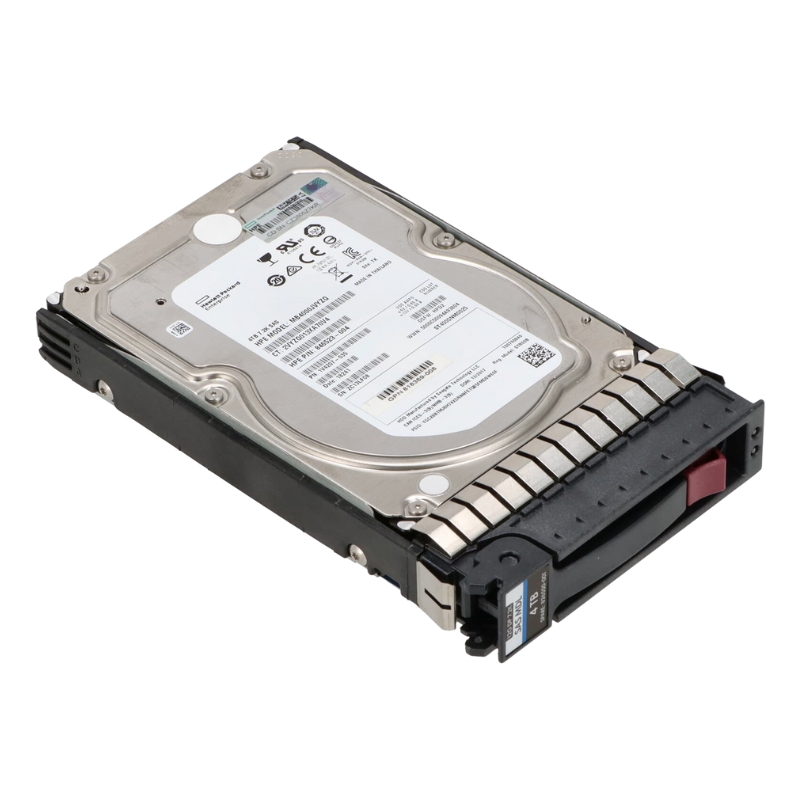


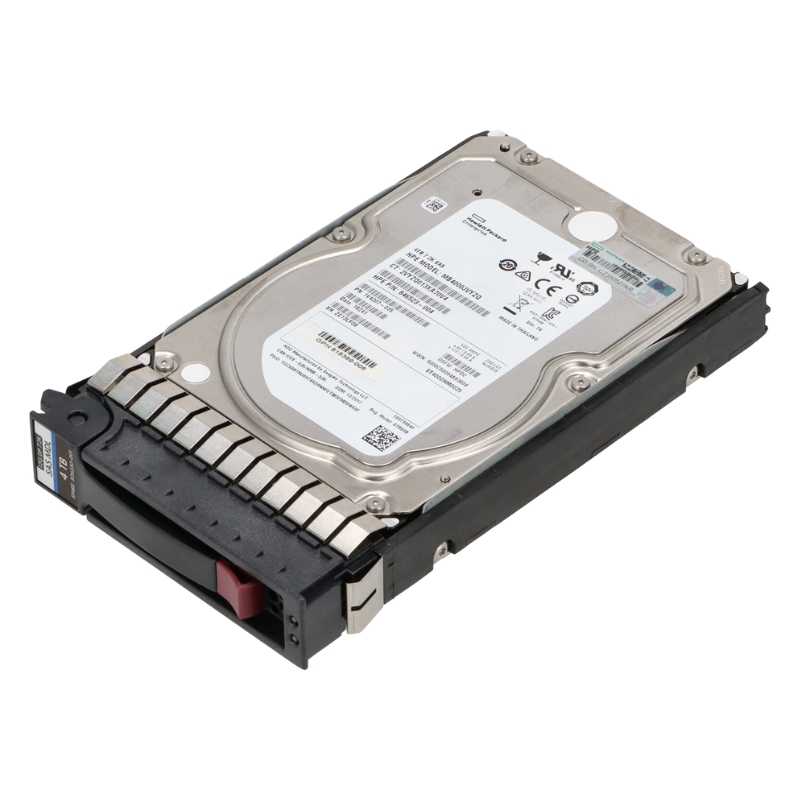
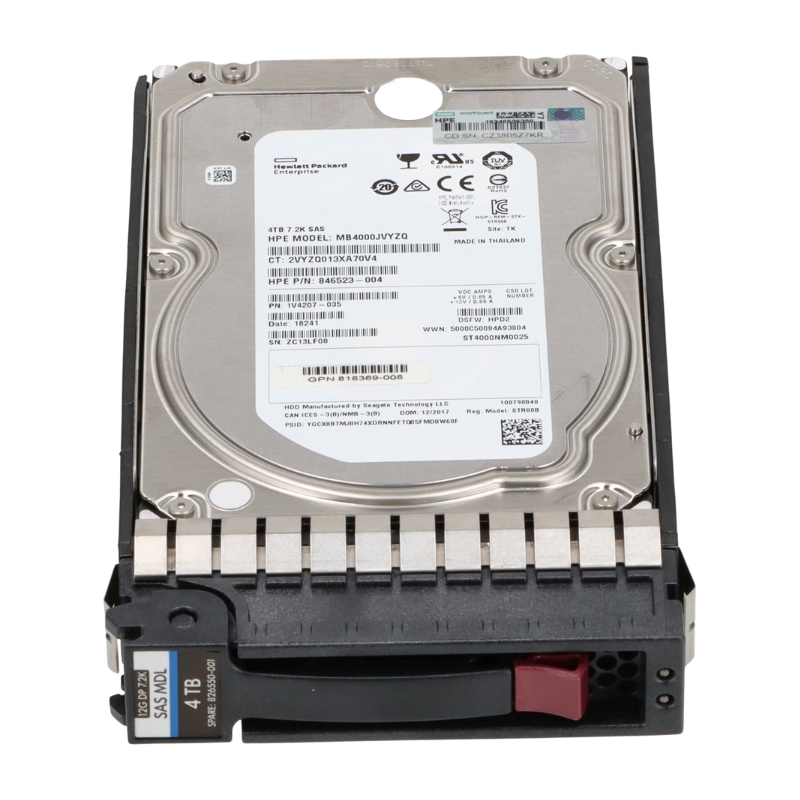
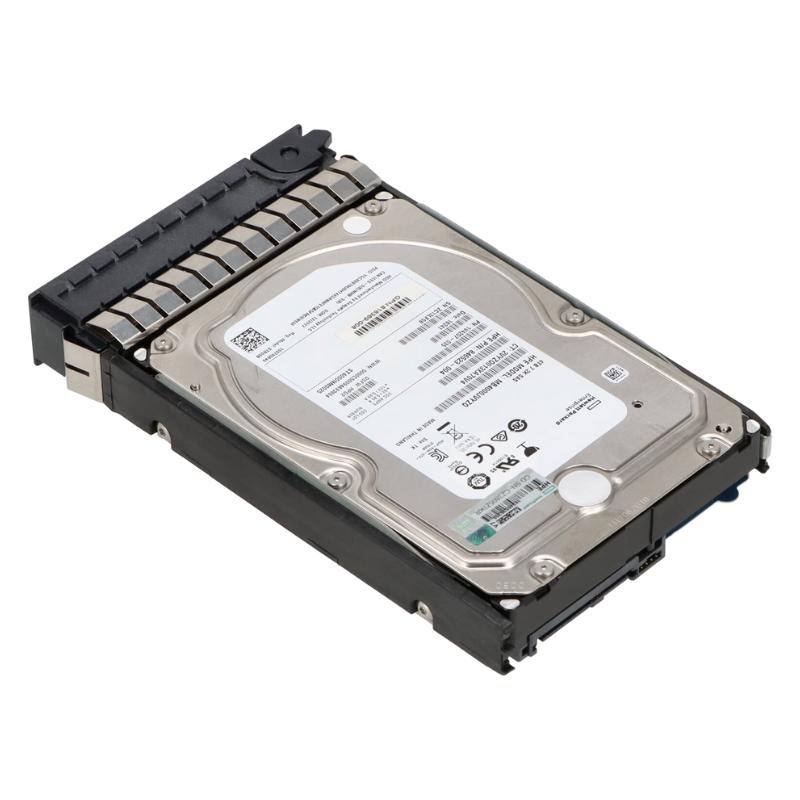
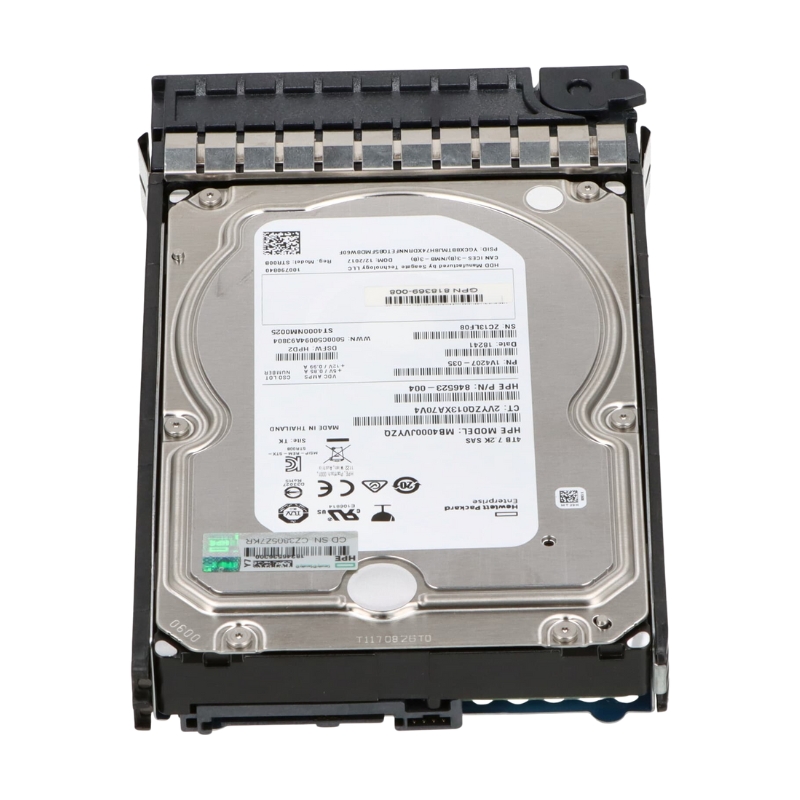
HPE 833930-003 4TB 7.2K RPM SAS 12GBPS LFF 3.5-inch Midline Hard Disk Drive. Excellent Refurbished with 1 year replacement warranty
The HPE 833930-003 is a high-capacity enterprise-grade hard disk drive designed for reliability and efficiency. With 4TB of storage, a 12Gbps SAS interface, and 7200 RPM rotational speed, it is ideal for midline workloads and optimized for HPE ProLiant servers and storage systems.
The HPE 833930-003 4TB 7.2K RPM SAS 12Gbps LFF 3.5-inch Midline Hard Disk Drive is engineered as a high-capacity, cost-efficient enterprise storage solution designed to meet the growing demands of modern data centers. Built for scalability, reliability, and consistent performance, this midline SAS hard drive integrates seamlessly into enterprise server environments where balanced workload handling and dependable storage density are critical. It is widely adopted in enterprise-class infrastructure, especially within HPE ProLiant server ecosystems, where optimized storage throughput and long-term durability are essential for business continuity.
This hard disk drive belongs to the Midline (MDL) category, which is specifically designed to bridge the gap between high-performance enterprise drives and high-capacity archival storage solutions. The engineering philosophy behind this category emphasizes a balance between affordability and reliability, making it suitable for workloads that require consistent access but not extreme input/output operations per second (IOPS). The HPE 833930-003 leverages a robust mechanical architecture optimized for 24/7 operation in multi-drive server environments.
Operating at 7,200 revolutions per minute, the spindle system of this drive ensures a stable rotational performance suitable for sequential data processing and moderate random access workloads. The mechanical assembly is designed to minimize vibration impact across multi-drive chassis configurations, which is particularly important in large-scale storage arrays. Enhanced rotational stability contributes to reduced latency fluctuations and improved predictable performance under sustained workloads.
The 7.2K RPM speed class represents a strategic compromise between high-speed enterprise drives and lower-cost archival disks. It enables efficient throughput for applications such as file storage systems, backup repositories, and general-purpose server data handling. This speed also reduces heat generation compared to higher RPM drives, contributing to improved system longevity and lower cooling requirements in dense server racks.
The Serial Attached SCSI (SAS) 12Gbps interface provides a high-speed data pathway between the drive and the host system. This interface is critical for enterprise environments where multiple drives operate simultaneously under heavy data traffic conditions. The dual-port architecture commonly associated with SAS drives enhances redundancy and path failover capabilities, ensuring uninterrupted data flow even in the event of controller or path failure.
With a 12 gigabits per second interface speed, the drive supports efficient data streaming and reduces bottlenecks in RAID configurations. This is particularly beneficial in environments where multiple users or applications access shared storage resources simultaneously. The SAS protocol also provides improved command queuing mechanisms compared to traditional SATA interfaces, enabling better workload management and optimized performance distribution.
The 4TB storage capacity of the HPE 833930-003 is optimized for mid-tier enterprise storage deployments where a balance between density and manageability is required. This capacity level allows organizations to scale storage infrastructures efficiently without excessive physical expansion. It is particularly effective in environments that require centralized data storage, virtualization support, and structured backup systems.
In RAID-based storage arrays, 4TB drives allow administrators to create balanced storage pools that maximize redundancy while maintaining usable capacity. The uniformity of drive capacity in enterprise arrays ensures predictable performance and simplifies storage planning. This is especially important in data centers where workload consistency is prioritized over peak performance bursts.
Midline drives like this model are optimized for sustained capacity usage rather than extreme transactional workloads. The firmware and caching mechanisms are tuned to support sequential read and write operations efficiently, which is ideal for backup systems, archival storage, and large-scale file distribution systems. This makes the drive highly suitable for enterprise environments with predictable but continuous data flow requirements.
The performance profile of the HPE 833930-003 is designed to deliver consistent throughput under sustained workloads. While not positioned as a high-IOPS performance drive, it excels in environments where steady data transfer rates are more important than peak transactional performance. This makes it ideal for applications such as media storage, backup servers, and cloud-based file repositories.
The SAS protocol enables advanced command queuing features that improve how the drive processes multiple simultaneous requests. This capability enhances efficiency in multi-user environments where concurrent read and write operations occur frequently. The drive firmware is optimized to prioritize workload balancing, reducing latency spikes and ensuring smoother performance under load.
The internal caching system plays a crucial role in improving read/write efficiency. By temporarily storing frequently accessed data, the drive reduces physical disk access requirements, thereby improving response times. This is particularly useful in enterprise environments where repetitive data access patterns are common.
The HPE 833930-003 is specifically designed for integration with HPE ProLiant servers, ensuring seamless compatibility with enterprise-grade hardware platforms. This compatibility includes firmware synchronization, backplane recognition, and optimized performance tuning for HPE storage controllers. It is widely deployed in rack-mounted, tower, and blade server configurations.
The Large Form Factor (LFF) 3.5-inch design allows for high-capacity storage deployment in server chassis that support larger drive bays. This form factor is particularly beneficial for organizations prioritizing storage density and cost efficiency per terabyte. The physical design ensures secure mounting and efficient airflow management within server enclosures.
Hot-plug functionality enables the drive to be inserted or removed without shutting down the system, ensuring continuous operation in mission-critical environments. This feature is essential for minimizing downtime during maintenance or drive replacement procedures, thereby improving overall system availability and operational efficiency.
The drive is optimized for compatibility with HPE Smart Array controllers, which manage RAID configurations and storage virtualization. This integration ensures efficient data distribution, redundancy management, and performance balancing across multiple drives in a storage array.
This drive is widely used in backup infrastructure where large volumes of data must be stored reliably over long periods. Its capacity and stability make it ideal for scheduled backup operations and long-term data retention strategies.
In virtualized infrastructures, storage drives must support multiple virtual machines accessing shared resources. The HPE 833930-003 provides sufficient throughput and capacity for moderate virtualization workloads, especially in private cloud deployments.
The drive is also suitable for file server environments where large datasets are shared across multiple users. Its consistent performance ensures reliable access to stored files in collaborative enterprise environments.


 Contact Us
 Information
 Catalog
 Solid State Drives (SSD)
 Network Switches
 Hard Disk Drives
 HBA & Controllers
 PC & Servers
 PC & Server Memory
 CPU & Processors
 Network Routers
 Power Supplies
 Tape Drives & Libraries
 Network Devices
 Computer & Network Cables