(7% discount is applied at checkout)
Cart is empty
Your go-to destination for cutting-edge server products
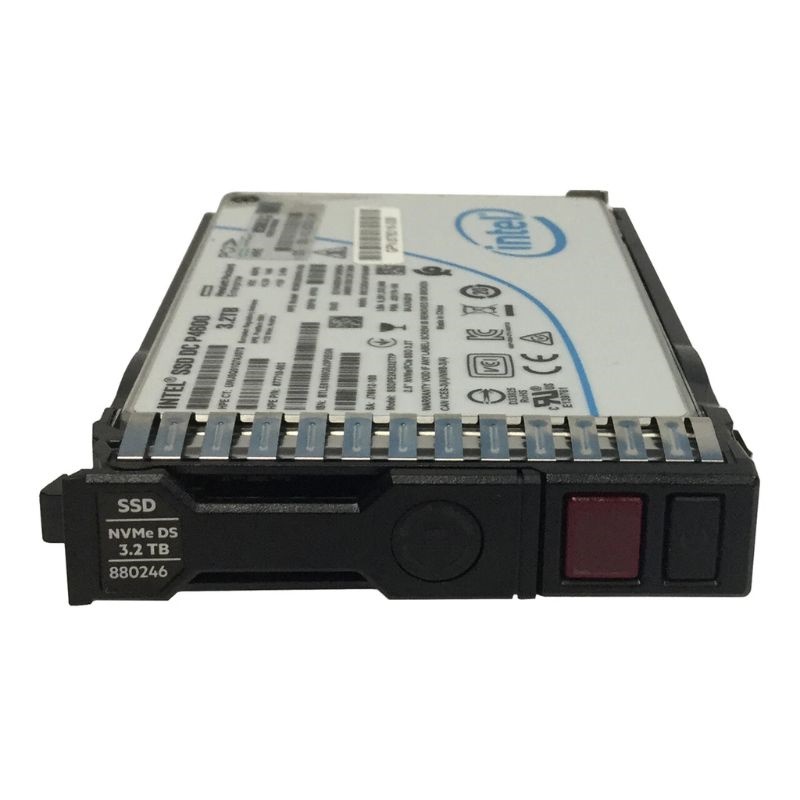


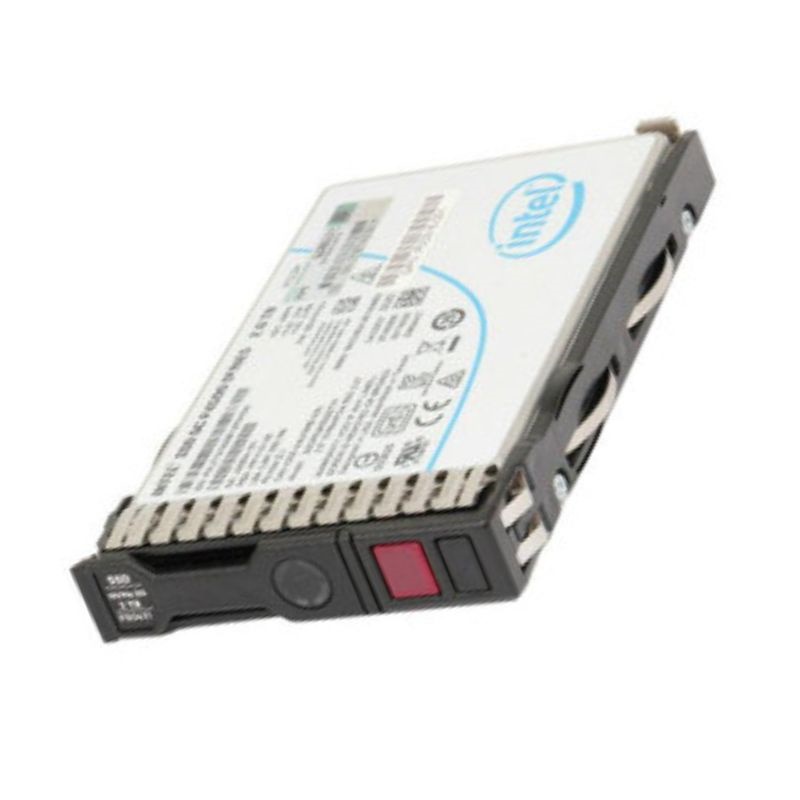
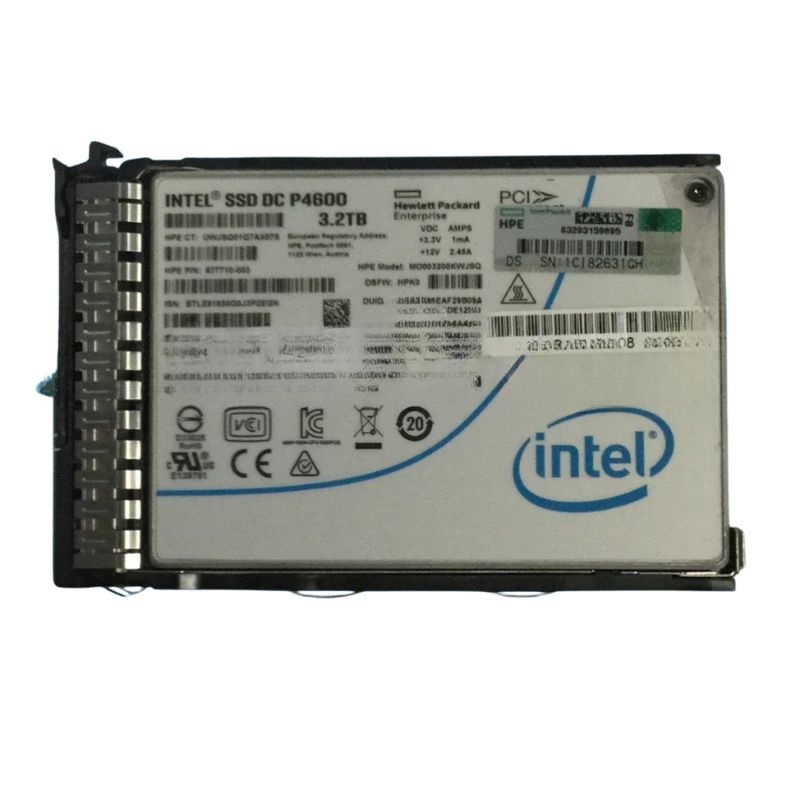
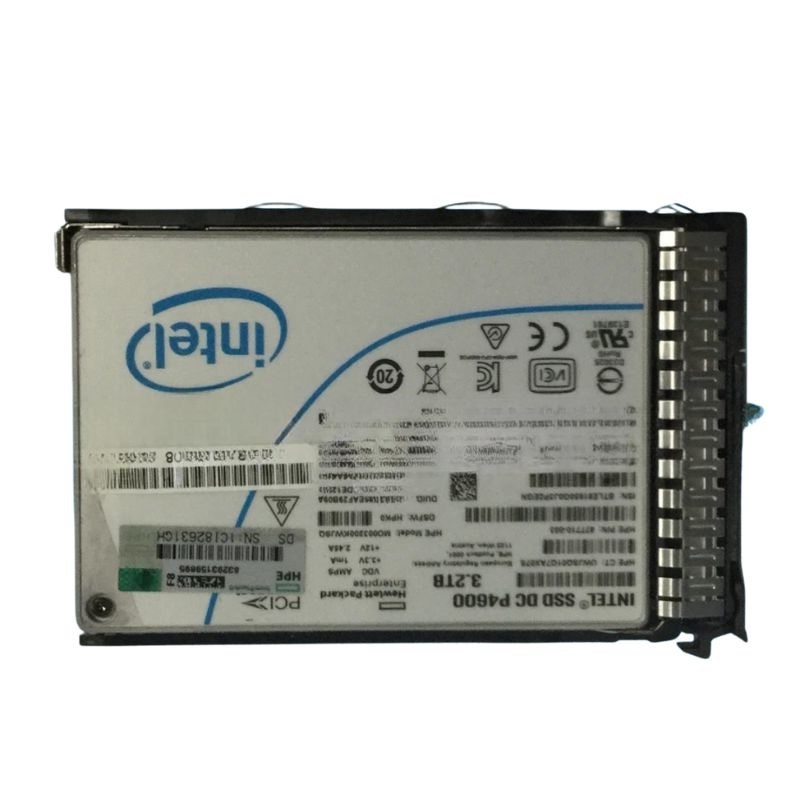
HPE 880246-001 3.2TB NVME Mixed Use O Hours SFF DS Internal Solid State Drive with Smart Carrier. Excellent Refurbished with 1-Year Replacement Warranty
The HPE 880246-001 3.2TB NVMe Mixed Use SSD is a high-performance enterprise-grade storage solution designed to handle demanding workloads with exceptional speed, reliability, and endurance. Built for data-intensive environments, this 2.5-inch Smart Carrier SSD provides both efficiency and scalability for modern IT infrastructures. Whether used in servers, storage arrays, or mission-critical applications, it guarantees consistent performance across various workloads.
Engineered with NVMe architecture, this SSD ensures ultra-low latency and rapid data transfers compared to traditional SATA or SAS options. Its mixed-use design makes it ideal for applications that require balanced read/write performance, such as virtualization, online transaction processing, data warehousing, and cloud services.
The HPE 880246-001 drive delivers not only capacity but also resilience. With advanced wear-leveling, error correction, and enterprise-class reliability features, it ensures consistent performance even under continuous workloads. Designed for long-term usage, it reduces downtime and improves operational efficiency for businesses handling critical applications.
This drive is tailored for diverse IT operations, offering high reliability and responsiveness. Common applications include:
As a product backed by Hewlett Packard Enterprise, this drive integrates seamlessly with HPE server systems. It undergoes rigorous quality testing to ensure maximum uptime and reliability.
The NVMe PCIe interface guarantees unmatched speed, significantly reducing application response times. Its mixed-use capability provides a perfect balance for workloads that require both read- and write-intensive operations.
Businesses investing in this SSD can future-proof their IT infrastructure with a storage solution that supports next-generation technologies and scalable performance needs.
The HPE 880246-001 3.2TB NVMe Mixed Use O Hours SFF DS Internal Solid State Drive with Smart Carrier sits within a focused category of enterprise-grade NVMe drives optimized for mixed-use workloads. This category targets data centers, virtualization hosts, hyperconverged infrastructures and high-performance servers that require a balance of capacity, endurance, and low latency. Products in this class combine fast PCIe/NVMe interfaces, robust firmware, and enterprise reliability features to support sustained random and sequential read/write operations across multi-tenant and high-I/O environments.
Mixed-use SSDs are engineered to handle a broad range of I/O patterns — from frequent small random writes generated by databases and virtual desktops, to long sequential transfers such as backups and bulk migrations. Unlike pure write-intensive (W-Intensive) or read-optimized models, mixed-use drives balance program-erase (P/E) cycles, throughput, and latency to deliver consistent performance across varied workloads. This makes them a natural choice when consolidating multiple application types on the same storage pool or when a predictable quality of service (QoS) is paramount.
The SFF DS (Small Form Factor, Drive Slot) form factor is designed to maximize storage density while fitting into standard enterprise server bays. Drives labeled with SFF DS typically conform to 2.5-inch dimensions, but may include integrated carriers or sleds engineered to meet HPE-specific chassis and backplane interfaces. The smart carrier included with some HPE parts improves mechanical fit, reduces insertion/removal wear, and sometimes incorporates status LEDs or activity pins for native chassis management.
A smart carrier elevates the drive from a bare NVMe module to a chassis-ready component. Advantages include:
Drives in this category leverage the NVMe protocol over PCIe lanes (commonly x4) to deliver substantially higher IOPS and lower latency than SATA or SAS SSDs. The HPE 880246-001 3.2TB NVMe Mixed Use drive is designed to achieve a high level of random I/O performance conducive to virtualization and transactional databases, while also offering sustained throughput for large block sequential operations.
When evaluating NVMe drives for enterprise deployment, three metrics dominate decision-making:
To get the best out of mixed-use NVMe drives, consider the following:
A 3.2TB capacity point is commonly used to balance per-drive capacity with cost, power draw, and endurance. This size is large enough for hosting virtual machine images, active database partitions, and high-performance cache layers, yet small enough to be economically feasible for multi-drive arrays that require redundancy.
Typical scenarios where a 3.2TB mixed-use NVMe drive excels:
Choosing a 3.2TB drive allows architects to achieve a good compromise between raw capacity per rack and overall solution cost. Packing several 3.2TB drives into a server yields terabytes of ultra-low-latency storage without the high acquisition and power overhead of larger capacity drives.
Products carrying HPE part numbers such as 880246-001 are typically validated for specific HPE ProLiant and HPE Synergy platforms. Integration benefits include firmware-level compatibility, predictable thermal and power behavior, and often vendor support for firmware updates via HPE management tools.
For optimal reliability, deploy HPE-certified drives in HPE servers whenever possible. Vendor-certified firmware reduces the likelihood of interoperability issues, ensures accurate reporting to chassis management controllers (like iLO), and can be updated through HPE's support channels to patch stability or performance improvements.
Enterprise NVMe drives include a range of reliability features to protect data integrity and provide predictable lifetimes. Mixed-use models are commonly specified with a certain TBW (Terabytes Written) or DWPD rating and are tested under controlled workloads to ensure endurance claims align with real-world mixed I/O patterns.
Implement an effective monitoring regime that ingests NVMe telemetry into centralized dashboards. Monitor temperature, media wear percentage, percentage of life used, and error logs. Predictive replacement based on metrics reduces unplanned downtime and improves serviceability for clustered systems.
Firmware is a critical piece of the enterprise NVMe ecosystem — it tunes performance, stability, and compatibility. HPE drives with model-specific firmware are generally updated through vendor-provided utility tools and management ecosystems to ensure consistent behavior across server fleets.
Maintain a clear lifecycle policy for drive retirement, including criteria based on age, cumulative TBW, and SMART warnings. Proper documentation eases auditability and helps teams plan for procurement cycles.
Heat and power are practical constraints in dense server deployments. NVMe drives can generate significant heat under sustained I/O; smart carriers and chassis-level airflow are essential to avoiding thermal throttling. Power consumption scales with activity — mixed workload profiles often produce variable power draw, so factor this into rack-level power planning.
Consider drive power characteristics when estimating total cost of ownership (TCO). Lower idle and active power contribute to reduced operational expenses over large fleets. For mixed-use drives, evaluate both idle wattage and peak power under target workloads.
NVMe drives integrate across software stacks from operating systems to hypervisors and storage orchestration layers. Support for NVMe-oF (NVMe over Fabrics) expands the flexibility of these drives beyond local-attached storage, enabling block-level remote access across RDMA or TCP-based fabrics.
To extend NVMe performance across networked environments, consider NVMe over Fabrics solutions where fast interconnects (RDMA or high-speed TCP) can preserve low latency. This approach enables pooling of NVMe resources across nodes for resilient, performant storage fabrics.
Designing a high-performance storage architecture involves placing NVMe drives where latency matters most and balancing capacity across tiers. Consider a tiered design where NVMe mixed-use serves as the primary working set storage, with larger-capacity SATA/SAS or object storage for colder data. This hybrid approach improves response times for active data while keeping archival storage cost-effective.
Use NVMe as both cache and persistent store where rapid I/O is required. In HCI scenarios, local NVMe devices accelerate read/write operations and offload the networked datastore. Ensure data protection via replication or RAID to prevent data loss if a single node fails.


 Contact Us
 Information
 Catalog
 Solid State Drives (SSD)
 Network Switches
 Hard Disk Drives
 HBA & Controllers
 PC & Servers
 PC & Server Memory
 CPU & Processors
 Network Routers
 Power Supplies
 Tape Drives & Libraries
 Network Devices
 Computer & Network Cables