(7% discount is applied at checkout)
Cart is empty
Your go-to destination for cutting-edge server products
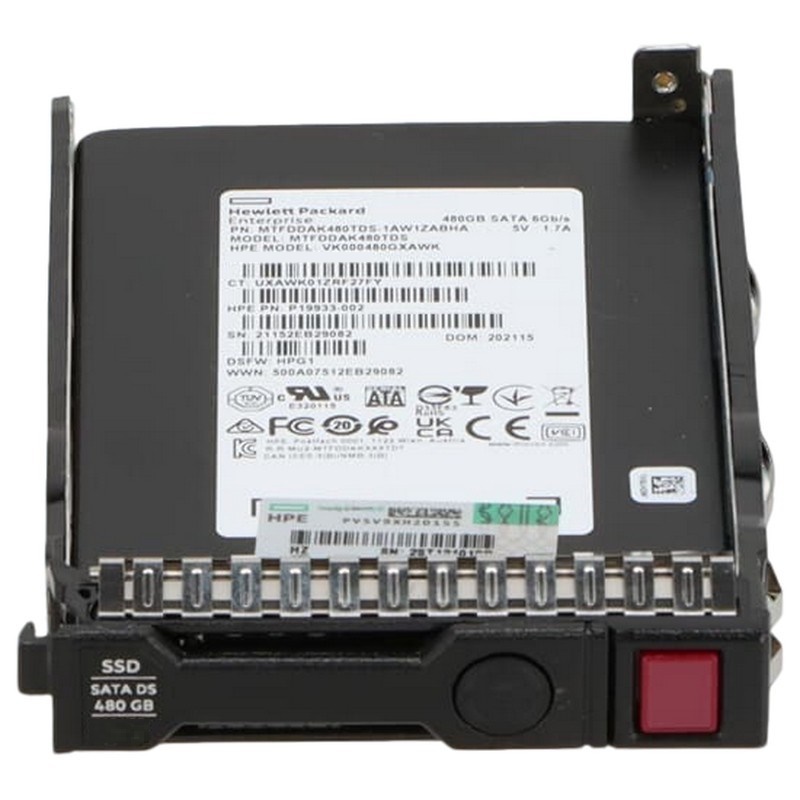


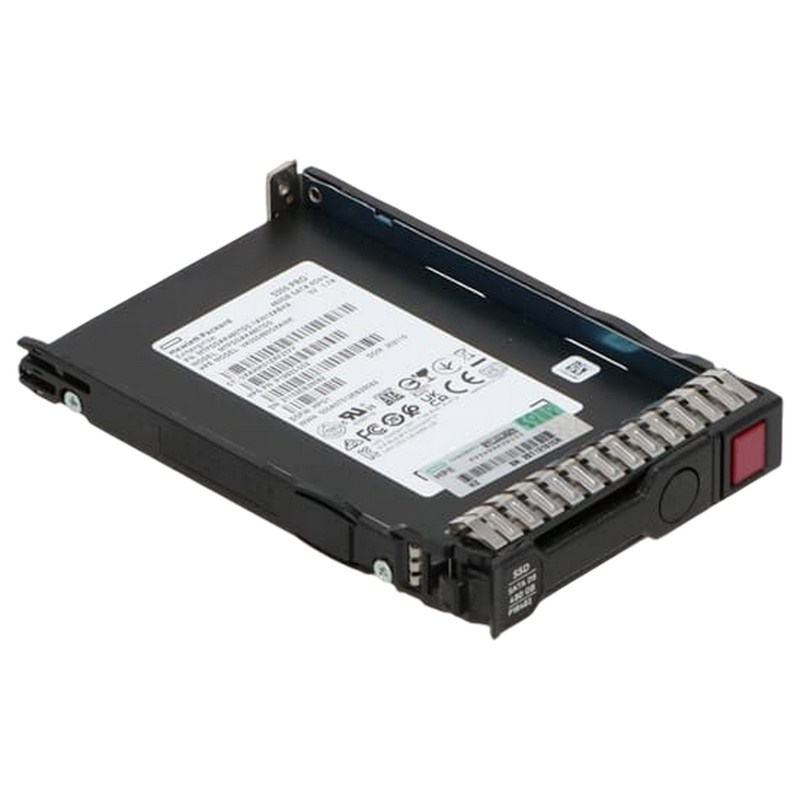
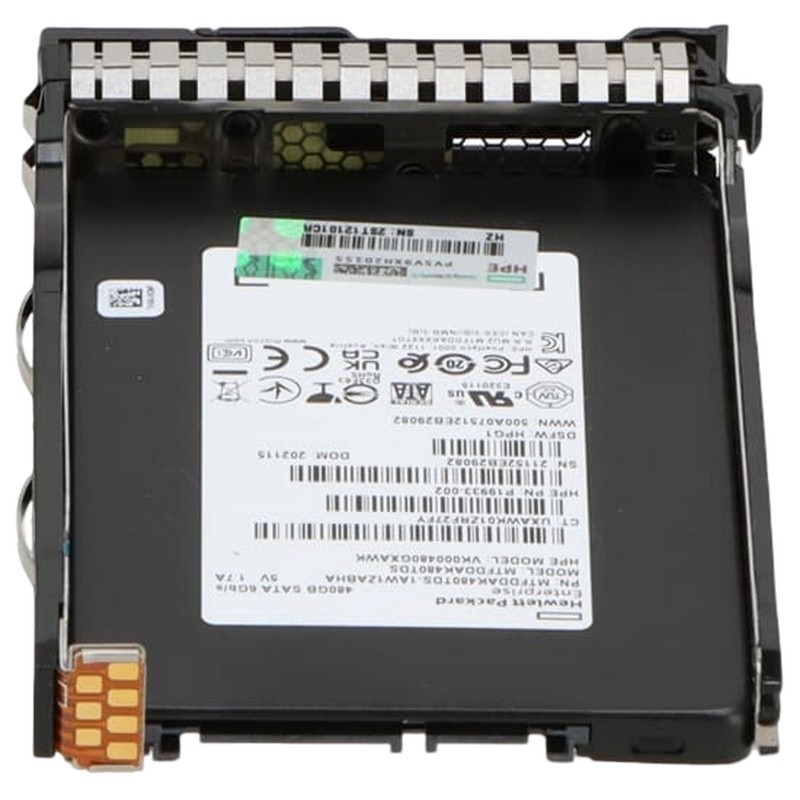
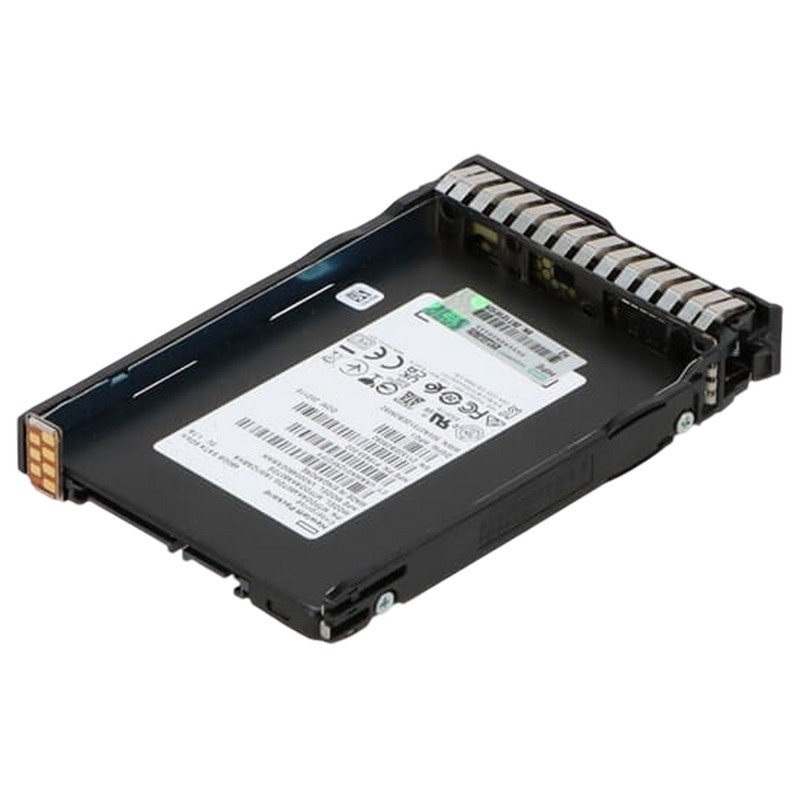
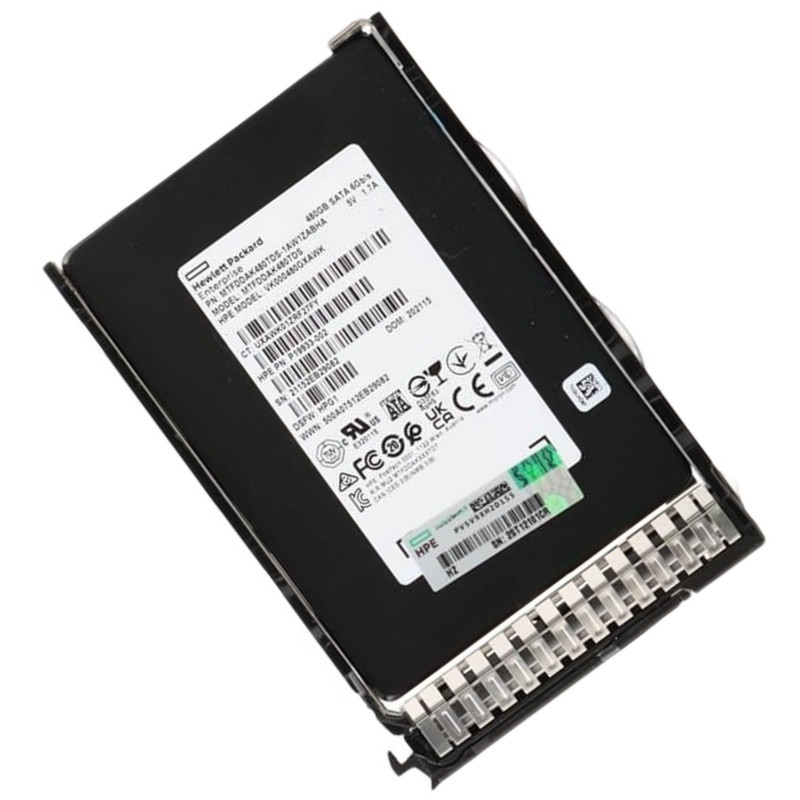
HPE 869579-001 480GB SATA 6GBPS MLC Read Intensive 3.5-inch Internal Solid State Drive. Excellent Refurbished with 1 year replacement warranty
Explore the detailed specifications and key features of the HPE 869579-001, a high-performance internal solid-state drive designed for reliability and speed.
The 869579-001 HPE 480GB SATA 6Gbps MLC Read Intensive 3.5-inch Internal Solid State Drive represents a targeted storage solution engineered to meet the needs of modern data centers and enterprise-class servers. Built to deliver sustained read performance, predictable latency, and a balance of cost and endurance, this drive is optimized for workloads dominated by sequential and random read operations. Enterprise architects, system administrators, and procurement teams seeking durable flash storage for read-heavy applications will find that this model offers a compelling mix of reliability, compatibility, and manageability.
The drive's core design philosophy centers around maximizing read throughput while providing sufficient write endurance for read-intensive workloads. Typical deployment scenarios include content delivery, virtual desktop infrastructure (VDI) read caches, boot volumes, database read replicas, analytics nodes with frequent read scans, and large-scale web servers. By choosing Multi-Level Cell (MLC) NAND flash and a SATA 6Gbps interface housed in a 3.5-inch form factor, the manufacturer balances per-gigabyte cost with performance and longevity.
The 3.5-inch chassis enables straightforward integration into many existing server and storage enclosures designed for standard hard disk drive bays. This form factor is advantageous for organizations that require higher-capacity SSDs in the same physical footprint as spinning media, facilitating upgrades and replacements without major chassis redesign. The drive's physical design also accommodates carrier trays or caddies commonly used in enterprise servers, simplifying hot-swap and field-service operations when supported by the host system.
At its core, the 869579-001 features 480 gigabytes of formatted storage capacity and communicates with systems via the SATA III 6Gbps protocol. The use of MLC flash technology enables a blend of higher program/erase cycles compared with TLC or QLC parts, which contributes to better predictable endurance for read-focused workloads. The drive incorporates enterprise-grade firmware algorithms for wear leveling, bad block management, and power-loss protection mechanisms appropriate to its class.
Performance characteristics for this model are tuned for read-intensive activity. Typical sequential read and random read IOPS are engineered to meet the demands of enterprise read operations, with caching and controller optimization reducing latency for small block random reads that are common in database and virtualization workloads. While write throughput and sustained write endurance are not the primary focus, the drive remains capable of handling occasional write bursts and steady small writes within the operational limits defined by the manufacturer.
One of the hallmarks of read-optimized SSDs is consistent latency under load. The 869579-001 is built to deliver predictable response times, which translates into improved quality of service (QoS) for applications that are sensitive to I/O latency spikes. For administrators, that means more reliable user experiences in systems that rely on frequent reads, such as analytics dashboards, reporting engines, and large-scale content servers.
Because this drive targets read-dominant workloads, its endurance metrics emphasize read durability while still providing a reasonable write cycle budget. MLC flash offers a favorable endurance profile relative to higher-density flash types, and enterprise-grade error correction and firmware routines reduce the chances of uncorrectable read errors over the device lifetime. Mean time between failures (MTBF) specifications and annualized failure rates are defined by the vendor and should be consulted as part of failover and redundancy planning.
Power consumption for the drive is optimized to fit within server power budgets while avoiding excessive thermal output. In packed server environments, the thermal envelope of the drive must be considered; adequate airflow and chassis cooling ensure consistent performance and longevity. Firmware power-management features may include idle power reduction and adaptive performance states, enabling data centers to tune operations to their energy-efficiency goals while maintaining the performance characteristics necessary for read-heavy tasks.
Compatibility is a crucial consideration for enterprise deployments. The 869579-001 is engineered to work seamlessly with a wide range of HPE ProLiant servers and HPE storage arrays, but it is also compatible with many industry-standard SATA controller platforms. Systems integrators should verify compatibility matrices and firmware guidance from the vendor to ensure optimal operation. Additionally, drive firmware updates and vendor-recommended host firmware revisions can enhance performance and stability in specific environments.
Unlike NVMe devices that leverage PCIe lanes for higher throughput and lower latency, this SATA-based SSD uses a simpler host interface that is widely supported across server generations. The drive's controller implements advanced features such as native command queuing (NCQ), TRIM support, and enterprise-class garbage collection to maintain performance over time. These features enable the drive to remain responsive even as the usable capacity becomes populated with data.
Understanding where the 869579-001 excels is essential for maximizing ROI. The drive is best used in roles where data is frequently read but written less intensively. Typical deployment patterns include caching layers in hybrid storage architectures, read replicas for database clusters, media streaming caches, operating system boot volumes in high-availability configurations, and application server read caches.
In hybrid arrays that combine SSDs and traditional HDDs, the 480GB read-intensive SSD can serve as a cache tier that accelerates reads for "hot" data. Proper caching policies and heat-mapping algorithms in the storage subsystem will determine the degree of benefit. Because the drive provides high read throughput and low latency for cached content, it can substantially reduce latency for frequently accessed datasets while enabling cost-effective capacity tiers with HDDs.
Virtualized environments and virtual desktop infrastructure deployments can place heavy demands on read performance during boot storms and login events. Using the 869579-001 as a boot or read cache can smooth out these peaks, delivering faster boot times and more consistent application responsiveness. Integrators may pair multiple drives in read cache pools to scale performance horizontally across dozens or hundreds of virtual machines.
Analytic workloads that perform large-scale reads—such as OLAP queries, business intelligence dashboards, and data lake indexing—benefit from predictable read performance and throughput. The drive can be used to host read replicas or secondary indexes that require fast access but do not endure heavy write cycles. For mission-critical databases, administrators should combine SSD-based read replicas with robust backup and failover strategies to ensure data integrity.
Because single-drive failures can impact service availability, redundancy is a key consideration. Employ RAID levels that match the performance and protection needs of the workload. For read-intensive deployments, RAID configurations that provide high read parallelism while protecting against drive failure—such as RAID 10 in certain implementations or read-optimized erasure coding for distributed storage platforms—are recommended. Complement redundancy with frequent backups and tested recovery procedures.
When compared with other SSD classes, the 869579-001 sits firmly in the read-intensive segment of the market. It differs from mixed-use or write-intensive enterprise SSDs primarily by offering a better price-per-gigabyte for read-oriented workloads while trading off some write endurance and peak write throughput. Compared to consumer SATA SSDs, this enterprise-class model includes firmware enhancements, telemetry capabilities, and endurance characteristics that meet server-grade expectations.
Selecting the appropriate SSD class depends on workload patterns. Choose read-intensive drives for workloads with high read-to-write ratios, such as caches, replicas, and content delivery. Opt for mixed-use or write-optimized drives when applications involve heavy random writes, logging, or sustained write bursts. Correctly matching drive class to workload prevents premature wear and avoids unnecessary expense on drives with higher write endurance than required.
Enterprise deployments must also account for environmental and regulatory standards such as RoHS compliance, end-of-life disposal policies, and, where applicable, data sanitization requirements. Drives used for sensitive data should be managed through secure erase procedures or physical destruction according to organizational policy when decommissioning.
Data integrity mechanisms are central to any enterprise SSD offering. The 869579-001 implements end-to-end data path protection, error correction codes, and firmware safeguards to reduce the risk of silent data corruption. For environments with strict data security needs, the drive may also support encryption features either through self-encrypting drive (SED) options or integration with host-based encryption solutions.
Error-correcting code (ECC) methods mitigate the effects of bit errors inherent to NAND flash over time. Combined with robust firmware routines that handle bad blocks and remapping, these mechanisms preserve data integrity and extend usable life. Host systems should be configured to monitor SMART attributes and perform periodic integrity checks aligned with organizational SLAs.
Encryption at rest is often a requirement for regulatory compliance or protection of sensitive information. If the model supports hardware-based encryption, enable and manage encryption keys through secure key management frameworks and ensure that recovery processes are in place for key loss scenarios. When hardware encryption is not available, host-based encryption provides an alternate layer of protection, albeit with CPU overhead that should be accounted for.
End-of-life procedures must include secure data sanitization. Drives that handle regulated or confidential data should be subject to overwrite, crypto-erase, or physical destruction methods compliant with policy and local laws. Maintain audit trails for disposal to meet compliance and governance requirements.


 Contact Us
 Information
 Catalog
 Solid State Drives (SSD)
 Network Switches
 Hard Disk Drives
 HBA & Controllers
 PC & Servers
 PC & Server Memory
 CPU & Processors
 Network Routers
 Power Supplies
 Tape Drives & Libraries
 Network Devices
 Computer & Network Cables