Product Overview — HPE P11089-001 1.92TB MU SC SSD
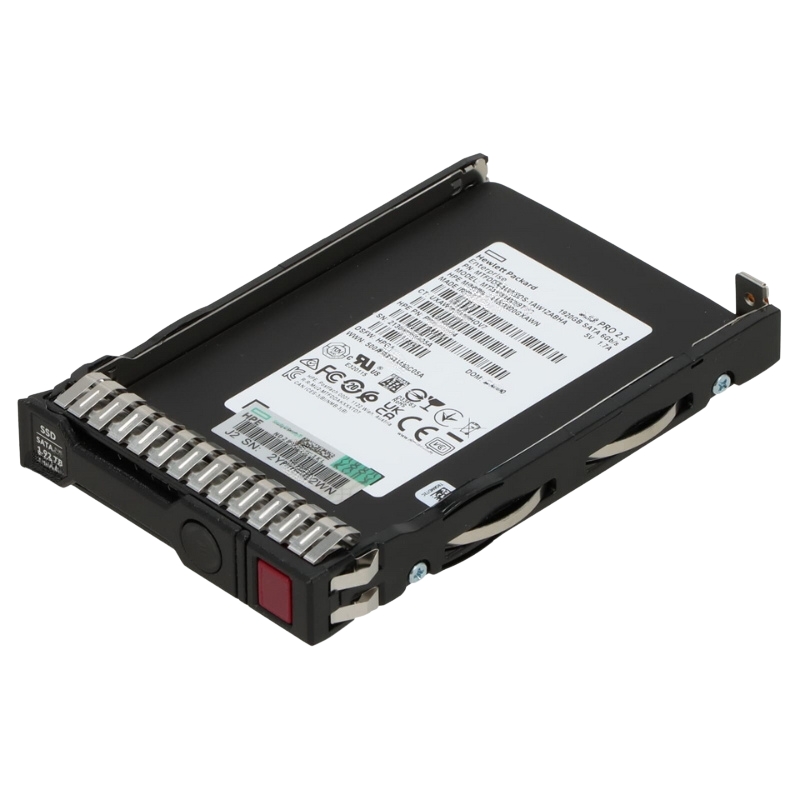
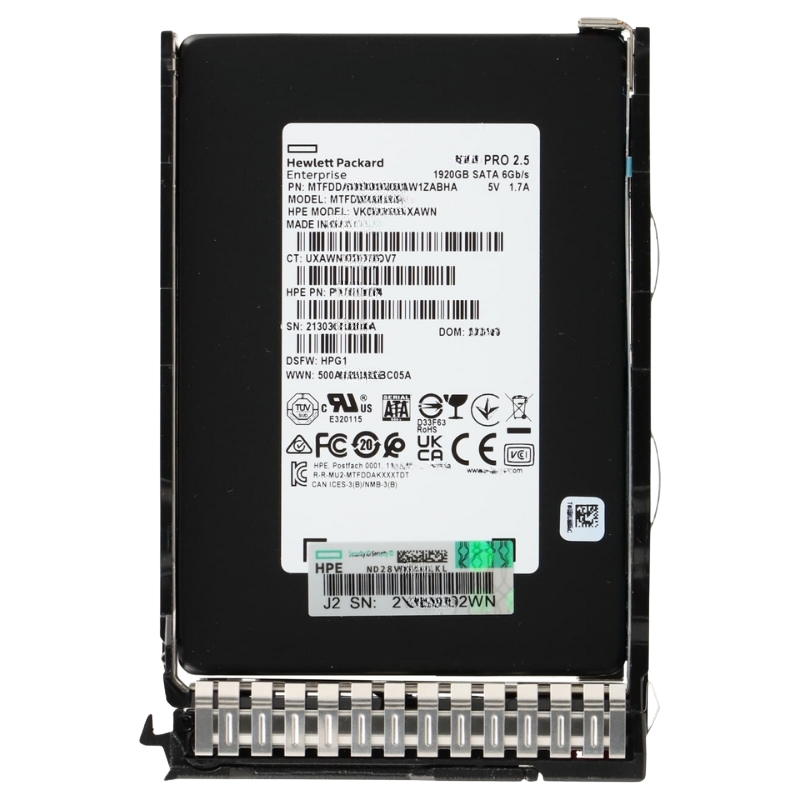
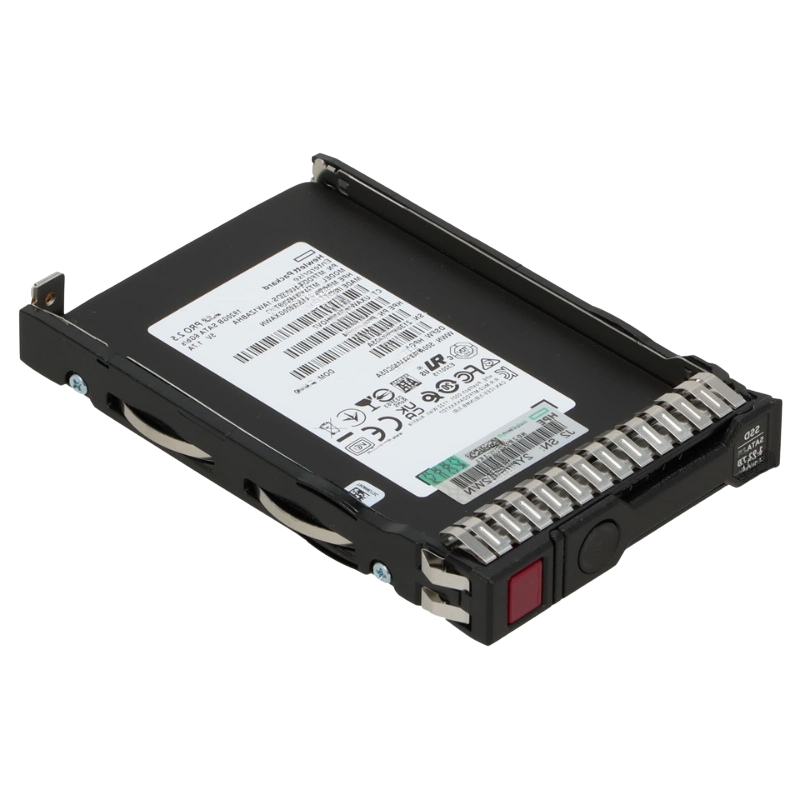
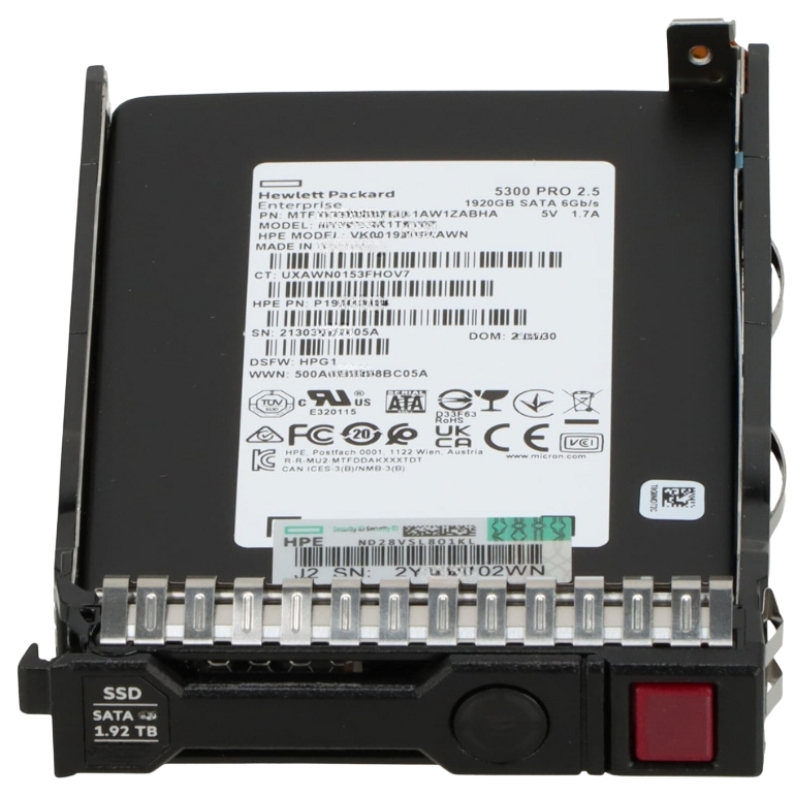
The HPE P11089-001 is a high-density enterprise storage module engineered by Hewlett Packard Enterprise. This
1.92TB solid-state drive (SSD) is a 2.5-inch small form factor (SFF) device that uses the SATA 6Gb/s interface and is
optimized for mixed-use (MU) workloads. Packaged in HPE’s Smart Carrier (SC), it’s intended for reliable, rack-scale deployment
in compatible HPE ProLiant servers and systems that require a balance of read and write performance.
Key Technical Attributes
Primary Specifications
- Model: HPE P11089-001
- Storage Size: 1.92 terabytes (TB)
- Form Factor: 2.5-inch Small Form Factor (SFF)
- Connection: SATA 6Gb/s (SATA III)
- Workload Class: Mixed-Use (MU) — designed for blended read/write environments
- Carrier Type: Smart Carrier (SC) — compatible with HPE server sleds and caddies
- Target Systems: HPE ProLiant and other supported HPE server platforms
Performance Characteristics
The drive is tuned to deliver consistent I/O for consolidated applications. Mixed-use SSDs like this one are intended to
accelerate virtualized environments, converged infrastructure, and transactional databases where both sustained throughput
and low latency matter.
- Optimized for predictable latency under sustained mixed read/write loads
- Efficient burst and steady-state throughput suitable for virtualization and caching layers
- Designed for enterprise QoS (quality of service) and predictable response times
Hardware Design & Physical Details
Form Factor and Compatibility
The 2.5-inch SFF profile conserves rack space while enabling high density. The Smart Carrier simplifies installation and hot-swap
replacement in HPE server bays and is intended to integrate with ProLiant drive backplanes and RAID controllers.
- Compact 2.5” footprint for dense storage arrays
- Smart Carrier means tool-less insertion/removal in supported HPE chassis
- Backward and forward compatibility with many HPE ProLiant generations — always verify your server’s compatibility matrix
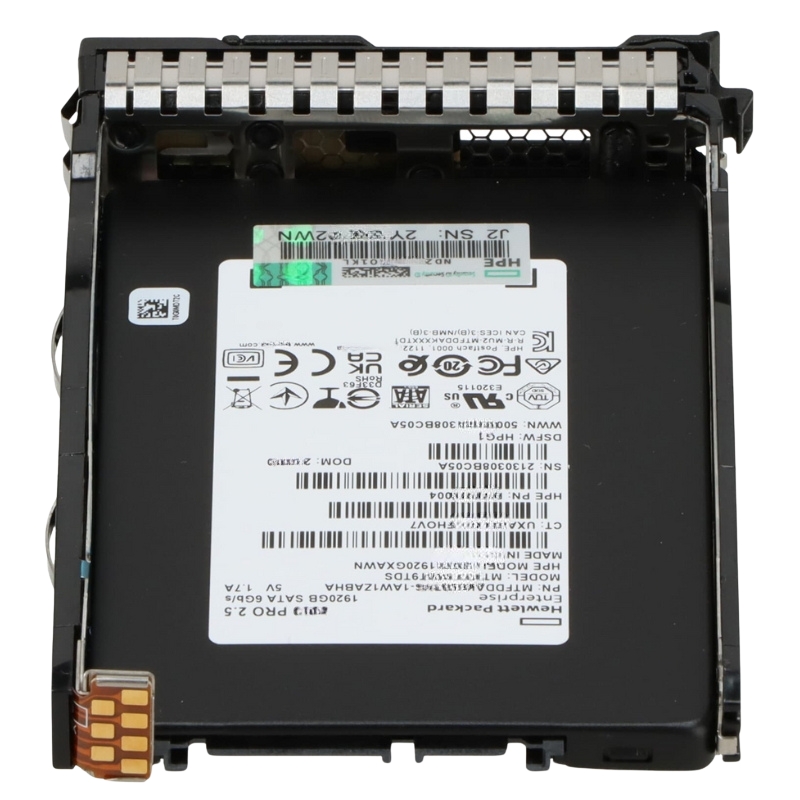
Build Quality and Connector
Built to enterprise tolerances, connectors and firmware are engineered to collaborate with HPE system management features for
health monitoring and secure firmware updates.
Data Integrity, Endurance & Reliability
Enterprise-Grade Endurance
Mixed-Use SSDs strike a balance between endurance and cost-efficiency — capable of handling a higher write workload than client
drives while remaining cost-effective versus pure write-intensive (data center) drives.
- Designed for sustained mixed read/write cycles
- Wear-leveling and over-provisioning to extend usable life
- Power-loss protection and advanced error correction mechanisms
Monitoring & Management
HPE integrates drive health telemetry into its system management stack, enabling proactive replacement and maintenance through
software tools and alerting systems.
- SMART attributes exposed to system firmware and OS tools
- HPE iLO and management suites can surface drive health and predictive failure warnings
- Support for secure firmware updates via HPE tools
Best Fit Workloads
The P11089-001 is well-suited for mixed-use scenarios where both reads and writes are significant. Typical deployments include:
- Virtualized server farms and VDI (virtual desktop infrastructure)
- Database acceleration (OLTP / small result-set workloads)
- Caching and tiered storage layers in hyperconverged systems
- General purpose server boot or application acceleration where latency reduction is needed
The Choose an MU SSD vs Other Classes
Consider a mixed-use device when you need better write endurance than consumer drives but don’t require the extreme endurance and
cost of U.2 NVMe or specialized data-center write-optimized parts. Mixed-use is a pragmatic middle ground for versatile
enterprise workloads.
Installation, Maintenance & Best Practices
Pre-Installation Checklist
- Confirm firmware compatibility with your HPE ProLiant model and controller firmware.
- Verify that the server backplane supports SATA 6Gb/s and the Smart Carrier form factor.
- Plan RAID configuration and ensure RAID controller supports SSD caching/trim where applicable.
Installation Steps (High Level)
- Power down the server or follow hot-swap procedures if supported.
- Insert the drive into the Smart Carrier; confirm the latching mechanism clicks.
- Slot the carrier into the drive bay until it seats firmly against the backplane.
- Power on and verify the drive is detected in HPE system management or the RAID utility.
Ongoing Maintenance
- Monitor SMART data and HPE health reports regularly.
- Apply validated firmware updates through HPE’s update tools to ensure stability and security.
- Keep spare Smart Carrier drives in inventory for rapid replacement in production clusters.
Compatibility & Validation
Server Support
This drive is intended primarily for HPE ecosystems. Before purchasing, consult HPE’s interoperability matrix to ensure official
support for your server generation and controller model. While SATA is widely adopted, vendor validation ensures optimal behavior
with HPE management features.
Operating System & Controller Considerations
- Most modern server OSes support SATA SSDs out of the box (Linux, Windows Server, VMware ESXi), but driver/firmware versions
can affect advanced features.
- When used in RAID arrays, confirm your controller supports TRIM/discard or schedule maintenance to avoid performance drift.
Comparisons & Purchasing Tips
How It Compares to Other SSD Types
- Customer / Client SSDs: Lower endurance and not recommended for heavy server workloads.
- Mixed-Use SSDs (this product): Balanced endurance and cost for general enterprise tasks.
- Data-Center / Write-Intensive SSDs: Higher endurance for heavy logging and database write-heavy tasks, at a higher price.
- NVMe Drives: Offer significantly higher throughput and lower latency but require NVMe slots/controllers and cost more.
Buying Recommendations
- Purchase through authorized HPE or certified resellers to preserve warranty and firmware support.
- Match drive firmware versions when building arrays to avoid compatibility issues.
- Consider capacity planning — 1.92TB provides ample workspace for many workloads but plan for RAID overhead and snapshots.
Security & Data Protection
Drive-level Safeguards
Enterprise SSDs typically support features to help protect data integrity and facilitate secure decommissioning. Use HPE’s
recommended procedures for secure erase, retirement, or repurposing drives to maintain regulatory compliance.
Best Practices for Secure Disposal
- Use vendor-recommended secure erase utilities or cryptographic erase if supported.
- Keep firmware up to date to mitigate known vulnerabilities.
- Document drive lifecycle and maintain chain-of-custody when disposing of drives containing sensitive data.
Enterprise Performance and Efficiency
This class of SSD is engineered to provide high input/output operations per second (IOPS) and low latency performance. The mixed-use design supports a variety of workloads, making it ideal for applications such as:
- Database management systems
- Virtualization platforms
- High-traffic web servers
- Transactional workloads
The HPE P11089-001 ensures consistent performance under heavy data loads, maintaining efficiency without sacrificing speed. Its SATA 6Gbps interface ensures seamless integration with legacy and modern server architectures.
Mixed Use SSDs vs. Other SSD Types
Understanding the distinction between mixed-use SSDs, read-intensive SSDs, and write-intensive SSDs is critical for storage planning:
- Read-Intensive SSDs: Optimized for frequent read operations, suitable for archival or content delivery systems.
- Write-Intensive SSDs: Engineered for high-frequency write operations, often used in logging or caching.
- Mixed Use SSDs: The HPE P11089-001 falls into this category, offering a balanced solution that can handle both read and write workloads efficiently, making it versatile for general-purpose enterprise applications.
Form Factor and Physical Compatibility
The 2.5-inch Small Form Factor design ensures that this SSD is compatible with most enterprise servers and storage enclosures. Its compact size allows for higher drive density in racks and blade servers, optimizing physical space without compromising performance.
Installation and Integration
Installing the HPE P11089-001 is straightforward for IT professionals familiar with enterprise storage systems. Key integration benefits include:
- Hot-swap capability for minimal downtime during maintenance.
- Backward compatibility with SATA 3Gbps systems.
- Support for HPE Smart Array Controllers and HPE ProLiant Servers.
Security and Data Protection Features
Data security is a critical concern in enterprise environments. The HPE P11089-001 features self-encrypting drive (SED) technology, providing robust protection for sensitive information. Key security highlights include:
- Hardware-based AES 256-bit encryption
- Instant secure erase capabilities for rapid data decommissioning
- Compliance with enterprise security standards and regulations
Reliability and Endurance
Enterprise workloads demand drives that can withstand heavy use over extended periods. The HPE P11089-001 SSD is built with high endurance NAND, ensuring:
- Long service life in write-intensive environments
- Consistent performance under sustained workloads
- Low failure rates, reducing maintenance and replacement costs
Mean Time Between Failures (MTBF)
The HPE P11089-001 offers an MTBF designed for enterprise reliability, reducing the risk of unexpected downtime. This metric assures businesses of dependable storage infrastructure, especially in data-critical operations.
Use Cases and Applications
This SSD category is ideal for organizations requiring robust storage solutions that combine performance, reliability, and security. Common use cases include:
- Enterprise servers handling transactional databases
- Virtual desktop infrastructure (VDI) environments
- High-performance computing clusters
- Backup and disaster recovery storage
Data Center Optimization
Integrating HPE P11089-001 SSDs into data center environments provides several advantages:
- Enhanced IOPS performance for critical applications
- Reduced power consumption compared to traditional HDDs
- Optimized cooling requirements due to lower thermal output
- Higher storage density enabling more data per rack unit
Comparative Advantages of HPE SSDs
HPE SSDs stand out in the enterprise storage market due to a combination of innovation, durability, and vendor support. The HPE P11089-001 offers:
- Seamless integration with HPE server ecosystems
- Proactive monitoring and predictive failure alerts via HPE management tools
- Advanced firmware optimized for mixed-use workloads
- Global support and warranty options to minimize business disruption
Firmware and Management Tools
HPE provides robust software tools that enhance the functionality of the P11089-001 SSD:
- Drive health monitoring
- Firmware updates for improved performance and security
- Integration with HPE InfoSight and HPE OneView for predictive analytics
Energy Efficiency and Sustainability
Reducing energy consumption is a key factor in modern data centers. The HPE P11089-001 SSD is designed for energy-efficient operation:
- Lower power draw compared to traditional hard drives
- Reduced heat generation contributing to cooler server environments
- Supports sustainability initiatives in enterprise IT infrastructure
Scalability and Future-Proofing
As enterprise data needs grow, scalable storage solutions are essential. The HPE P11089-001 allows organizations to expand capacity without compromising performance:
- Supports high-density configurations
- Compatible with evolving enterprise storage architectures
- Facilitates smooth migration from legacy drives
Integration with Hybrid Storage Solutions
This SSD is ideal for hybrid storage environments, combining high-speed SSDs with high-capacity HDDs to optimize cost and performance balance. Benefits include:
- Tiered storage strategies for frequently accessed data
- Enhanced workload allocation between SSD and HDD tiers
- Improved application response times through intelligent caching
Monitoring and Predictive Maintenance
Using HPE management tools, IT teams can monitor the performance and health of P11089-001 SSDs, enabling predictive maintenance strategies that prevent downtime and ensure continuous business operations.





 Contact Us
 Information
 Catalog
 Solid State Drives (SSD)
 Network Switches
 Hard Disk Drives
 HBA & Controllers
 PC & Servers
 PC & Server Memory
 CPU & Processors
 Network Routers
 Power Supplies
 Tape Drives & Libraries
 Network Devices
 Computer & Network Cables