(7% discount is applied at checkout)
Cart is empty
Your go-to destination for cutting-edge server products
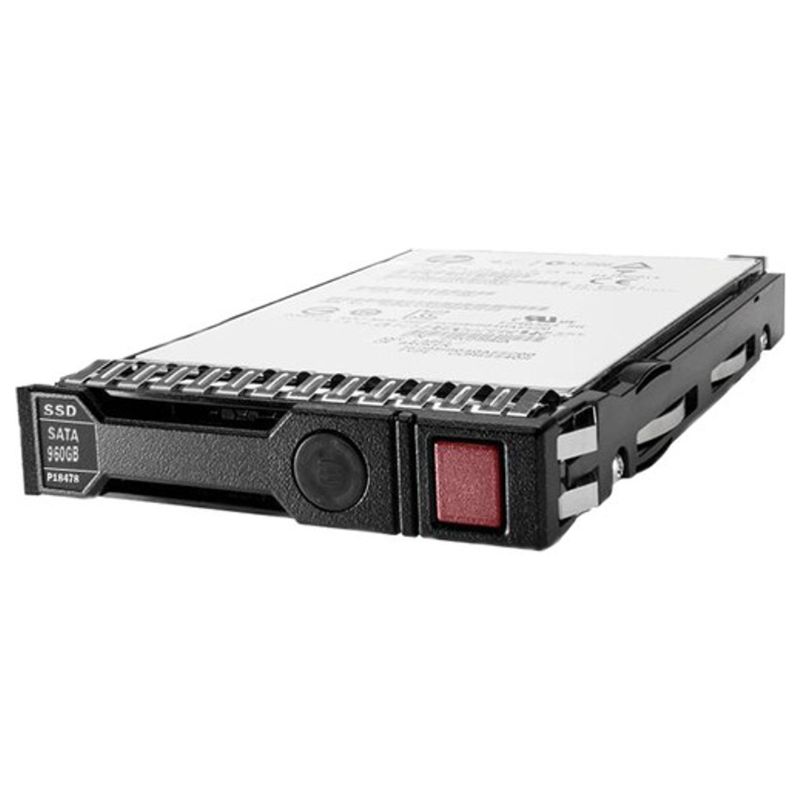


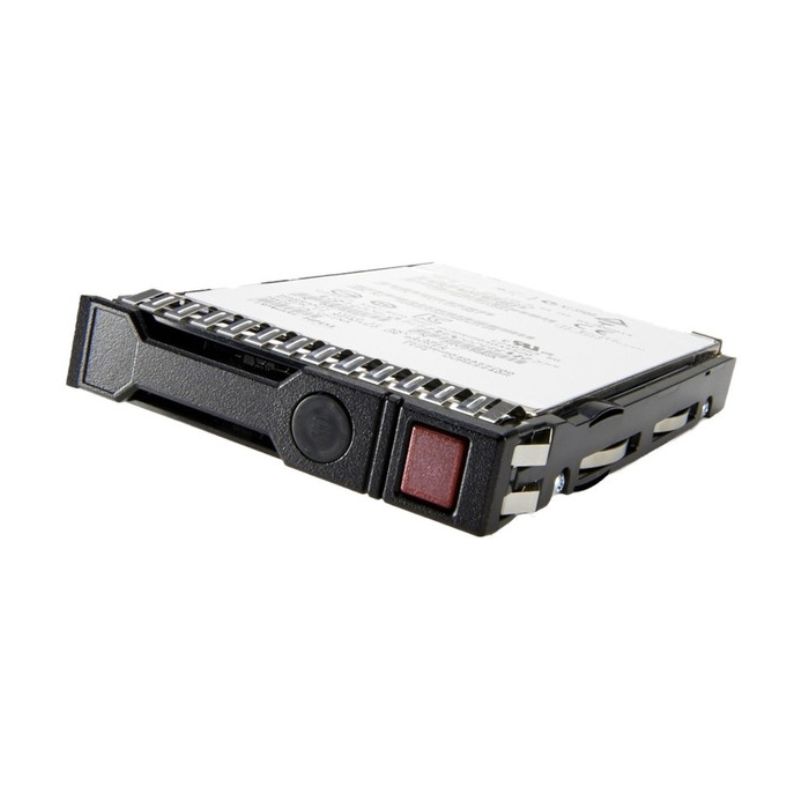
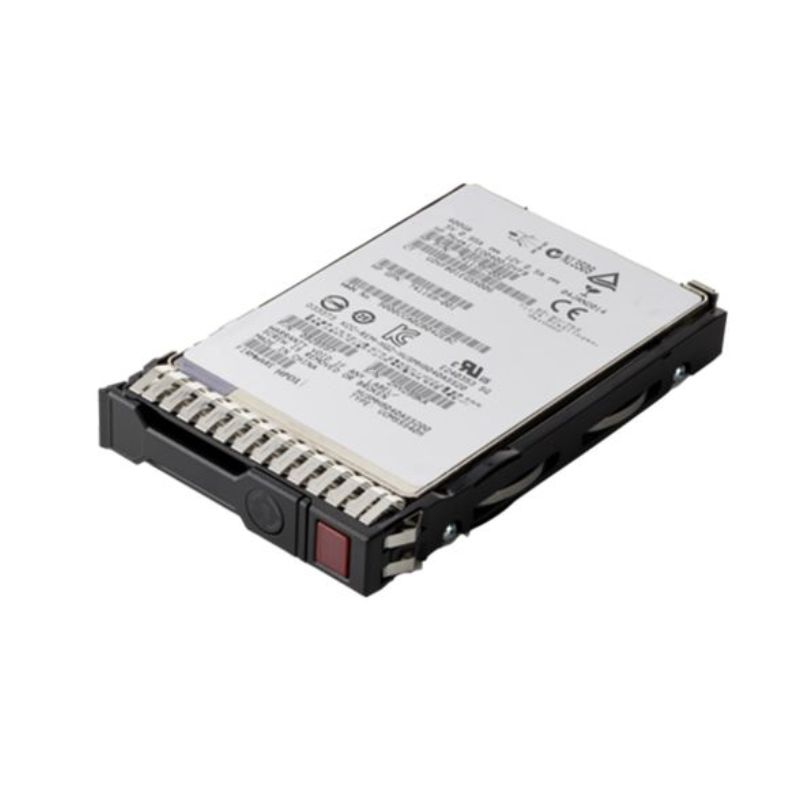
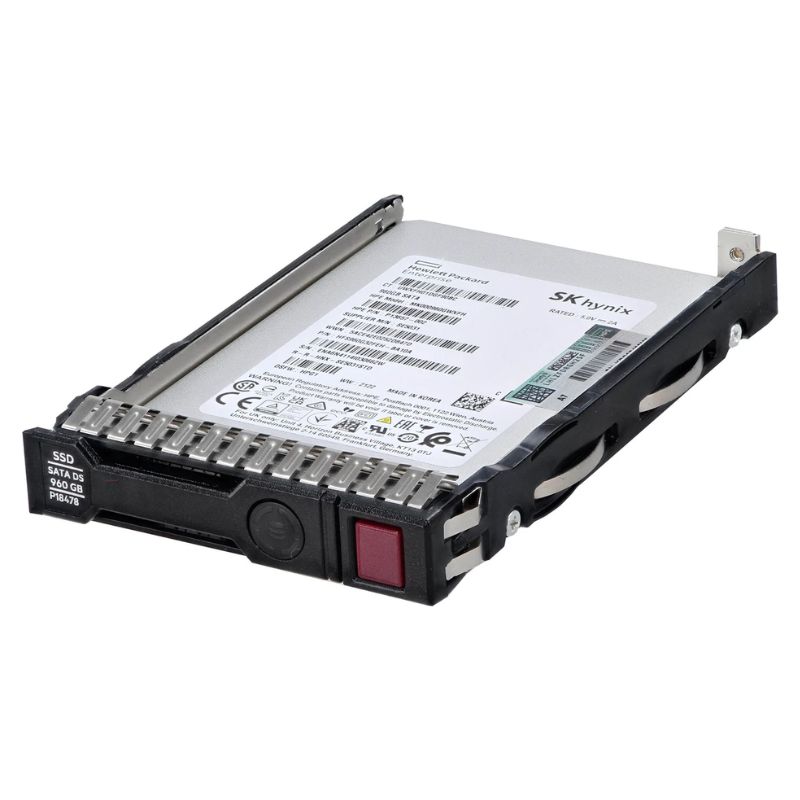
HPE P24190-B21 960GB SATA 6GBPS Very Read Optimized 2.5-inch SFF SC 5210 Solid State Drive. Excellent Refurbished with 1 Year Replacement Warranty
The HPE P24190-B21 is a 960GB, SATA 6.0Gb/s solid-state drive engineered for read-intensive workloads in enterprise and hyperscale environments. Packaged in a compact 2.5-inch SFF form factor and optimized for heavy read traffic, the drive delivers consistent low-latency access and dependable storage for content delivery, scale-out databases, and caching tiers.
Below are the essential identifiers to include in bills of material, procurement lists, and support tickets.
The P24190-B21 is calibrated to favor read operations. This means firmware, internal over-provisioning, and wear-leveling strategies are balanced to extend life and maintain consistent read latency under prolonged, read-heavy usage patterns.
The drive’s SATA 6Gb/s interface and 2.5" profile make it widely compatible with server bays, storage arrays, and HPE server families designed for SFF SSDs. Ideal for retrofit upgrades or as part of a new deployment where space efficiency and read throughput are priorities.
HPE designs its enterprise-class drives with stronger error management, advanced ECC algorithms, and features tuned to minimize data corruption risk in production systems. While this model emphasizes read performance, it still implements protective measures to preserve data integrity during both normal operation and edge-case events.
Because the drive is read-optimized, it should be placed in tiers where reads dominate: read caches, CDN edge nodes, search index partitions, and archival read pools where occasional writes occur but are not the operational focus.
Enterprise SSDs benefit from deliberate over-provisioning. Allocating a portion of capacity for spare area and background operations extends life and stabilizes performance. For the 960GB P24190-B21, adopt provisioning that aligns with your workload intensity and maintenance window cadence.
Keeping firmware aligned reduces interoperability surprises. Work with HPE’s support resources to obtain recommended firmware bundles and validated interoperability matrices for your server/array models.
Dense deployments raise thermal stress. The P24190-B21, like other SFF enterprise SSDs, performs best within specified temperature ranges; excessive heat can accelerate wear and reduce predictable performance.
Read-optimized SSDs are natural fits for content delivery nodes that serve a high ratio of reads to writes — video chunks, static assets, and frequently requested media segments benefit from the P24190-B21’s tuned behavior.
Low-latency, consistent read times enhance user experience in search systems and metadata-heavy applications where lookup speed dominates perceived performance.
For densely populated servers that require fast boot and deterministic access to OS images, read-prioritized SSDs provide faster OS load and smaller maintenance windows for reboots and OS provisioning.
Analytical clusters that perform repeated read passes over datasets (e.g., data marts and read-heavy reporting nodes) can leverage these drives to reduce job latency and increase throughput per rack unit.
When acquiring P24190-B21 units, ensure your procurement pack captures the critical metadata and validation steps to simplify lifecycle management.
Many enterprise SSDs support hardware-based encryption and secure erase functions. If encryption is needed for compliance, verify whether the specific model supports self-encrypting drive (SED) features and how they integrate with your key management system.
Implement verified data sanitation routines when retiring drives. Use manufacturer-recommended secure-erase commands or physical destruction for drives leaving secure facilities.
Read-optimized SSDs typically offer a favorable price-per-gigabyte compared to high-endurance write-optimized models. For workloads where reads vastly outnumber writes, they provide superior total cost of ownership without compromising delivery speed.
Higher capacity 2.5" SFF drives let you pack more usable terabytes per chassis when paired with high-density servers, maximizing storage per rack and reducing physical footprint.
Plan background tasks (scrubbing, dedupe, garbage collection at array level) during low-traffic periods to reduce competition with foreground reads and keep tail latency low.
The HPE P24190-B21 is a 960GB enterprise-grade 2.5-inch small form factor (SFF) solid state drive designed and validated for HPE server platforms. Marketed as a Very Read Optimized (VRO) drive and carried in the Smart Carrier (SC) 5210 tray format, this SATA 6Gbps device targets read-heavy workloads where predictable low-latency random reads and sustained sequential reads matter most. It offers the capacity and interface common to modern mixed-storage server arrays while being tuned for dense, low-cost read performance in virtualized storage tiers, content delivery, analytics nodes and other read-centric infrastructures. :contentReference[oaicite:0]{index=0}
This model uses the SATA III interface (6.0 Gbps signaling) and the 2.5-inch SFF footprint, making it compatible with most HPE ProLiant and Apollo servers that accept Smart Carrier 2.5" drive modules. The cartridge/tray (SC) packaging ensures hot-swap tray compatibility and proper backplane alignment for HPE enclosures. The drive family commonly appears with multiple firmware tunes (Read-Intensive, Very-Read-Optimized, Mixed Use) to match endurance and cost profiles to workload requirements. :contentReference[oaicite:1]{index=1}
“Very Read Optimized” is not just a marketing term — it indicates firmware and flash-management choices that bias endurance allocation, over-provisioning and background housekeeping toward supporting a high proportion of read operations with minimal write amplification and predictable read latency. In practice, VRO drives are often preferred for object stores, vSAN capacity tiers, content caches, and read-heavy database replicas where frequent reads dominate and write cycles are limited. Compared with Mixed-Use or Write-Intensive SSDs, VRO drives typically offer lower cost-per-GB while maintaining enterprise-class reliability metrics for reads. :contentReference[oaicite:2]{index=2}
Although exact IOPS and throughput numbers vary between vendor multi-sourcing and firmware revisions, SATA VRO enterprise SSDs emphasize consistent random read IOPS and steady sequential throughput up to the practical limits of the SATA link. For architects designing read caching layers or archival acceleration, these drives deliver improved read performance over spinning media, with much lower seek-induced latency and predictable tail-latency behavior when compared to HDDs. When planning, assume the drive will excel at high-concurrency read tasks but plan any heavy write or logging workloads on higher-endurance Mixed-Use or Write-Intensive models. :contentReference[oaicite:3]{index=3}
In a typical deployment—vSAN capacity tier, distributed object store node, or read-replica database—the P24190-B21 reduces read latencies, increases query/concurrency headroom, and cuts the I/O wait time that would otherwise be spent spinning disks. This can translate to fewer physical nodes needed to hit a target read QPS, reducing total cost of ownership (TCO) for read-dominated clusters.
Officially listed at 960GB usable capacity for the P24190-B21 (noting that published capacities sometimes differ slightly in marketing vs. raw NAND counts), this model uses a SATA 6Gbps interface in a 2.5-inch SFF package with HPE Smart Carrier (SC) compatibility. The SC 5210 tray ensures it slides into standard HPE hot-swap bays and fits HPE ProLiant server drive backplanes that accept SC-mounted 2.5" drives. These compatibility details mean you can replace or upgrade server capacity without changing chassis or backplane hardware. :contentReference[oaicite:4]{index=4}
VRO-class drives are engineered with endurance ratings that assume heavier read than write usage. Endurance is typically expressed as Drive Writes Per Day (DWPD) or Total Terabytes Written (TBW) over the warranty period. For a VRO drive, endurance numbers are lower than Mixed-Use or Write-Intensive SSDs, so for systems performing heavy writes (logging, heavy dedupe re-writes, or intensive caching rebuild operations), administrators should evaluate endurance caps and consider higher-endurance models. Always consult the HPE QuickSpecs or datasheet for the P24190-B21 to confirm exact endurance/TBW numbers and warranty terms for the specific SKU and firmware revision prior to deployment. :contentReference[oaicite:5]{index=5}
Enterprise SSDs including HPE-branded or OEM P24190-B21 equivalents expose SMART attributes and vendor telemetry for drive health monitoring. HPE servers and stacks (iLO, Onboard Administrator) can integrate drive health alerts, predictive failure warnings and firmware update mechanisms. Regular firmware updates from HPE or approved multi-vendor suppliers are recommended to ensure reliability, interoperability and performance consistency across fleet drives. When building monitoring dashboards, include SMART metrics like media wearout indicators, power-on hours, reallocated sectors, and current firmware version for proactive maintenance.
The sweet spot for the P24190-B21 is clearly read-heavy workloads. Typical deployments include:
If your design involves sustained high-rate writes, frequent large-scale deduplication or compression passes that generate a lot of write traffic, or intensive database logging, choose a Mixed-Use or Write-Intensive SKU to avoid endurance-limited service interruptions. Having a clear I/O profile and write-percentage forecast per drive will help you map the right HPE SSD family to each tier of your architecture. :contentReference[oaicite:6]{index=6}
HPE publishes datasheets, QuickSpecs and firmware update bundles for SSD families. Using the official HPE channels for firmware and support ensures the correct drive revisions and compatibility with server management firmware (iLO, Smart Storage firmware, etc.). For multi-vendor OEM-sourced drives carrying equivalent part numbers, verify that firmware is HPE-approved or that the reseller provides validated firmware packages. Document firmware baseline versions across your fleet and include firmware version as part of your change-control and maintenance windows. :contentReference[oaicite:8]{index=8}
HPE typically sells enterprise SSDs with multi-year warranties and defined support channels; however, warranty terms may vary by SKU, region, and whether the drive is sold new, refurbished, or as a multi-vendor replacement. Before buying used or refurbished P24190-B21 units on secondary markets, check warranty transferability and the seller’s return policy. Also, confirm whether your HPE support contract requires original HPE-branded components for full coverage in the event of a service request. :contentReference[oaicite:9]{index=9}
Authorized HPE resellers, distribution partners and HPE’s official store should be the first stops for new drives because they guarantee original firmware, warranty coverage and product validation. Secondary markets (refurbishers, classifieds) can offer lower prices but carry risks around unknown firmware, remaining endurance and limited warranty. When comparing quotes, look beyond price per GB—factor in endurance (TBW/DWPD), warranty period, firmware level and whether the vendor supplies an HPE Smart Carrier tray and documentation. :contentReference[oaicite:10]{index=10}
For a read-optimized deployment, calculate TCO by combining purchase price, projected life (based on expected writes), maintenance windows, expected failures and energy savings relative to spinning disks. Often, SSDs reduce the number of servers required to meet I/O demands, which reduces licensing, power and cooling costs—key factors when advocating for an SSD refresh project.
HPE’s SATA SSD portfolio typically includes Read-Intensive, Very Read Optimized and Mixed-Use variants at multiple capacities. Read-Intensive models are tuned for even lighter write profiles and often cost less than Mixed-Use SKUs; Mixed-Use models balance read and write performance and feature higher endurance. When selecting between them, balance capacity needs, expected write intensity, and cost sensitivity. If your workload occasionally spikes in writes (rebuilds, large batch ingests), Mixed-Use may be the safer choice. For strictly archival-read or CDN-style workloads, VRO is usually the most cost-effective option. :contentReference[oaicite:11]{index=11}
NVMe SSDs provide significantly higher IOPS and lower latencies than SATA SSDs and are now common in performance tiers and cache layers. However, NVMe typically comes at higher cost-per-GB; for large-capacity, read-dominated datasets where the SATA link is sufficient, P24190-B21-style drives remain a cost-effective option. Use NVMe for latency-critical hot tiers and SATA VRO for dense, read-oriented capacity tiers.
Integrate drive SMART metrics into your monitoring platform and set alerts for critical thresholds such as high media wear, uncorrectable read errors, or sudden spike in reallocated sectors. Combine drive-level monitoring with system-level checks (RAID controller logs, HPE iLO alerts) so you catch both device-level and array-level abnormalities. Schedule periodic checks after firmware updates and during maintenance windows to verify no regressions occurred. :contentReference[oaicite:12]{index=12}
For large fleets, keep an asset register with part numbers, firmware versions, power-on hours and cumulative TBW. Rotate drives out of service proactively when they approach endurance thresholds or after firmware support EOL. Doing so reduces the chance of correlated failures and improves the predictability of capacity planning.
Some HPE SSD SKUs and variants include self-encrypting drive (SED) functionality or support for TCG Opal standards. If data-at-rest encryption is required for compliance or internal policy, choose SED-capable SKUs or implement encryption at the array or host level. Confirm that the P24190-B21 variant you purchase includes the encryption feature if that is a requirement—SATA SKUs are often available in both SED and non-SED flavors. :contentReference[oaicite:13]{index=13}
Follow certified secure-erase procedures when decommissioning drives. Use vendor-provided secure-erase utilities or NIST-compliant wiping procedures to sanitize drives prior to disposal or resale. For drives returning to secondary markets, maintain a documented chain-of-custody and erasure certificates to meet compliance requirements.
For category pages describing the HPE P24190-B21 and its subcategory, use long-tail keywords and variations naturally through the copy: “HPE P24190-B21 960GB SATA VRO SSD”, “Very Read Optimized 2.5-inch SC 5210”, “HPE 960GB SATA 6Gbps enterprise SSD”, and common search intents like “buy HPE P24190-B21”, “P24190-B21 specs”, and “HPE VRO SSD compatibility”. Use H2 headings for main themes (specs, use cases, compatibility), H3 for supporting topics (installation, firmware), and H4/H5 for technical call-outs and lists. This structure improves crawlability and helps search engines surface specific details. :contentReference[oaicite:14]{index=14}
Provide full technical specifications, compatibility matrices (server models and backplanes), warranty and support snippets, and clear procurement options (new vs refurbished). Include schema markup for product (Product, Offer, Review) on the page to increase the chance of rich results. Add customer-focused elements like “Which SKU is right for me?” decision trees and quick comparison tables to reduce buyer friction and improve conversion.
Mixing drive classes is technically possible but not recommended within the same RAID or erasure-coded group because differing performance and failure characteristics can lead to unpredictable rebuild times and uneven wear. Instead, group similar endurance/performance drives in the same tier and use software-defined tiering or policies to move data between tiers as needed.
For authoritative technical specifications and datasheets, reference HPE’s official product documentation and QuickSpecs; for purchasing and part-number variants consult authorized HPE resellers and distributors to confirm pricing, warranty status and availability.


 Contact Us
 Information
 Catalog
 Solid State Drives (SSD)
 Network Switches
 Hard Disk Drives
 HBA & Controllers
 PC & Servers
 PC & Server Memory
 CPU & Processors
 Network Routers
 Power Supplies
 Tape Drives & Libraries
 Network Devices
 Computer & Network Cables