Your go-to destination for cutting-edge server products
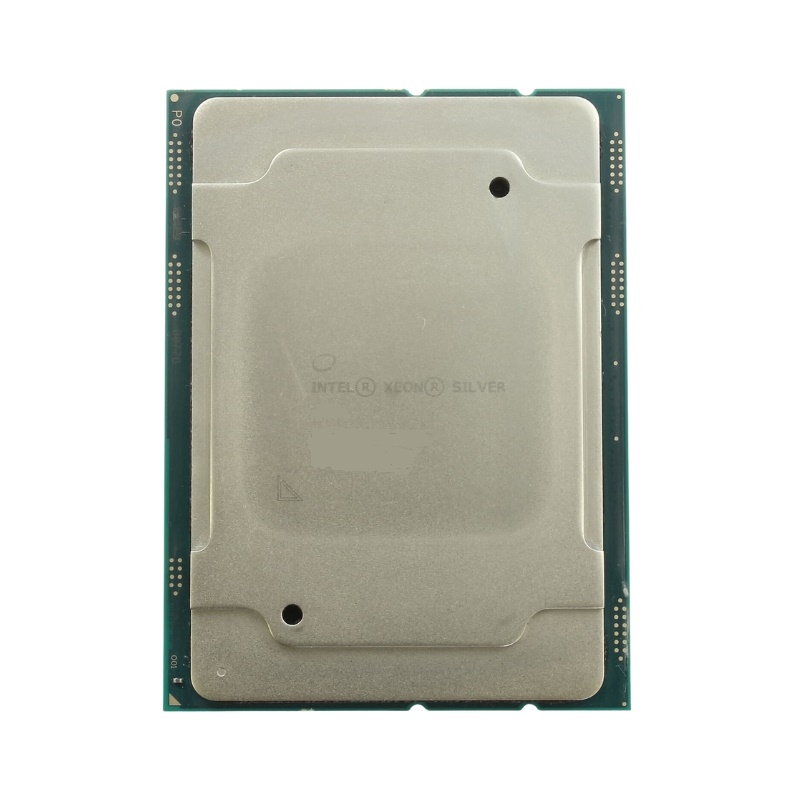
P06807-L21 HPE Intel Xeon Silver 4210 10 Core 2.20GHz 13.75MB Cache Processor.

P06807-L21
* Product may have slight variations vs. image
Hover on image to enlarge

Brief Overview of P06807-L21

HPE P06807-L21 Intel Xeon Silver 4210 10 Core 2.20GHz 13.75MB Cache TDP 85W FCLGA3647 G10 Processor. New System Pull with 1 Year Replacement Warranty

$236.25
$175.00
You save: $61.25 (26%)
Ask a question
Price in points: 175 points
+
Quote

Additional 7% discount at checkout

SKU/MPNP06807-L21Availability✅ In StockProcessing TimeUsually ships same day ManufacturerHPE Manufacturer WarrantyNone Product/Item ConditionNew (System) Pull ServerOrbit Replacement Warranty1 Year Warranty
Google Top Quality Store Customer Reviews
Our Advantages
Payment Options
  • — Visa, MasterCard, Discover, and Amex
  • — JCB, Diners Club, UnionPay
  • — PayPal, ACH/Bank Transfer (11% Off)
  • — Apple Pay, Amazon Pay, Google Pay
  • — Buy Now, Pay Later - Affirm, Afterpay
  • — GOV/EDU/Institutions PO's Accepted 
  • — Invoices
Delivery
  • — Deliver Anywhere
  • — Express Delivery in the USA and Worldwide
  • — Ship to -APO -FPO
  • For USA - Free Ground Shipping
  • — Worldwide - from $30
Description

Product Overview of HPE Intel Xeon 2.20GHz Processor

Upgrade your infrastructure with the HPE Intel Xeon Silver 4210 BL460C G10 CPU Kit—engineered for reliability, performance, and seamless integration into your existing systems.

General Information

  • Brand: Hewlett Packard Enterprise (HPE)
  • Processor Family: Intel Xeon Silver
  • Model: 4210
  • Number of Cores: 10
  • Threads: 20
  • Base Frequency: 2.2 GHz
  • Max Turbo Frequency: 3.2 GHz
  • Compatibility: HPE ProLiant BL460c Gen10 Server

Outstanding Multicore Processing Power

  • 10 physical cores and 20 threads ensure optimized parallel processing.
  • Delivers base speeds of 2.2 GHz with dynamic acceleration up to 3.2 GHz via Turbo Boost.
  • Ideal for handling high-load environments, virtualization, and data-intensive tasks.

Advanced Intel Technologies at Work

  • Supports Hyper-Threading to improve throughput and overall system responsiveness.
  • Leverages Intel Turbo Boost Technology for smart performance adjustment under load.
  • Provides stable computing with reduced thermal output and energy consumption.

Optimized for HPE ProLiant Blade Servers

  • Tailored specifically for the HPE ProLiant BL460c Gen10 platform.
  • Ensures compatibility and ease of deployment with minimal configuration.
  • Ideal choice for enterprise-grade applications requiring consistent uptime.

Energy-Efficient Design Without Compromising Power

  • Built to deliver maximum throughput per watt for eco-conscious data centers.
  • Reduces operational costs without sacrificing processing performance.
  • Smart thermal management to maintain system integrity and performance.

Enhanced Value for Enterprise Computing

  • Cost-effective CPU upgrade that extends the life of existing hardware.
  • Backed by HPE’s trusted engineering and robust enterprise support ecosystem.
  • Scalable solution for growing data center requirements or virtualization workloads.

Architecture & Socket Compatibility

The P06807‑L21 / P06807‑B21 belongs to Intel’s 2nd Generation Xeon Scalable family (Cascade Lake). It’s built on a 14nm process, featuring:

  • Socket Type: FCLGA‑3647 / LGA 3647 (Socket P). Requires motherboards designed for this socket. :contentReference[oaicite:8]{index=8}
  • Memory Channels: Six channels (hexa‑channel), allowing for greater memory bandwidth. :contentReference[oaicite:9]{index=9}
  • Max Memory Capacity: Up to 1 TB DDR4 SDRAM. Ideal for data‑intensive server applications, virtualization, in‑memory databases. :contentReference[oaicite:10]{index=10}
  • Memory Speed Supported: DDR4‑2400 MHz. :contentReference[oaicite:11]{index=11}

Performance & Core / Thread Capabilities

  • 20 threads through Intel Hyper‑Threading Technology, effectively doubling the concurrency over physical cores. :contentReference[oaicite:12]{index=12}
  • Turbo Boost Technology 2.0 allows single or lightly‑loaded cores to reach up to ~3.20 GHz, accelerating burst workloads. :contentReference[oaicite:13]{index=13}
  • Large L3 cache (~13.75‑14 MB) helps with cache hits for shared data, lowering latency when switching between threads. :contentReference[oaicite:14]{index=14}
  • Support for AVX, AVX2, AVX‑512 vector instruction sets enhancing compute throughput, especially for scientific, AI, and media workloads. :contentReference[oaicite:15]{index=15}

Thermal, Power & Efficiency Details

Balancing performance vs power draw is critical in server hardware. This CPU offers:

  • TDP: 85 W. Offers relatively moderate thermal demand considering ten cores and high clock speeds. :contentReference[oaicite:16]{index=16}
  • T‑Case (Maximum case temperature): ~78 °C rating, helping in thermal planning for rack / blade environments. :contentReference[oaicite:17]{index=17}
  • Enhanced Intel SpeedStep Technology, enabling dynamic frequency / voltage scaling to save power during lighter workloads. :contentReference[oaicite:18]{index=18}
  • Non‑inclusion of integrated graphics, helping reduce unused power draw when dedicated graphics or headless server is used. :contentReference[oaicite:19]{index=19}

Cache & Interconnect Technology

  • L3 Cache: ~13.75‑14 MB of unified L3 cache. Useful for boosting performance in tasks with frequent memory access. :contentReference[oaicite:20]{index=20}
  • UPI (Ultra Path Interconnect): 9.6 GT/s (gigatransfers per second) for high‑speed communication between CPUs (in dual‑CPU / multi‑socket systems). There are 2 UPI links. :contentReference[oaicite:21]{index=21}
  • PCI Express Lanes: Up to about 48 lanes of PCIe 3.0, enabling extensive connectivity for NVMe, networking, or accelerator cards. :contentReference[oaicite:22]{index=22}

Use‑Cases & Ideal Deployment Scenarios

Server Blade Environments

  • Optimized for HPE ProLiant BL460c Gen10 blade servers and compatible chassis. Excellent fit for dense compute per watt. :contentReference[oaicite:24]{index=24}
  • Good for blade clusters that handle virtualization, container hosting, microservices backends.

Virtualization & Multi‑Tenant Hosting

  • Handles multiple VMs / containers well due to threading, memory channels, and cache.
  • ECC memory and reliability features reduce risk in multi‑tenant shared infrastructure.

Data Analytics & In‑Memory Databases

  • AVX‑512 support accelerates certain data‑parallel and compute‑heavy operations.
  • Large cache size and memory bandwidth (six channels) help throughput in analytic workloads.

Enterprise & Cloud Infrastructures

  • Ideal for servers in cloud, SaaS, IaaS environments where stability and moderate to high performance are both required.
  • Used in hybrid cloud or edge computing setups where tolerable power consumption with strong compute is needed.

Reliability, Security & Advanced Features

  • ECC memory support ensures error correction for critical data and reduces risk of corruption. :contentReference[oaicite:25]{index=25}
  • Execute Disable Bit for protection from buffer overflow attacks. :contentReference[oaicite:26]{index=26}
  • Intel AES New Instructions for hardware‑accelerated encryption, securing data at rest / in motion. :contentReference[oaicite:27]{index=27}
  • Intel Trusted Execution Technology, Virtualization Technology (VT‑x, VT‑d), SpeedShift, etc., to support modern OS / hypervisor security & performance. :contentReference[oaicite:28]{index=28}

Memory & I/O Subsystems

Memory Bandwidth & Channels

  • Six channels of DDR4 allow parallel memory access increasing throughput. :contentReference[oaicite:29]{index=29}
  • Supports DDR4‑2400, which is reasonable trade‑off between speed and stability in blade or rack servers. :contentReference[oaicite:30]{index=30}
  • Large maximum memory (1 TB) allows for memory‑hungry applications, virtualization, caching. :contentReference[oaicite:31]{index=31}

I/O Throughput & PCI‑Express / UPI Links

  • UPI interconnect: 2 links at ~9.6 GT/s speed each, enabling efficient CPU‑to‑CPU communication in multi‑socket (dual socket) configurations. :contentReference[oaicite:32]{index=32}
  • PCI Express 3.0 lanes count ~48, enabling high throughput for NVMe storage, GPU / accelerator cards, high‑speed network adapters. :contentReference[oaicite:33]{index=33}

Power Delivery & Motherboard Requirements

  • Requires robust voltage regulation and power delivery design on motherboard, suited for server blades.
  • Good airflow and chassis cooling needed to keep temperatures within spec under load.
Advantages & Strengths in Real‑World Usage
  • Better response and throughput in environments with mixed workloads (web, application, DB).
  • Lower operational cost due to moderate power draw and efficient multi‑thread performance.
  • Upgrade path for existing Gen10 blade servers, offering newer architecture without full platform overhaul.
  • High reliability and uptime potential due to ECC support, quality server silicon, stability of Xeon line.
Potential Drawbacks & Trade‑Offs
  • Not optimized for workloads bound by extremely high single‑thread performance (e.g. certain legacy engineering or scientific applications).
  • Higher end Xeon Gold/Platinum offerings may provide larger cache, more cores, higher memory bandwidth or more UPI / PCIe lanes.
  • Platform compatibility must be confirmed: socket, BIOS, firmware, chassis cooling must match.
  • No onboard integrated graphics means external GPU or headless server configuration required.

Upgrades & Compatible Replacements

  • Upgrading from older generation Silver / Bronze CPUs offers gains in instruction support (AVX‑512 etc.), cache, memory channels.
  • Replacing with Xeon Gold if you need more cores, higher memory capacity or advanced features—but expect higher power / cooling demands.
  • Consider dual‑socket options if scaling beyond one CPU; the UPI links in this chip support multi‑CPU configurations.

Usage Tips & Best Practices

Ensuring Compatibility & Stability

  • Verify the BIOS / firmware of your server or blade chassis supports the Cascade Lake Xeon 4210—older firmware may not recognise the CPU fully or may suffer from performance bottlenecks.
  • Make sure your cooling system is adequate: proper airflow, heatsinks or blade server cooling modules are required to dissipate 85 W TDP effectively.
  • Use high‑quality ECC DDR4‑2400 memory modules; mismatched or under‑spec memory can degrade performance or stability.

Optimizing for Performance

  • Tune OS and hypervisor settings to leverage multiple threads and cores—ensure hyperthreading is enabled.
  • Adjust turbo / power limits conservatively if energy or thermal constraints exist; allow the CPU to enter turbo for bursts rather than constant high frequency to avoid thermal throttling.
  • Use appropriate workloads that exploit AVX / AVX‑512, large cache, and memory bandwidth (e.g. compiling, data analytics, virtualization).
  • Balance memory and I/O—since PCIe lanes and UPI are robust, ensure your storage / network subsystems match to avoid bottlenecks.

Longevity & Stability

  • Monitor thermal performance continuously (temperature sensors, Tcase) especially under load; ensure chassis airflow is maintained.
  • Update firmware, BIOS, microcode patches, especially for security vulnerabilities or optimizations for newer instruction sets.
  • Use ECC memory to detect/correct errors, which is especially important in server or mission‑critical applications.
  • Ensure stable power delivery, clean power, and proper cooling to avoid degradation over time.
Features
Manufacturer Warranty:
None
Product/Item Condition:
New (System) Pull
ServerOrbit Replacement Warranty:
1 Year Warranty