(7% discount is applied at checkout)
Cart is empty
Your go-to destination for cutting-edge server products
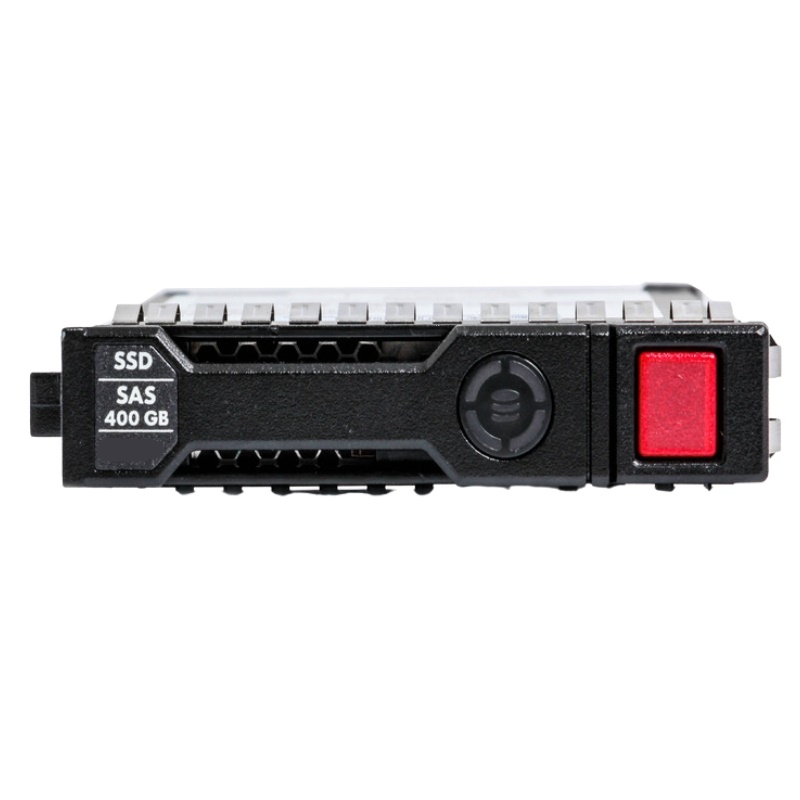


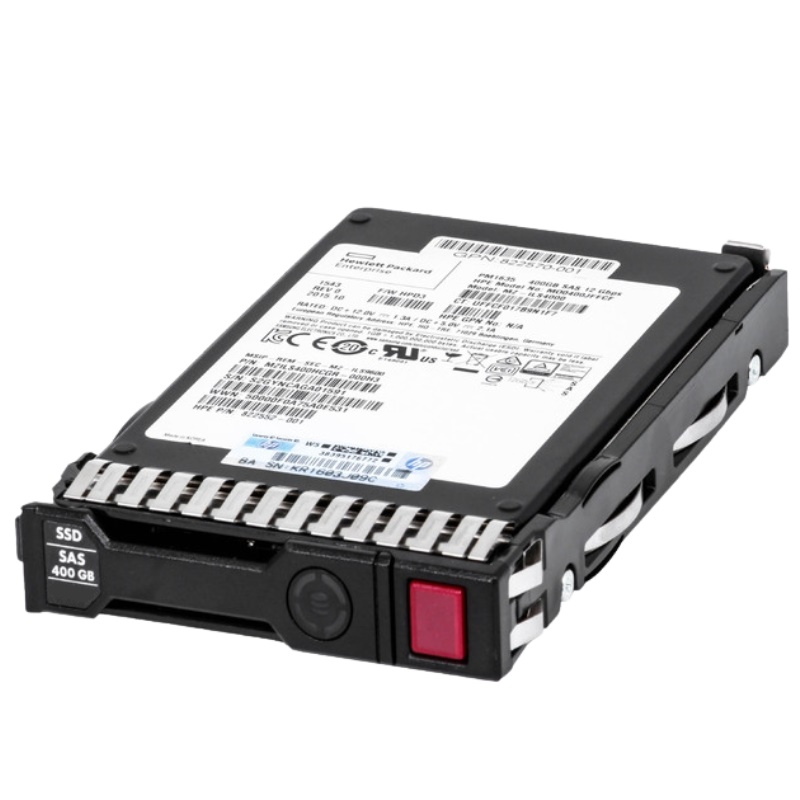
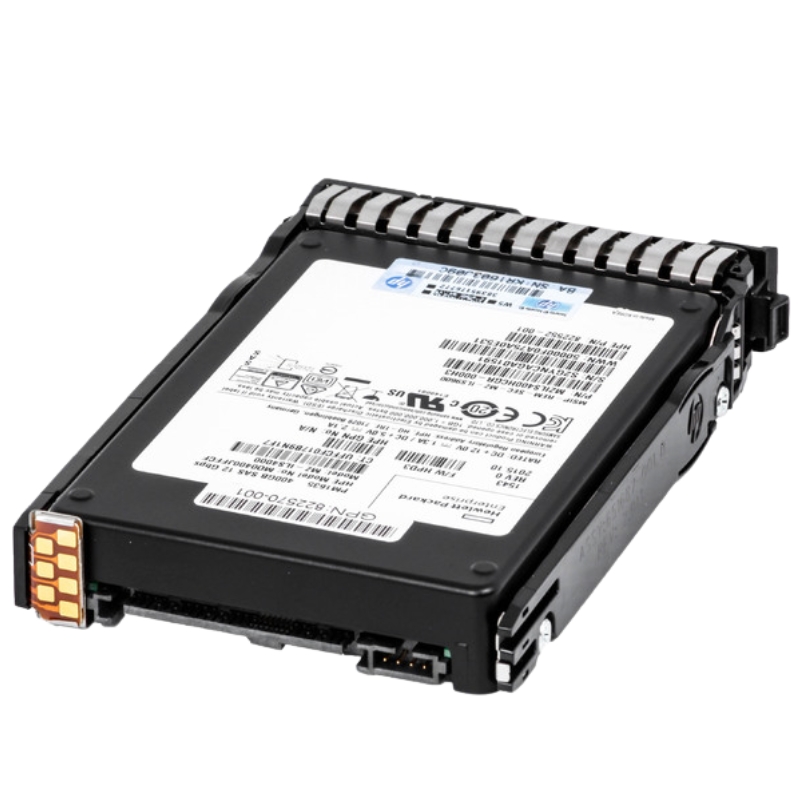
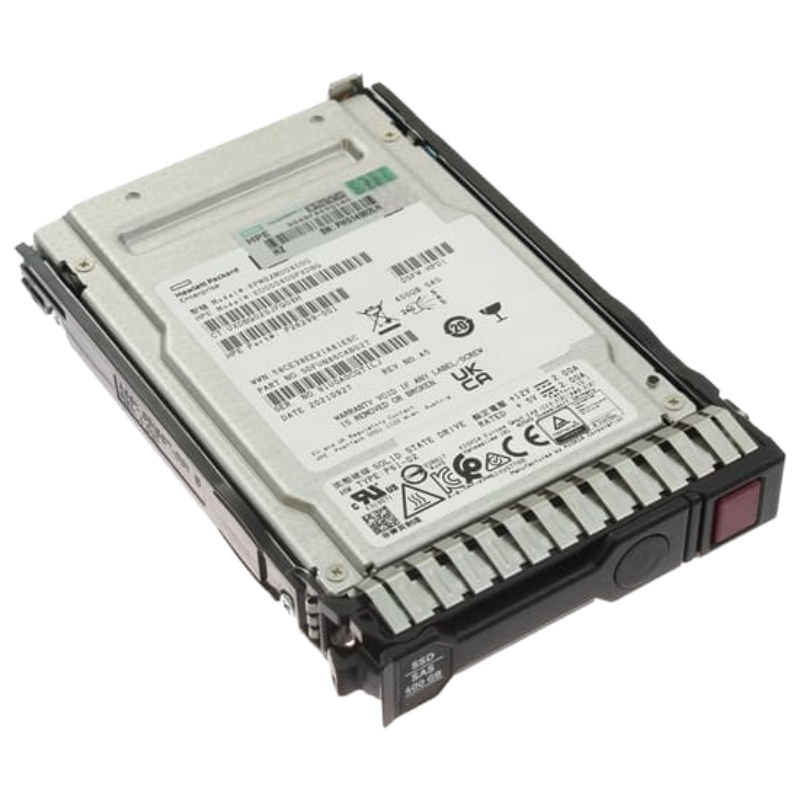
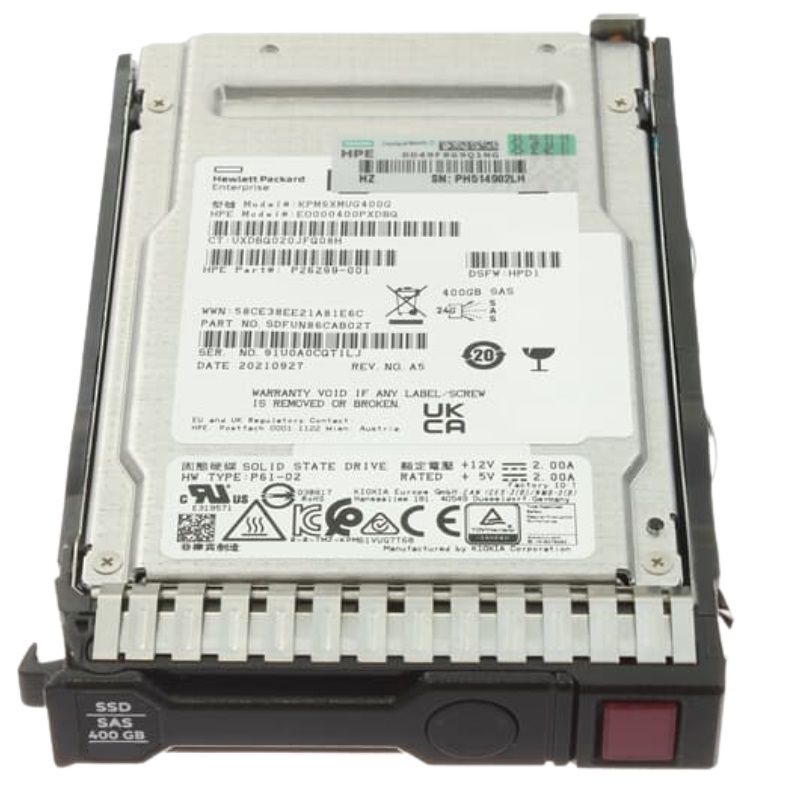
HPE PX05SVB040 SV3000 400GB SAS-12GBPS Mixed Use SFF SC Digitally Signed Hot-Plug SSD. Excellent Refurbished with 1 Year Replacement Warranty
The HPE PX05SVB040 SV3000 400GB Solid State Drive delivers exceptional speed and reliability for mixed-use workloads. Designed for demanding environments, this hot-swappable SSD ensures seamless integration and optimal data throughput.
The category centered on the HPE PX05SVB040 SV3000 400GB SAS-12Gbps Mixed Use SFF SC Digitally Signed Hot-Plug Solid State Drive encompasses enterprise-grade SSDs engineered for modern data center demands. At its core this category targets administrators, systems architects, and procurement managers who require high-density, low-latency storage optimized for mixed-use workloads — including virtualization, database transaction logs, tiered caching, and read/write intensive application servers. The category highlights the PX05SVB040's defining attributes: a 400GB raw capacity tuned for small form factor (SFF) 2.5-inch chassis, the SAS 12 Gbps interface for enterprise-class throughput and command queuing, and firmware-level features such as digital signing and hot-plug compatibility that reduce the risk and friction of large-scale deployments. This collection presents product pages, technical primers, comparative guides, and deployment notes, all geared to explain how mixed-use SAS SSDs differ from consumer drives, why digital signature verification increases supply chain integrity, and how the small form factor aligns with modern blade and rack server densities.
Technically, the PX05SVB040 is defined by its SAS-12Gbps physical layer and its enterprise-optimized NAND management. The Serial Attached SCSI (SAS) interface at 12 gigabits per second provides full-duplex communication and robust error handling, making it suitable for RAID constructs, multipath I/O topologies, and mission-critical clustered environments. The SFF designation indicates a 2.5-inch mechanical profile, enabling higher drive counts per chassis relative to 3.5-inch form factors and aligning this SSD with dense server platforms. The single connector design supports industry-standard SAS cabling and backplanes, enabling straightforward integration into HPE ProLiant servers and HPE storage enclosures that accept SAS SSDs. Because SAS supports enterprise-grade SCSI command sets, these drives function seamlessly with hardware RAID controllers and software-defined storage stacks that expect consistent command behavior under load. The mixed-use firmware profile balances write endurance with sustained throughput, making this category particularly suited to deployments that mix random writes and sequential reads, such as virtual machine boot volumes and high-concurrency databases.
Performance in this category is characterized by low latency and consistent IOPS under sustained mixed workloads. Unlike consumer SSDs that may exhibit performance erosion during prolonged writes, the enterprise mixed-use class maintains predictable latency thanks to advanced over-provisioning, wear-leveling algorithms, and write amplification minimization. Typical performance discussions within this category focus on factors such as random 4K read/write IOPS, sustained sequential throughput, average latency at queue depths representative of server workloads, and write latency percentile distributions. These metrics inform decisions about where to place PX05SVB040 drives in tiered storage architectures — for example, a logical choice is to use them as primary datastore drives for virtual desktop infrastructure and transactional databases where consistent responsiveness is paramount. The combination of SAS-12Gbps throughput and enterprise firmware ensures that random I/O spikes are absorbed without dramatic stalls, which is critical when many VMs are consolidated onto a single host or when multiple concurrent database sessions perform complex transactions.
Endurance and data integrity are central themes in this SSD category. Because mixed-use drives are expected to sustain a significant volume of writes over their service life, endurance is specified using drive writes per day (DWPD) or total bytes written (TBW) metrics that correlate to workload patterns. The PX05SVB040 and its peers in this category typically implement enterprise-grade NAND with firmware focused on minimizing write amplification, employing sophisticated wear-leveling strategies and background garbage collection that reduces foreground write latency. Crucially, digitally signed firmware provides an additional layer of security and supply chain assurance; each firmware image is cryptographically signed so that servers can verify authenticity before applying updates. This reduces the risk of malicious or corrupted firmware being installed and ensures that firmware upgrades maintain compatibility with HPE management tools. The category emphasizes the role of periodic firmware validation, signed firmware rollouts, and secure update channels as part of a comprehensive storage security posture.
Hot-plug support is another defining characteristic for enterprise operational models. The PX05SVB040's hot-plug design enables drive replacement or upgrades without powering down servers, thereby minimizing planned and unplanned downtime. This capability is especially valuable in high-availability clusters and distributed storage systems where even brief outages can disrupt service-level agreements. The category documentation explains best practices around hot-swap procedures, such as ensuring controllers support hot-plug semantics, following LED and management console indications, waiting for drive rebuild progress to reach safe states, and coordinating with server management agents like HPE Integrated Lights-Out (iLO) or Smart Array controllers. Hot-plug also reduces the operational impact of drive failures during maintenance windows and supports rapid capacity scaling in live environments.
Compatibility is a key research step for any buyer exploring this category. The PX05SVB040 series is intentionally compatible with a wide range of HPE server models and storage controllers, but compatibility extends beyond vendor marketing: it requires checking controller firmware, driver versions, and backplane specifications. Many enterprises use hardware RAID controllers or HBA mezzanine cards that explicitly list compatible SSD models; this category provides compatibility matrices and cross-reference tables aligning the SSD model with HPE ProLiant Gen-series servers, HPE storage arrays, and third-party controllers. Operating system compatibility is addressed through supported drivers and kernel-level multipath I/O configurations for Linux distributions, Windows Server, and virtualization hypervisors. The category highlights known interoperability caveats — for example, requiring controller firmware at or above certain revisions to recognize advanced SMART attributes — and recommends validating interoperability in lab environments before production rollout.
The small form factor impacts rack-level density, thermal design, and power budgets. This category clarifies how SFF SAS SSDs allow for greater drive counts per unit of rack space, enabling higher usable capacity within tight chassis real estate. However, higher density introduces thermal and power management considerations: packed drive bays can elevate ambient temperature and increase cooling workload, so data center operators must model the thermal output of mixed-use SSDs and ensure sufficient airflow. The category offers guidance on calculating power draw for storage-dense servers, recognizing that sustained high I/O can increase power consumption compared to idle states. Configurations that use multiple PX05SVB040 drives in RAID groups should therefore be validated against server power supply capacities and rack cooling capabilities to avoid thermal throttling or unexpected failures.
Enterprise customers often deploy SSDs in RAID or erasure-coding arrays to increase resilience and performance. Within this category the emphasis is on designing arrays that leverage the PX05SVB040’s strengths while mitigating potential failure modes. Design patterns include using RAID levels that balance redundancy with performance, such as RAID 10 for write-intensive mixed workloads and RAID 6 for larger arrays where double parity protects against simultaneous device failures. The category explains the implications of rebuild times for SSDs versus HDDs, noting that SSD rebuilds are typically faster but can stress the remaining drives with intense I/O; therefore, rebuild-friendly policies and spare allocation are recommended. Additionally, modern controllers and storage software offer features such as background scrubbing, proactive sparing, and predictive drive health analytics that help maintain array integrity in large-scale deployments.
Real-world use cases anchor the category content to operational decisions. Typical deployments for PX05SVB040-class SSDs include virtual machine datastores in hyperconverged infrastructure, boot and OS volumes for latency-sensitive hosts, high-performance cache layers in hybrid storage arrays, and transactional databases requiring consistent low-latency I/O. The category includes narrative case studies describing how organizations reduced VM boot times, improved transaction throughput, and lowered tail-latency for multi-tenant applications by consolidating workloads on mixed-use SAS SSDs. These case studies emphasize architecture choices such as controller queue depth tuning, aligning write-back cache policies with backup schedules, and ensuring that storage tiering intelligently places the hottest data on flash layers while colder data remains on high-capacity HDD tiers.
Optimization advice in this category covers both hardware and software knobs. From the hardware side, users are encouraged to match drive firmware and controller firmware versions, configure appropriate queue depths on HBAs, and select RAID stripe widths that complement the common I/O size of their applications. On the software front, the category discusses file system alignment, appropriate use of TRIM/discard in virtualized environments, and tuning VM-level caching mechanisms to avoid unnecessary write amplification. Performance tuning sections describe how to interpret latency histograms, how to use synthetic benchmarks judiciously, and how to extrapolate benchmark results to expected production loads, stressing that real-world multi-tenant workloads often reveal different bottlenecks than isolated lab tests.
Environmental factors and compliance obligations are covered thoroughly in this category. SSDs present different failure and disposal profiles than HDDs; thus, data centers must adapt asset tracking, end-of-life procedures, and hazardous material handling policies accordingly. The PX05SVB040's digital signature and firmware transparency help with compliance audits by providing verifiable firmware provenance. The category outlines how to document device inventories, maintain firmware versions for audit trails, and coordinate secure disposal practices that meet regional regulatory standards. Additionally, thermal and acoustic benefits of SSDs reduce cooling and noise concerns, though power provisioning must be recalculated for dense SSD deployments to ensure electrical circuits remain within safe operating margins.
Buyers often need to compare similar models across capacity, endurance class, and performance profile. The category provides side-by-side conceptual comparisons that discuss when a mixed-use 400GB SAS-12Gbps drive is appropriate versus alternatives such as read-optimized SSDs, high-endurance enterprise writes, or NVMe-based alternatives. Selection advice centers on matching endurance ratings to expected write amplification, balancing capacity versus the number of drives in RAID configurations, and considering controller support for SAS versus NVMe transports. The category helps buyers decide when to prioritize backward compatibility with existing SAS backplanes and when to plan for NVMe migration in future refresh cycles.


 Contact Us
 Information
 Catalog
 Solid State Drives (SSD)
 Network Switches
 Hard Disk Drives
 HBA & Controllers
 PC & Servers
 PC & Server Memory
 CPU & Processors
 Network Routers
 Power Supplies
 Tape Drives & Libraries
 Network Devices
 Computer & Network Cables