(7% discount is applied at checkout)
Cart is empty
Your go-to destination for cutting-edge server products
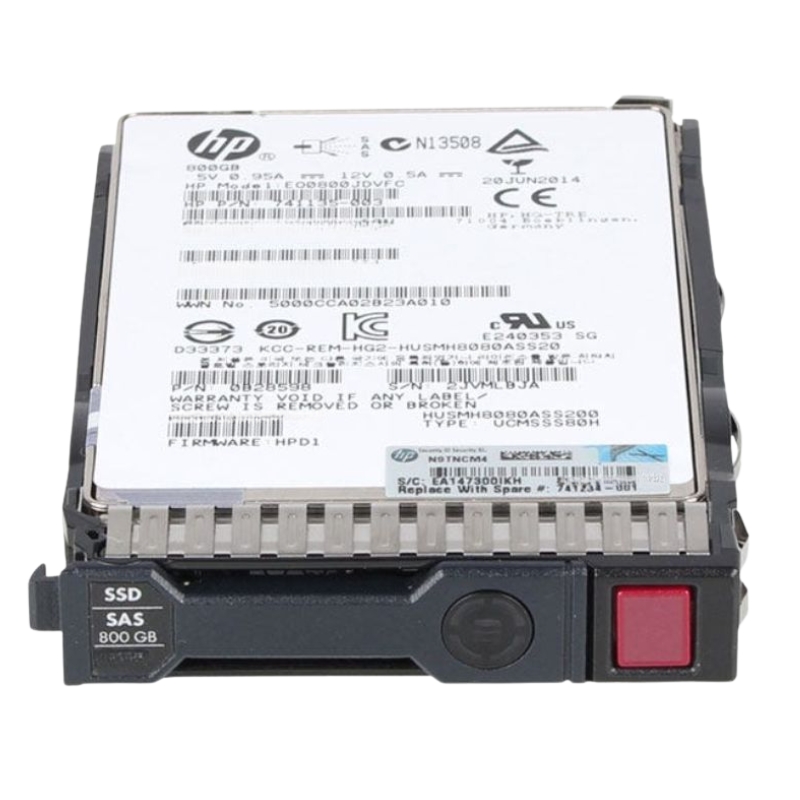


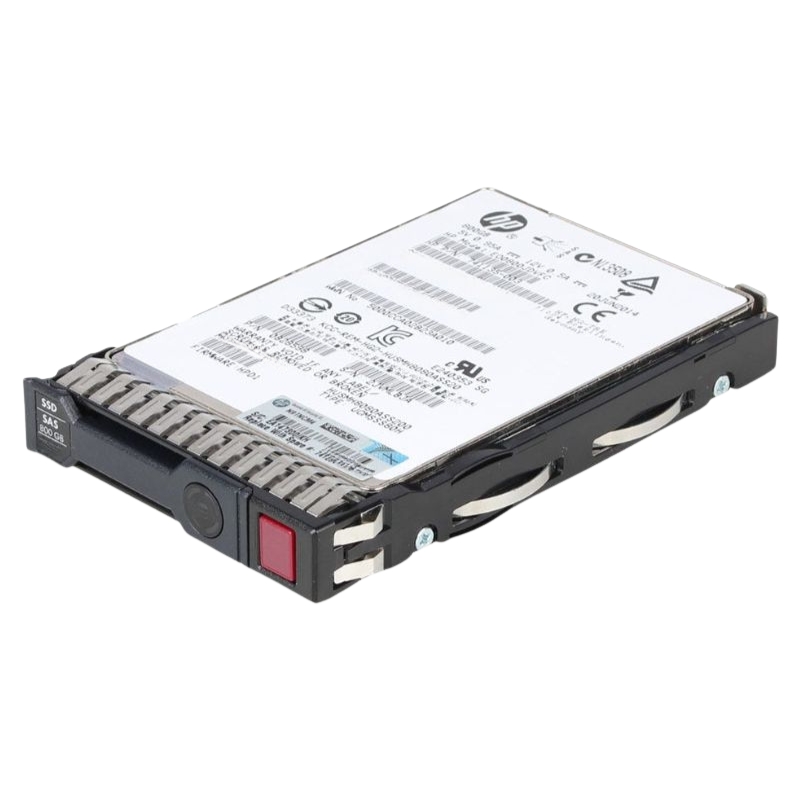
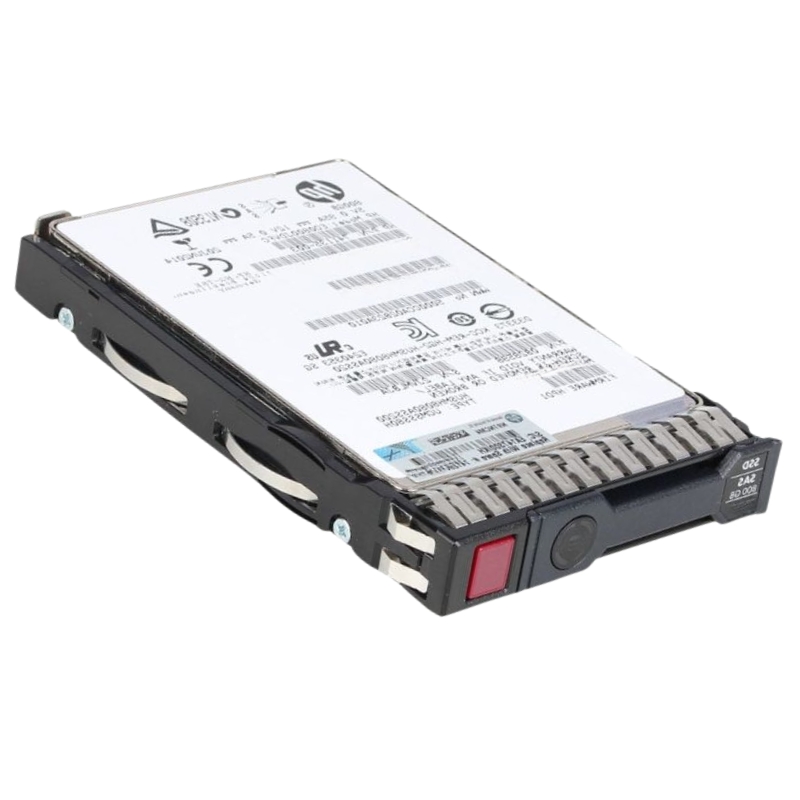
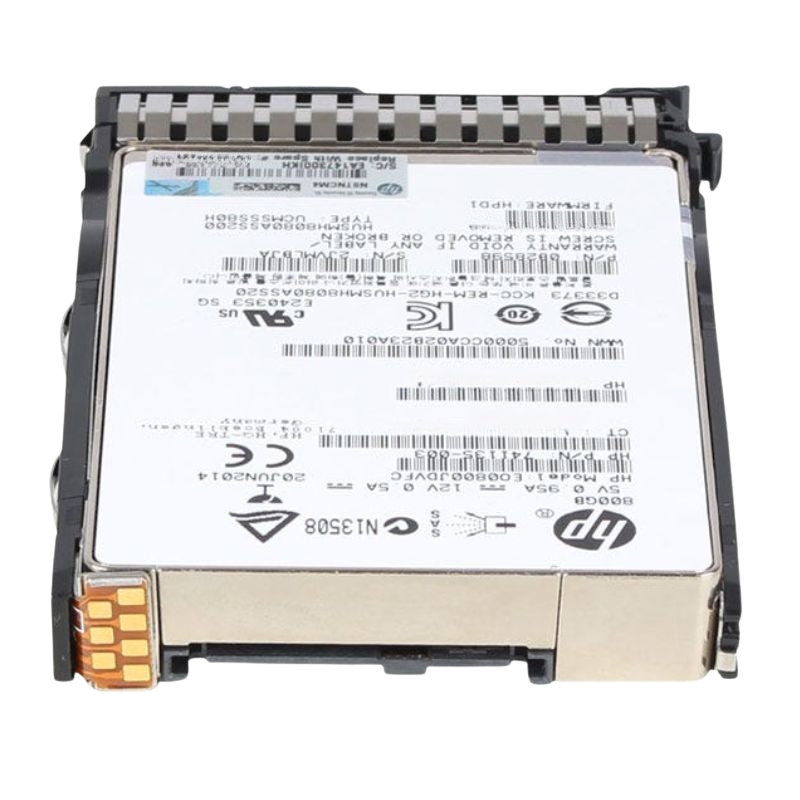
HPE P11533-001 800GB SAS 12GBPS PCIe NVMe Mixed Use 2.5Inch SSD. Excellent Refurbished with 1 Year Replacement Warranty
Upgrade your IT infrastructure with the HPE P11533-001 800GB SAS 12Gbps PCIe NVMe Mixed Use 2.5-Inch SSD. Designed for enterprises seeking exceptional performance and reliability, this SSD ensures smooth handling of data-intensive workloads. Featuring an 800GB storage capacity, advanced 12Gb/s SAS interface, and optimized endurance for mixed-use operations, it delivers excellent speed, durability, and efficiency compared to traditional spinning hard drives.
This enterprise-class SSD is engineered to provide consistent performance under demanding conditions. With NVMe PCIe technology combined with SAS 12Gb/s interface, it offers enhanced bandwidth and responsiveness for data-driven applications.
Relevant subcategories
By replacing traditional hard drives with this SSD, businesses can achieve remarkable improvements in speed and reliability. The reduced latency ensures applications and workloads run seamlessly while lowering power consumption and noise output.
The HPE P11533-001 SSD not only ensures outstanding performance but also contributes to a greener data center environment. With an eco-friendly build, it minimizes waste while maximizing operational efficiency.
Businesses looking to enhance system responsiveness and efficiency will find the HPE P11533-001 800GB SAS SSD an ideal solution. It delivers a balanced combination of storage capacity, transfer speed, and endurance for demanding workloads. Whether you are upgrading an existing server or deploying new infrastructure, this SSD ensures dependable and consistent performance.
The HPE P11533-001 800GB represents a high-density, enterprise-grade 2.5-inch SSD designed for mixed-use workloads. Targeted at data centers, virtualization environments, and mixed read/write application servers, this class of storage device blends the endurance and consistency of SAS deployment with the performance advantages associated with modern NVMe and PCIe architectures. This category description details specifications, deployment scenarios, compatibility notes, benefits, buying guidance, and optimization tips tailored to technical buyers, system integrators, and procurement teams seeking reliable, high-throughput storage modules for HPE and OEM platforms.
The SKU's core calling cards—800GB capacity, 2.5" form factor, and support for 12Gbps SAS—make it ideal for standardized rack servers and storage arrays that accept 2.5" sleds. The term Mixed Use implies a design focus on balancing endurance and performance: typically higher write endurance than read-optimized value drives, but still engineered for sustained throughput and consistent latency.
The compact 2.5-inch mechanical form ensures compatibility with dense server and storage chassis. While marketed in the SAS 12Gbps ecosystem, aspects of the SKU’s architecture (controller design, queueing, and firmware optimizations) are informed by NVMe/PCIe design philosophies to maximize parallelism and minimize queuing latency for mixed workloads.
At 800GB, these drives offer a middle-ground capacity that fits well into both boot/storage arrays and high-performance application tiers. Mixed-use endurance metrics are engineered to support enterprise write cycles across months or years of service, depending on workload intensity. For procurement planning, map expected daily writes to drive write endurance specifications supplied by HPE to estimate useful lifetime.
Mixed-use SSDs typically deliver a balanced IOPS and throughput profile optimized for random and sequential operations. Expect low write latency under steady-state operations, burst handling for peak loads, and firmware features such as background garbage collection and power-loss protection to preserve data integrity and service availability in enterprise deployments.
The HPE P11533-001 800GB Mixed Use SSD is suited to a range of production use cases where predictable performance and endurance are required:
Virtualized environments demand consistent random I/O performance because of the consolidation of many small virtual disks on a shared storage layer. Mixed-use SSDs deliver the write endurance and low latency needed to support many short I/O bursts typical of guest OS activity, login storms, and application churn.
Databases benefit from SSD tiers that can reliably absorb transactional writes and provide low-latency read amplification for query responses. Use P11533-001 drives as part of a tiered storage architecture: flash for active datasets and HDDs for colder archives.
Enterprise servers often require drives that support hot-swap replacement, firmware-level reliability, and compatibility with RAID controllers. A mixed-use SSD in the boot or system volume improves boot times, reduces OS-related I/O bottlenecks, and provides deterministic behavior during failover scenarios.
Ensuring compatibility with existing infrastructure is essential. The P11533-001 SKU is typically validated for numerous HPE server families and storage enclosures, but buyers should verify firmware and hardware compatibility lists before ordering. Key compatibility considerations include:
Check the specific HPE ProLiant (or other) server model's QuickSpecs and the supported drive list. Many HPE RAID controllers and HBAs support SAS 12Gbps drives in standard drive bays; confirm that the controller firmware supports enterprise SSD features such as TRIM/DFA, SMART reporting, and vendor-specific telemetry.
The 2.5" form factor is widely accepted, but verify sled type (cabled vs. backplane), thickness (7mm, 9.5mm, etc.), and hot-swap connectors. HPE-branded sleds and carriers often provide status LEDs and interlock mechanics that are expected in server management tools.
Use HPE's management utilities to monitor drive health, firmware-level errors, and predictive failure warnings. Firmware updates can deliver performance improvements and bug fixes; run updates during maintenance windows following vendor guidance.
The selling points of a drive in this category center on enterprise reliability, optimized mixed workload performance, and vendor certification:
HPE-branded drives are typically backed by enterprise warranties and service-level expectations. Drive telemetry and SMART metrics are integrated into server management for proactive maintenance, reducing unexpected downtime risk.
Mixed Use classification ensures that drives are not over-optimized for either read-heavy or write-heavy patterns alone; instead, firmware and NAND management algorithms aim for steady, predictable behavior across a broad workload mix.
Purchasing HPE-labeled SKUs simplifies procurement and support. When drives are on the vendor-validated list for a given server family, service contracts and spares management are easier to maintain.
Even enterprise SSDs benefit from thoughtful system-level configuration. Below are practical optimizations to squeeze consistent performance from mixed-use drives.
Keep drive and controller firmware patched to recommended versions. Firmware updates can improve garbage collection, power-loss behavior, and telemetry — all impacting long-term performance stability.
Fine-tune queue depth settings at the HBA and OS level to align with application behavior. Too-low queue depth may underutilize the parallelism of the drive; too-high queue depth can cause increased latency in certain controller designs.
Reserving a portion of capacity for over-provisioning improves write amplification and endurance. Choose RAID levels that balance performance and redundancy—RAID 10 for lower latency and better write performance; RAID 6 for higher storage efficiency with redundancy.
SSDs are sensitive to sustained high temperatures. Ensure proper airflow in drive bays and monitor thermal telemetry to avoid thermal throttling that can reduce throughput during peak loads.
Understanding where a mixed-use SAS/PCIe SSD sits relative to other categories helps make informed tradeoffs.
Read-optimized drives prioritize sequential reads and lower cost per GB but typically have lower write endurance. Mixed-use drives balance both and are preferable where writes are non-trivial.
Write-intensive models offer higher endurance at a premium. If your workload writes heavily (e.g., real-time logging, intensive analytics), a write-intensive model may deliver longer lifetime and lower TCO despite higher initial cost.
Native NVMe over PCIe often offers lower latency and higher parallelism than SAS-connected drives. However, SAS remains ubiquitous in enterprise backplanes and offers broad interoperability with existing storage arrays and RAID controllers. Choose based on architecture compatibility and performance needs.
A mid-size hosting provider replaces older HDD-based boot volumes with mixed-use 800GB SSDs to reduce VM startup times and increase consolidation ratios. The predictable I/O profile reduces noisy-neighbor effects and improves tenant experience during peak login events.
An enterprise IT team deploys a small fleet of mixed-use SSDs as an active tier for high-value database shards. The drives absorb transactional loads and reduce read-latency for real-time queries, while bulk historical data remains on cost-effective HDD arrays.


 Contact Us
 Information
 Catalog
 Solid State Drives (SSD)
 Network Switches
 Hard Disk Drives
 HBA & Controllers
 PC & Servers
 PC & Server Memory
 CPU & Processors
 Network Routers
 Power Supplies
 Tape Drives & Libraries
 Network Devices
 Computer & Network Cables