(7% discount is applied at checkout)
Cart is empty
Your go-to destination for cutting-edge server products
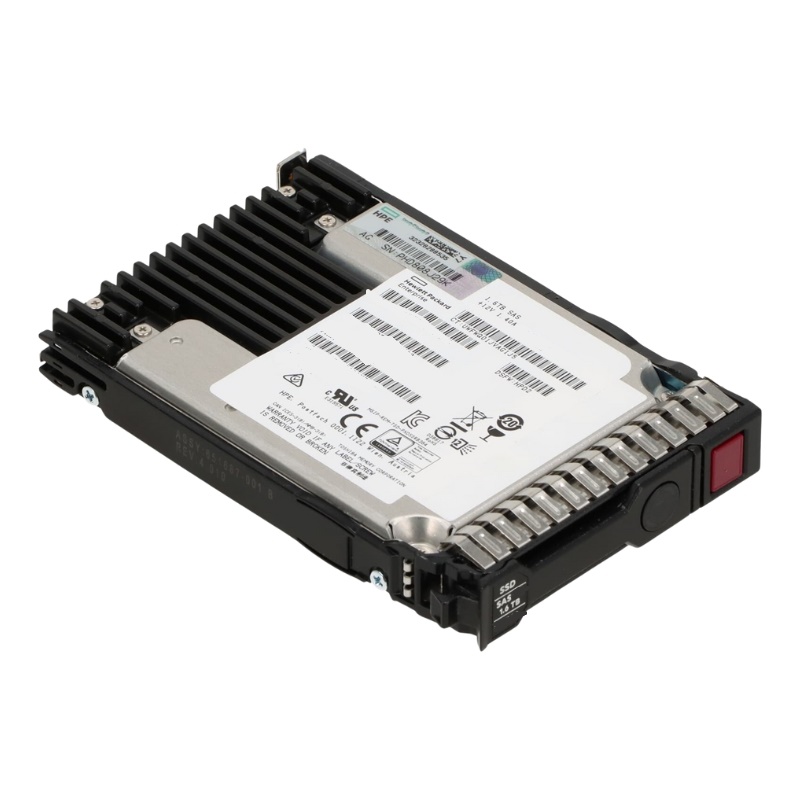


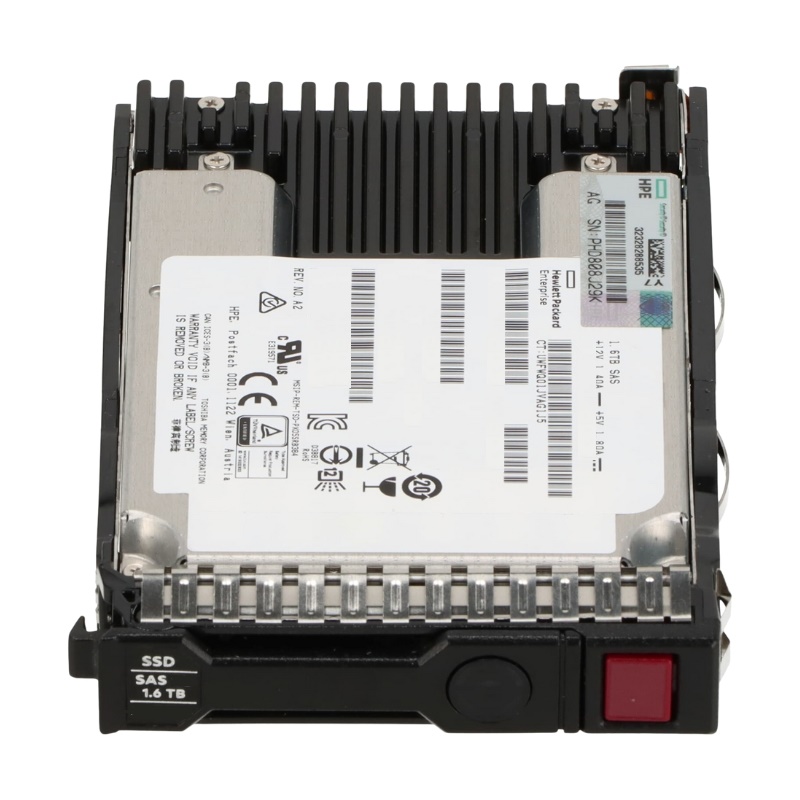
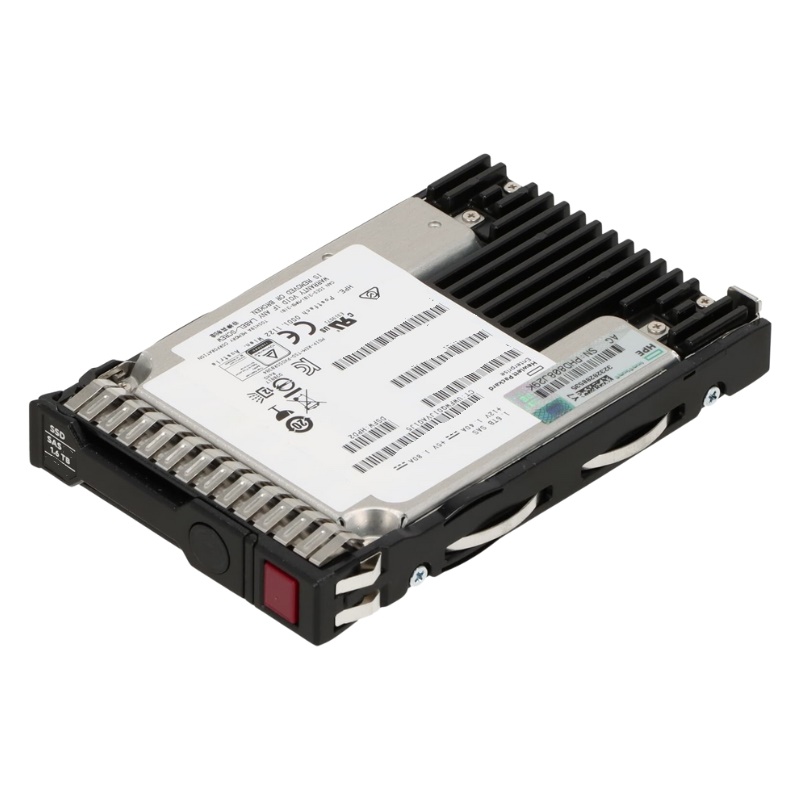
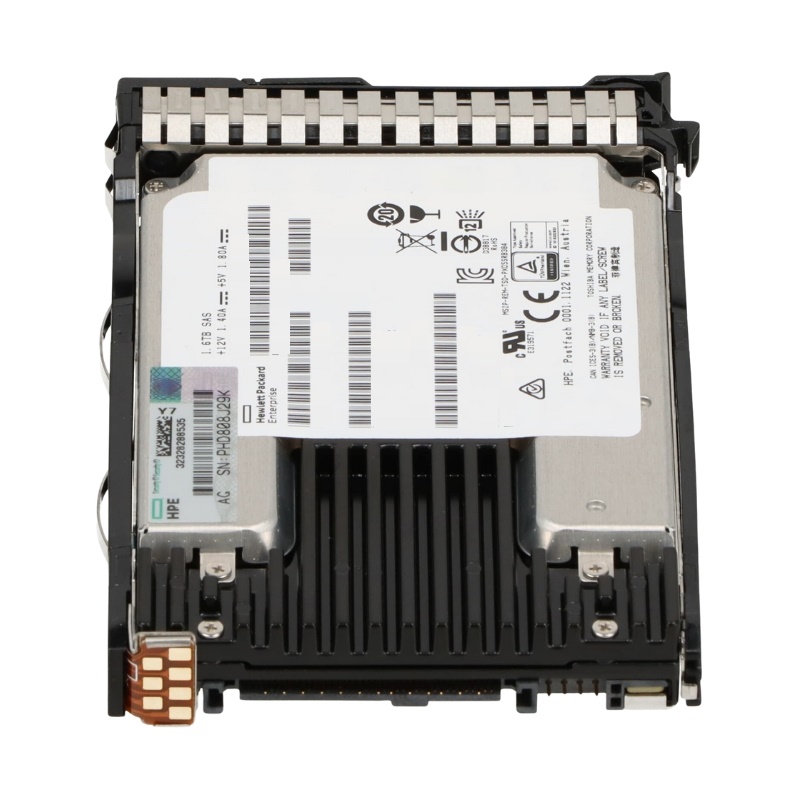
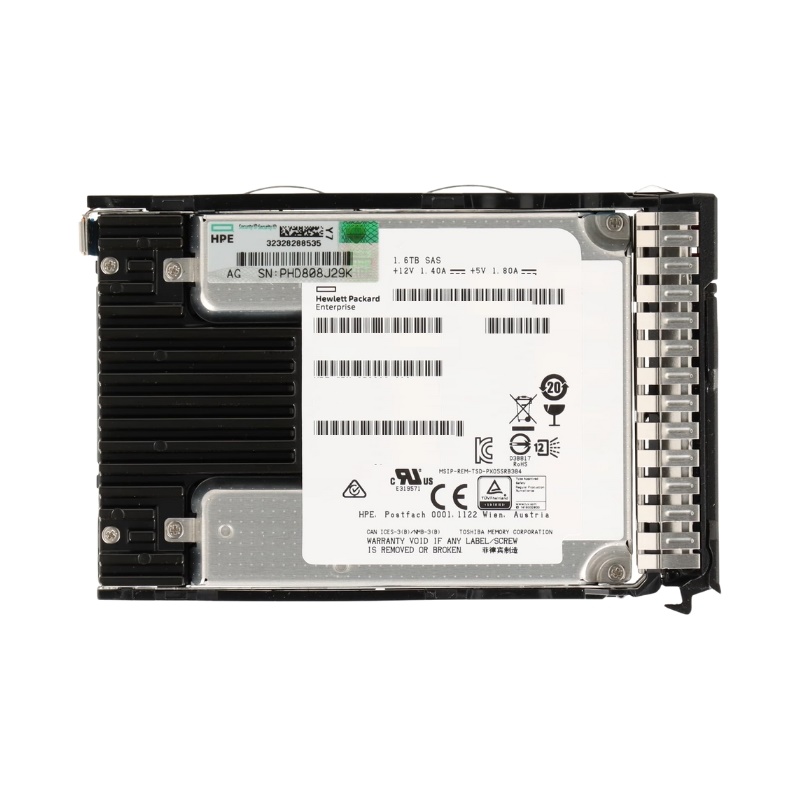
HPE P07045-001 1.6TB SAS 12GBPS Mixed Use 2.5 Inch SE MSA Solid State Drive. Excellent Refurbished with 1 year replacement warranty
The HPE P07045-001 1.6TB SSD delivers unmatched efficiency and reliability for enterprise environments that demand consistent high performance. Crafted for mission-critical systems, this drive supports mixed-use applications with impressive endurance and speed.
With a blazing-fast 12Gb/s Serial Attached SCSI (SAS) interface, the P07045-001 offers seamless data throughput for latency-sensitive applications. This ensures quick access to large datasets and supports high IOPS environments such as virtualization and real-time analytics.
This SSD is engineered for both read- and write-intensive operations. Ideal for applications with balanced IO workloads—such as database management, online transaction processing (OLTP), and cloud infrastructure—it combines endurance with performance in a compact format.
Fully compatible with HPE MSA 2050 Series enclosures, this SSD ensures seamless integration into existing storage architectures. It serves sectors such as financial services, healthcare, and enterprise IT with high-volume data operations.
Deploy this drive in storage arrays, cloud infrastructure, database servers, or virtualized environments. Its balance of speed and endurance makes it suitable for enterprises aiming to modernize their data storage without disrupting workflow.
The P07045‑001 from Hewlett Packard Enterprise (HPE) is a 1.6TB solid‑state drive (SSD) engineered with a 12Gb/s Serial Attached SCSI (SAS) interface. It is designed for mixed‑use workloads, combining the durability of enterprise write patterns with the faster read performance traditionally associated with read‑heavy or hybrid workloads. Offered in the standard 2.5‑inch form factor, this drive integrates seamlessly into enclosures originally built for SAS or SSDs, such as HPE Modular Smart Array (MSA) systems, storage enclosures, and server aggregations. Its robust design includes solid endurance metrics, firmware tuned for consistent performance under fluctuating input/output (I/O) patterns, and energy/thermal efficiency suitable for dense data center deployment.
Under mixed workload patterns—where both random and sequential reads and writes occur—the P07045‑001 SSD maintains high I/O operations per second (IOPS), sustaining throughput close to its interface limits for many enterprise use cases. Its firmware prioritizes consistent read response times, while write caching and internal buffering handle bursts of writes efficiently so that performance does not degrade under load.
In infrastructure requiring predictable latency—such as virtualization hosts, database servers, and file‐services clusters—sustained latency is critical. The P07045‑001 is engineered to avoid large latency spikes during mixed operations, thanks to its internal scheduling logic, queue depth optimization, and overprovisioning margins. This ensures performance remains consistent even when subjected to simultaneous reads and writes.
The drive supports up to 10 DWPD, meaning it can be written and rewritten up to ten times per day over its warranted lifespan without exceeding its rated degradation thresholds. Write amplification is managed through efficient wear leveling, garbage collection, and error correction schemes. Thermal throttling is minimal due to effective heat dissipation designs, which preserve endurance even in high‑density configurations.
In virtual machine (VM) heavy clusters, for example hyperconverged infrastructure (HCI) setups, workloads are typically mixed—frequent writes (from snapshots, logs, VM images) and reads (boot, OS, application data). The P07045‑001 fits this pattern well, ensuring that both writes and reads are handled gracefully. When used in ALL‑flash or hybrid arrays, it serves as reliable flash tiers, boosting performance for hot data while scaling cold data to lower performance/higher capacity storage.
Applications like OLTP databases, messaging systems,Accounting, and financial trading systems generate small random writes and reads along with sequential backups and logs. This SSD remains stable under such mixed operations, minimizing latency for transaction commits and accelerating query responses. Its SAS interface ensures high availability and multiple paths, if configured, for redundancy.
In cloud and service provider environments, resources are shared; performance interference must be limited. With this drive's solid endurance and predictable behavior, providers can offer service tiers for mixed‑use workloads—such as database as a service (DBaaS), shared storage volumes, hosted virtual desktops—without the drive failure risk rising sharply under shared demands.
While sequential writes to large files (such as backups) may not fully stress the mixed‑use profile, periodic or scheduled backups, snapshots, and restore operations benefit from the high sustained throughput. Using this drive in mid‑tier or performance tiers in tiered storage strategies, or as hot spot accelerators, speeds up the overall data pipeline.
Ensure that the SSD is running the latest firmware recommended by HPE to benefit from bug fixes, performance optimizations, and enhancements to endurance or compatibility. SAS controller settings should allow for full 12Gb/s negotiation, proper link training, and low overhead in SAS path switching. Multipath I/O (MPIO) setups—common in SAN or shared storage networks—must be configured to enable failover and load balancing without introducing latency outliers.
By leaving a portion of the drive unallocated (overprovisioning), you can improve both performance consistency and lifespan. Wear leveling algorithms distribute write/erase cycles across the NAND cells evenly, reducing early cell failures. Drives with adequate spare block reserves better handle write bursts without immediate performance degradation.
Because mixed‑use drives generate heat under concurrent read/write activity, proper airflow in drive bays or sleds is essential. Heat sinks, airflow ducting, and adequate chassis ventilation help maintain the optimum operating temperature, preventing thermal throttling and preserving performance over long sustained workloads.
This model is designed for enterprise efficiency. While delivering high performance, it keeps power consumption in check during heavy I/O activity. For environments billing by power usage, or in tight thermal/power constrained racks, choosing such efficient drives reduces cooling and energy cost overheads.
Error correction code (ECC), end‑to‑end data path protection, and firmware safeguards guard against silent data corruption. The P07045‑001 supports mechanisms to preserve data integrity in the face of sudden power loss or unexpected shutdowns—depending on system support for power loss protection and cache backup arrangements.
Many drives with this model are available in refurbished condition. These units are restored, often with rigorous testing for performance, endurance, and reliability, and usually offered at a lower cost point. They undergo validation for firmware version, diagnostic stress, burn‑in cycles, and often include warranties from refurbishers or resellers. For organizations with constrained budgets, a certified refurbished P07045‑001 can offer near‑enterprise performance at reduced expense.
This model sits within SAS SSD ecosystems. It is often grouped under “enterprise SSDs” or “server storage drives” subcategories. Users seeking high reliability, low latency, and predictable behavior under mixed operations will identify this as a top choice. Subcategories where it fits include “MSA NAS/SAN flash tiers,” “hybrid storage acceleration,” “compute‑storage convergence,” and “performance tiers in data centres.”
Many storage systems implement tiers—fast SSD tiers for hot data, slower or high‑capacity tiers for cold data. The P07045‑001 can serve in the hot or warm tier, caching layer, or as metadata and log storage. Its balanced design makes it well‑suited to accelerate performance for both frequent small I/O operations and bulk transfers, acting as a workhorse in the middle of a tiered architecture.
Regularly checking Self‑Monitoring, Analysis, and Reporting Technology (SMART) attributes is essential. Metrics such as available spare capacity, percentage of drive used, uncorrectable error counts, and media wear indicators help gauge remaining life. Setting up alert thresholds before failure prevents data loss and enables proactive drive replacement.
Keeping firmware up to date ensures enhancements in reliability, bug fixes, improvements in thermal behavior or latency under load. Track the version shipped with each unit—especially refurbished drives—to ensure that known issues are addressed. Some firmware revisions may unlock or disable features such as power loss protection or enhanced data path protection; knowing what is enabled matters for enterprise SLAs.
Deploying multiple P07045‑001 drives across a rack or data center benefits from purchasing identical firmware, batch, and revision sets. Homogenous inventory reduces variation in response times, drive wear, and reliability. Having spare units on hand ensures quick swap‑outs without long repair or maintenance windows—critical for high‑availability infrastructure.
In SAN or server systems that support hot‑swapping, ensure you have redundant paths and mirrored or replicated data before removing a failing drive. Observing safe extraction guidelines, cooling after extraction, and ensuring firmware compatibility with the replacement drive preserves uptime and consistency.
Understand vendor recommendations on drive retirement—often based on write cycles, errors, thermal history, or operational hours. Keeping drives past their safe end‑of‑life increases risk of failure and data corruption. Proper disposal or recycling under environmental standards is also part of responsible lifecycle management.
While investing in enterprise‑grade mixed‑use SSDs mitigates many performance and reliability risks, some remain: firmware bugs, interop issues, thermal overloads, or unexpected outage scenarios. Mitigation includes vendor support contracts, firmware testing before deployment, environmental monitoring, and implementing redundancy at multiple layers (RAID, replication, etc.).
Includes terms that customers often use when searching: “HPE mixed‑use SSD 12Gb SAS,” “enterprise SAS 2.5‑inch 1.6TB,” “MSA solid state drive,” “10 DWPD SAS enterprise drive,” “high endurance flash for server,” “refurbished HPE P07045‑001,” “data center SSD SAS 12Gb/s,” “balanced read write enterprise SSD.” These related phrases align with search intent for IT managers, procurement officers, system architects, and data center engineers seeking high reliability storage solutions.
Link internally to related categories or product pages: e.g., “other HPE SAS 12Gb/s mixed use SSDs,” “HPE MSA 2050 Series storage solutions,” “enterprise SSD write‑intensive vs mixed‑use.” Externally, cite whitepapers, HPE spec sheets, reviews or benchmarks that validate performance, endurance, or reliability—these boost trust and signal quality to search engines.
Match the drive’s endurance (10 DWPD) with your write volume. For read‑dominant workloads, it may be overkill; for write‑intensive workloads (e.g., constant logs, media editing), you might consider drives rated higher than 10 DWPD. Use monitoring tools to assess actual read/write ratio over time.
Check your server chassis or storage array’s airflow, cooling capacity, ambient temperature limits. Ensure PSU margins can handle peak loads. Evaluate power draw of each drive—stacking many high performance SSDs in dense enclosures can push system power and cooling demands significantly upward.
In one deployment, a global enterprise replaced mixed batches of SATA SSDs and SAS HDDs with P07045‑001 drives in their VDI tier. The result was a >50% reduction in login times, smoother user experience under peak loads, and reduced cooling costs due to lower aggregate power draw and less mechanical overhead.
Another deployment in a financial institution used these drives for transactional databases and log archival. The mixed‑use drives allowed predictable response times even during market open hours when write loads surged. End‑of‑day analytics also benefitted from fast sequential reads of large datasets.
A cloud service provider used P07045‑001 units in a mid‑tier performance layer for tenants who required lower latency than HDD but didn’t need the absolute maximum speed (and cost) of top‑end write‑intensive SSDs. This tier achieved high customer satisfaction, predictable billing, and acceptable endurance with lower acquisition cost.
Other brands and models in the enterprise SSD space include drives from Samsung, Intel, Micron, and others offering SAS‑based mixed‑use options. Differences tend to revolve around warranty, firmware maturity, performance under extreme mixed I/O load, and support ecosystems. HPE’s support and integration with its own MSA enclosures often give it an edge for HPE customers or those with matching infrastructure.
Effective target phrases include: “HPE P07045‑001 1.6TB SAS SSD”, “12Gb/s Mixed‑Use SAS 2.5‑inch drive”, “HPE MSA Enterprise SSD 1.6TB”, “10 DWPD SAS drive”. Title tags for category or product listing pages might follow patterns like P07045‑001 HPE 1.6TB SAS Mixed‑Use SSD | 12Gb/s Enterprise Drive.
Craft meta descriptions that highlight endurance, interface speed, and capacity—e.g., “P07045‑001 HPE mixed‑use SSD: 1.6 TB, 12Gb/s SAS, 10 DWPD, best for enterprise and data‑center use.” Use image alt text like “HPE P07045‑001 1.6TB SAS 12Gb/s SSD front view”, “HPE enterprise 2.5‑inch SAS mixed‑use solid state drive P07045‑001”, etc.
Break long blocks of text with headings, bullet points, tables, and use of bold for key attributes such as “10 DWPD”, “12Gb/s SAS”, “mixed‑use enterprise SSD”. Include comparison charts, performance benchmarks, and real deployment scenarios to build trust. Reviews and case studies from users increase dwell time and improve perceived authority.
The drive is manufactured following Restriction of Hazardous Substances (RoHS) directives, ensuring materials used meet environmental safety thresholds. This ensures safer disposal, less toxic material content, and compliance with global environmental regulations.
In high‑density storage racks, each watt matters. The P07045‑001’s design aims to minimize power draw under normal and heavy load, while maintaining thermal characteristics that avoid hotspots. Reduced thermal footprint translates directly into lower cooling cost and longer component life for adjacent hardware.
As data volumes grow, demands increase not only in capacity but in consistent performance under load. Incorporating mixed‑use SSDs early—such as P07045‑001—allows your storage infrastructure to scale with predictable performance, both for reads and writes. Ensure your architecture supports expansion, enclosure compatibility, and firmware updates to leverage improvements over time.


 Contact Us
 Information
 Catalog
 Solid State Drives (SSD)
 Network Switches
 Hard Disk Drives
 HBA & Controllers
 PC & Servers
 PC & Server Memory
 CPU & Processors
 Network Routers
 Power Supplies
 Tape Drives & Libraries
 Network Devices
 Computer & Network Cables