(7% discount is applied at checkout)
Cart is empty
Your go-to destination for cutting-edge server products
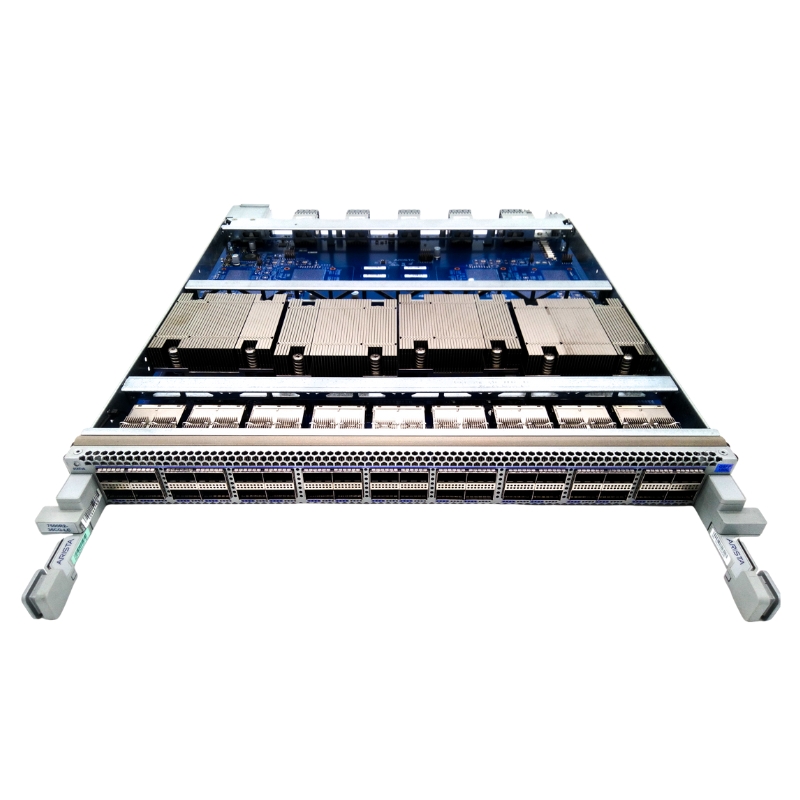


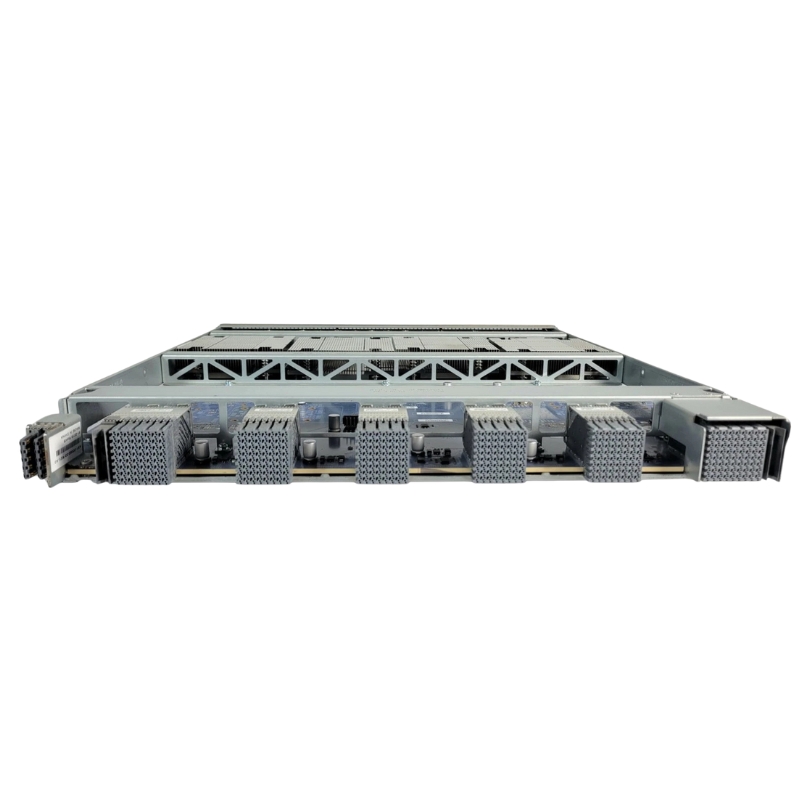
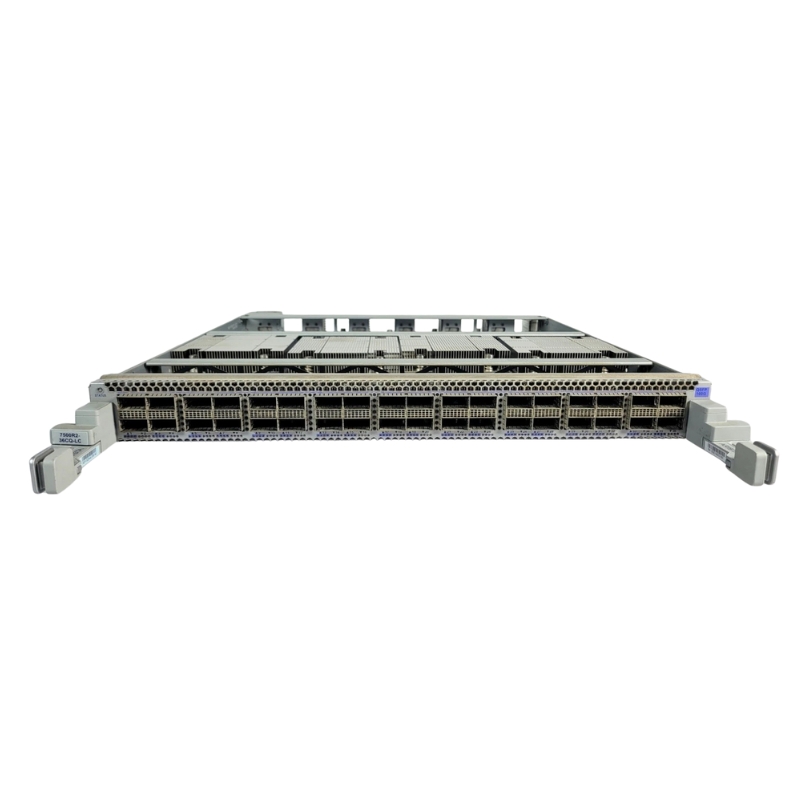
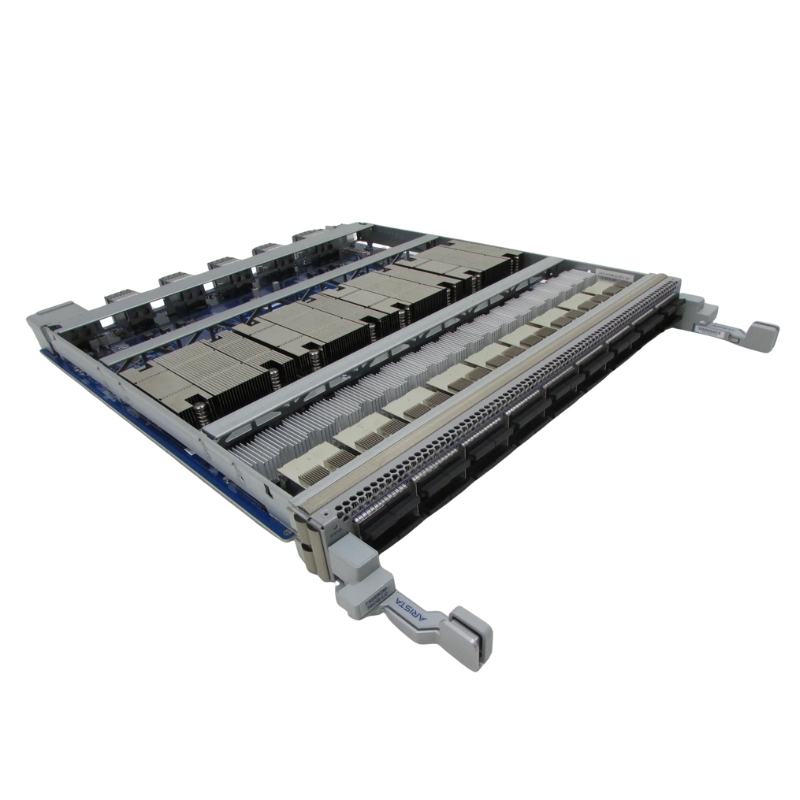
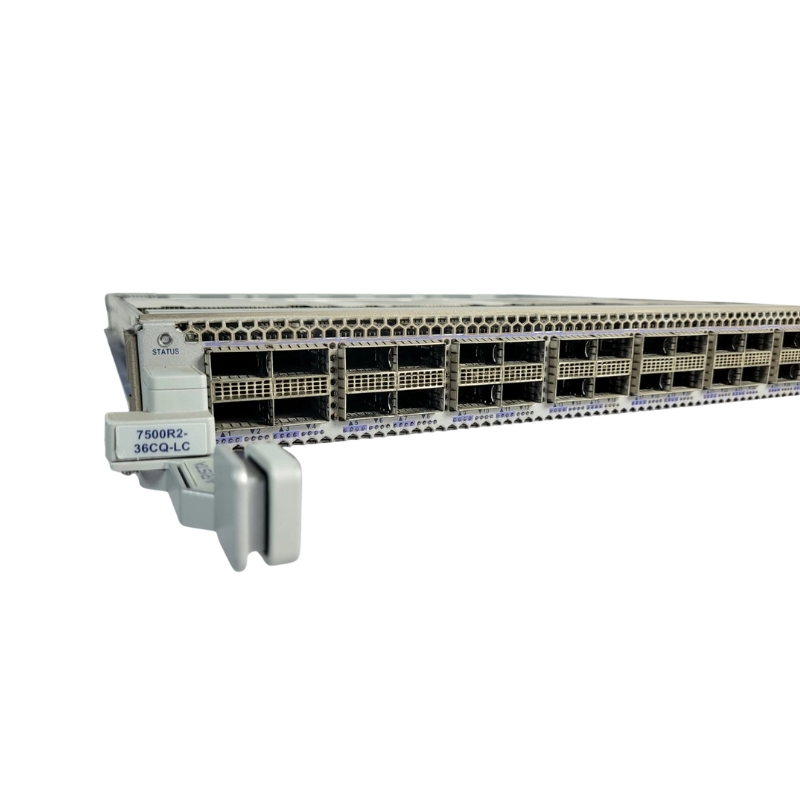
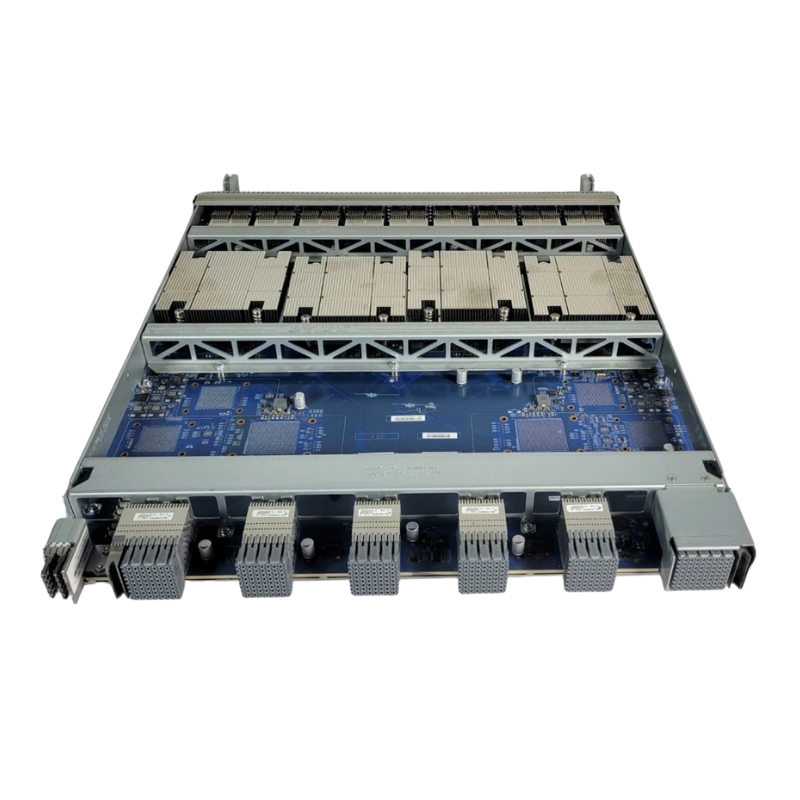
Arista DCS-7500R2-36CQ-LC 36 Ports 7500R Series 100GbE QSFP100 Line Card. New Sealed in Box (NIB) With 3 Years Warranty
The Arista DCS-7500R2-36CQ-LC is a high-density expansion module engineered for modern data centers and service provider networks. This 36-port 100 Gigabit Ethernet (100GbE) line card (QSFP100) delivers ultra-high throughput, low latency, and efficient port consolidation for spine and leaf fabrics. Ideal for cloud-scale deployments, the DCS-7500R2-36CQ-LC provides scalable bandwidth in a compact form factor.
The DCS-7500R2-36CQ-LC is built for high-performance fabrics where density, reliability, and programmability matter. Below are the main strengths that make this line card a strong choice for enterprise and carrier environments.
The DCS-7500R2-36CQ-LC is designed to fit Arista’s 7500R2 chassis family. For best results and vendor-supported operation:
Choosing the Arista 36-port 100GbE line card brings several architecture-level advantages:
The Arista 7500R Series represents the pinnacle of modular network switching, designed to meet the relentless demands of cloud-scale networking, high-performance computing, and next-generation data center architectures. At the heart of these scalable systems are the line cards, which define the port density, interface speed, and overall capability of the chassis. The Arista DCS-7500R2-36CQ-LC stands as a flagship model within this portfolio, engineered specifically for high-density 100 Gigabit Ethernet deployments.
The 7500R Series is built on Arista's proven Extensible Operating System (EOS) and features a fully distributed, multi-terabit forwarding architecture. Unlike chassis that suffer from centralized oversubscription, the 7500R employs a unique spline-and-leaf architecture within the chassis itself. This means that each line card connects to every other line card via the central fabric modules, ensuring consistent, low-latency, non-blocking performance. The role of a line card like the DCS-7500R2-36CQ-LC is to provide the network interfaces and the local forwarding engine, making it a critical component for defining the network's edge or core capacity.
Each line card, including the DCS-7500R2-36CQ-LC, has its own dedicated forwarding engine (Arista's FlexRoute™ engine). This allows the line card to make independent forwarding decisions, dramatically increasing the total system throughput and routing table capacity while minimizing latency. The control plane, managed by the supervisor modules, synchronizes state across all line cards, providing a single logical management entity.
The 7500R chassis is designed with multiple fabric module slots. High-performance line cards leverage the full capacity of these fabric modules. For a card with 36 ports of 100GbE, the system provides ample internal bandwidth to ensure all ports can run at full line rate simultaneously, even with complex features enabled.
All 7500R series line cards operate under the unified Arista EOS. This single binary image provides feature parity across the entire platform, ensuring that advanced capabilities like MLAG, VXLAN, EVPN, and deep buffer management are available consistently, regardless of the specific line card installed.
The DCS-7500R2-36CQ-LC is a high-density, high-performance line card engineered for the most demanding network environments. It is a second-generation (R2) card for the 7500R series, offering significant improvements in power efficiency and forwarding capacity over its predecessors.
This line card is a full-height module that installs into any line card slot of a compatible 7500R series chassis, such as the 7508R or 7512R. Its front panel is populated with 36 QSFP100 (QSFP28) ports, providing a maximum theoretical throughput of 3.6 Tbps full duplex. The QSFP28 form factor is the industry standard for 100GbE, offering flexibility through the use of direct-attach copper cables (DAC), active optical cables (AAC), or a wide variety of optical transceivers (SR4, LR4, PSM4, CWDM4, etc.).
Each of the 36 ports natively supports 100GbE. A key operational advantage is their inherent flexibility. Through the use of breakout cables, each QSFP28 port can be configured as 4 independent 25GbE SFP28 interfaces or 4 independent 10GbE SFP+ interfaces. This means a single DCS-7500R2-36CQ-LC can be adapted to support:
This breakout capability makes the card incredibly versatile, allowing network architects to design a leaf-spine fabric where the spine (using this card) connects to 100GbE leafs or directly to 25GbE servers, all from the same hardware.
While not a "giant buffer" card in the traditional sense, the DCS-7500R2-36CQ-LC is equipped with a substantial and intelligent packet buffer memory. This is crucial for handling microbursts and transient congestion common in data center environments, especially with incast traffic patterns from many servers talking to a single destination. The buffer management is enhanced by Arista's Dynamic Buffer Allocation, which optimizes buffer usage on a per-queue, per-port basis to minimize packet loss and maximize throughput.
Raw port density is only one part of the story. The true value of this line card lies in its performance under load with advanced features enabled.
The card is built to handle the massive scale of modern cloud networks. It supports millions of MAC address entries, hundreds of thousands of IPv4 and IPv6 host routes, and massive ECMP (Equal-Cost Multi-Path) groups. This scale is essential for large-scale VXLAN deployments where EVPN is used as the control plane, requiring the line card to maintain extensive routing and forwarding information bases (RIB/FIB).
Engineered for high-frequency trading (HFT), financial services, and high-performance computing (HPC) workloads, the DCS-7500R2-36CQ-LC provides consistent, ultra-low latency. When operating in cut-through switching mode, latency is measured in microseconds, ensuring that application performance is never hindered by the network. All 36 ports can forward traffic at line rate, regardless of packet size, when the system is equipped with sufficient fabric capacity.
The flexibility and power of the DCS-7500R2-36CQ-LC make it suitable for several critical roles within the data center.
In a Clos-based leaf-spine architecture (the de facto standard for modern data centers), the spine layer requires high-radix, non-blocking switches. A 7500R chassis populated with multiple DCS-7500R2-36CQ-LC cards creates an incredibly powerful and dense spine. Each spine switch can connect to hundreds of leaf switches, forming a fabric that can scale to accommodate tens of thousands of servers. The 100GbE links provide the necessary oversubscription ratios for east-west traffic, which dominates cloud and web-scale applications.
HPC clusters require minimal latency and massive bisectional bandwidth for tasks like computational fluid dynamics, genomic sequencing, and AI/ML training. The 7500R with this line card serves as an ideal core or super-spine for such clusters. The support for large MTU (Jumbo Frames) and RoCE (RDMA over Converged Ethernet) is critical for these environments, allowing for efficient transfer of large data sets and remote direct memory access protocols.
Beyond the pure data center fabric, this line card is perfect for aggregating traffic from multiple sources. It can serve as a consolidation point for multiple lower-speed access networks, a gateway to public cloud interconnects, or a core router for a large enterprise campus or service provider network. Its robust Layer 3 feature set, including BGP and OSPF at scale, makes it a capable router in addition to being a powerful switch.
The hardware is empowered by the rich software capabilities of Arista EOS, which are fully accessible on the DCS-7500R2-36CQ-LC.
This is a cornerstone technology for modern network overlays. The line card provides full hardware offload for VXLAN encapsulation and decapsulation, ensuring line-rate performance for tunneled traffic. EVPN (Ethernet VPN) serves as the control plane, providing MAC/VIP learning and enabling efficient multi-tenancy across the data center.
Arista's MLAG technology allows two physical 7500R switches to appear as a single logical Layer 2 switch from the perspective of a downstream device. This provides redundant, active-active links without the complexities of Spanning Tree Protocol. The DCS-7500R2-36CQ-LC handles the MLAG peer-link and client-facing ports with high efficiency.
Arista's unique value proposition includes deep visibility into network behavior. Features like LANZ (Latency Analyzer) detect and report on microbursts and queueing latency. The line card supports sFlow and mirroring (ERSPAN) for traffic analysis. Most importantly, it streams fine-grained telemetry data via open APIs, allowing for integration with tools like Arista CloudVision, Prometheus, and Grafana for real-time network monitoring and automated response.
Arista EOS is built for automation. The single binary image ensures consistent behavior, which is critical for automated provisioning and management. The line card can be fully configured and monitored via its eAPI (a RESTful JSON API), alongside standard automation tools like Ansible, Puppet, and Python scripts. This programmability allows it to be treated as "infrastructure as code," seamlessly integrating into DevOps and NetOps workflows.
The DCS-7500R2-36CQ-LC exists within a broader family of 7500R line cards, each optimized for different purposes.
Arista also offers a 48-port 100GbE (QSFP28) card. The key trade-off is between pure port density and other resources. The 48-port card offers 12 more ports but may have a different balance of forwarding table scale or buffer resources. The 36-port card is often chosen for its optimal balance of density, power consumption, and forwarding performance for core routing roles.
For forward-looking deployments, Arista offers line cards with 24 QSFP-DD ports supporting 400GbE. The choice here is between current-generation 100G server connectivity and next-generation 400G. The 36x100G card provides more total 25G/100G server-facing ports today, while the 400G card offers a path to higher uplink speeds and future-proofing. They can often be mixed within the same chassis.
The DCS-7500R2-36CQ-LC is compatible with the 7508R (8-slot) and 7512R (12-slot) chassis. It requires a compatible supervisor module (such as the SUP-1 or SUP-2) and sufficient fabric modules to achieve non-blocking performance. When planning a deployment, it is crucial to consult the Arista documentation to ensure the correct combination of chassis, supervisors, fabric modules, and power supplies is selected to support the power and cooling requirements of multiple such line cards.
High-density 100GbE line cards are power-hungry components. The DCS-7500R2-36CQ-LC must be factored into the overall power budget of the 7500R chassis. Arista's designs prioritize power efficiency, but a fully loaded chassis will require high-capacity, redundant power supplies. Similarly, the thermal output is significant, and the data center cooling system must be able to handle the heat load generated by a chassis with multiple such cards to prevent thermal shutdown and ensure hardware longevity.
Deploying this card requires careful planning for physical connectivity. For short-reach connections (within a rack or adjacent racks), DACs are a cost-effective and low-power solution. For longer distances within a data center, AACs or optical transceivers with multimode fiber (OM3/OM4) are used. For long-reach connections between data centers or across campuses, LR4 transceivers with single-mode fiber are required. The choice impacts both the upfront cost and the ongoing power consumption of the network.


 Contact Us
 Information
 Catalog
 Solid State Drives (SSD)
 Network Switches
 Hard Disk Drives
 HBA & Controllers
 PC & Servers
 PC & Server Memory
 CPU & Processors
 Network Routers
 Power Supplies
 Tape Drives & Libraries
 Network Devices
 Computer & Network Cables