(7% discount is applied at checkout)
Cart is empty
Your go-to destination for cutting-edge server products
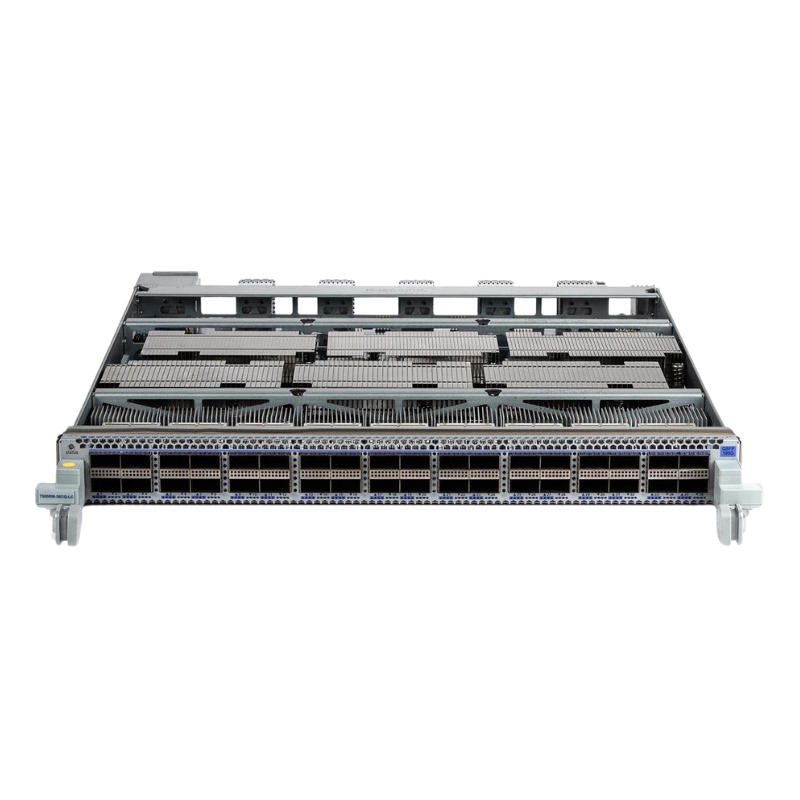


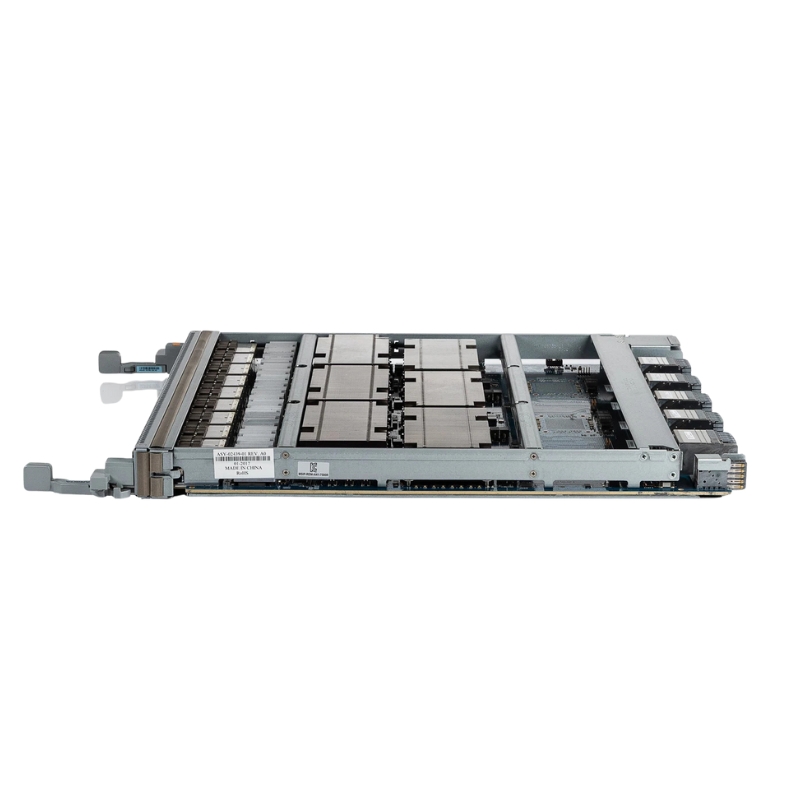
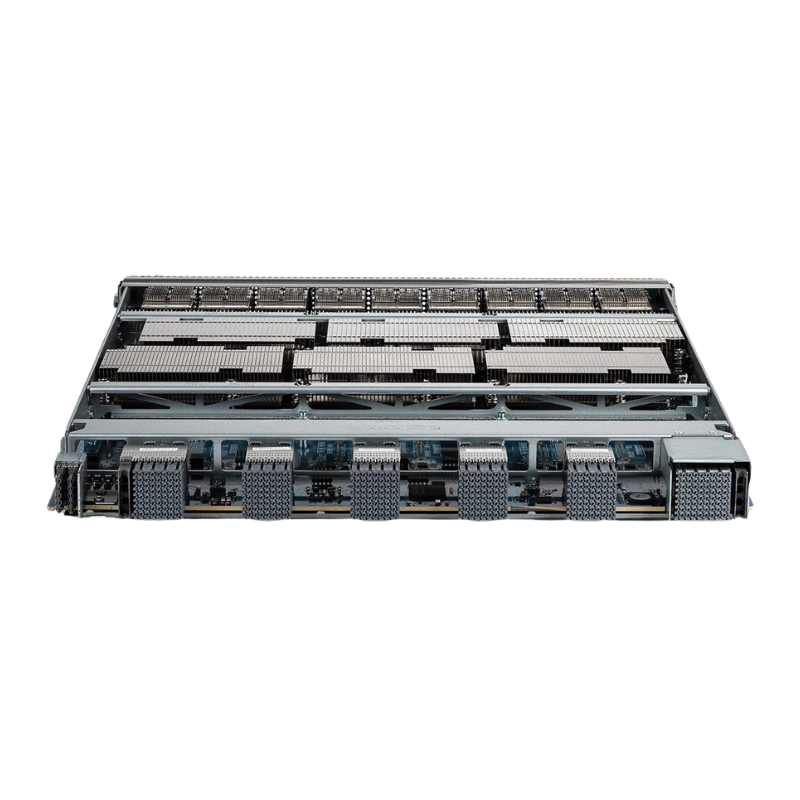
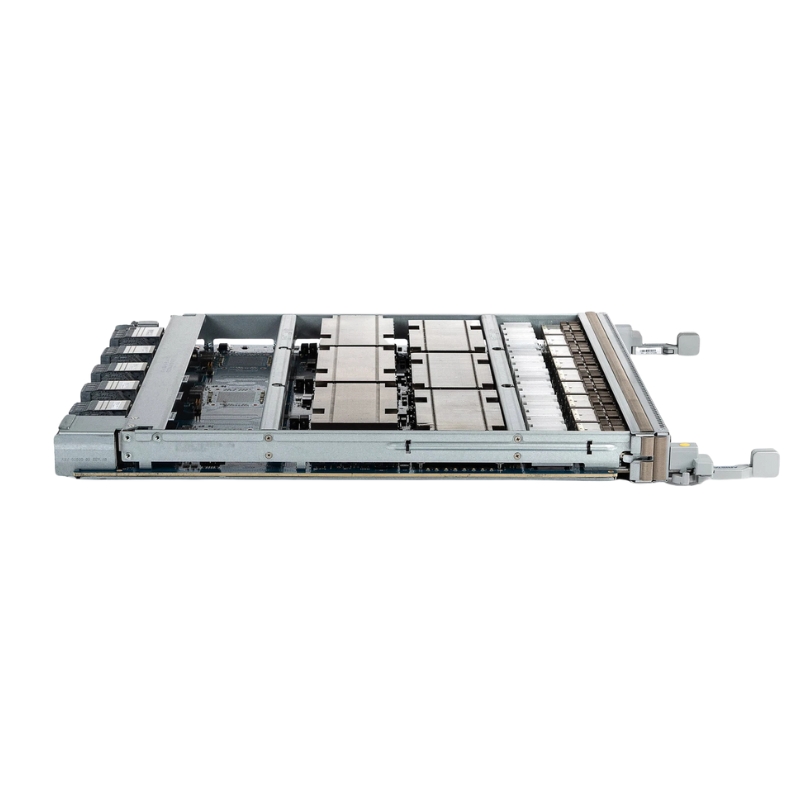
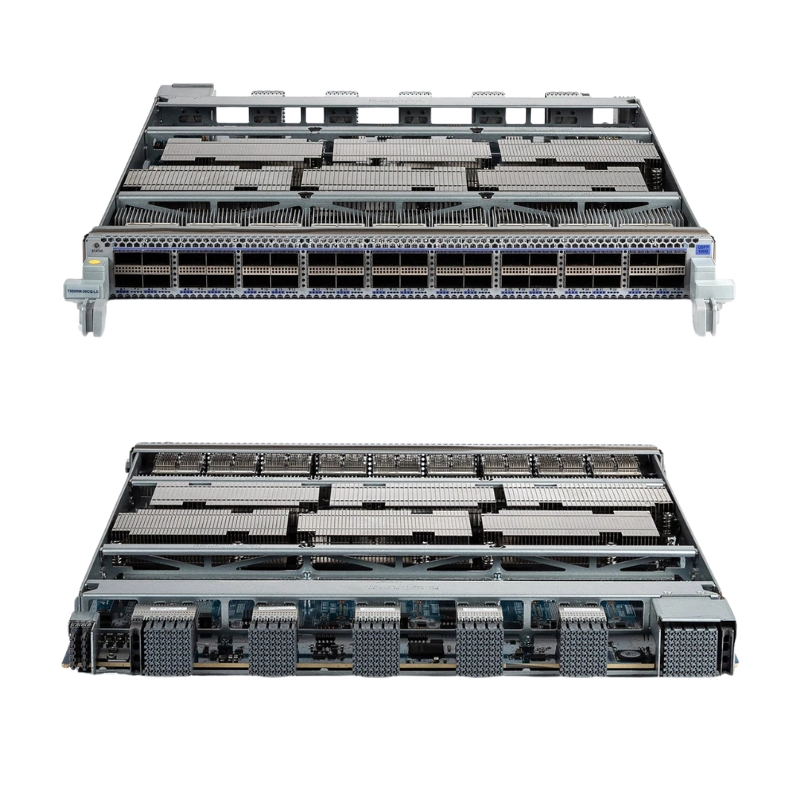
Arista DCS-7500RM-36CQ-LC 36 Ports 7500R Series 100 Gigabit Ethernet QSFP100 Line Card. Excellent Refurbished with 1 year replacement warranty
The Arista DCS-7500RM-36CQ-LC is a high-density expansion module (line card) designed for the 7500R series chassis. Engineered for ultra-high throughput data centers and service provider environments, this expansion card delivers 36 QSFP100 ports supporting 100 Gigabit Ethernet over optical fiber. Ideal for aggregation, spine, and core switching layers, the module provides a scalable, low-latency interface to meet modern networking demands.
The Arista 7500R Series represents the pinnacle of modular spine and core switching, designed to meet the relentless demands of modern cloud networks, hyperscale data centers, and high-performance computing environments. At the heart of this scalable system are its high-density line cards, which provide the critical interface between the chassis backplane and the network fabric. The Arista DCS-7500RM-36CQ-LC is a flagship 100 Gigabit Ethernet line card, engineered to deliver unprecedented port density and performance within the 7500R platform.
In a modular networking chassis like the Arista 7500R, the system's functionality and capacity are defined by the line cards installed within it. The chassis itself provides the power, cooling, and management fabric, while the line cards deliver the network ports and the forwarding intelligence. The DCS-7500RM-36CQ-LC transforms the 7500R chassis into a ultra-high-density 100G aggregation switch, capable of handling massive east-west traffic flows and serving as a robust spine in a leaf-spine architecture.
The "CQ" in the model name signifies the use of QSFP100 (also known as QSFP112) form-factor transceivers. This advanced form factor is specifically designed for 100G and 400G applications, supporting a wide range of optical and direct-attach copper (DAC) cables. The QSFP112 interface provides the electrical lane structure necessary for 100G speeds (4x25G or 2x50G) and is also backward compatible with QSFP28 (for 40G and 100G) and QSFP+ (for 40G) optics, offering significant deployment flexibility.
The high density and performance of the DCS-7500RM-36CQ-LC make it ideal for several critical roles in modern network architecture.
In a leaf-spine architecture, the spine layer requires extreme throughput and low latency to handle the aggregate traffic from all leaf switches. A 7500R chassis populated with multiple DCS-7500RM-36CQ-LC line cards can create a massively scalable spine, with each card providing 3.6 Tbps of non-blocking connectivity to the leaf layer. This ensures any-to-any communication with predictable performance, which is essential for big data analytics, virtual machine mobility, and distributed storage.
By utilizing breakout cables, the 36x100G ports can be configured as 144x25G ports, providing a smooth migration path for networks transitioning from 25G leaf connections to 100G. Furthermore, the platform's design ensures a ready path for future 400G connectivity, protecting the network investment.
AI and machine learning training workloads generate immense amounts of east-west traffic between GPU servers. This requires a network fabric with minimal latency and massive bisectional bandwidth. The DCS-7500RM-36CQ-LC, combined with Arista's deep buffer memory and advanced congestion management, prevents packet loss and tail latency that can cripple distributed training jobs, ensuring model training completes faster and more reliably.
Internet Exchanges and large service providers require routers and switches that can handle full internet routing tables (BGP) and massive traffic loads from hundreds of peers. The 7500R platform with this line card provides the necessary scale, with support for over 1 million IPv4 and IPv6 routes, and the forwarding capacity to handle terabits of internet traffic.
Arista EOS provides a comprehensive suite of routing protocols, including BGP, OSPF, and IS-IS, with features like EVPN for network virtualization. This makes the DCS-7500RM-36CQ-LC an excellent choice for building scalable peering fabrics and core routing infrastructure.
The hardware capabilities of the DCS-7500RM-36CQ-LC are fully unlocked by the Arista Extensible Operating System (EOS), a cornerstone of Arista's software-driven cloud networking approach.
Unlike other network operating systems with separate images for different hardware components, Arista EOS uses a single, binary image that runs across the entire 7500R system, including all line cards. This simplifies software upgrades, ensures consistency, and eliminates compatibility issues between the chassis management engine and the line cards.
Arista EOS is built on a Linux foundation and features a programmatic stateful API. This allows network engineers to automate every aspect of the switch's operation using tools like Ansible, Puppet, Chef, or Python scripts.
Managing a high-speed network requires deep visibility into traffic patterns and potential bottlenecks. Arista EOS offers a suite of telemetry features that provide real-time and historical data.
Monitors queue depths in real-time and generates notifications when congestion begins to form, allowing operators to pinpoint microbursts and other transient issues that are invisible to standard SNMP polling.
The DCS-7500RM-36CQ-LC is engineered not just for speed, but for consistent and reliable performance under load.
The line card connects to the 7500R chassis's central fabric modules via a high-bandwidth connection, ensuring that all 36 ports can run at full line rate, simultaneously, without any internal blocking. This is a critical requirement for spine switches and core routers where any oversubscription can lead to congestion and packet loss.
While cut-through switching is used for low-latency forwarding, the line card is equipped with significant shared buffer memory. This deep buffer is essential for handling "elephant flows" and absorbing microbursts of traffic in incast scenarios common in data centers and HPC environments. By temporarily storing packets during congestion, the switch prevents drops and allows TCP to auto-tune without session timeouts, maintaining application performance.
The 7500R platform is designed for maximum uptime. Key resiliency features that impact the line card include:
In a dual-supervisor configuration, the standby supervisor continuously synchronizes its state with the active supervisor. In the event of an active supervisor failure, the standby can assume control without dropping network adjacencies (like BGP/OSPF neighbors) or losing data packets buffered in the line cards.
Arista EOS supports ISSU, allowing the entire system, including all line cards, to be upgraded to a new software version without a network outage. The system performs a "rolling" upgrade, restarting processes or supervisors one at a time while the data plane continues to forward traffic.
The DCS-7500RM-36CQ-LC is hot-swappable, meaning it can be installed or removed from a powered-on and operating chassis without disrupting traffic on other line cards. This facilitates easy maintenance and capacity expansion with zero downtime.
Successfully integrating the DCS-7500RM-36CQ-LC into your network requires careful planning.
The DCS-7500RM-36CQ-LC is designed for the 7500R Series chassis, including the 7504R (4-slot), 7508R (8-slot), and 7512R (12-slot). It is a single-slot card, but power and cooling requirements must be considered when populating a chassis with multiple high-density cards. Consult the Arista hardware documentation to understand the maximum configuration supported by your specific chassis model and power supply units.
A fully loaded 36-port 100G line card consumes significant power and generates considerable heat. Proper power capacity planning with N+1 or N+N redundant power supplies is crucial. Similarly, ensuring the chassis has adequate airflow and that the data center's cooling system can handle the thermal output is essential for long-term reliability.
Different optical transceivers have different power draw characteristics. Long-range (LR4, ER4) optics consume more power than short-range (SR4) or copper DAC cables. The total power budget for the chassis must account for the specific transceivers being used in all line cards.


 Contact Us
 Information
 Catalog
 Solid State Drives (SSD)
 Network Switches
 Hard Disk Drives
 HBA & Controllers
 PC & Servers
 PC & Server Memory
 CPU & Processors
 Network Routers
 Power Supplies
 Tape Drives & Libraries
 Network Devices
 Computer & Network Cables