(7% discount is applied at checkout)
Cart is empty
Your go-to destination for cutting-edge server products
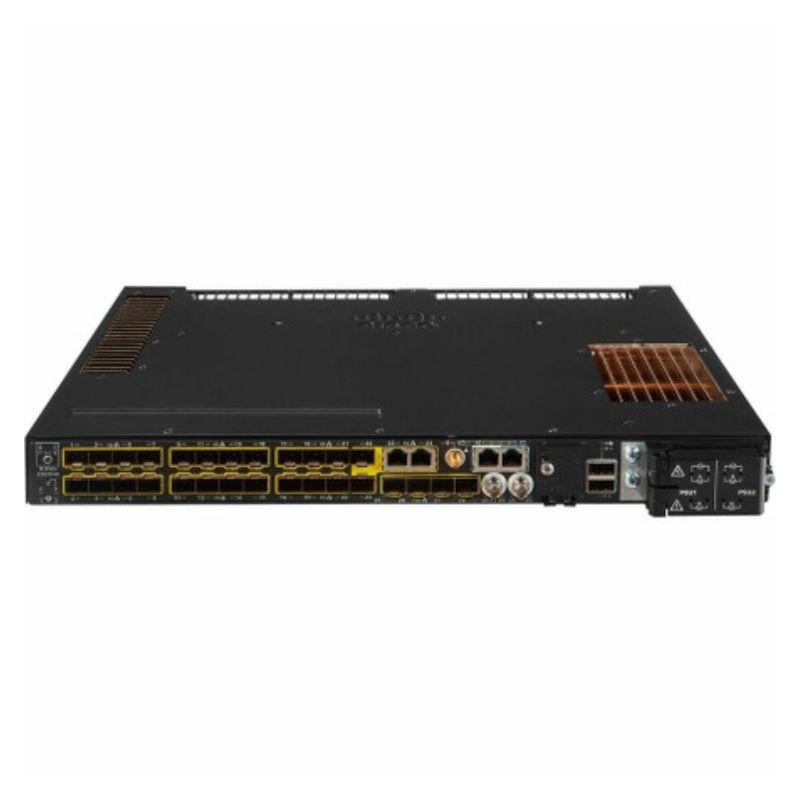


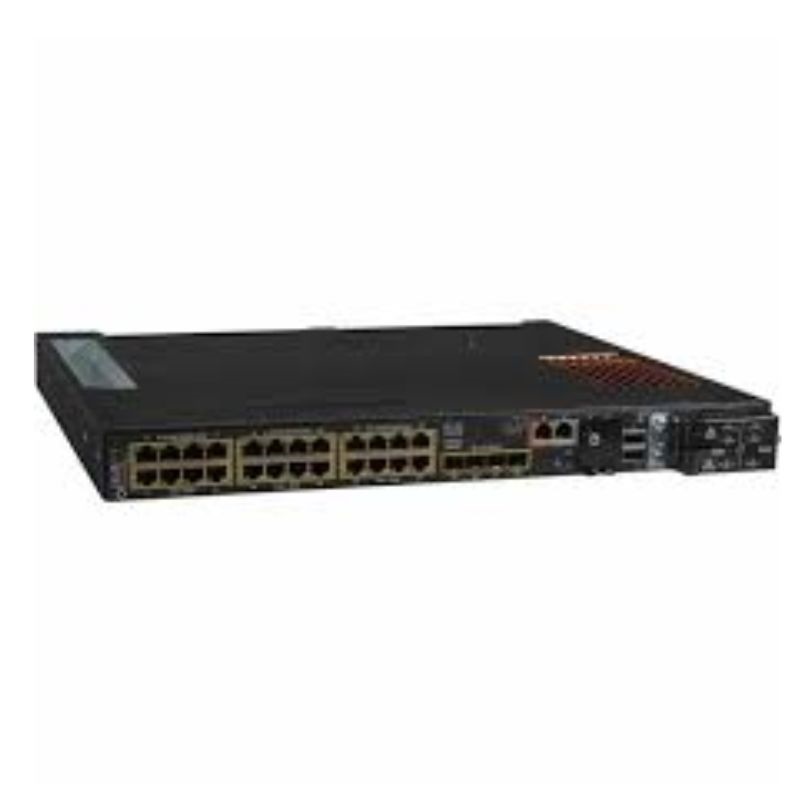
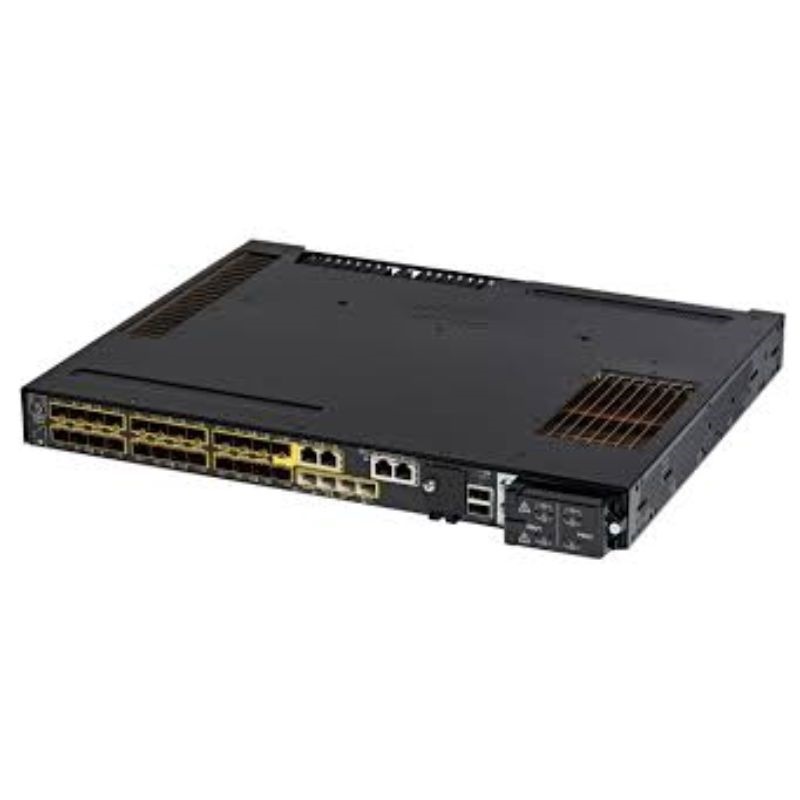
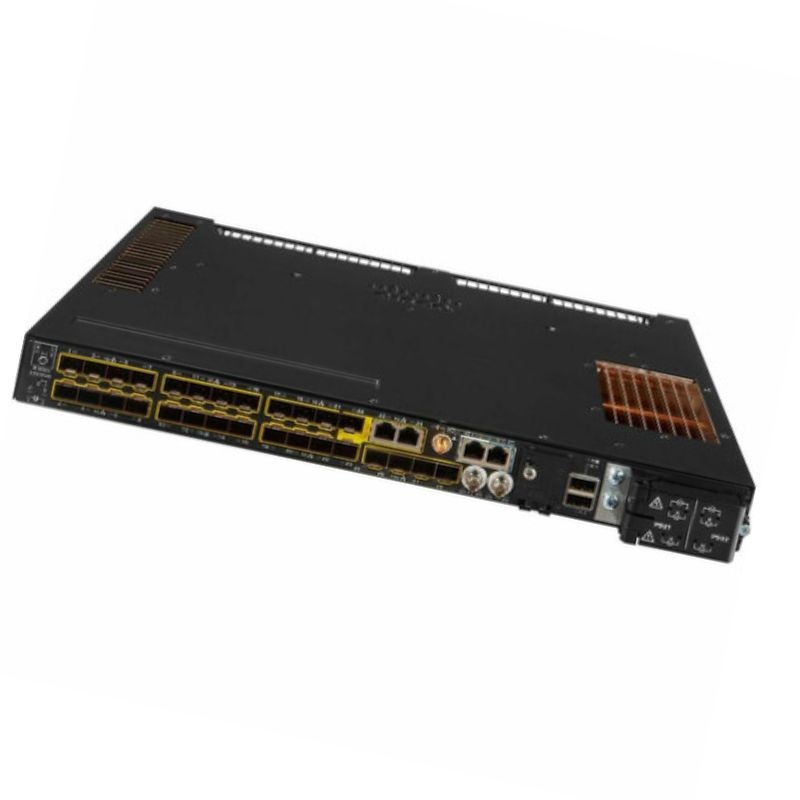
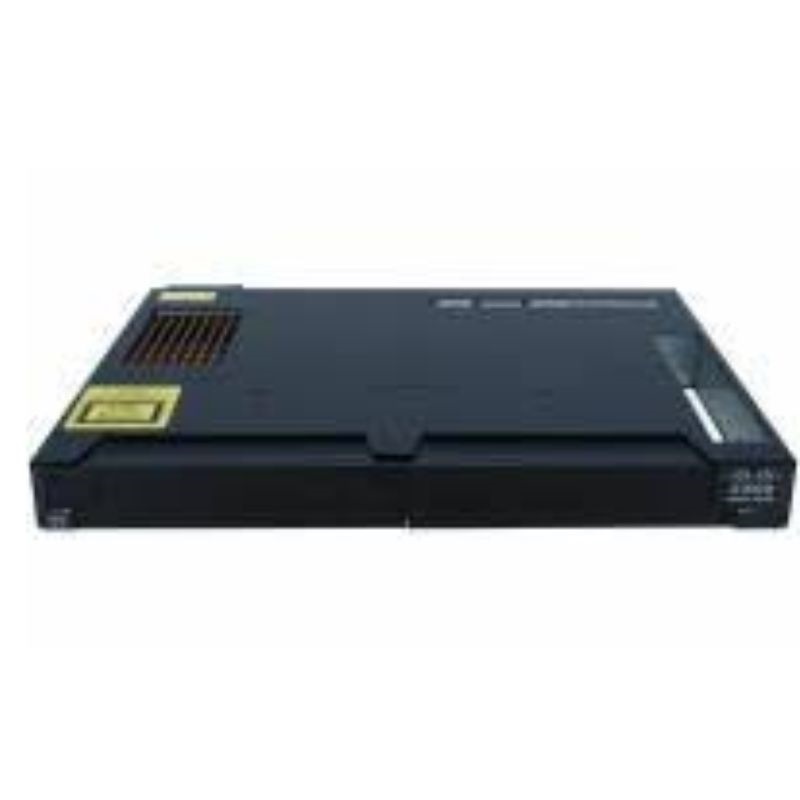
Cisco IE-9320-24P4S-E Catalyst 24 Ports IE9320 Rugged Managed Rack-mountable Switch. Factory-Sealed New in Original Box (FSB) with 1 year replacement warranty
Catalyst IE-9320-24P4S-E — Rugged Managed 24-Port Gigabit Ethernet Switch
The Cisco Catalyst IE-9320-24P4S-E is a rack-mountable, industrial-grade managed Ethernet switch engineered for mission-critical networks. It combines high-density Gigabit copper ports, SFP+ uplinks, and a substantial Power over Ethernet (PoE) budget to support IP cameras, wireless access points, and other powered devices. Ideal for transportation, utilities, manufacturing, and outdoor/harsh-environment applications, this fanless switch delivers layer-3 routing capabilities, modular expansion and resilient power delivery in a compact 1U form factor.
The Cisco IE-9320-24P4S-E Catalyst class represents a category of rugged managed rack-mountable switches engineered for harsh environments that demand enterprise-grade switching, resilient Layer 2/Layer 3 features, and advanced Power over Ethernet (PoE) support. This category is tailored for customers who need high port density (24 copper Gigabit Ethernet ports plus multi-gigabit/10G uplinks), deterministic throughput, long lifetime support, and simplified operations across industrial, transportation, utility, and large campus networks. The IE-9320 family blends hardened hardware, flexible uplink options, and Cisco’s operating software stack to deliver a dependable foundation for demanding network topologies.
Ruggedized chassis — designed to tolerate temperature extremes, vibration, and EMI commonly encountered in industrial and field installations.
Rack-mountable form factor — 1U/2U compatible designs with standard rail kits for integration into telco and data center racks.
High port density — 24x 1G copper access ports with additional SFP/SFP+ uplink slots for flexible aggregation.
Advanced PoE/PoE+ — models support robust PoE budgets to power cameras, sensors, wireless APs, and other edge devices.
Managed switching capabilities — full CLI, web GUI, SNMP, NetConf/YANG, and support for Cisco's network management ecosystems.
Layer 2 and Layer 3 features — VLANs, QinQ, VRFs, static/dynamic routing, multicast, and QoS for deterministic service delivery.
Switches in this category are purpose-built to operate reliably where commercial-grade switches often fail. Mechanical design considerations include reinforced steel enclosures, vibration-tested mounting points, and sealed panels to resist dust ingress. Thermal engineering focuses on conduction and convection methods to manage heat: models often provide fanless conduction-cooled variants for silent operation and minimal maintenance, plus fan-assisted options with redundant fans for higher-density PoE models. Typical specifications highlight extended operating temperature ranges and thermal derating curves so installers can plan for worst-case ambient conditions.
Rack-mountable variants provide standardized 19-inch mounting, detachable rack ears, and cable management accessories to maintain tidy installation and cooling efficiency. Front-accessible connectors allow for clean cabling in tight rack spaces; many models use modular power supplies (or dual-redundant PSU options) to ensure service continuity during maintenance.
The 24-port IE-9320 configuration typically offers 24 Gigabit RJ-45 copper access ports for devices such as IP cameras, sensors, access points, and industrial controllers. For aggregation and backbone connectivity, the unit supports a mix of SFP and SFP+ uplink slots — frequently 4 SFP/SFP+ slots capable of multi-gigabit or 10G links — enabling flexible fiber or copper uplinks to distribution switches or routers.
Auto-negotiation and manual speed/duplex settings per port.Support for 802.3az energy-efficient Ethernet where applicable.
Per-port administrative control, storm control, and port monitoring.
Flow control and link aggregation (LACP) for bandwidth scaling and redundancy.
One of the defining features of the IE-9320-24P4S-E category is the robust PoE capability. These switches often provide substantial PoE/PoE+ budgets to power numerous edge devices simultaneously without external injectors. Administrators can allocate PoE per port, set prioritization policies, and configure scheduling to conserve power during off-peak hours.
Dynamic power allocation and port prioritization to prevent budget overruns.Per-port power negotiation and classification per IEEE 802.3af/at standards.
PoE scheduling and power reservation for critical devices.
Power consumption monitoring for capacity planning and energy optimization.
Switches in this category typically run Cisco’s hardened network operating system, delivering full CLI access, a modern web-based GUI, and integration with Cisco management platforms. Expect support for automation and programmability through APIs, NETCONF/YANG models, and support for industry-standard management tools. Centralized monitoring via SNMP and telemetry options enables real-time insight into link state, PoE usage, and fault conditions.
RESTful APIs for configuration and state retrieval.Template-based provisioning to accelerate rollouts across many switches.
Telemetry and streaming telemetry for advanced monitoring and analytics.
Integration with orchestration tools such as Ansible, Puppet, or Cisco DNA Center.
The category provides a comprehensive set of L2/L3 features required for segmented, secure, and scalable networks. From advanced VLAN configurations to dynamic routing, multicast handling, and VRF support, these switches are equipped to serve as access and distribution nodes in complex topologies.
802.1Q VLANs and QinQ stacking for multi-tenant or isolated environments.STP/RSTP/MSTP for loop avoidance and fast convergence.
OSPF/BGP static routing options for inter-VRF and WAN integration.
IGMP snooping and PIM for efficient multicast forwarding.
Deterministic service delivery is essential for voice, video, and industrial control traffic. This category supports hierarchical QoS (HQoS), classification and marking (DSCP), shaping, policing, and queuing strategies to ensure latency-sensitive flows are prioritized and bandwidth is allocated predictably..
To reduce exposure to common threats, these switches include features such as DHCP snooping, IP source guard, ARP inspection, and anti-DoS protections. Combined with monitoring and logging, operators gain better visibility and quicker remediation of anomalous behaviors.
High-availability demands are addressed by redundant power supply support, dual-PSU options, and battery or UPS compatibility. Power redundancy together with PoE prioritization ensures critical devices remain powered during partial power events.
In manufacturing floors, SCADA systems, PLCs, and sensors require deterministic connectivity with minimal latency and high availability. The IE-9320 category supports real-time communications and robust physical protection against electrical noise and temperature extremes, making it ideal for factory automation networks.
Railway systems, traffic management, and transit networks rely on hardened switches for onboard and wayside communications. Features such as wide temperature ratings, vibration tolerance, and secure PoE for cameras and signage align this category with transportation requirements.
Video surveillance deployments demand high PoE budgets, careful bandwidth planning, and QoS to maintain video integrity. The 24-port configuration with multiple SFP+ uplinks enables large camera farms to be aggregated efficiently while preserving throughput for analytics and recording systems.
Utilities use rugged switches for substation communications, distribution automation, and SCADA telemetry. Hardened designs, deterministic networking, and support for secure routing and segmentation make the category suitable for these critical infrastructures.
Choose a full PoE model when powering a large number of edge devices such as IP cameras, PAN-tilt-zoom units, wireless access points, or IoT sensors. If PoE needs are minimal or handled via external injectors, non-PoE variants may save on initial cost and heat dissipation.
If your deployment demands aggregation into 10G cores or high-throughput analytics (e.g., many HD cameras), select variants with SFP+ 10G uplinks. For smaller backhaul needs, SFP 1G uplinks may suffice — balance cost against expected traffic growth.
Prefer models that include long-term software maintenance and access to Cisco’s TAC and field-replaceable unit (FRU) programs for quicker on-site recovery. Consider extended warranty or smart-net contracts if uptime and rapid replacement are critical.


 Contact Us
 Information
 Catalog
 Solid State Drives (SSD)
 Network Switches
 Hard Disk Drives
 HBA & Controllers
 PC & Servers
 PC & Server Memory
 CPU & Processors
 Network Routers
 Power Supplies
 Tape Drives & Libraries
 Network Devices
 Computer & Network Cables