(7% discount is applied at checkout)
Cart is empty
Your go-to destination for cutting-edge server products
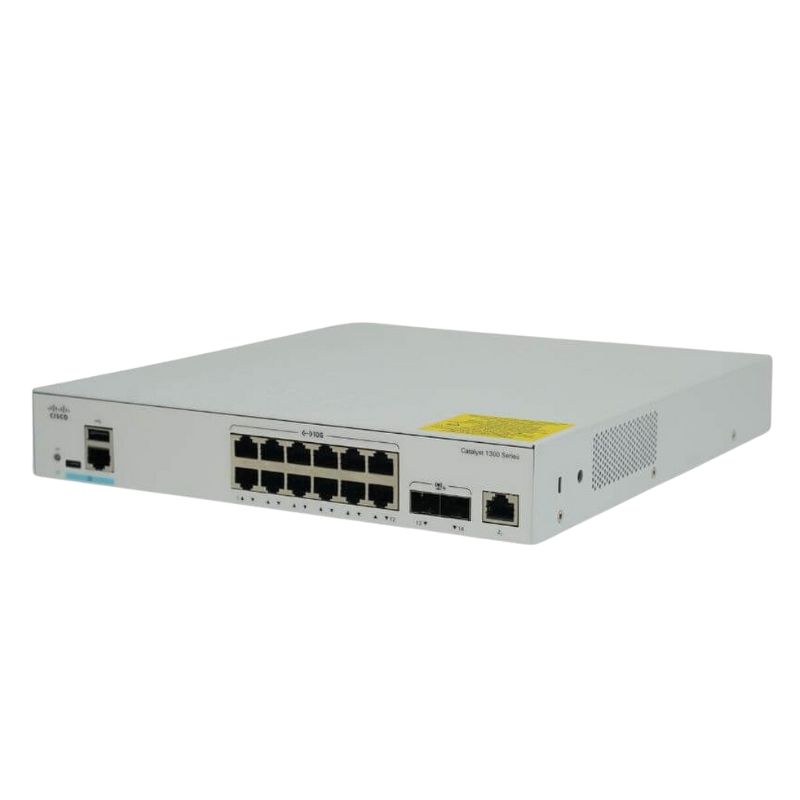


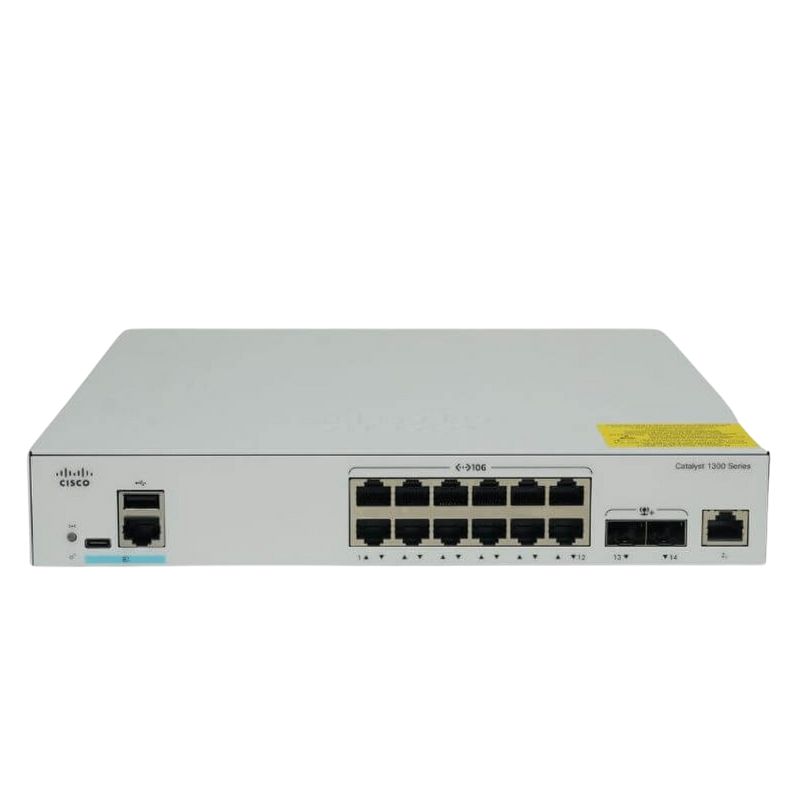
Cisco C1300-12XT-2X 12 Ports Catalyst 1300-12xt-2x Manageable 10 Gigabit Ethernet 10gbase-x, 10gbase-t 3 Layer Switch. Excellent Refurbished with 1 year replacement warranty
| SKU/MPN | Warranty | Price | Condition | You save |
|---|---|---|---|---|
| C1300-12XT-2X | 1 Year Warranty | $1,465.00 | Factory-Sealed New in Original Box (FSB) | You save: $512.75 (26%) |
| C1300-12XT-2X | 1 Year Warranty | $785.00 | Excellent Refurbished | You save: $274.75 (26%) |
This Cisco Catalyst C1300-12XT-2X operates as a fully manageable Layer 3 switch, enabling advanced routing, segmentation, and optimized data traffic control.
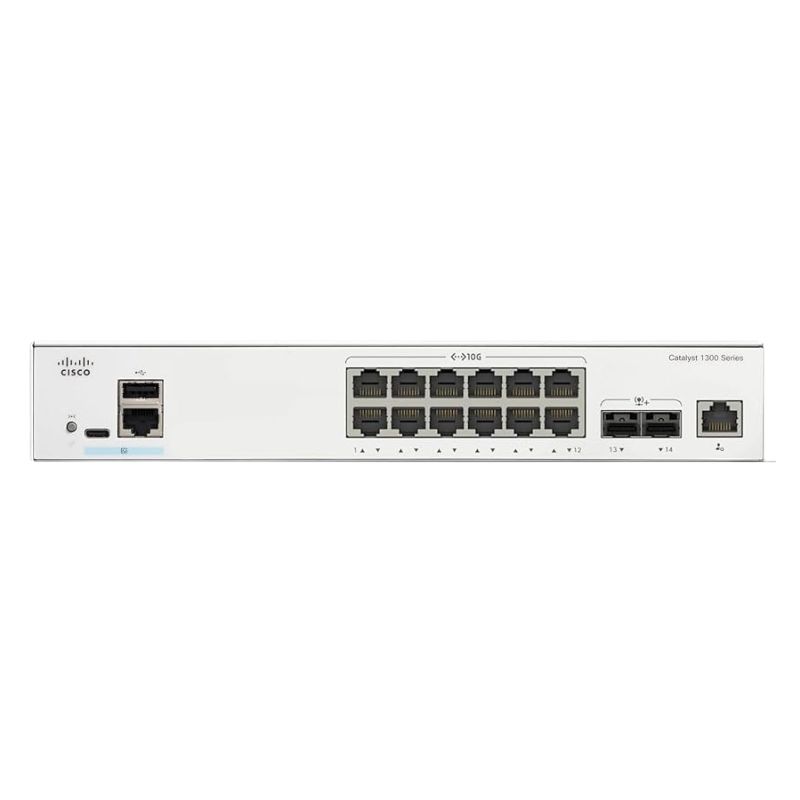
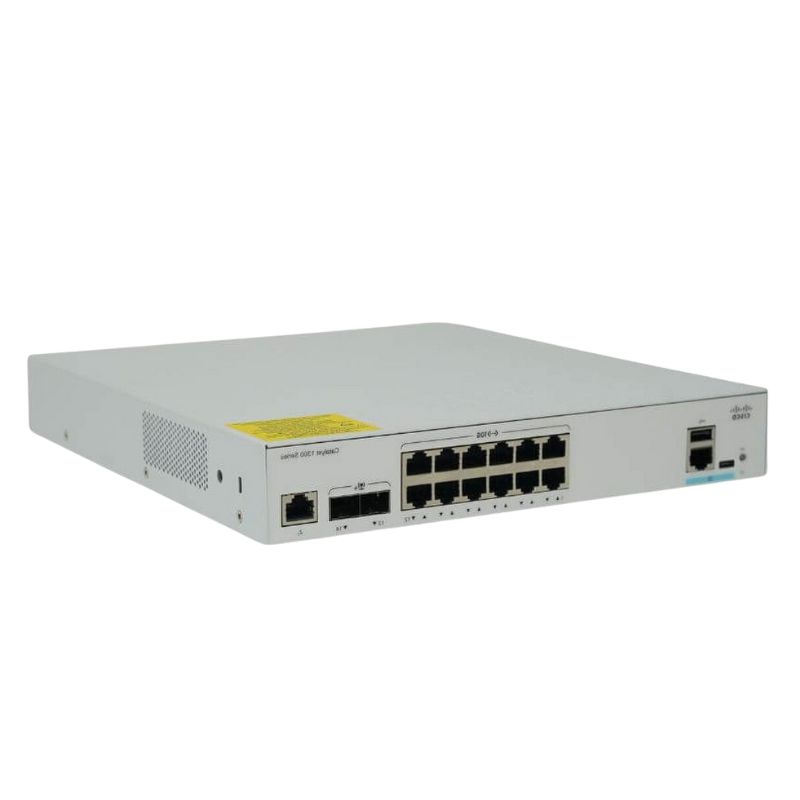
The Cisco C1300-12XT-2X is a compact, rack-mountable Layer 3 managed switch in the Catalyst 1300 family designed to deliver high-performance 10 Gigabit Ethernet connectivity for small and medium businesses, enterprise branch offices, and distributed edge sites. This model provides twelve 10G RJ45 copper ports plus two 10G SFP+ uplink ports in a 1U form factor, making it an ideal choice where dense 10G access is required alongside fiber uplinks for aggregation or WAN connectivity. The platform emphasizes predictable performance, simplified management, and the security features needed for modern converged networks.
The C1300-12XT-2X comes equipped with twelve 10 Gigabit copper RJ45 ports, providing high-speed Ethernet connectivity over twisted-pair cabling and supporting the 10GBase-T standard for backward compatibility with lower speeds when necessary. In addition to the 12 copper access ports, the model includes two 10G SFP+ fiber uplink ports that can be used for aggregation to core switches, long-distance fiber links, or redundant uplinks. A separate Gigabit Ethernet management port provides out-of-band management options for network operations teams. This mix of copper and fiber ports enables flexible deployment at the access layer while preserving growth paths into the distribution or core.
The switch delivers a switching capacity that supports multi-gigabit traffic flows with a published switching fabric designed for the class of device; the C1300-12XT-2X is specified with a switching capacity of approximately 280 Gbps and a forwarding rate in the range of 200+ million packets per second, making it capable of handling concurrent 10G line-rate traffic on all ports under typical enterprise access workloads. These performance characteristics make the device suitable for bandwidth-intensive applications such as server-to-switch connectivity, high-density wireless controller backhaul, and multiple virtualization or storage streams in branch or campus aggregation.
Switching capacity and packets-per-second metrics translate directly to headroom for bursts, simultaneous flows, and predictable latency. For organizations migrating from 1G aggregation to 10G access, the C1300-12XT-2X provides the kind of consistent forwarding rate needed to preserve application performance without creating bottlenecks at the access layer. When designing a topology, engineers should pair the device’s capacity with appropriate uplink architecture and oversubscription ratios to meet service-level goals.
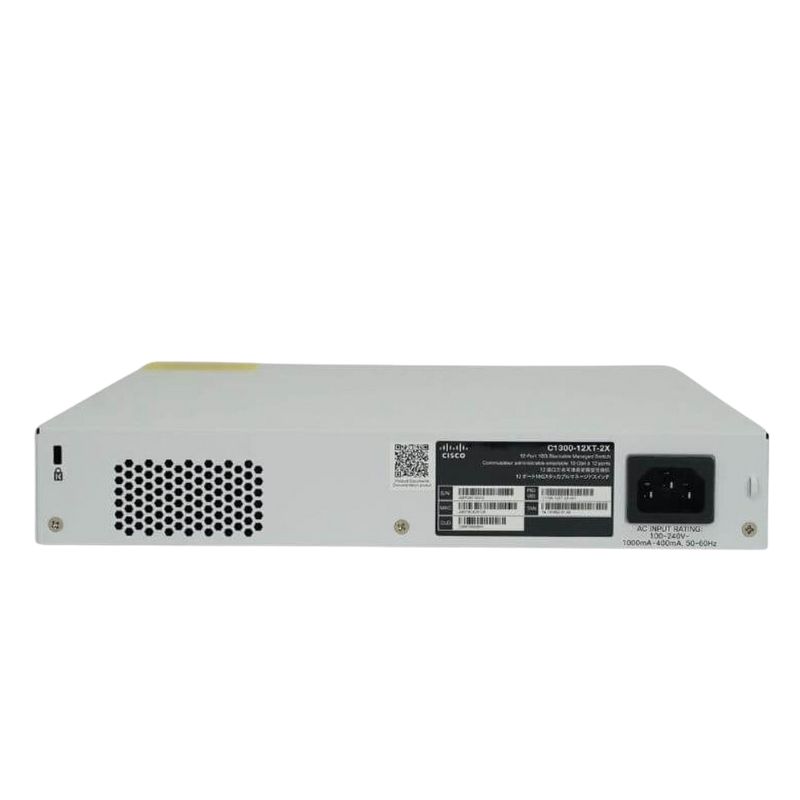
The C1300-12XT-2X is engineered for energy-efficient operation, with a typical power consumption around 56.70 watts in standard configurations. This relatively modest power footprint reduces operating expense at edge locations and simplifies rack power planning. The switch’s thermal design, often using a single fan or a fanless profile depending on the variant and environment, minimizes noise and supports deployment in branch closets, small IDFs, or office racks where acoustic and cooling constraints matter. When consolidating multiple 10G access switches in a single rack, the power-per-device figure is a key input to electrical circuit loading and UPS sizing.
As a Layer 3 switch, the Catalyst 1300-12XT-2X supports the fundamental routing features necessary for modern campus and branch networking, including static routing, RIP, and limited dynamic routing features appropriate for small-to-midsize deployments. The device can handle inter-VLAN routing, route-based segmentation, and policy-based forwarding to enforce traffic steering and to keep east-west traffic within the local aggregation layer when needed. These Layer 3 services allow organizations to design scalable, secure network topologies that place access switching close to users and applications while maintaining centralized policy control.
Built-in QoS features let network teams prioritize latency-sensitive traffic such as VoIP, video conferencing, and real-time collaboration. Proper QoS configuration on an access switch ensures that critical traffic receives forwarding precedence during congestion and that the network delivers predictable experience levels for business-critical applications. The C1300 line is designed to interoperate with Cisco’s broader QoS tooling and standard 802.1p/DSCP markings used across campus or WAN domains.
Security at the edge is fundamental, and the Catalyst 1300 series integrates common access-layer protections including 802.1X network access control, port security, dynamic ARP inspection, and IP source guard to prevent spoofing and unauthorized device access. Role-based access on management planes and secure management protocols reduce the attack surface. Combined with VLAN segmentation and ACLs, these functions help enforce zero-trust principles at the entry point to the network. For organizations using Cisco’s management tools, expedited policy distribution and monitoring streamline security operations.
The C1300-12XT-2X supports both on-box CLI management for network engineers and simplified, centralized management via Cisco Business Dashboard and the Cisco Business mobile app. These management options are designed to reduce day-one deployment friction and to simplify ongoing operations for IT teams that manage multiple branch or campus switches. The centralized dashboard provides templates, bulk configuration, and real-time telemetry to assist in consistent provisioning and troubleshooting across distributed sites. For smaller teams, the mobile app offers quick configuration and status checks without the need for deep CLI expertise.
Visibility features such as port statistics, flow counters, and syslog integration feed monitoring systems and help teams rapidly triage performance issues. The Catalyst 1300 devices are suitable collectors of per-port telemetry and can export logs or integrate with Cisco’s management stack to feed analytics and health dashboards. For organizations focused on automation-driven operations, the device’s support for standard management protocols makes it possible to incorporate it into a broader observability and automation fabric.
The C1300-12XT-2X excels in scenarios that require concentrated 10G connectivity at the access layer. Typical use cases include small data center top-of-rack connectivity for dense virtualized server deployments, high-performance uplinks for wireless access point controllers, aggregation of 10G server connections in compact branch or hub sites, and converged voice and video deployments where both bandwidth and low latency are required. Its mix of copper and fiber ports makes it especially useful for sites that need 10G copper out to short-reach devices while retaining fiber uplinks to the campus core or an optical aggregation ring.
At 1U height and a compact depth suited for wiring closets and shallow racks, the C1300-12XT-2X can be deployed in standard 19-inch racks with front-to-back cabling. The unit’s weight and mechanical profile simplify installation in locations where rack space is at a premium. Planning for cable management, airflow, and power distribution is simplified by the switch’s relatively small footprint; however, administrators should plan for access to SFP+ uplink ports and ensure proper patch panel layouts to reduce bend radius and optimize fiber runs.
10GBase-T copper ports provide the convenience of using familiar RJ45 cabling and support distances up to 100 meters over Cat6a or better cabling. For short-run server-to-switch connections or dense access to devices that lack fiber interfaces, 10GBase-T reduces the need for transceivers and can lower the cost of upgrading endpoints. The tradeoffs include slightly higher latency and increased power per port when compared with SFP+ direct-attach or fiber-based solutions, so designers should weigh these factors when allocating uplinks versus access port types.
The two 10G SFP+ uplinks enable high-bandwidth fiber aggregation and the option to build resilient pairings to distribution devices or optical switches. SFP+ fiber supports long-distance connectivity and flexible transceiver choices, making it the preferred option when linking distant closets or connecting to a fiber ring. Using SFP+ for uplinks also helps preserve copper ports for local access while delivering line-rate 10G to the aggregation layer. Proper transceiver selection and fiber type alignment are critical to maximizing reach and reliability.
Although the Catalyst 1300 series focuses on access-layer simplicity, network architects can still create resilient topologies by leveraging multiple uplinks, link aggregation groups, and dynamic routing where supported. Pairing two C1300-12XT-2X devices with diverse uplinks, or connecting them to redundant aggregation switches, reduces single points of failure. For deployments that require deterministic redundancy, careful attention to spanning tree configuration, routing convergence behavior, and uplink balancing is necessary to maintain service continuity.
Some Catalyst 1300 models and the broader series support stacking or simplified multi-device management paradigms to enable consolidated configuration and visibility for groups of switches. When rolling out multiple access switches across a site, central management via Cisco Business Dashboard simplifies firmware updates, policy consistency, and configuration backups, which together reduce operational overhead and Mean Time to Repair. Administrators should confirm the specific stacking and management features of the chosen C1300 SKU to align with scale and operational requirements.


 Contact Us
 Information
 Catalog
 Solid State Drives (SSD)
 Network Switches
 Hard Disk Drives
 HBA & Controllers
 PC & Servers
 PC & Server Memory
 CPU & Processors
 Network Routers
 Power Supplies
 Tape Drives & Libraries
 Network Devices
 Computer & Network Cables