(7% discount is applied at checkout)
Cart is empty
Your go-to destination for cutting-edge server products
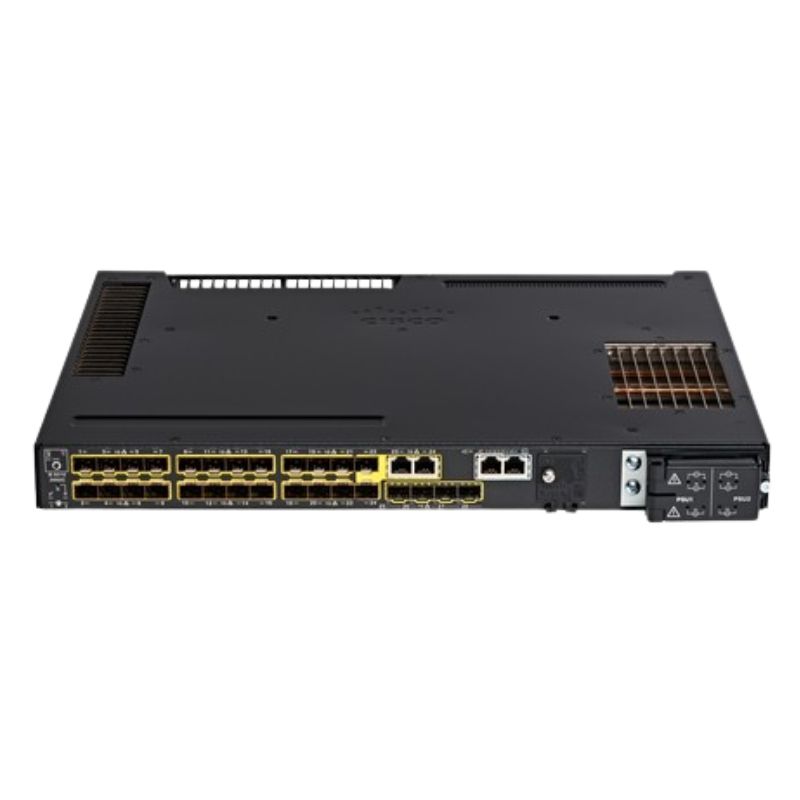


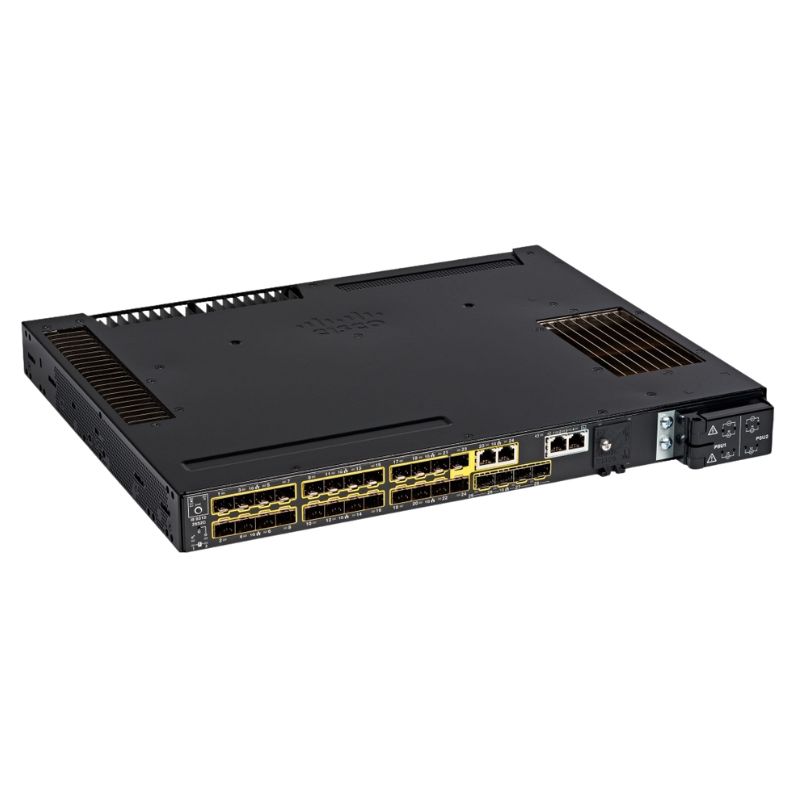
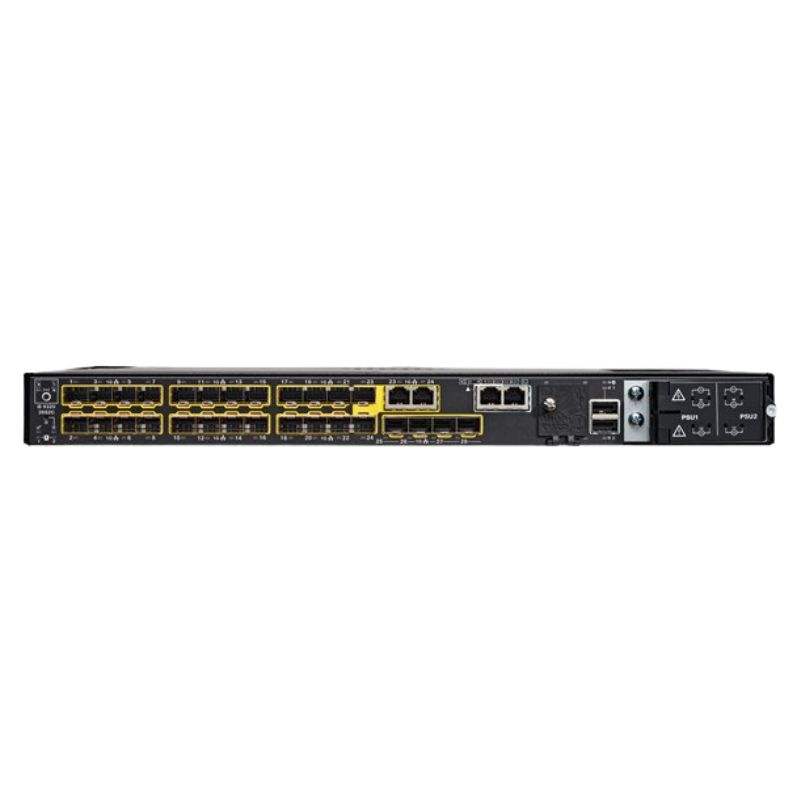
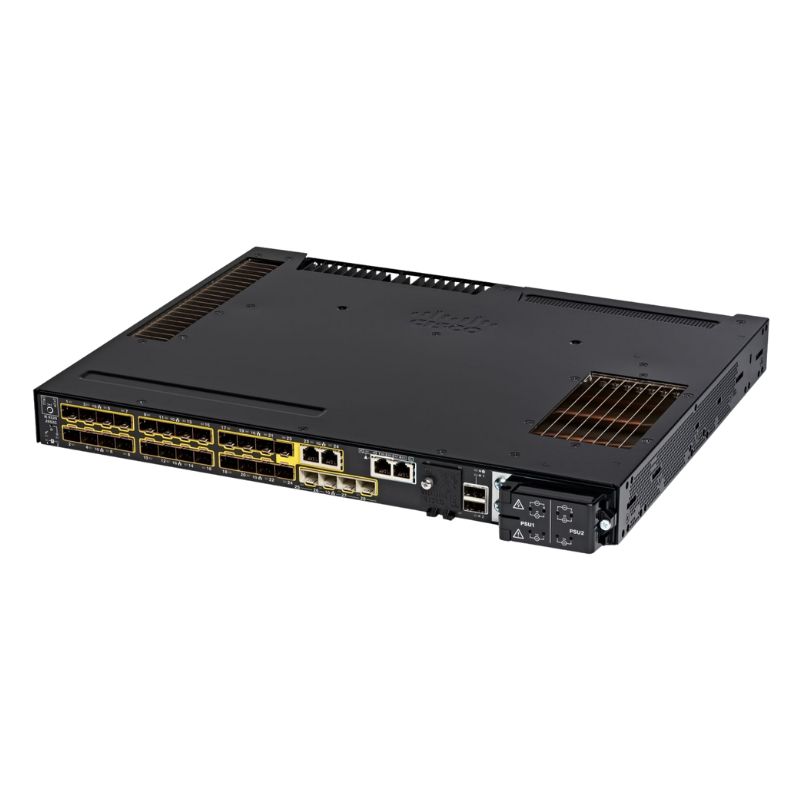
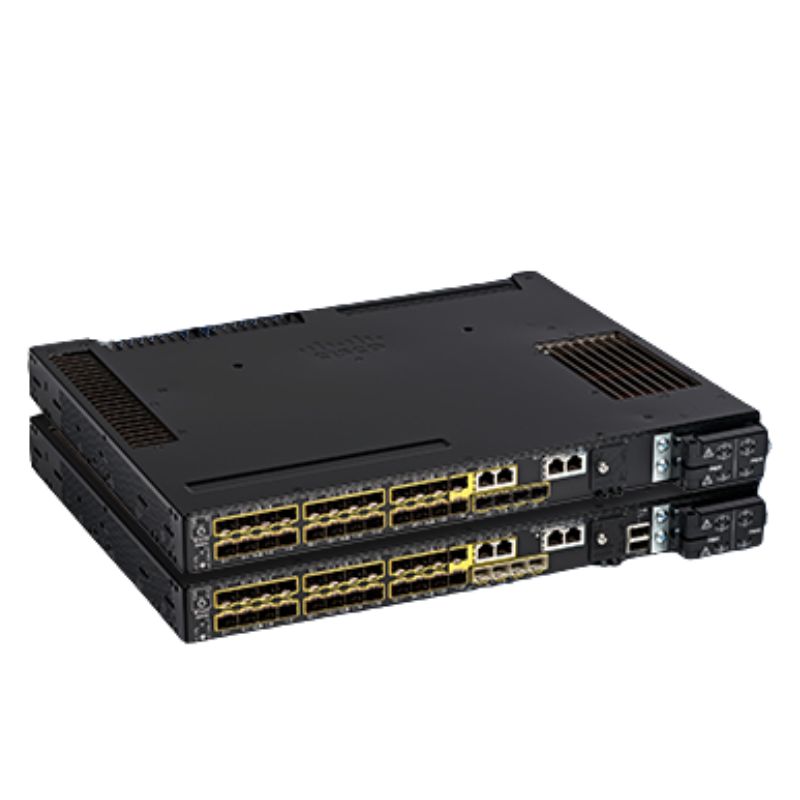
Cisco IE-9320-24P4X-A Catalyst Ie9320 Rugged Series Managed 24 Ports 10 Gigabit Sfp+ (uplink) Rack-mountable Poe+ Switch. Factory-Sealed New in Original Box (FSB) with 1 year replacement warranty
The Cisco IE-9320-24P4X-A Catalyst IE9320 Rugged Series switch represents a robust class of industrial Ethernet switches engineered for demanding environments where reliability, long-term availability, and secure connectivity are essential. Designed as a managed Layer 2/Layer 3-capable platform with advanced operational features, this 24-port 10/100/1000BASE-T device integrates Power over Ethernet Plus (PoE+) across its copper ports and includes four 10 Gigabit SFP+ uplink ports to enable high-speed aggregation and backbone connections. This category of rugged industrial switches is purpose-built to bridge traditional IT and operational technology (OT) networks, supporting Ethernet connectivity for applications such as automation control, video surveillance, transportation systems, energy substations, and outdoor or factory-floor deployments where environmental and electrical stressors demand hardened hardware.
At the heart of the IE-9320-24P4X-A series is a balanced architecture that couples dense Gigabit PoE+ edge connectivity with high-capacity 10G uplink ports. The switch provides twenty-four RJ-45 ports capable of 10/100/1000 speeds with PoE/PoE+ power delivery, enabling a broad array of powered devices such as IP cameras, wireless access points, compact PLCs, and industrial sensors without the need for separate power cabling. The additional four SFP+ modules serve as flexible 10 Gigabit fiber or SFP+ copper uplinks, which are critical for connecting to aggregation layers, data center switches, or ring/mesh topologies that require low-latency, high-throughput backhaul. This combination of edge PoE density and 10G uplinks positions the product category to support converged data, voice, and video traffic with headroom for future bandwidth growth.
The PoE+ functionality in this category is designed to meet the power demands of modern edge devices while simplifying installations and reducing cabling complexity. PoE+ extends the available wattage per port compared to legacy PoE, enabling support for devices that require higher power envelopes like PTZ cameras, thermal imaging sensors, and advanced wireless access points. When selecting a switch in this family, it’s important to consider the total PoE budget and per-port power allocation. Network planners should evaluate the mix of endpoints and their maximum power draws to ensure the switch’s aggregate power supply and power management features satisfy continuous operation requirements, failover scenarios, and any temperature-related derating that may impact available power in harsh conditions.
Industrial-grade switches in the Catalyst IE9320 series are engineered to withstand extremes of temperature, vibration, shock, and electromagnetic interference commonly found in non-office settings. The mechanical design, conformal coatings, and component selection are optimized for extended temperature ranges and improved resistance to dust and moisture ingress. Rugged switches are typically validated against industrial standards and may feature extended MTBF characteristics to support long deployment lifecycles. This robustness is what differentiates industrial switches from commercial-grade alternatives and makes them the default choice for outdoor enclosures, rail cabinets, manufacturing lines, and utility substations that demand consistent network uptime.
The category includes rack-mountable form factors that fit standard 19-inch racks as well as DIN-rail and wall-mount variations for installations within control cabinets and constrained spaces. Rack-mount models offer straightforward integration into server rooms and central equipment racks, while DIN-rail and compact chassis variants allow installers to place the switch physically closer to field devices to minimize cable runs and reduce installation complexity. Cable management, redundant power connector options, and front-access serviceability are additional design elements that ease maintenance and lower mean time to repair in production environments.
Management capabilities are a core differentiator for managed industrial switches. The Catalyst IE9320 family supports a broad set of management interfaces and automation features that simplify configuration, monitoring, and lifecycle operations. These platforms typically offer a combination of CLI, web-based GUI, and SNMP for traditional network operations. Layered on top of this are modern automation and telemetry approaches such as NETCONF/YANG, RESTCONF APIs, and streaming telemetry, which enable integration with orchestration systems and centralized management platforms. These management functions are critical for scaling large deployments, performing bulk configuration changes, and maintaining consistent policies across distributed sites.
Security is an intrinsic requirement for industrial networks that manage critical infrastructure. Switches in this category provide robust security tooling such as 802.1X network access control, MACsec encryption support for secure link-layer communications, ACLs for granular traffic control, and features for DHCP snooping and IP source guard to prevent spoofing and unauthorized device access. In addition, built-in segmentation through VLANs and VRFs allows operators to isolate OT traffic from IT systems, reducing the attack surface and enabling compliance with industry-specific regulations. Advanced threat mitigation is achieved by combining access control policies with secure management plane practices, role-based administration, and audit logging to maintain visibility on configuration changes.
The Catalyst IE9320 category supports a comprehensive set of Layer 2 and Layer 3 protocols to satisfy enterprise-class routing and switching requirements within industrial deployments. At Layer 2, these switches implement rapid spanning-tree protocols, robust multicast handling, link aggregation, and advanced QoS capabilities to prioritize real-time traffic. On the Layer 3 side, static routing, OSPF, and inter-VLAN routing capabilities enable efficient east-west traffic flow between segments and distributed control systems. The availability of hardware acceleration for routing and ACL enforcement ensures deterministic forwarding performance that is vital for latency-sensitive industrial applications.
Industrial environments frequently host mixed traffic types ranging from small periodic telemetry packets to high-bandwidth video streams. QoS mechanisms in this product family provide end-to-end prioritization, shaping, and policing to ensure that control plane and real-time flows receive predictable latency and jitter characteristics. Configurable priority queues, DSCP remarking, and ingress/egress shaping help maintain deterministic behavior for mission-critical applications even during congestion or during large data transfers such as archival video uploads or firmware distribution.
A defining strength of the Catalyst IE9320 category is its interoperability with a wide array of Cisco and third-party networking equipment. These switches are built to integrate into hierarchical network architectures including ring and mesh topologies that are common in industrial designs. Support for redundancy protocols, fast failover mechanisms, and dynamic routing ensures continuity of service and predictable failover behavior. Vendors and system integrators value the consistency of feature sets across enterprise and industrial Cisco platforms because it reduces the complexity of training, simplifies policy transfer, and streamlines support processes.
The inclusion of SFP+ uplink ports provides flexible options for long-distance fiber links, resilience via redundant uplinks, and high-capacity aggregation to campus or core switches. Operators can choose from a wide range of SFP+ modules — single-mode or multimode fiber transceivers, CWDM/DWDM modules for wavelength-division multiplexing, or passive/active DAC solutions for short-reach connections. This flexibility allows the same switch platform to serve urban transportation corridors, campus backbone links, or isolated industrial cells without needing specialized variants.
Switches in the IE9320 family are applicable across a wide spectrum of industries and use cases. In smart manufacturing, they connect programmable logic controllers, human-machine interfaces, and safety devices to support both deterministic control and enterprise analytics. For security and surveillance, PoE+ port density allows large arrays of HD and thermal cameras to be powered and connected, with SFP+ uplinks aggregating video streams to recording appliances. In transportation systems, hardened switches are deployed in wayside cabinets and rail onboard systems where vibration, temperature extremes, and electromagnetic noise are significant constraints. Utility networks and substation automation benefit from the switch’s deterministic routing, redundancy, and secure management for supervisory control and data acquisition traffic.
As industrial deployments increasingly leverage cloud analytics and centralized monitoring, these switches play a pivotal role as edge gateways that pre-process and securely forward data. Edge computing nodes co-located with rugged switches can host automation functions, AI inference engines for video analytics, or local historians that reduce upstream bandwidth usage by filtering or aggregating telemetry. The switches’ VLAN and routing capabilities, combined with secure tunneling and telemetry, support hybrid architectures that distribute workload across edge, fog, and cloud layers without compromising performance or security.
Industrial-grade switches must meet regulatory and industry certifications pertinent to their intended markets. The IE9320 category typically aligns with certifications for electromagnetic compatibility, hazard ratings for use in certain environments, and safety standards that are crucial for deployment in transportation, utilities, and public infrastructure. Lifecycle support and long-term availability are additional value propositions; manufacturers of industrial networking gear commonly commit to extended availability windows, predictable firmware updates, and dedicated technical resources to assist integrators over multi-year projects. These support elements reduce total cost of ownership and mitigate the risk of obsolescence in long-lived control system installations.
Regular firmware maintenance and security patching are essential to maintain a resilient network. Managed industrial switches in this category provide mechanisms to perform safe upgrades, schedule rollouts, and perform rollback actions should an update introduce instability. They also support secure software distribution workflows that integrate with configuration management systems and network orchestration tools to ensure consistency across geographically-dispersed deployments. Proactive patch management reduces exposure to vulnerabilities and maintains compliance with organizational security policies and industry standards.
Selecting the right switch model within this category starts with a clear inventory of connected devices, bandwidth profiles, redundancy requirements, and environmental constraints. Planners should quantify port counts for current and near-term needs, estimate PoE power requirements for each device class, and model uplink utilization under expected peak loads. It is prudent to include growth margins to accommodate future camera upgrades, new wireless access points, or additional local compute platforms. Considerations around power supply redundancy, heat dissipation within the chosen enclosure, and available physical space for mounting should factor into procurement decisions. Evaluating warranty terms, support tiers, and extended spare-part availability will further refine total cost and operational risk.
When comparing models, buyers should weigh features such as per-port performance characteristics, PoE power delivery and management intelligence, uplink speed and module compatibility, supported routing protocols, and advanced security features. Equally important are environmental ratings such as operating temperature range, ingress protection levels, shock and vibration tolerance, and certification for specific industry standards. Operational concerns like ease of management, integration with existing orchestration platforms, and the vendor’s track record for firmware support also heavily influence selection. A thorough comparison aligns technical capability with the practical constraints of installation and long-term maintenance.


 Contact Us
 Information
 Catalog
 Solid State Drives (SSD)
 Network Switches
 Hard Disk Drives
 HBA & Controllers
 PC & Servers
 PC & Server Memory
 CPU & Processors
 Network Routers
 Power Supplies
 Tape Drives & Libraries
 Network Devices
 Computer & Network Cables