(7% discount is applied at checkout)
Cart is empty
Your go-to destination for cutting-edge server products
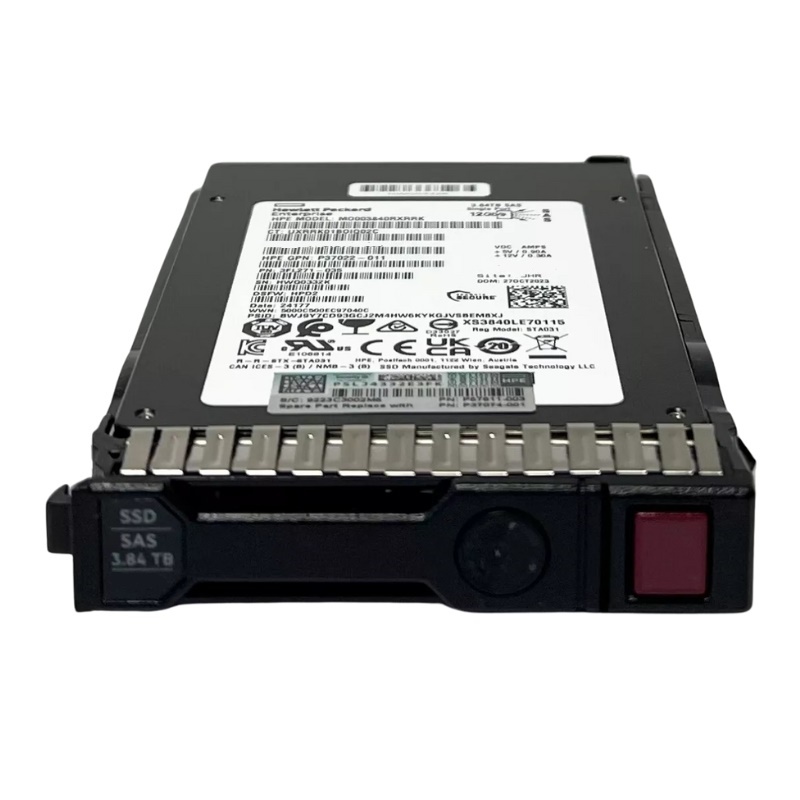


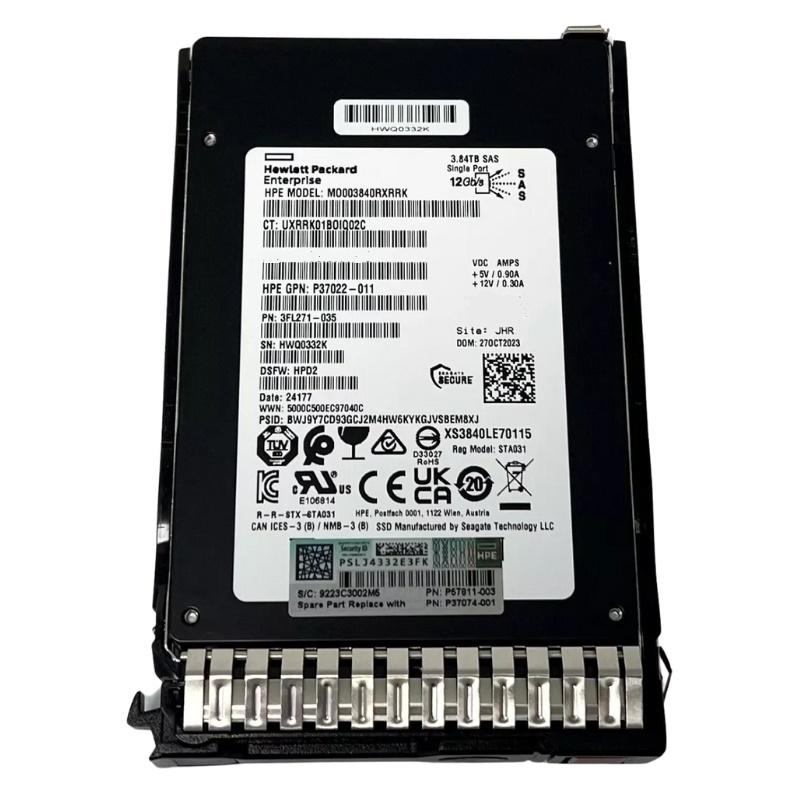
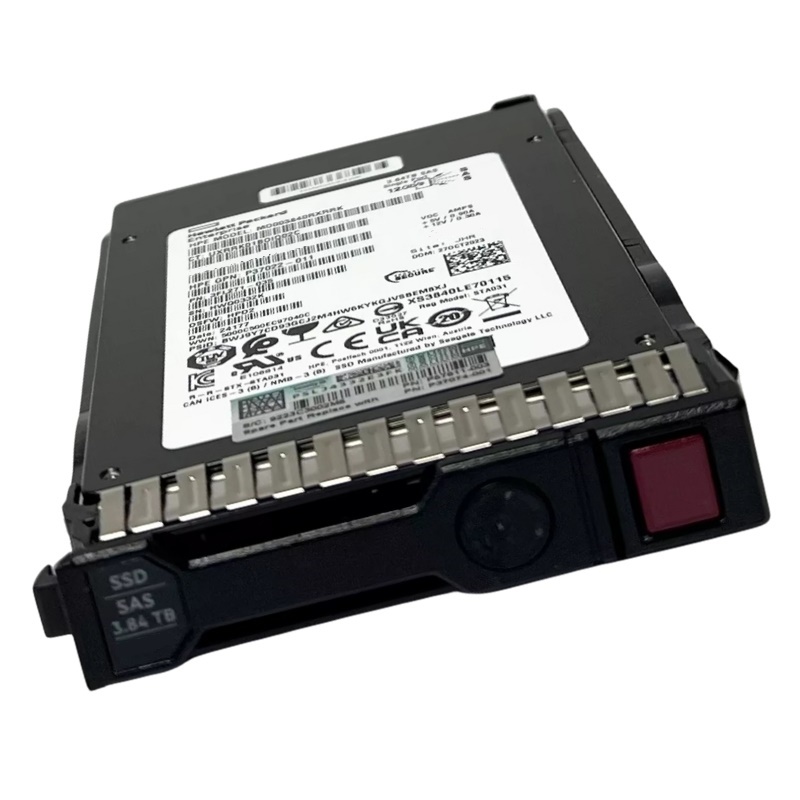
HPE P41537-001 3.84TB SAS 12GBPS SFF Solid State Drive. Factory-Sealed New in Original Box (FSB) with 3 Years Warranty
| SKU/MPN | Warranty | Price | Condition | You save |
|---|---|---|---|---|
| P41537-001 | 1 Year Warranty | $4,180.00 | Factory-Sealed New in Original Box (FSB) | You save: $1,463.00 (26%) |
| P41537-001 | 1 Year Warranty | Contact us for a price | Excellent Refurbished |
Enterprise-grade solid-state storage: the HPE P41537-001 is a 3.84 TB, 2.5-inch SAS 12Gb/s value SSD engineered for mixed-use workloads. This hot-swappable, digitally-signed firmware drive (DS) is optimized for HPE ProLiant rack servers and offers a balance of performance, endurance, and cost-efficiency for production systems.
Designed for consistent production performance, the drive delivers strong sequential throughput, high random IOPS and a mixed-use endurance rating suitable for virtualized and data-center workloads.
This 2.5" SAS drive is validated for a wide range of HPE rack and tower servers, simplifying integration into existing infrastructure.
The HPE P41537-001 is a high-performance 3.84TB SAS solid-state drive engineered for enterprise storage systems requiring exceptional reliability, consistent low latency, and robust mixed-workload capabilities. This 2.5-inch, SAS-12Gb/s drive represents the pinnacle of HPE's Gen10+ value SAS SSD lineup, delivering the endurance and performance necessary for demanding data center environments.
Enterprise SAS SSDs represent a specialized class of storage devices designed for business-critical applications where performance, reliability, and data integrity cannot be compromised. The HPE P41537-001 occupies the strategic "Mixed Use" category within this segment, balancing read-intensive and write-intensive workload requirements.
Unlike consumer-grade SATA SSDs, SAS (Serial Attached SCSI) drives like the P41537-001 are built from the ground up for enterprise deployment. The SAS interface provides full duplex communication, meaning data can be read from and written to the drive simultaneously without performance degradation. This is a significant advantage over SATA's half-duplex operation, especially in mixed workload scenarios common to virtualized environments and database applications.
The 12Gb/s SAS interface doubles the bandwidth of the previous 6Gb/s generation, reducing potential bottlenecks and ensuring the NAND flash memory can operate at its full potential. This higher interface speed is particularly beneficial during peak workload periods and when multiple drives are accessed concurrently in RAID configurations.
The "Mixed Use" designation indicates that the HPE P41537-001 is engineered to handle a balanced combination of read and write operations efficiently. This contrasts with Read-Intensive SSDs, optimized primarily for read-heavy workloads, and Write-Intensive SSDs, designed for extreme write endurance.
Mixed Use SSDs achieve their balanced performance through several technological approaches: advanced wear-leveling algorithms, over-provisioning (allocating more NAND capacity than the user-accessible capacity), and sophisticated garbage collection mechanisms. The P41537-001's 3.84TB capacity includes additional NAND flash reserved specifically for these background operations, ensuring consistent performance throughout the drive's lifespan.
The HPE P41537-001 incorporates sophisticated engineering to deliver enterprise-level reliability and performance. Understanding its underlying architecture helps explain why it stands out in the Mixed Use SSD category.
This drive utilizes Triple-Level Cell (TLC) 3D NAND flash memory, which stores three bits of data per memory cell. The "3D" aspect refers to the vertical stacking of memory cells, increasing density and reliability while reducing cost per gigabyte compared to planar NAND. HPE's implementation includes advanced error correction and read-retry algorithms to maintain data integrity despite the increased complexity of TLC technology.
While historically TLC NAND had lower endurance than SLC or MLC alternatives, modern TLC with 3D architecture combined with sophisticated controller technology delivers sufficient write endurance for mixed use applications. The P41537-001 is rated for significantly higher write volumes than consumer SSDs, with specifications typically measured in Drive Writes Per Day (DWPD) over the warranty period.
The heart of any SSD is its controller, and the HPE P41537-001 features an enterprise-grade controller specifically tuned for Mixed Use workloads. This specialized processor manages all aspects of drive operation, including:
Enterprise SSDs must protect data in progress during unexpected power loss. The P41537-001 includes robust power loss protection circuits that provide sufficient backup power to complete writes in progress and commit all data from volatile caches to non-volatile NAND memory, preventing data corruption.
While peak performance numbers are important, enterprise buyers are equally concerned with performance consistency under sustained workloads. The P41537-001 is engineered to maintain predictable latency and IOPS even during extended write operations, thanks to its over-provisioning and efficient garbage collection algorithms.
Enterprise storage systems require predictable performance to meet service level agreements. The HPE P41537-001 provides excellent QoS metrics, maintaining consistent response times that are critical for latency-sensitive applications. This consistency is a key differentiator from consumer-grade SSDs that may exhibit significant performance degradation under sustained writes.
As part of HPE's Gen10+ SSD family, the P41537-001 incorporates specific enhancements that differentiate it from previous generations and competitor offerings.
The "Value SAS" designation indicates an optimal balance between performance, endurance, and cost. While offering robust enterprise features, Value SAS drives provide a more cost-effective solution than HPE's Performance SAS lineup for workloads that don't require the absolute highest performance tiers.
Within HPE's SSD hierarchy, the Mixed Use Value SAS G10+ sits between the Read-Intensive Value SAS (lower endurance, optimized for reads) and the Performance SAS (highest endurance and performance). This strategic positioning makes the P41537-001 an ideal choice for general-purpose enterprise workloads where both read and write performance are important but extreme write endurance is not required.
HPE Gen10+ SSDs feature firmware specifically optimized for HPE servers and storage systems. This deep integration enables enhanced features and better compatibility compared to third-party SSDs.
The P41537-001 includes HPE's proprietary wear monitoring technology, which provides accurate remaining life prediction through HPE system management tools. This allows administrators to proactively plan drive replacements before failures occur, increasing system reliability and reducing unplanned downtime.
When installed in compatible HPE servers, these SSDs can report health and status information directly to the Integrated Lights-Out (iLO) management processor. This enables remote monitoring and alerting even when the server operating system is unavailable.
Proper integration of the HPE P41537-001 into existing infrastructure requires understanding its compatibility requirements and optimal configuration scenarios.
The SAS-12Gb/s interface maintains backward compatibility with 6Gb/s and 3Gb/s SAS infrastructures. When connected to older SAS controllers, the drive will automatically negotiate to the highest mutually supported speed. This ensures compatibility with existing infrastructure while providing a migration path to higher performance as systems are upgraded.
Like all SAS devices, the P41537-001 supports dual-port connectivity for redundancy and multipathing. This allows the drive to be connected to two separate host controllers simultaneously, providing path failover in mission-critical environments. The drive is fully compatible with SAS expanders, enabling large-scale storage deployments.
Proper alignment of RAID stripe sizes with the SSD's internal architecture ensures optimal performance. Most modern RAID controllers and operating systems handle this automatically, but verification is recommended during configuration.
The HPE P41537-001 3.84TB Mixed Use SSD addresses specific enterprise workload requirements where its balanced performance characteristics deliver significant advantages.
Virtualized environments typically generate mixed I/O patterns as multiple virtual machines with different workload characteristics share the same physical storage. The P41537-001's consistent performance under mixed read/write conditions makes it ideal for:
While hypervisors typically run from memory after boot, the boot drive still requires reliable performance for logging, core dumps, and temporary operations. The Mixed Use endurance profile ensures these background writes don't impact drive longevity.
For all-in-one hyperconverged configurations or direct-attached storage in virtualized servers, the 3.84TB capacity provides ample space for multiple virtual machines while delivering the I/O performance needed for responsive operation.
Database workloads often balance read queries with write transactions, making them well-suited to Mixed Use SSDs. Specific database applications include:
Online Transaction Processing (OLTP) systems benefit from the low latency and consistent performance of the P41537-001, improving transaction throughput and response times.
Database transaction logs and temporary databases often generate write-intensive patterns intermixed with reads, matching the Mixed Use profile's strengths.
Enterprise collaboration platforms and email systems generate diverse I/O patterns as users access, modify, and store documents and messages. The P41537-001 provides the right balance of performance for these mixed workloads.
These applications generate both sequential and random I/O patterns across different components, making the balanced characteristics of Mixed Use SSDs advantageous compared to read-optimized alternatives.
For service providers and enterprise private clouds, the P41537-001 offers an optimal price-to-performance ratio for general-purpose storage workloads where workload patterns may be unpredictable or varied.
In shared storage environments serving multiple customers or departments, the Mixed Use endurance ensures no single workload type disproportionately impacts drive lifespan or performance.
Enterprise storage demands exceptional reliability and data protection mechanisms. The HPE P41537-001 incorporates multiple technologies to ensure data integrity and maximize availability.
The drive implements comprehensive data protection from the host interface through to the NAND flash memory, including:
Protection codes are maintained throughout the entire data path, detecting and correcting errors that might occur during internal data transfer operations. This includes buffer RAM protection, internal bus protection, and flash interface protection.
Sophisticated Error Correction Code algorithms correct multiple bit errors within each page of NAND flash, significantly exceeding the capabilities of consumer SSD controllers. This extends the usable life of the NAND flash and maintains data integrity as the flash cells undergo wear.
Enterprise SSDs like the P41537-001 are specified with significantly higher MTBF ratings than consumer drives, typically exceeding 2 million hours. The Annualized Failure Rate represents the statistically predicted failure rate under normal operating conditions, typically well below 1%.
These reliability metrics assume operation within specified temperature ranges and workload limits. Proper cooling and adherence to workload specifications are essential to achieving the published reliability figures.
Successfully integrating the HPE P41537-001 into an enterprise environment involves careful planning and execution across the procurement and deployment lifecycle.
When procuring HPE SSDs, several factors ensure genuine products and optimal value:
HPE implements anti-counterfeiting measures in its products. Purchasing from authorized HPE partners ensures genuine products with full warranty coverage and access to HPE firmware updates.
For critical environments, maintaining appropriate spare drive inventory reduces recovery time in the event of drive failure. The 3.84TB capacity makes the P41537-001 suitable for tiered sparing strategies where a single spare can replace multiple different capacity drives in a pinch.
Regularly updating drive firmware ensures access to performance optimizations, bug fixes, and compatibility improvements. HPE provides firmware through its support portal and often integrates updates into its system management tools.
Implementing regular health checks using HPE's management tools allows administrators to monitor wear indicators and plan proactive replacements before failures occur, typically when the drive approaches its wear threshold.
While SSDs are generally more resilient to environmental factors than hard drives, proper operating conditions still impact reliability and lifespan:
Maintaining operating temperatures within specified ranges ensures optimal performance and longevity. Enterprise storage systems should provide adequate airflow across all drives, with particular attention to high-density configurations.
While the drive includes power loss protection, clean power input reduces stress on all system components. Uninterruptible Power Supplies (UPS) and proper power distribution are recommended for all critical infrastructure.


 Contact Us
 Information
 Catalog
 Solid State Drives (SSD)
 Network Switches
 Hard Disk Drives
 HBA & Controllers
 PC & Servers
 PC & Server Memory
 CPU & Processors
 Network Routers
 Power Supplies
 Tape Drives & Libraries
 Network Devices
 Computer & Network Cables