(7% discount is applied at checkout)
Cart is empty
Your go-to destination for cutting-edge server products
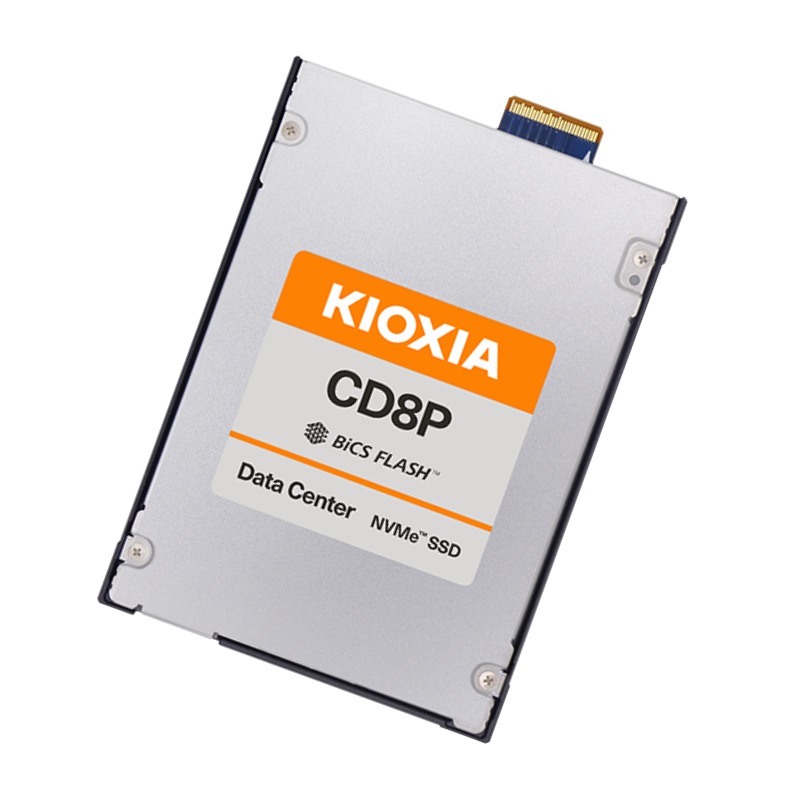


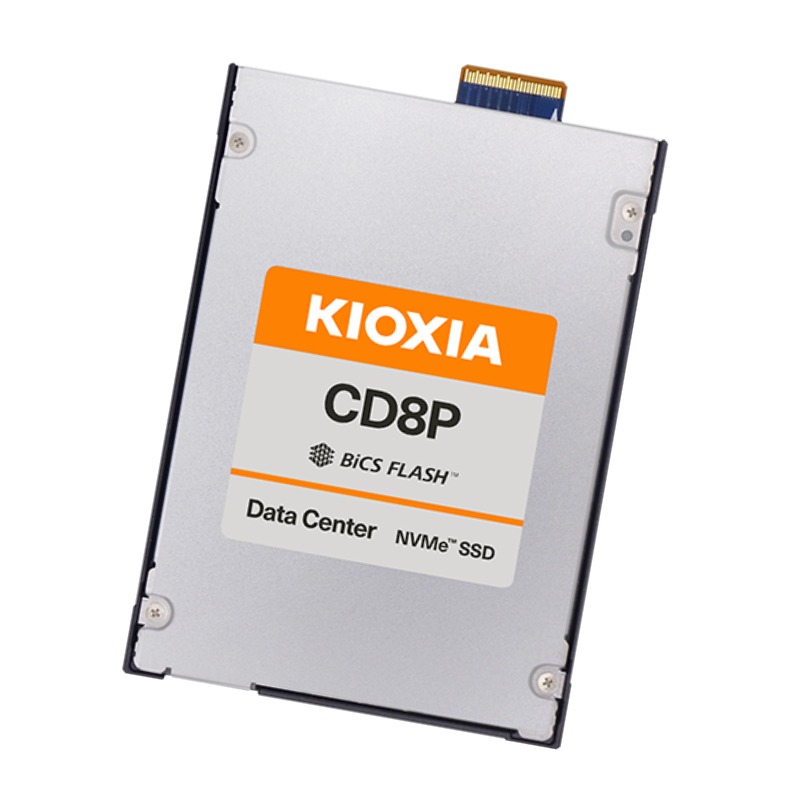
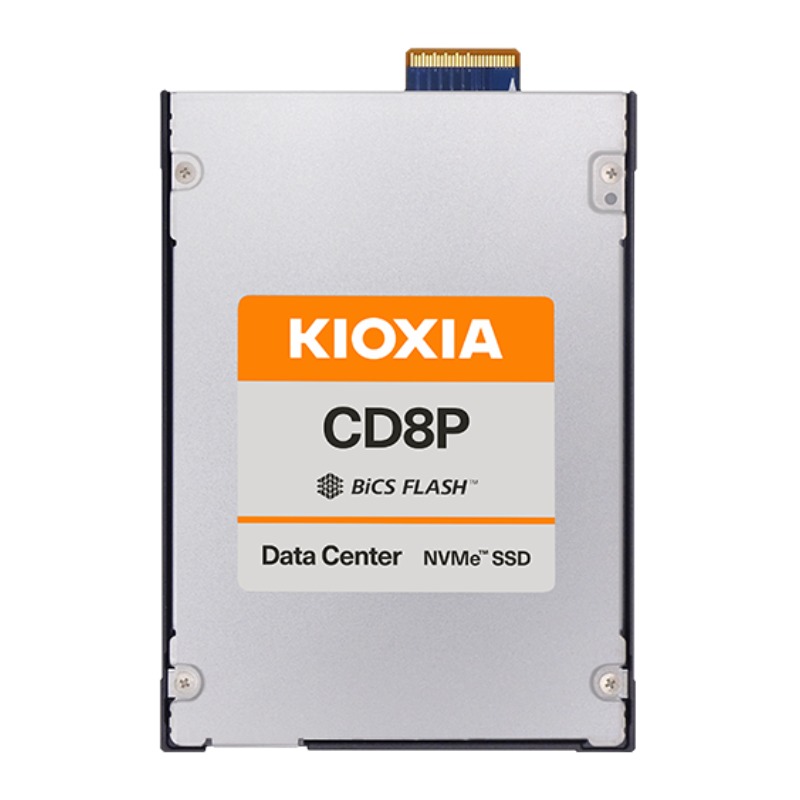
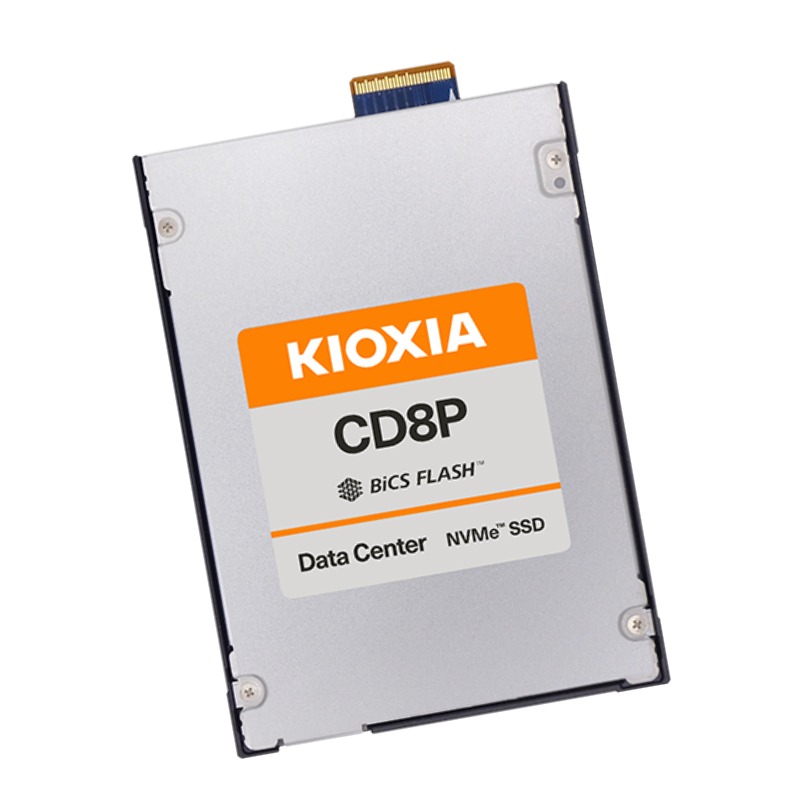
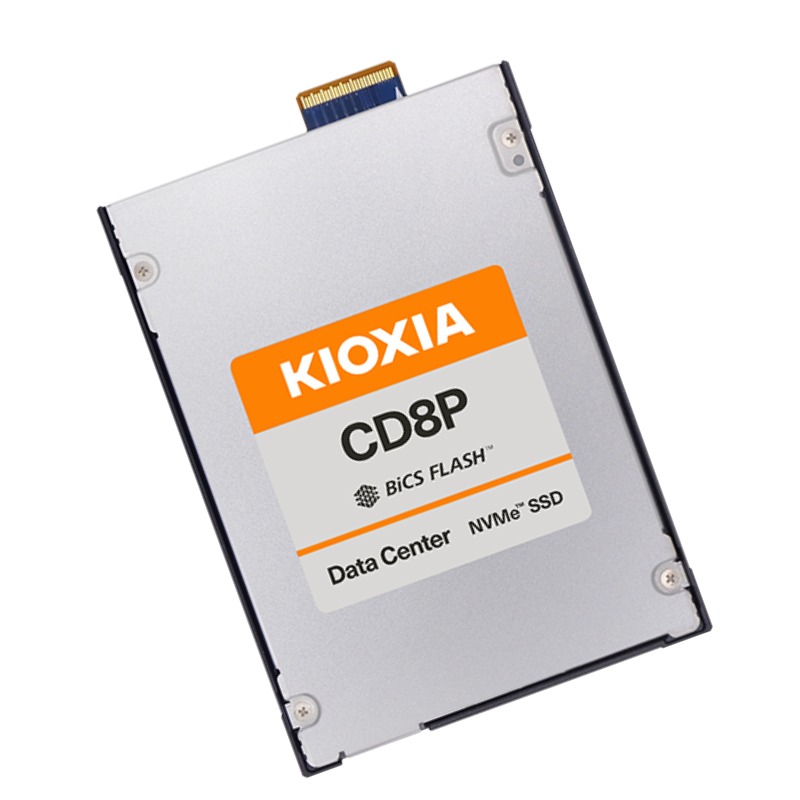
Kioxia KCD81PUG15T3 15.36TB 2.5Inch CD8P-R PCIe 5.0 NVMe 2.0 15mm SSD. New (Box Not Sealed) MOQ-5
Overview of the PCIe 5.0 NVMe Drives
The KCD81PUG15T3 model belongs to Kioxia’s high-performance, ultra-high-capacity solid state drives built for demanding data center environments. With a massive 15.36 TB capacity in a 2.5-inch form factor and support for PCIe 5.0 / NVMe 2.0 protocol, this drive targets workloads where high throughput, low latency, and density matter. In this category you’ll find next-generation enterprise SSDs optimized for mixed workloads, analytics, virtualization, and storage acceleration use cases.
Whether used in rack servers, blade servers, or external storage arrays, the Kioxia KCD81PUG15T3 maintains consistent performance and compatibility with advanced storage controllers.
Enterprise PCIe 5.0 NVMe SSDs are the frontier in storage technology. Leveraging the doubled per-lane throughput offered by PCIe Gen5, these SSDs deliver significantly higher bandwidth compared to Gen4 devices. They are ideally suited for latency-sensitive workloads, real-time analytics, AI/ML pipelines, hyperconverged infrastructure, and next-gen NVMe-oF (NVMe over Fabrics) deployments.
Within this category, several subcategories emerge:
The KCD81PUG15T3 falls squarely in the high-capacity, high-throughput tier. It is built for operations that demand both scale and speed. In the subcategory context, it competes with drives offering 12 TB, 15 TB, 18 TB, and beyond, all while exploiting PCIe Gen5 lanes and next-gen NVMe command sets.
Understanding why the KCD81PUG15T3 stands out requires a deep dive into its technical composition. Below are some of the key features that differentiate it from predecessors or more conventional SSDs:
By supporting **PCIe Gen5**, the drive doubles the per-lane bandwidth relative to Gen4, enabling up to ~16 GT/s per lane under full utilization. This means that a x4 slot can approach ~32 GB/s theoretical bandwidth. The NVMe 2.0 standard introduces features such as multi-namespace architecture, Fabric integration, latency optimizations, and extended command sets, which improve throughput, concurrency, and multi-tenant performance.
The 2.5-inch 15 mm profile is ideal for server sleds, storage enclosures, and rackmount arrays, offering high density without resorting to U.3 or EDSFF modules in all cases. The 15.36 TB capacity enables large datasets, consolidation of workloads, and reduction of infrastructure footprint. In a single server, multiple drives of this capacity permit petabyte-scale aggregations without excessive device count.
Typical performance figures place this drive among the top tier for sequential read/write, random read/write, and QoS-bound metrics:
For enterprise deployments, endurance (expressed in drive writes per day, DWPD), power-loss protection, and error correction are vital. The KCD81PUG15T3 typically offers robust endurance ratings (e.g., 1–3 DWPD or more, depending on workload class), backed by strong ECC, RAID-level internal protection, and power-loss capacitors or firmware-based flushes to protect in-flight data. Overprovisioning and advanced wear-leveling algorithms help maintain performance over long service life.
In dense server environments, managing heat is critical. The thermal design of this SSD supports both passive heat dissipation through its enclosure and active airflow designs. Power consumption under active and idle states is optimized to balance high performance with energy efficiency, often with features such as dynamic power scaling, low-power idle, and thermal throttling to protect hardware stability.
The category of high-capacity PCIe 5.0 NVMe SSDs is defined by the ability to accelerate data-intensive workloads. The following use cases showcase where the KCD81PUG15T3 and its siblings shine:
Modern enterprise environments often have mixed traffic: small random reads, writes, caching, and metadata operations. High concurrency, quality-of-service isolation, and low latency are key. The KCD81PUG15T3 supports multi-namespace partitioning, allowing logical partitioning per VM or tenant, while maintaining low jitter and consistent performance under heavy mixed load.
Large-scale databases (SQL or NoSQL), in-memory analytics, and real-time indexing benefit from drives that reduce I/O bottlenecks. With high sequential throughput and high IOPS, this SSD helps avoid database page cache misses and accelerates query responses.
In hyperconverged or software-defined storage systems, these SSDs can form caching layers or tiered pools. Because of their capacity and performance, fewer drives are needed to offer cache or fast-tier benefits, reducing device management overhead.
Some drives in the category are tailored for ultra-low latency (e.g. sub-100 µs tail latency), optimized for small-block random operations. Others are tuned for bulk sequential throughput. The KCD81PUG15T3 balances both, making it a hybrid performer for general-purpose enterprise usage.
Drives in this subcategory often trade peak performance for lower average power consumption, targeting environments where cooling and power budgets are constrained. The KCD81PUG15T3 maintains performance while including power scaling features to adapt under varied load.
Some SSD lines are built specifically for write-intensive workloads (e.g. log writing, streaming), others for read-intensive (e.g. content delivery), and yet others for general mixed-use. This category includes all three. The KCD81PUG15T3 is often marketed as a mixed-use, balanced high-performance model capable of handling both read and write demands without bias.
Deploying enterprise NVMe SSDs like the KCD81PUG15T3 involves more than plug-and-play. For best results, consider the following optimization strategies:
Because of their high throughput and density, these drives generate more heat than legacy SSDs. Plan for directed airflow across the drive surface, thermal conduction into chassis rails, or heat sinks when possible. Monitoring temperatures and leveraging firmware-level thermal throttling safeguards longevity and performance.
PCIe 5.0 support is still emerging; ensure your platform’s BIOS, UEFI, and NVMe driver stack support Gen5 mode. Firmware updates may improve performance, stability, and power optimization. Use vendor-certified drivers and firmware compatibility matrices to match server platforms with SSD firmware.
The KCD81PUG15T3 supports multiple namespaces (logical divisions of the physical media). Use namespace partitioning to isolate workloads (e.g. one tenant per namespace) and enable Quality-of-Service (QoS) policies. Namespace-level TRIM / deallocation commands aid in garbage collection and reclaiming space under virtualization.
Drives in this category often serve as the high-speed media behind NVMe-oF deployments, serving host requests over RDMA, TCP, or Fibre Channel. Their performance characteristics make them ideal targets in remote or pooled storage models, leveraging multi-namespace capabilities and latency-optimized protocols.
Drives oriented toward write-heavy tasks may deliver higher DWPD or enhanced caching layers, at cost of slightly reduced read performance or higher power. If you run write-logging, streaming, or data ingestion loads, consider whether that variant overshadows a balanced model like KCD81PUG15T3.
In chassis with strict power or cooling constraints, you may find models capping wattage or leveraging extended idle states. The KCD81PUG15T3, while efficient, is a performance-first design — if your environment is severely power-constrained, you might trade some performance for a lower-power sibling.
In multi-drive arrays, spread high-IO workloads evenly across drives to avoid “hot spots.” Leverage virtual volume striping or software-level load balancing to maintain consistent performance across all drives.
Regularly capture SMART metrics, temperature history, write amplification, and spare usage. Use those to forecast drive retirements or replacements before failures impact availability.
Tailor the overprovisioning percentage to your workload type. For write-intensive or mixed workloads, increasing overprovisioning gives more headroom for garbage collection and wear leveling, which translates to better sustained performance and drive longevity.
When possible, align I/O sizes to internal block boundaries (e.g. 256 KiB or 1 MiB), reduce mid-request fragmentation, coalesce small I/O, and avoid unaligned writes. Batch or queue operations to reduce CPU/IOPS overhead.


 Contact Us
 Information
 Catalog
 Solid State Drives (SSD)
 Network Switches
 Hard Disk Drives
 HBA & Controllers
 PC & Servers
 PC & Server Memory
 CPU & Processors
 Network Routers
 Power Supplies
 Tape Drives & Libraries
 Network Devices
 Computer & Network Cables