(7% discount is applied at checkout)
Cart is empty
Your go-to destination for cutting-edge server products
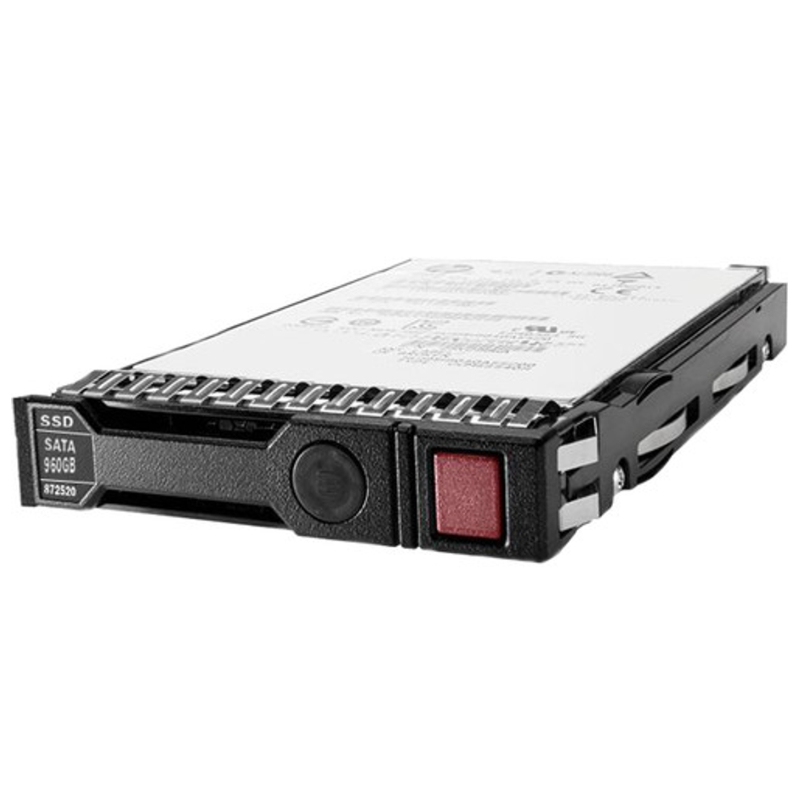


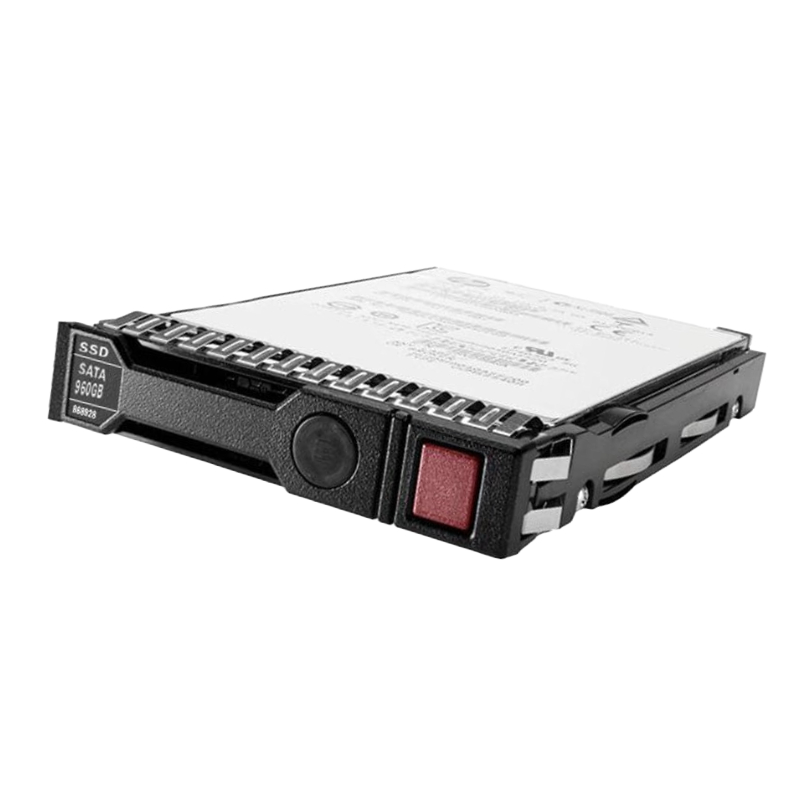
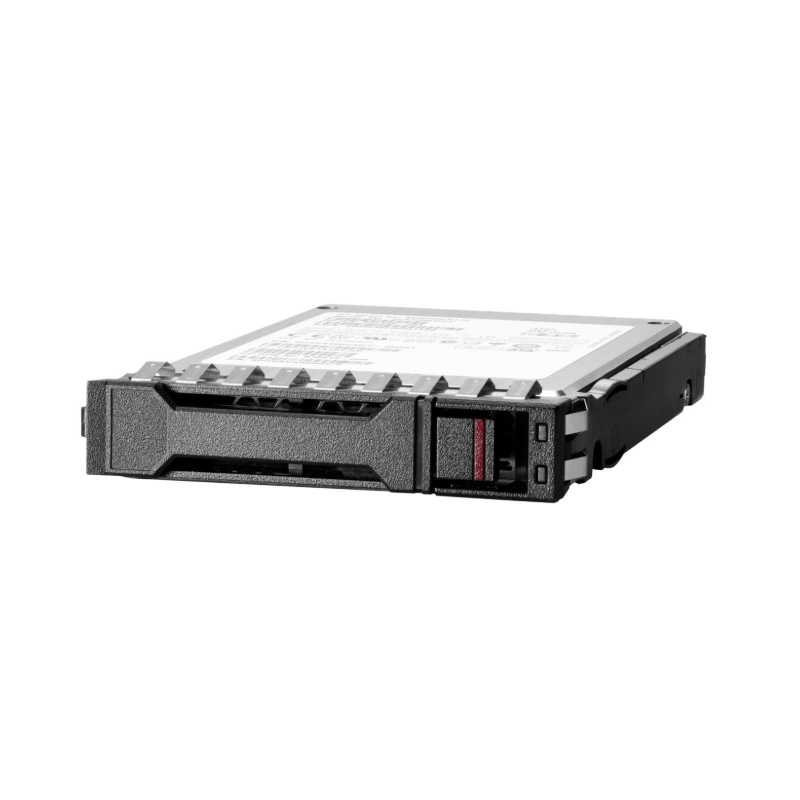
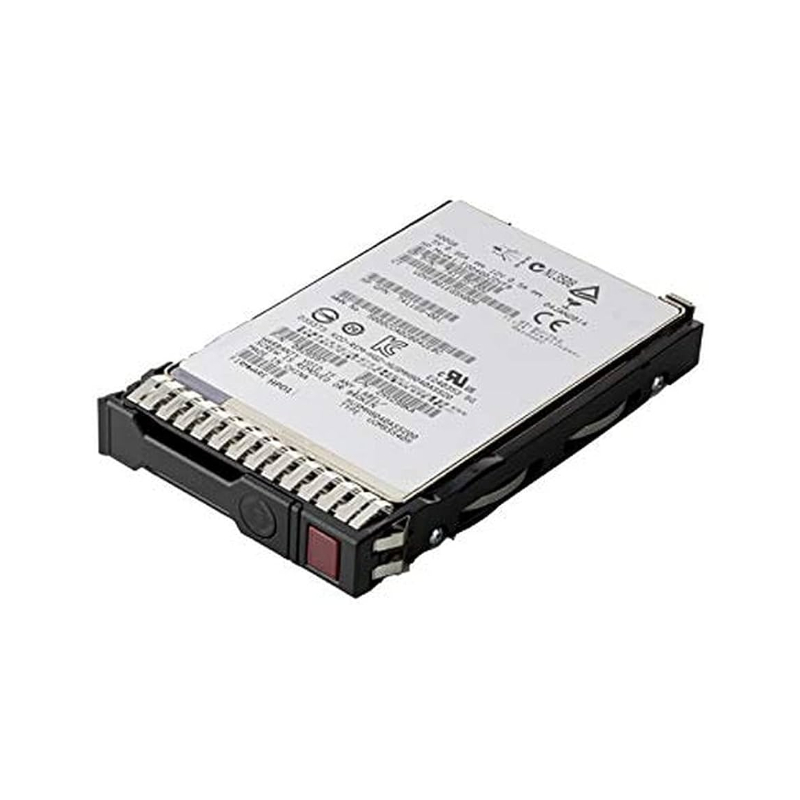
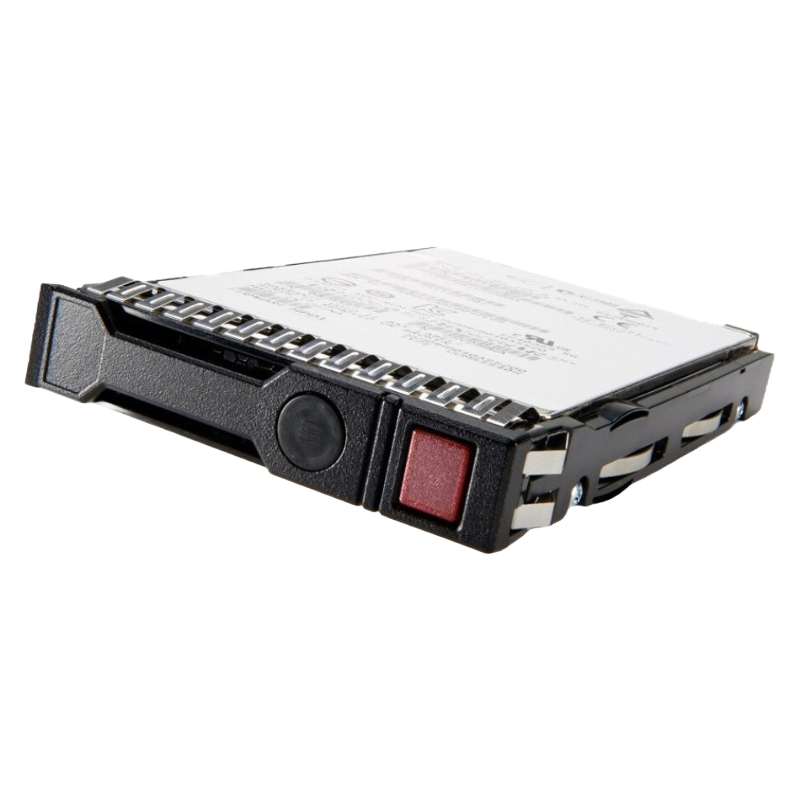
HPE P08569-001 960GB SATA 6GBPS Read Intensive Digitally Signed SSD. New (System) Pull with 1 Year Replacement Warranty
| SKU/MPN | Warranty | Price | Condition | You save |
|---|---|---|---|---|
| P08569-001 | 1 Year Warranty | $679.00 | New (System) Pull | You save: $237.65 (26%) |
| P08569-001 | 1 Year Warranty | $1,045.00 | Factory-Sealed New in Original Box (FSB) | You save: $365.75 (26%) |
The P08569‑001 series from Hewlett Packard Enterprise represents a specialized family of high-reliability, read‑optimized solid state drives designed to serve workloads where read operations dominate.
This SSD utilizes Multi-Level Cell (MLC) flash technology, delivering a balance of speed, durability, and cost-efficiency ideal for enterprise workloads.
Equipped with a single-port SATA interface supporting up to 6Gbps data transfer rates, ensuring consistent performance in data center environments.
This drive is optimized for workloads that are predominantly read-heavy. It's particularly suitable for:
Digitally signed firmware helps ensure that only trusted firmware can be executed, protecting against unauthorized changes and tampering.
For IT professionals seeking reliable and high-performance read-intensive storage, the HPE P08569-001 960GB SATA SSD offers exceptional value and efficiency.
The P08569‑001 series from Hewlett Packard Enterprise represents a specialized family of high-reliability, read‑optimized solid state drives designed to serve workloads where read operations dominate. This category of storage devices is ideal for server environments, content delivery applications, and infrastructures where consistent data throughput and firmware integrity are essential. The designation “digitally signed” refers to embedded firmware that carries cryptographic signatures, which helps prevent unauthorized or malicious firmware modifications. As a result, the P08569‑001 family is purpose-built for mission-critical systems that demand both performance and security in the flash storage plane.
This category is defined by a nominal storage capacity of 960 GB, leveraging the SATA 6 Gbps interface. Drives in the P08569‑001 class maintain a drive height of 7 mm and adopt the Small Form Factor (SFF) design, coupled with hot-pluggable characteristics and a Smart Carrier (SC) mounting mechanism. These physical parameters make the drives compatible with many modern server bays and blade nodes.
Internally, the P08569‑001 units employ Multi‑Level Cell (MLC) flash memory, which strikes a balance between cost, endurance, and performance. The choice of MLC ensures that each program/erase cycle is carried out with reliability, which is critical given the often 24/7 usage patterns of enterprise infrastructure. The drive’s single SATA port supports full-duplex operations at up to 6 Gbps nominal speed, enabling sustained sequential transfer rates and consistent random I/O throughput.
Within the P08569‑001 category, sequential read performance can reach up to 525 MiB/s. This ensures that large data transfers such as database table reads, media files, or VM template loads are handled swiftly. Meanwhile, sequential write speeds may reach up to 480 MiB/s under optimal conditions, allowing for occasional bulk writes or caching operations. The high sequential throughput is particularly beneficial in read‑dominant environments that occasionally require bursts of write operations.
One of the defining strengths of the P08569‑001 line is its random I/O capability. For random reads, the devices can deliver up to 68,000 IOPS, enabling responsive access to many small datasets, index lookups, or metadata retrievals. Random writes achieve up to 33,000 IOPS, which supports frequent metadata updates, small log writes, or caching behaviors. This balance of sequential and random performance levels positions the P08569‑001 drives as strong contenders for read-intensive but moderately write-bound workloads in enterprise settings.
In environments where read operations vastly outnumber writes, this category excels. Instances such as web services serving static content, content distribution networks (CDNs), and virtualization hosts performing frequent OS image reads fall squarely into the target use domain. The P08569‑001 series delivers consistent low-latency read performance, which can contribute directly to user experience or transactional responsiveness in data center deployments.
Because boot operations and OS image access typically involve many read operations with occasional updates, the P08569‑001 class is well-suited for hosting operating systems in server racks or hypervisor hosts. Similarly, when used in caching roles—where new writes are buffered and most activity is reading from cache—these drives maintain high throughput and minimize wear on more expensive storage tiers. The digitally signed firmware helps ensure that the system boot processes cannot be compromised by firmware tampering.
Many analytics workloads, reporting engines, or data warehouses rely heavily on repeated read access to reference tables, aggregated views, or precomputed results. The P08569‑001 category supports such workloads by allowing frequent, high-throughput reads with reliable performance over time. In scenarios where write activity is limited to periodic refresh cycles, these SSDs deliver solid, predictable behavior across many cycles.
A key distinguishing trait of the P08569‑001 class is the incorporation of digitally signed firmware. This means that every firmware image loaded onto the drive is cryptographically validated, preventing unauthorized modifications or injection attacks. For data centers that emphasize supply chain security and firmware validation, that capability strengthens the trust boundary around the drive itself. In practice, firmware updates can only be accepted if the digital signature matches HPE’s code‑signing credentials, thereby protecting against rogue or malicious firmware deployments.
Alongside firmware signing, these drives typically support standard enterprise-level SMART monitoring, wear-leveling, and error correction mechanisms. These features help maintain data integrity across the device’s lifespan, making them dependable for environments that demand sustained, high-availability performance over time.
Devices in the P08569‑001 category are engineered to integrate seamlessly with HPE ProLiant servers, blade systems, and storage enclosures. They are recognized natively by many modern HPE controller firmware stacks and are often validated for use in server platforms, ensuring optimal compatibility and customer support. Because of their standardized form factor, they may also be compatible with third‑party chassis or server systems when physical dimensions, connector placement, and firmware expectations align.
Thanks to the hot-plug capability, these SSDs can be inserted or removed from live systems without powering down the chassis, which is critical for maintaining uptime in enterprise deployments. The Smart Carrier helps guide proper alignment and secure connection during service operations, minimizing the risk of insertion errors, and preserving front‑to‑back airflow and cooling within storage bays.
Given the compact 7 mm height, thermal dissipation must be managed carefully. The P08569‑001 family is designed for typical data center power envelopes, drawing moderate current under load while staying within safe thermal thresholds. In dense rack environments or blade systems, proper airflow and cooling policies should be employed to maintain stable operating temperatures and optimize longevity. Integration into server backplanes, drive sleds, or chassis enclosures should account for ventilation paths and heat spreaders as necessary.
Because the P08569‑001 series is optimized for read-intensive application patterns, the endurance demands are comparatively lower than for write-intensive SSDs. The use of MLC flash affords improved program/erase cycle resilience over lower-cost flash types, and wear-leveling algorithms distribute write activity evenly across cells. In realistic scenarios, this category can provide many years of dependable service when writes remain moderate and within design expectations.
These SSDs support robust error correction and internal data scrubbing, ensuring that even in edge cases of cell degradation, data remains intact and transparent to the host. Data retention is maintained through periodic refresh cycles within the drive firmware. Over long idle intervals, the drive will refresh charge levels in memory cells to preserve data stability. With proper operational conditions and thermal control, drives in this category often exceed typical enterprise lifespans.
While the principal model is rated at 960 GB, variants within the P08569‑001 family might include different overprovisioning ratios or partitioned effective capacities for different enterprise tiers. Some subvariants may reserve more spare area, trading off usable capacity for improved longevity or faster write performance. These subtle differences matter when selecting a drive for specific use patterns or SLA commitments.
Within the P08569‑001 line, there may be multiple firmware versions or feature-sets available. Some revisions may enable additional diagnostics, telemetry, or compatibility with newer controllers. Other firmware branches may be optimized for particular server models or storage backplanes. It is important when purchasing or deploying to confirm firmware revision compatibility, and to ensure that the correct digitally signed firmware is in use for the intended host environment.
In some deployments, this SSD might be offered factory-installed or pre-configured for specific server configurations. In those cases, the drive could be delivered with matching HPE part-tracking, system-level inventory tags, or pre-applied firmware partitions keyed to host controllers. These integration-level differentiations help maintain uniformity in large-scale deployments or service fleets.
To get optimal throughput from drives in the P08569‑001 category, adopting correct partition alignment and logical block sizing is key. Aligning the host partitions to 4 KiB or higher boundaries reduces inadvertent read‑modify‑write cycles and increases effective sequential bandwidth. Proper alignment can also prevent internal write amplification, thereby preserving endurance over long operational periods.
These SSDs respond well to moderate queue depths (e.g. depths of 8–32) in order to saturate available internal parallelism without causing undue latency. I/O scheduling policies that prioritize read commands or isolate read-heavy queues from write bursts help to maintain consistent latency and prevent head-of-line blocking. Distributing I/O across multiple drives in striped or distributed volumes helps even out bottlenecks and improve overall cluster responsiveness.
Compared with generic consumer SSDs or lower‑end enterprise drives, the P08569‑001 family offers a stronger balance of firmware security, validated integration, and sustained read performance. Unlike write-intensive SSDs designed for heavy logging or caching, drives in this category are tuned for scenarios where write volume is low or occasional. Against general-purpose enterprise SSDs, the digitally signed firmware and careful design for long-term consistency offers an edge in mission-critical data centers. When compared to NVMe or SAS alternatives, SATA 6 Gbps remains a stable, widely deployed interface that ensures widespread compatibility across legacy servers and modular chassis.
Choosing the appropriate variant within this category should start by evaluating the read/write balance of the target workload. If read operations dominate at a high ratio, the P08569‑001 line is suitable. If write demands begin to approach heavy levels, one might consider shifting to SSDs optimized for mixed or write-intensive operations. Ensuring that write peaks remain within the 33,000 IOPS random write capability prevents undue stress or early wear.
Confirming that the target host controller, RAID or HBA firmware, and server backplane fully supports the P08569‑001 drive is critical. Some legacy controllers may not recognize digitally signed firmware by default or may require firmware updates to accept cryptographically validated images. Ensuring coordination between drive firmware revision, controller generation, and host OS driver compatibility helps avoid deployment surprises.
Because firmware is digitally signed, updates must be matched to the correct signature and host compatibility. A best practice is to test any firmware package in a lab environment before roll‑out. Maintaining a consistent firmware revision across the fleet helps avoid inter-compatibility issues. In the event of firmware mismatch or failure, fallback or rollback procedures must be tested in advance. Additionally, integrating firmware update operations into change management ensures safety in mission-critical environments.
As data center architectures evolve, SSD categories like the P08569‑001 will maintain a niche in read‑dominated workloads where cost per gigabyte, interface stability, and firmware trustworthiness are key selection factors. While NVMe and PCIe-based storage become more common, SATA remains a reliable fallback for compatibility and serviceability. The digitally signed firmware model also becomes more relevant as security concerns at the firmware layer gain attention in enterprise and government sectors. For new projects, the P08569‑001 class remains a viable option for balanced, secure, and predictable storage in the read‑intensive domain.
Within the broader category taxonomy, the P08569‑001 family fits under enterprise SSDs → SATA SSDs → read‑optimized SSDs → HPE OEM SSDs. Its subcategory may include varying firmware revs, overprovisioned variants, and integration bundles. Future roadmap variants might deliver increased capacity, tighter energy profiles, or enhanced telemetry features while preserving the performance and security core of the P08569‑001 identity.


 Contact Us
 Information
 Catalog
 Solid State Drives (SSD)
 Network Switches
 Hard Disk Drives
 HBA & Controllers
 PC & Servers
 PC & Server Memory
 CPU & Processors
 Network Routers
 Power Supplies
 Tape Drives & Libraries
 Network Devices
 Computer & Network Cables