(7% discount is applied at checkout)
Cart is empty
Your go-to destination for cutting-edge server products
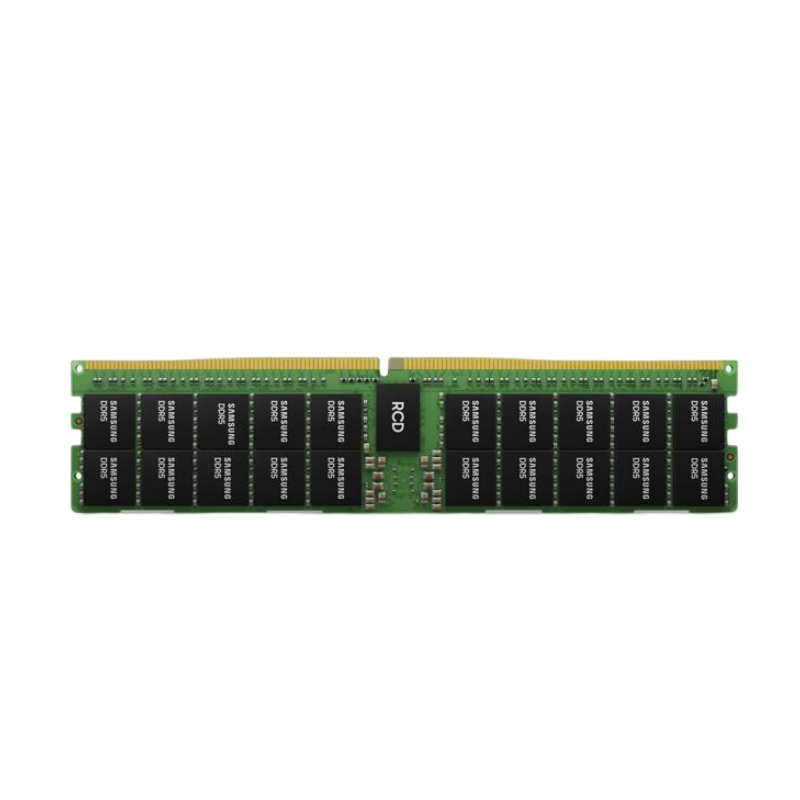


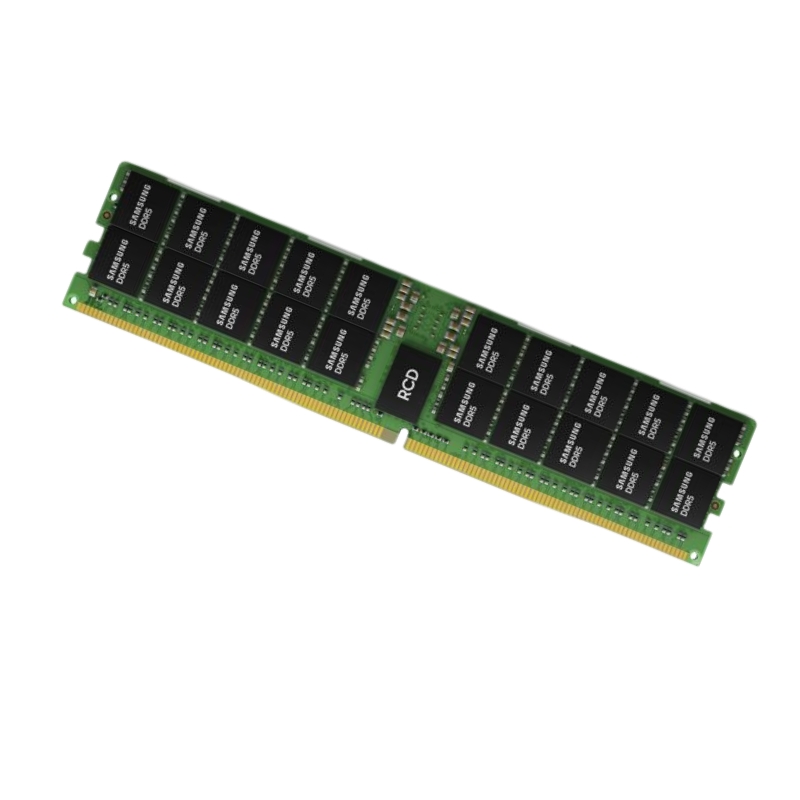
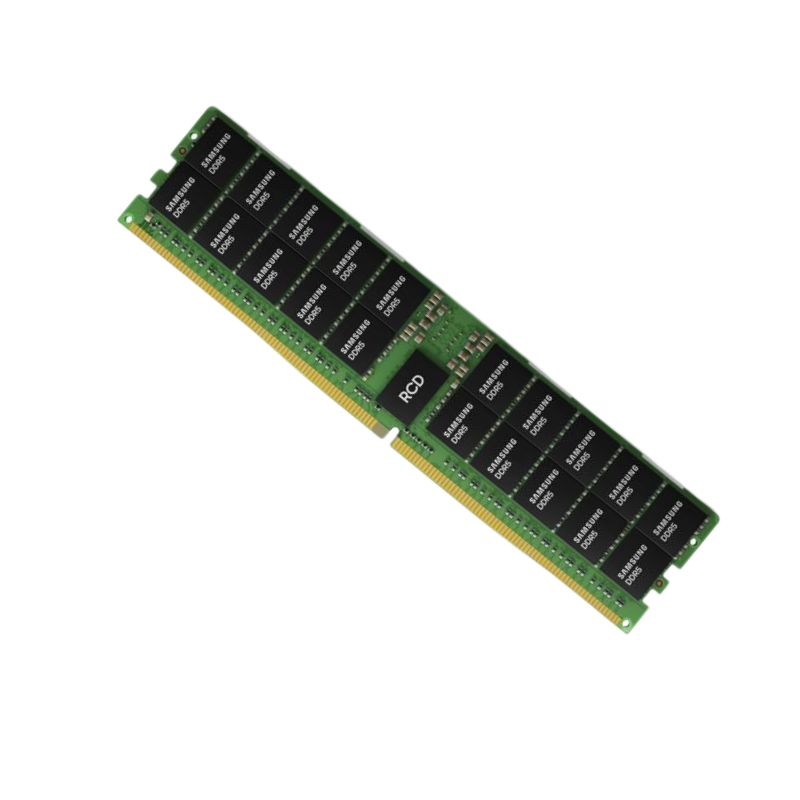
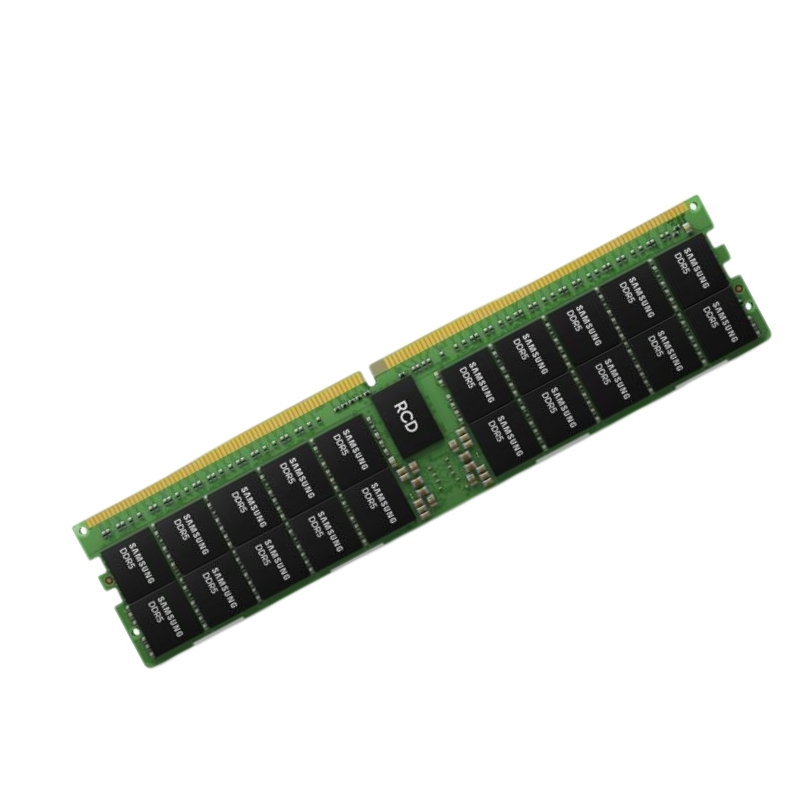
M321R8GA0EB2-CCP Samsung 6400MBPS PC5-51200 64GB 2rx4 ECC Registered Cl52 DDR5 SDRAM 288-Pin RDIMM Memory Module Server. New (System) Pull with 1 year replacement warranty
| SKU/MPN | Warranty | Price | Condition | You save |
|---|---|---|---|---|
| M321R8GA0EB2-CCP | 1 Year Warranty | $2,448.00 | New (System) Pull | You save: $856.80 (26%) |
| M321R8GA0EB2-CCP | 1 Year Warranty | $2,726.00 | New Sealed in Box (NIB) | You save: $954.10 (26%) |
The Samsung M321R8GA0EB2-CCP is a high-capacity DDR5 SDRAM memory module engineered specifically for modern server and data center environments. Designed to meet the growing demand for higher bandwidth, improved reliability, and superior efficiency, this 64GB DDR5 RDIMM delivers consistent performance under heavy, multi-threaded workloads. With advanced error correction and registered signal processing, it is optimized for mission-critical infrastructure where uptime, stability, and scalability are non-negotiable.
Samsung M321R8GA0EB2-CCP DDR5 Memory Module
The Samsung M321R8GA0EB2-CCP 64GB DDR5 Registered RDIMM Server Memory Module is designed to meet the demanding needs of modern data centers, enterprise workloads, and high-performance computing infrastructures. With a blazing speed of 6400 MT/s (PC5-51200), this module ensures accelerated processing power, reduced bottlenecks, and efficient multitasking across complex applications. As a 2Rx4 ECC Registered DIMM (RDIMM), it combines stability, scalability, and robust error correction to provide unparalleled system reliability.
Built on DDR5 SDRAM technology, this memory module offers substantial improvements over previous generations. Increased bandwidth, improved power efficiency, and enhanced reliability features make it a future-ready solution for evolving server platforms. Operating at DDR5-6400 with a PC5-51200 rating, this module delivers a data rate of up to 6400 MB/s. Such speed ensures smoother data handling, reduced latency under load, and optimized system throughput. DDR5 SDRAM represents the next evolutionary step in memory technology, offering greater bandwidth, improved efficiency, and advanced features for server-grade computing. With speeds up to 6400 MT/s, DDR5 ensures servers can handle next-generation workloads, including artificial intelligence, virtualization, big data analytics, and machine learning
The 288-pin RDIMM form factor ensures compatibility with modern server platforms that support DDR5 memory. Its standardized design allows for easy installation and seamless integration into enterprise systems.
In server environments, data integrity and system stability are non-negotiable. This is where Error-Correcting Code (ECC) and Registered (or Buffered) DIMMs become essential. ECC memory includes extra bits to detect and correct single-bit data corruption on the fly, preventing silent data errors that could lead to crashes or corrupted results. The "Registered" aspect, indicated by the "R" in RDIMM, incorporates a register (or buffer) on the module that acts as a traffic controller for addressing signals. This reduces the electrical load on the server's memory controller, allowing for the support of significantly more memory modules per channel—a prerequisite for populating massive memory capacities in multi-socket servers. The combination of ECC and Registered technology, as seen in this Samsung module, is the industry standard for mission-critical applications where uptime and accuracy are paramount.
Decoding the part number and specifications of this module reveals its targeted capabilities. The "M321R8GA0EB2-CCP" follows Samsung's naming convention, indicating a DDR5 (5th Gen) Registered DIMM. Its key technical attributes define its place in the server ecosystem.
The 64GB capacity is ideal for balancing density and affordability per module, allowing system builders to achieve high total memory (e.g., 1TB in a 16-slot dual-channel system) without immediately resorting to more expensive 128GB LRDIMMs. The 2Rx4 configuration indicates the module's internal physical organization: it is a dual-rank (2R) module composed of memory chips with a x4 data width. Dual-rank modules allow for better interleaving, improving memory controller efficiency and often providing a performance boost over single-rank modules at the same capacity.
DDR5 modules utilize a 288-pin layout for both RDIMMs and UDIMMs. However, the key notch position is different from DDR4's 288-pin design, providing physical incompatibility to prevent accidental insertion into the wrong motherboard type. This ensures that only compatible platforms, designed with the necessary power management and signal integrity for DDR5, can utilize these advanced modules.
A significant advancement in DDR5 is the relocation of the Power Management Integrated Circuit (PMIC) from the motherboard to the memory module itself. This module-integrated PMIC provides more stable power delivery, reduces noise, and allows for finer-grained power control. While operating at a similar nominal voltage (around 1.1V) as DDR4, the improved efficiency of DDR5 and the on-module PMIC contribute to better performance-per-watt, a crucial metric for large-scale data center deployments concerned with operational costs and cooling.
Samsung M321R8GA0EB2-CCP as a leading OEM and component manufacturer, represents the pinnacle of reliability. Their modules are built with rigorously binned, top-quality DRAM chips and undergo extensive testing. For enterprise deployments, selecting memory from a tier-one manufacturer like Samsung, Micron, or SK Hynix, or from a trusted third-party integrator that uses these chips, is crucial. Look for a strong warranty and technical support, which are indicators of the vendor's confidence in their product's longevity.
The Samsung M321R8GA0EB2-CCP is engineered for seamless integration with server platforms that support DDR5 registered memory. It is backward incompatible with DDR4, making it essential to verify motherboard and CPU compatibility before deployment. Leading enterprise server manufacturers are adopting DDR5 across their latest architectures, ensuring that this module is future-proof for next-generation workloads.


 Contact Us
 Information
 Catalog
 Solid State Drives (SSD)
 Network Switches
 Hard Disk Drives
 HBA & Controllers
 PC & Servers
 PC & Server Memory
 CPU & Processors
 Network Routers
 Power Supplies
 Tape Drives & Libraries
 Network Devices
 Computer & Network Cables