(7% discount is applied at checkout)
Cart is empty
Your go-to destination for cutting-edge server products
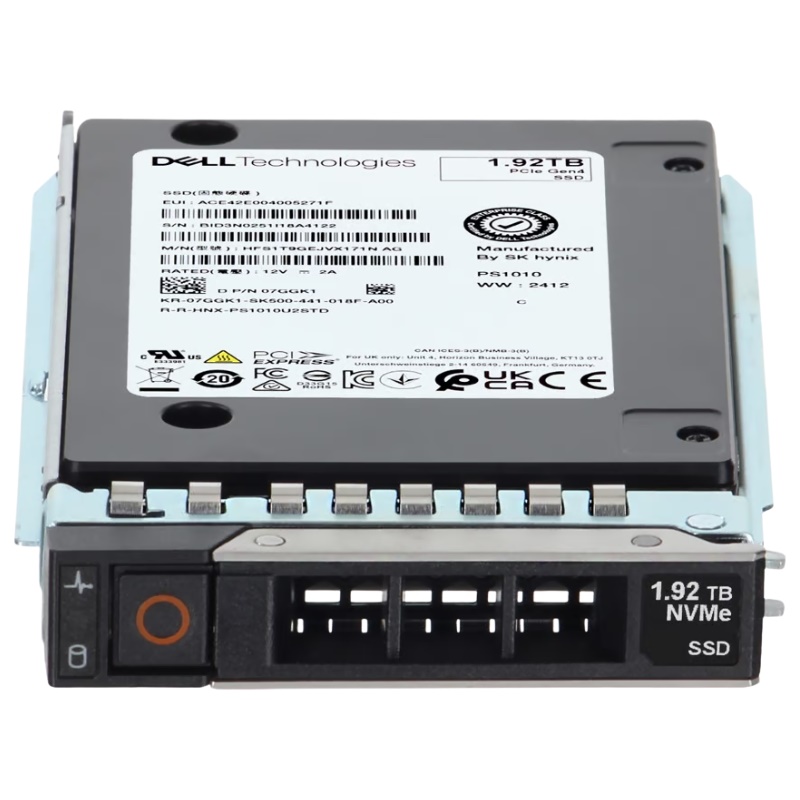


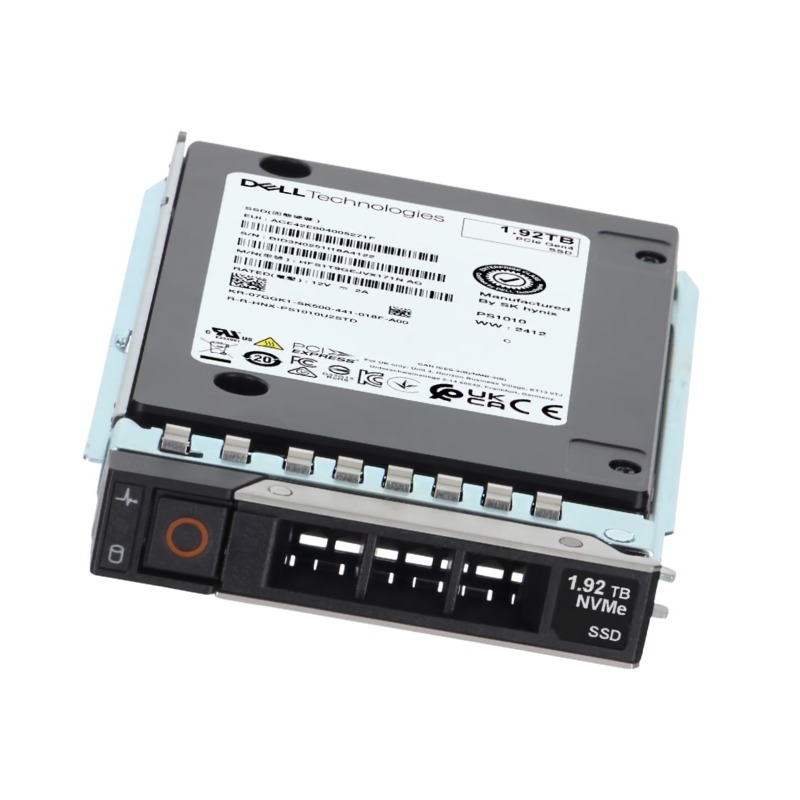
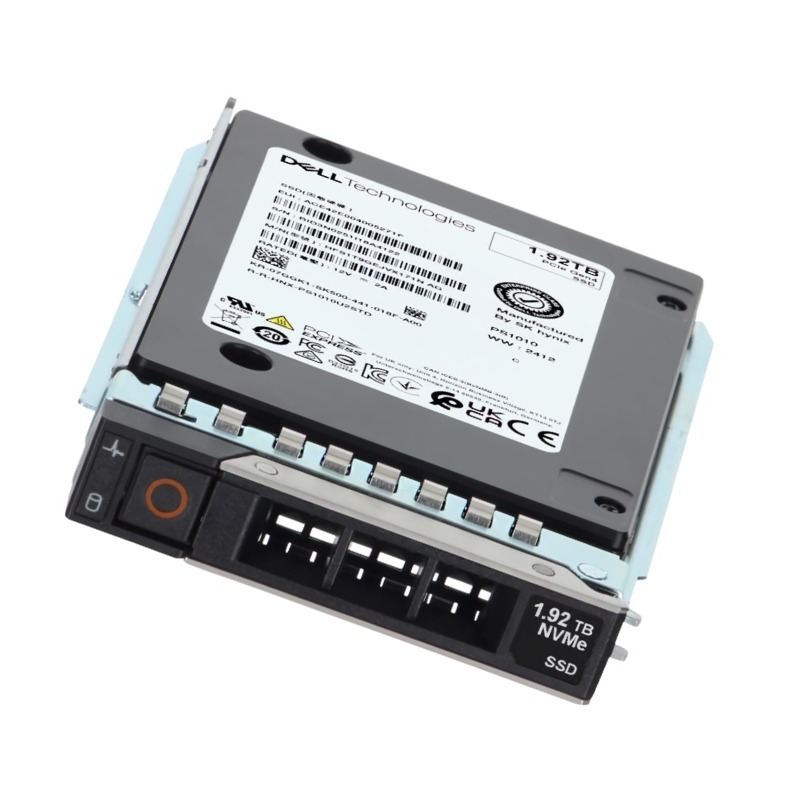
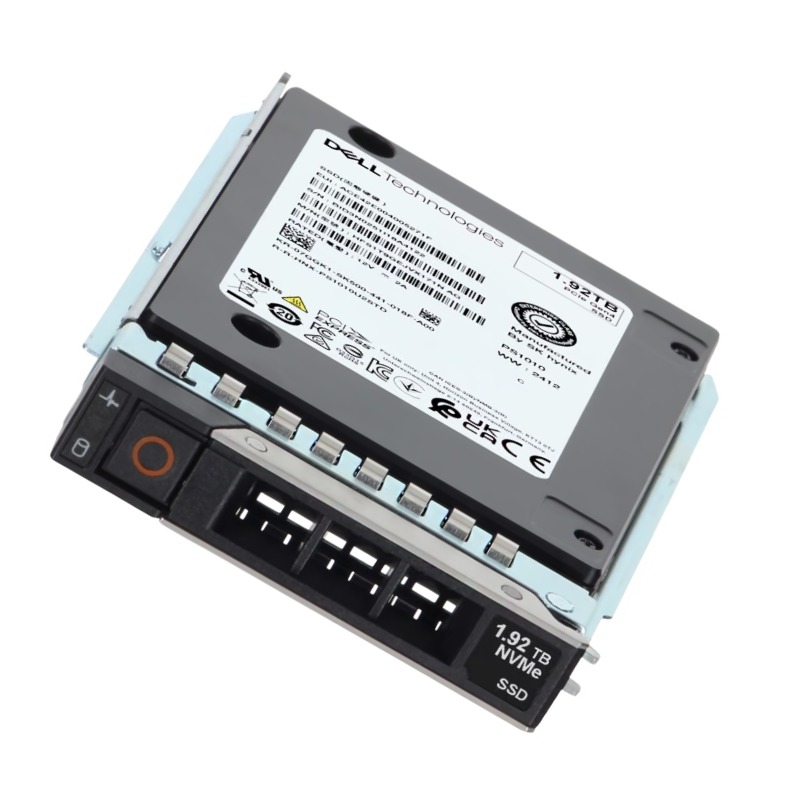
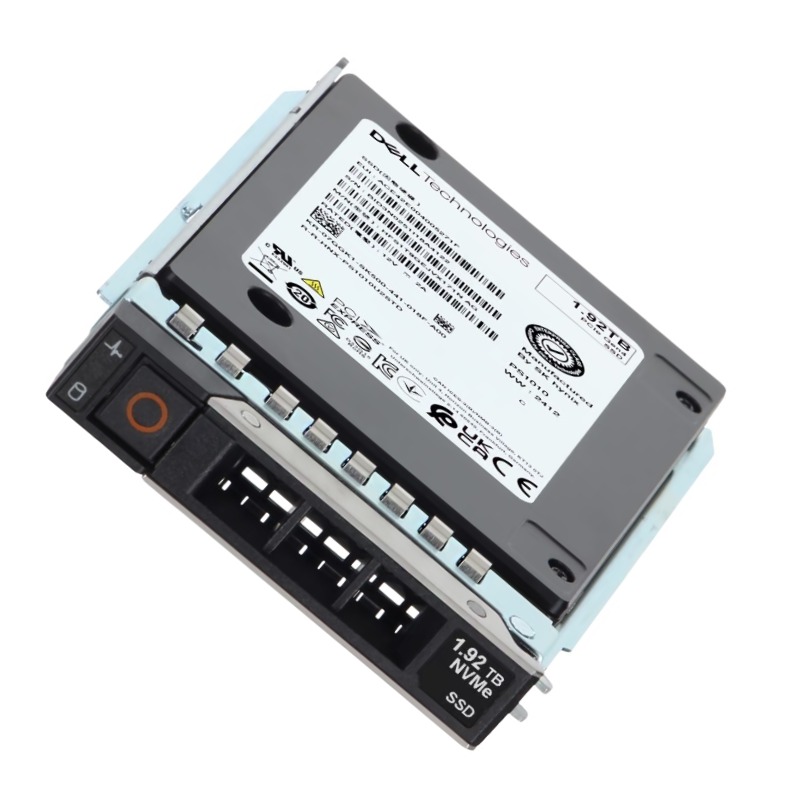
Dell 345-BLNZ 1.92TB PCIe Gen4 NVMe U.2 2.5Inch Read Intensive SSD. New Sealed in Box (NIB) with 1 year Replacement Warranty
Elevate your enterprise storage with the Dell1.92TB PCIe Gen 4.0 x4 NVMe U.2 SFF 2.5-inch SSD. Designed for next-generation PowerEdge servers, this small form factor (15mm) solid-state drive delivers exceptional performance, stability, and endurance—ideal for demanding read-intensive applications.
This drive ensures exceptional performance under heavy workloads, making it suitable for database management, virtualization, and cloud infrastructure environments.
These intelligent technologies enhance operational reliability, protecting valuable business data across various workloads.
The Dell 1.92TB PCIe Gen 4.0 NVMe U.2 SSD is fully compatible with a wide range of Dell PowerEdge servers, including the latest 14G, 15G, 16G, and 17G generations.
The category of 1.92 TB enterprise solid state drives — typified by the :contentReference[oaicite:0]{index=0} — addresses a critical tier in data-center storage design: moderate capacity, ultra-low latency, read-intensive workload optimization, and deployment in dense server platforms. These drives represent a sweet-spot between smaller capacities used for boot/OS/metadata services and ultra-large capacities reserved for archival or bulk storage. In particular, these drives are engineered around the U.2 2.5-inch (typically 15 mm) form factor with the NVMe interface over PCIe Gen4 x4 lanes, enabling throughput and I/O performance far beyond legacy SATA or SAS SSDs. According to published specs, the 345-BLNZ offers up to approximately 5.3 GB/s sequential read and 1.9 GB/s sequential write, with random I/O performance in the order of 700 k IOPS (read) and ~114 k IOPS (write) across a 100% span. :contentReference[oaicite:1]{index=1}
This category is commonly referred to as “read-intensive U.2 NVMe enterprise SSDs” and serves use-cases such as virtualization host storage, read-cached tiers, database query front-ends, content delivery caching, and other I/O environments where reads dominate writes. They are purpose-built to handle heavy read workloads with endurance profiles suited accordingly. By targeting the 1.92 TB size (and similarly sized models), organizations achieve a balance of capacity, performance, cost per TB, and rack density — enabling efficient storage scaling without moving into the much higher cost/lower endurance mixed-use or write-intensive SSD tiers.
At the heart of this category is the U.2 2.5-inch (15 mm) small-form-factor drive, a design that permits hot-swap, tray-based installation in server bays, compatibility with high-density sleds, and efficient thermal/power behaviour. The use of the PCIe Gen4 x4 NVMe interface is critical: it offers roughly double the bandwidth of PCIe Gen3, along with lower protocol overhead via NVMe, and deep queue depths facilitating high parallelism. For example, the 345-BLNZ features a PCIe 4.0 x4 interface under NVMe, driving sequential reads up to ~5.3 GB/s per the spec sheet. :contentReference[oaicite:2]{index=2}
Choosing a drive in this category implies that the system architecture supports an NVMe U.2 interface, compatible backplane or adapter, and adequate cooling and power performance. Interfaces such as the U.2 connector (SFF-8639 or SFF-TA-1002) provide enterprise connectivity, support hot-swap, and integrate easily into standard server bays — making these drives well-suited for modern 14G, 15G, 16G, 17G generation server platforms such as those in the Dell PowerEdge family. :contentReference[oaicite:4]{index=4}
Performance in this category is measured across multiple axes: sequential throughput, random IOPS (read/write), latency, and sustained performance under real-world workloads. For read-intensive drives, manufacturers often quote high sequential read numbers and very strong random read IOPS, while write performance and endurance may be modest in comparison to mixed-use or write-intensive tiers.
In the specific case of the 345-BLNZ, the spec sheet lists sequential read up to ~5.3 GB/s and sequential write up to ~1.9 GB/s. Random read peaks at ~700,000 IOPS and random write at ~114,000 IOPS (4 k block, full span). :contentReference[oaicite:5]{index=5} What this tells us: for workloads where reading data dominates — e.g., boot images, OS volumes, read caching, analytics query front-ends — this drive delivers strong performance headroom. Meanwhile the write capability, while lower than headline read speeds, is still significant for metadata updates, OS activities or moderate write bursts.
Latency is also implicitly improved: the NVMe protocol over PCIe offers lower command overhead and better queueing mechanics than SAS/SATA, meaning that read-intensive drives such as these can reduce I/O wait times and improve application responsiveness. When deployed in clusters or hyper-converged infrastructures, the faster read path helps accelerate VM boot storms, file-share access, search indexes and more.
Read-intensive drives are optimized for high read volume and comparatively modest write volume and therefore have endurance ratings that match those assumptions. While a write-intensive drive might be rated at multiple drive writes per day (DWPD), a read-intensive drive might be rated at ~1 DWPD or less but still be engineered for millions of hours MTBF and enterprise usage lifecycles.
The 345-BLNZ uses TLC 3D NAND (as indicated in its general description) which provides a balance of cost and endurance for read-heavy workloads. :contentReference[oaicite:6]{index=6} For enterprises choosing this category, fitting the drive to the right workload is key: you gain exceptional read performance, but if your workload involves heavy sustained writes or high daily write volume, you may need a higher endurance tier.
Use-cases well aligned with this category include: content delivery platforms with large numbers of read requests, virtualization hosts where VMs are primarily read accessed, boot volumes for large deployments, database replicas (read-only query nodes), high-density caching layers, and general enterprise file-share acceleration. Because the capacity (~1.92 TB) remains moderate, the cost per TB is lower than ultra-large drives, and the rack density efficiency remains high. That makes them an attractive “sweet-spot” tier between everyday SSDs and high-capacity archival drives.
When selecting drives in this category, compatibility is multi-faceted: interface (U.2 NVMe vs other), form-factor (2.5” SFF 15 mm), server backplane support, firmware readiness, and thermal/power provisioning. The 345-BLNZ is explicitly designed for multiple generations of Dell PowerEdge servers (14G, 15G, 16G, 17G), implying that the drive firmware and mechanical design match hot-swap trays and sleds used in those systems
When planning installations, consider whether you will use these drives for primary volumes, caching tiers or read-heavy workloads. For example, in a server with NVMe bay slots, you might populate 1.92 TB drives in all bays and dedicate them to VM OS volumes or read-cache layers. Alternatively, in a storage array environment, these drives can serve as a front-end acceleration layer ahead of slower bulk drives.
This category (read-intensive NVMe U.2 1.92 TB) sits within a broader enterprise SSD tiering framework. Understanding the distinctions between sub-categories is critical for selecting the right product.
Read-intensive drives are optimized for workloads where read operations vastly out-number writes. They typically have lower DWPD endurance ratings, but deliver high read throughput, strong random read IOPS, and excellent latency characteristics. For example, the 345-BLNZ falls into this category. The value proposition: cost-effective capacity for large read workloads, high performance for reads, moderate writes sufficient for metadata or occasional updates.
Mixed-use drives are designed for balanced read/write workloads, for example virtual desktop infrastructure (VDI), mixed database workloads, and general purpose enterprise use. These drives typically support higher DWPD endurance, have higher write performance than RI drives, but cost more per TB. If your workload has significant write volume or you require longer endurance life, you might move into this sub-category.
Write-intensive SSDs are engineered for heavy and sustained write workloads — e.g., high-performance transactional databases, log heavy applications, intensive caching with writes, or HPC workloads. They offer the highest endurance ratings (often >10 DWPD), the strongest write speeds, and premium cost per TB. For organizations needing top-tier write performance, this is the option — but for many read-centric applications, a read-intensive drive like the 345-BLNZ offers a better cost/performance fit.
Therefore, when browsing the category of 1.92 TB U.2 NVMe enterprise SSDs, you’ll often see product labels like “Read Intensive (RI)”, “Mixed Use (MU)”, or “Write Intensive (WI)”. Knowing your workload’s read/write profile is key: if reads dominate, this category (RI) is likely ideal; if writes are heavy or bursty, consider stepping up to MU or WI tiers.
The choice of the 1.92 TB capacity class is strategic in enterprise SSD planning. It offers the advantages of moderate to high capacity while retaining better cost per TB than smaller capacities (e.g., 960 GB) and fewer trade-offs in terms of performance variability. With a 2.5-inch U.2 form factor, you can deploy multiple drives per server or sled, achieving high rack density.
Additionally, because these drives typically use 3D TLC NAND (in the case of 345-BLNZ) and enterprise-grade firmware, the reliability and service life tend to be higher compared to consumer-grade SSDs — making them suitable for continuous server or storage array operations with minimal maintenance overhead. :contentReference[oaicite:8]{index=8}
Enterprise NVMe U.2 SSDs such as the 345-BLNZ must address thermal and power characteristics because high speeds mean increased thermal load, and many drives will operate continuously under heavy workload. The spec sheet mentions features like enhanced power loss data protection, hardware encryption (AES-256), temperature monitoring and logging, and end-to-end data protection.
From a cooling perspective: when installing multiple drives in a server bay or sled, ensure there is adequate airflow across the drive lips and heat-dissipation surfaces. Some vendors supply carrier/tray assemblies with active or passive heat‐spreaders; the U.2 format often benefits from direct airflow and proper server chassis integration.
Power consumption is typically modest compared to legacy HDDs or large write-intensive enterprise SSDs, but under high I/O the power draw can increase. Planning for proper power delivery, thermal headroom and monitoring is part of enterprise architecture best practice.
Reliability is a major driver in this category. Drives like the 345-BLNZ report high mean time between failures (MTBF) values — for example, 2 million hours rated life In addition, firmware features such as wear-leveling, background garbage collection, and error-correction coding (ECC) are critical to maintaining consistent performance and drive health over years of operation.
Because read-intensive drives are optimized for reads rather than heavy sustained writes, one key monitoring metric is write volume over time: if your workload evolves to include heavier writes, you may need to step up to a different tier to maintain long-term reliability and avoid early retirement of drives.
Within the enterprise storage landscape, the category defined by 1.92 TB NVMe U.2 read-intensive SSDs — exemplified by the Dell 345-BLNZ — occupies a strategically important niche. It provides excellent read performance, strong rack density, cost-efficient capacity and deployment versatility. For workloads that are read-heavy, latency-sensitive, and require moderate capacity, this tier is hard to beat. When matched with appropriate server architecture, thermal/power design, monitoring and lifecycle planning, these drives deliver enterprise-class capability with efficient cost and reliable operations. Organizations scaling their infrastructure for virtualization, content delivery, database caching or large-scale read-centric workloads will find this category to be a compelling building block in their storage strategy.


 Contact Us
 Information
 Catalog
 Solid State Drives (SSD)
 Network Switches
 Hard Disk Drives
 HBA & Controllers
 PC & Servers
 PC & Server Memory
 CPU & Processors
 Network Routers
 Power Supplies
 Tape Drives & Libraries
 Network Devices
 Computer & Network Cables