(7% discount is applied at checkout)
Cart is empty
Your go-to destination for cutting-edge server products
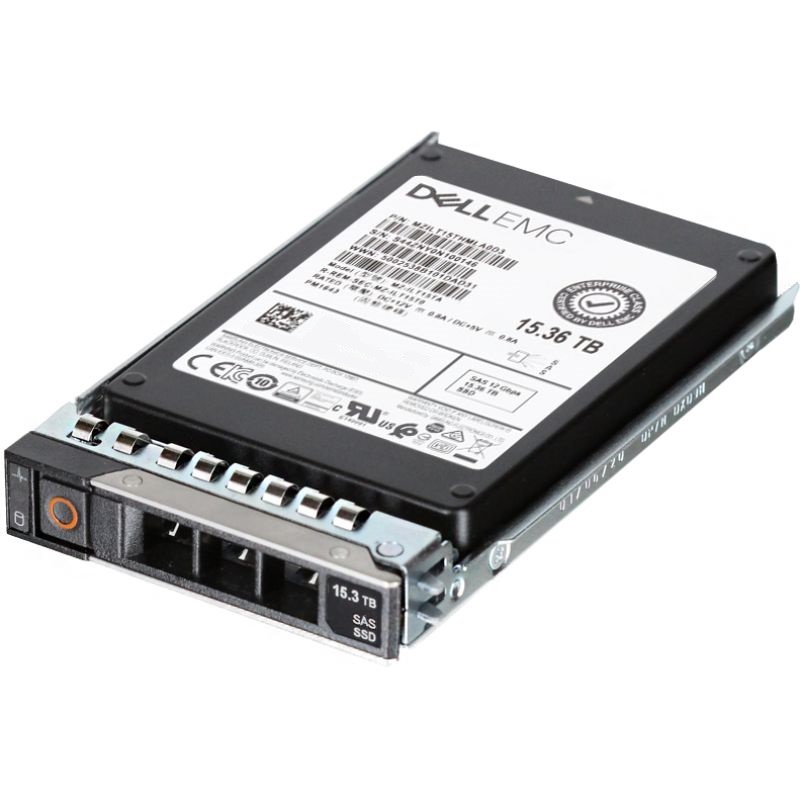


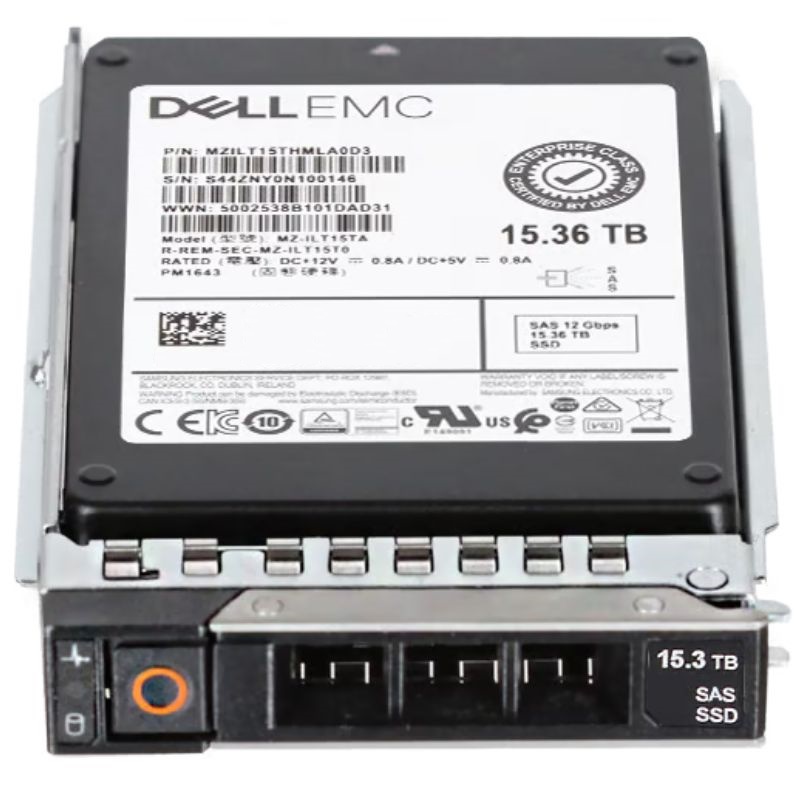
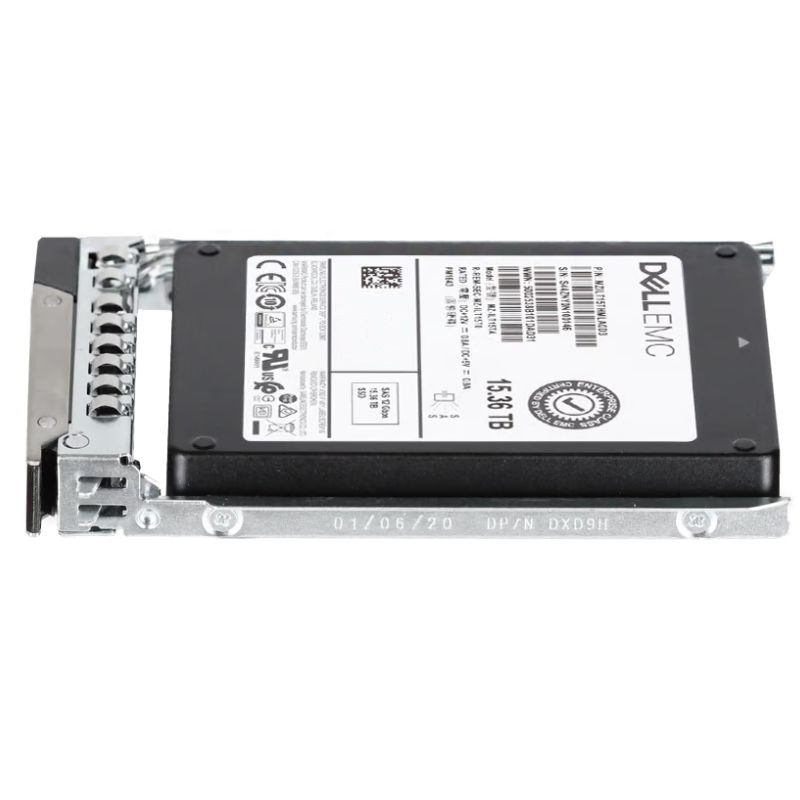
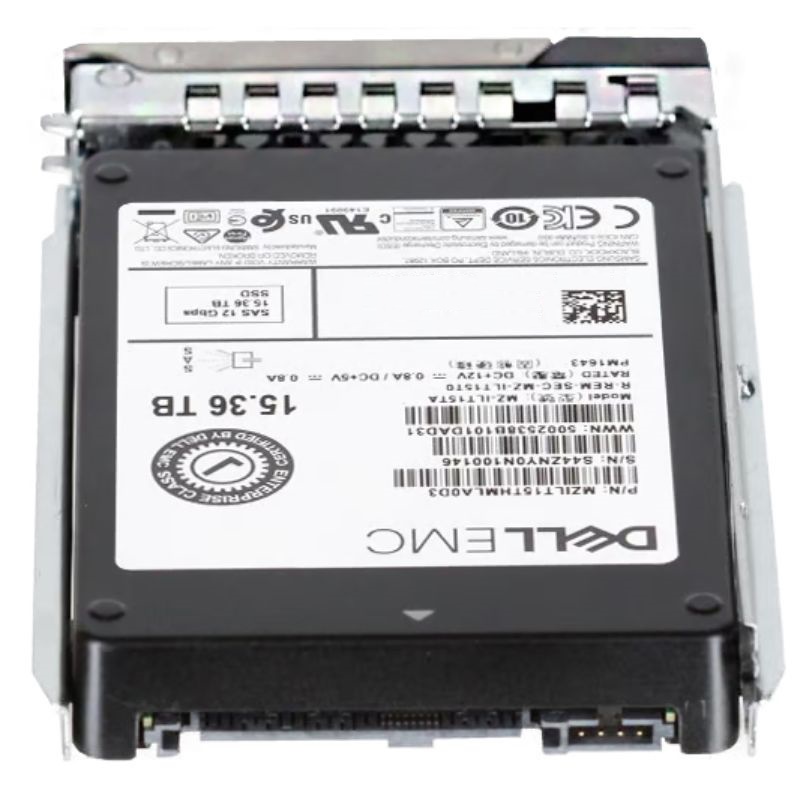
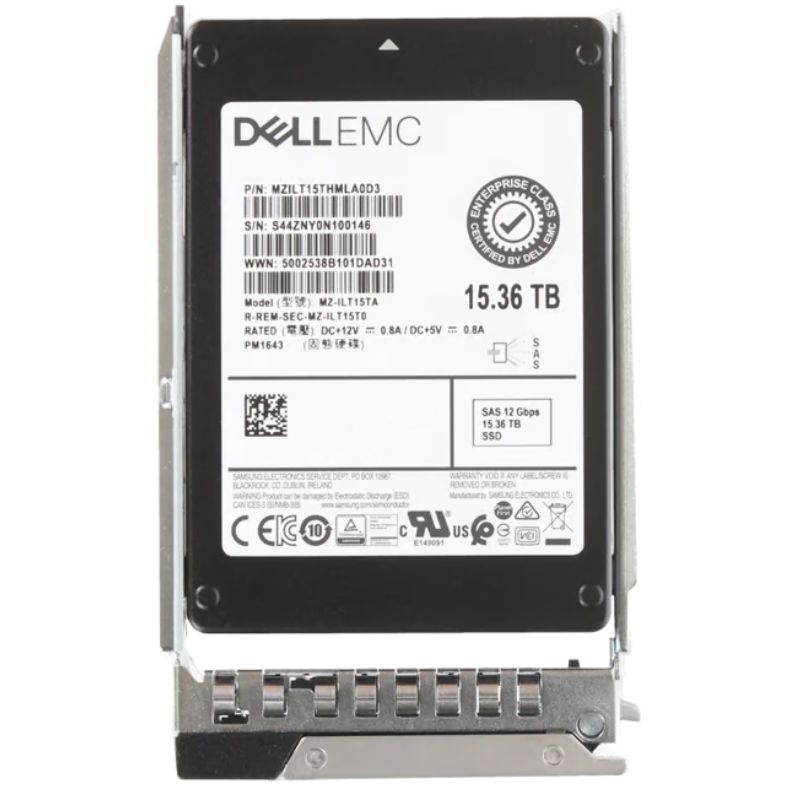
Dell 400-ANUC 15.36TB SAS-12GBPS Read-Intensive TLC SFF Hot-Plug Certified with tray for Poweredge Server Solid State Drive. New Sealed in Box (NIB) with 1-Year Replacement Warranty
The Dell 400-ANUC 15.36TB SAS 12Gbps solid-state drive is engineered for enterprise-grade storage solutions, offering exceptional reliability and optimized read-intensive performance. Designed with a hot-plug tray, this SSD integrates seamlessly into PowerEdge servers, ensuring efficient scalability and dependable operation.
The Dell 400-ANUC 15.36TB SAS-12Gbps Read-Intensive TLC SFF Hot-Plug Certified solid state drive is engineered to deliver a balanced combination of high-capacity storage, predictable performance for read-heavy workloads, and seamless compatibility with PowerEdge server platforms. This category of enterprise-class SSDs targets data centers, virtualization hosts, database servers, analytics clusters, and high-performance file-serving infrastructure where sustained read throughput, low latency, and operational reliability are mission-critical. Each drive in this category is characterized by 12Gbps SAS interface performance, small form factor (SFF) packaging for space-efficient server configurations, and a read-optimized triple-level cell (TLC) NAND implementation tuned for endurance and cost-effectiveness.
The SAS-12Gbps interface on these drives supports full-duplex communication and enterprise-class features such as dual-port redundancy in supported backplanes, robust error reporting, and link-level reliability designed for multi-initiator architectures. The interface negotiates at 12 gigabits per second per lane, enabling aggregated throughput that supports large sequential read operations as well as many small random reads typical of virtualization and metadata services. Hot-plug capability allows drives to be replaced or upgraded without powering down the system, dramatically reducing maintenance windows and operational risk in 24/7 environments.
These SSDs leverage read-intensive TLC NAND, which stores three bits per memory cell to deliver a favorable cost-per-gigabyte while maintaining read performance and sufficient endurance for workloads dominated by read transactions. Read-intensive TLC is optimized at the controller and firmware level to reduce write amplification, to implement advanced wear-leveling strategies, and to provide consistent read latency across a broad range of utilization scenarios. The combination of these elements results in predictable service-level performance and simplified capacity planning for storage architects.
Performance in this category emphasizes high sustained read bandwidth, strong small-block random read IOPS, and low read latency. Typical use cases include read-centric applications such as content delivery networks, virtual desktop interfaces where boot storms occur, database queries that are disproportionately read-heavy, search indexes, and analytics workloads where read throughput is the gating factor. While write performance is not the primary focus, the drives still provide sufficient write endurance and throughput to handle updates, checkpoints, and occasional bulk writes without compromising longevity when used within their designed service class.
At 15.36 terabytes per drive, this class provides a compelling balance of capacity and density for modern racks. When deployed in 2.5-inch chassis with high bay counts, organizations can realize multi-petabyte totals in a single rack, reducing footprint and power overhead compared to equivalent spinning-disk arrays. This high per-drive capacity allows architects to design fewer RAID groups for a given capacity target, improving rebuild times and simplifying capacity management. Planning for thermal dissipation, proper airflow, and backplane bandwidth is essential when populating a large percentage of bays with high-density SSDs, and the certified tray ensures that the mechanical and thermal integration with Dell PowerEdge server architectures is optimized to support safe operating temperatures and predictable performance under sustained load.
Certification with PowerEdge servers indicates that these drives have passed Dell’s interoperability tests, firmware validation, and mechanical fit checks for specific server generations. Certified drives often carry validated firmware that cooperates with HBA/RAID controller firmware, server management subsystems, and BIOS-level drive discovery routines, minimizing the risk of compatibility issues during firmware updates or system reboots.
Enterprise SSDs in this category typically incorporate a suite of features focused on maintaining data integrity and minimizing downtime. End-to-end data path protection reduces the risk of undetected corruption by protecting metadata and payloads through the device. Advanced ECC (error-correcting code) algorithms and background scrubbing routines correct soft errors before they become visible to the host. Power-loss protection mechanisms protect write-in-flight data using supercapacitors or firmware-managed techniques to ensure the drive’s internal mapping and metadata remain consistent after unexpected power events. SMART reporting and telemetry expose health metrics and endurance indicators to server management platforms, enabling predictive replacement schedules and integration with monitoring tools to avoid surprise failures.
Endurance metrics such as drive writes per day (DWPD) or total terabytes written (TBW) are primary planning variables when selecting an SSD. Read-intensive TLC drives are engineered with a lower write endurance rating than mixed-use or write-intensive SSDs, but their endurance is matched to their intended workload profile where writes are comparatively infrequent. Accurate life-cycle planning requires measuring actual write rates in production, projecting future growth in write amplification caused by snapshot workflows or background compaction, and aligning RAID or erasure coding strategies to balance rebuild times and redundancy. Proactive wear-leveling and over-provisioning on the drive assist long-term health, and modern fleet-management approaches use telemetry to trigger preemptive replacements when a drive approaches its programmed endurance threshold.
As with any firmware-driven device, the SSD’s firmware influences performance characteristics, bug fixes, and feature sets. Certified drives for PowerEdge servers often receive firmware updates through Dell’s update channels or integrated systems management tools, simplifying the firmware roll-out process in large fleets. Firmware updates can deliver improvements in compatibility, latency stability under certain I/O patterns, and reliability mitigations. System administrators should schedule firmware updates during maintenance windows, follow vendor guidance for revision compatibility, and ensure backups and snapshots are in place prior to mass updates.
When deploying these SFF SAS SSDs in RAID arrays, architects must consider rebuild times, parity overhead, and fault domain distribution. High-capacity SSDs can lengthen rebuild durations for traditional RAID levels, which increases exposure during a degraded state. Strategies such as using RAID levels designed for SSDs, deploying erasure coding at the array level, or leveraging controller features like drive-aware rebuild algorithms can reduce exposure and improve overall resiliency. The drive’s predictable read performance makes it suitable for read-mostly profiles where mirrored or parity-protected sets serve content distribution, and the high capacity allows for fewer parity groups to achieve a target usable capacity while preserving redundancy budgets.
The drive is well-suited to environments that require a predictable read profile and sustained throughput without paying the premium for higher-end endurance classes unnecessarily. It also fits into cloud service provider portfolios where cost-effective, high-density storage tiers are essential to maintain competitive pricing while delivering strong performance to tenants with read-biased workloads.
Compared to write-intensive enterprise SSDs, read-intensive TLC drives trade a portion of write endurance for improved capacity and lower cost per gigabyte. Against NVMe flash, SAS-12Gbps SSDs provide broad compatibility, especially in legacy or mixed-hardware data centers that rely on SAS backplanes and HBA/RAID controller ecosystems. For organizations prioritizing compatibility with PowerEdge infrastructures and seeking a balance of density, cost, and read performance, this class provides a pragmatic choice.


 Contact Us
 Information
 Catalog
 Solid State Drives (SSD)
 Network Switches
 Hard Disk Drives
 HBA & Controllers
 PC & Servers
 PC & Server Memory
 CPU & Processors
 Network Routers
 Power Supplies
 Tape Drives & Libraries
 Network Devices
 Computer & Network Cables