(7% discount is applied at checkout)
Cart is empty
Your go-to destination for cutting-edge server products


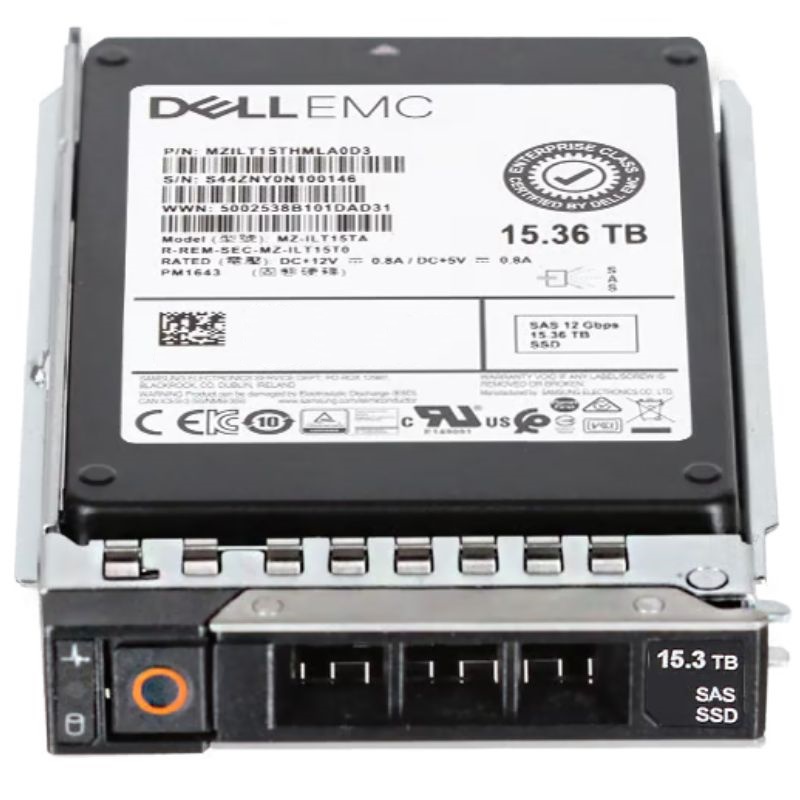
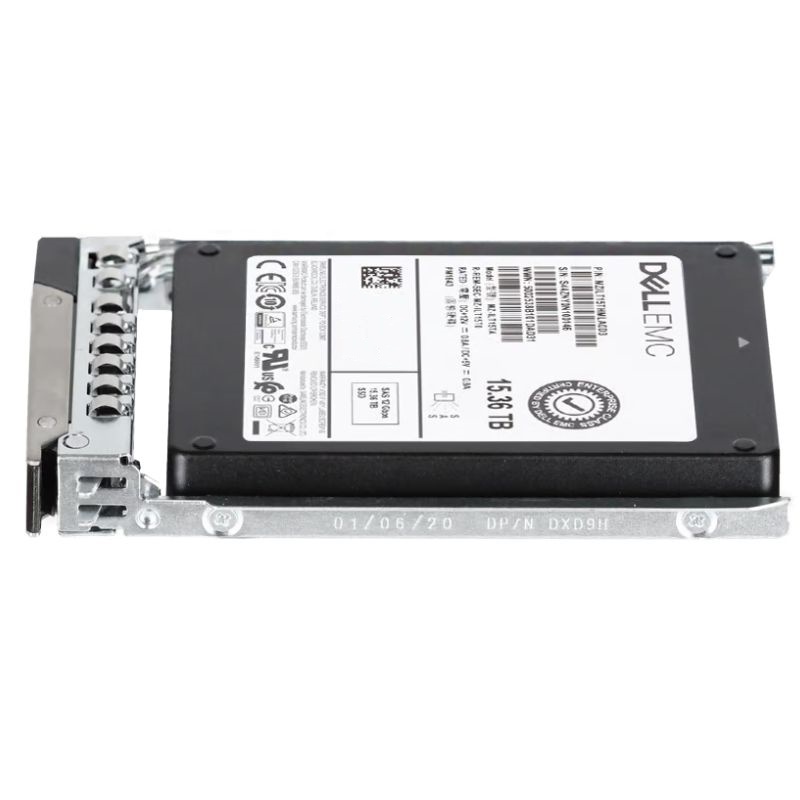
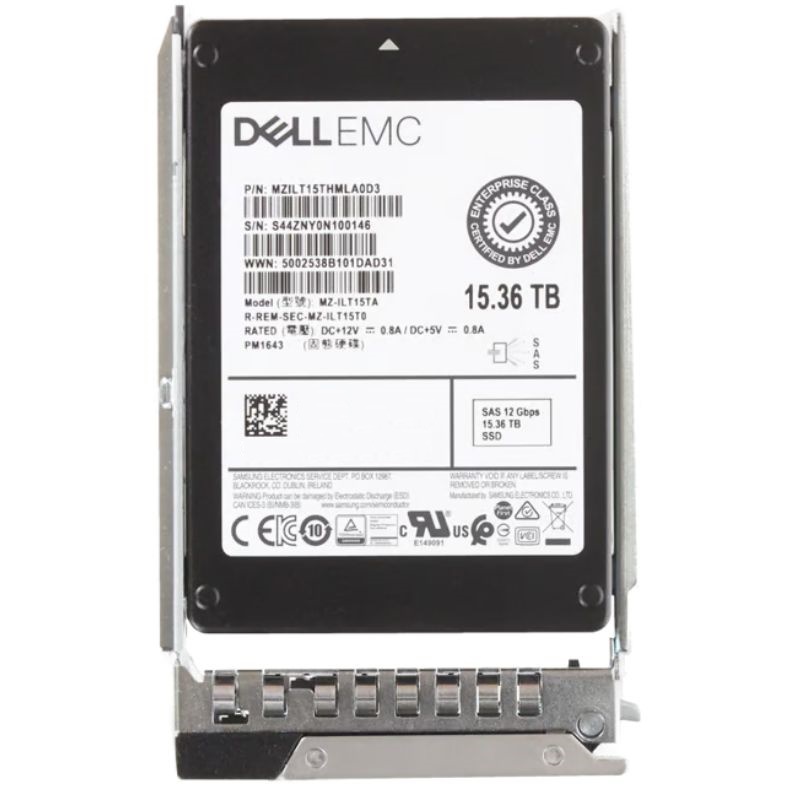
Dell 400-ANUD 15.36TB SAS-12GBPS Read-Intensive TLC SFF Hot-Plug Certified with tray for Poweredge Server Solid State Drive. New Sealed in Box (NIB) with 1-Year Replacement Warranty
The Dell 400-ANUD 15.36TB SAS-12Gbps Read-Intensive TLC SFF hot-plug solid state drive represents a high-capacity enterprise class storage option designed for modern PowerEdge server deployments where sustained read performance, data center reliability and dense storage per rack unit are prioritized. This category centers on 2.5-inch small form factor (SFF) enterprise SSDs that use the Serial Attached SCSI (SAS) 12Gb/s interface, optimized firmware for read-heavy workloads, and drive carriers or trays certified for Dell PowerEdge systems. Models in this family are aimed at read-intensive use cases such as large database read replicas, analytics and reporting nodes, virtualization with heavy boot/read operations, content delivery and caching tiers where write amplification is controlled and long steady read throughput is more important than maximum sustained write endurance.
These SSDs follow the 2.5-inch SFF mechanical standard common to modern server arrays and sleds, making them compatible with 2.5" hot-plug drive bays and hybrid carriers found in Dell PowerEdge generations. The SAS 12Gb/s physical layer supports dual-port configurations and enterprise-grade connectivity that enterprise storage infrastructures expect, including multipath failover at the controller level and broad interoperability with SAS backplanes.
At 15.36 terabytes, drives in this category provide a high single-drive raw capacity that enables dense storage pools without relying solely on NVMe/U.3 device formats. Using fewer physical drives to reach multi-terabyte pool sizes reduces controller overhead, simplifies RAID or erasure coding layouts, and lowers the number of drive bays required for given storage levels. For organizations consolidating multiple read-heavy applications or running large virtual machine footprints, a 15.36TB SAS SSD offers a straightforward path to shrink footprint and preserve consistent latency characteristics across the storage tier.
Drives branded as read-intensive are tuned in firmware and NAND management to deliver strong sequential and random read performance while controlling write endurance expectations and cost. Using 3D TLC NAND, these SSDs balance cost per gigabyte and density against endurance; firmware algorithms place priority on read path latency, predictable I/O completion times and long periods of consistent throughput. The result is storage that performs especially well when workloads are dominated by reads — for example, serving content to many concurrent clients, scanning large data sets for analytics, or running database read replicas. These devices typically expose performance characteristics more stable during extended read bursts than equivalent consumer drives, and they include enterprise features like power loss protection, background media management and host-level reporting.
SAS-12Gbps provides a serial physical link rated up to 12 gigabits per second per lane; in practice, effective throughput depends on controller design, queue depth, and type of I/O (random small blocks versus large sequential transfers). For read-intensive enterprise TLC SSDs, expect high IOPS for random reads with low microsecond latencies and strong sustained sequential read numbers, especially when connected to well-tuned RAID controllers or HBA architectures that fully utilize scatter/gather and NCQ features. While peak theoretical values are useful, the important metric for many buyers is predictable read latency under load and consistent throughput during long queries or streaming reads.
Read-Intensive enterprise SSDs trade off some write endurance in exchange for higher capacity and lower cost per GB. These models are commonly rated around a 1 drive write per day (DWPD) workload class or similar, which suits environments where writes are significantly less frequent than reads. For organizations running write-heavy databases, log-intensive applications, or heavy random write caching, a different SSD class (mixed-use or write-intensive) will be more appropriate. Drive selection should therefore map expected daily write volumes to DWPD ratings, with careful attention to background garbage collection, overprovisioning, and RAID rebuild patterns that can temporarily increase write activity. Product listings often include explicit DWPD or TBW (terabytes written) values which help calculate expected service life under specific workloads.
One of the defining attributes for drives in this category is Dell certification and the inclusion of a matching tray/carrier designed for PowerEdge server drive bays. Certification ensures the firmware handshake, drive LED behavior, predictive failure logging and service tag recognition align with Dell iDRAC and OMSA toolsets. Certified carriers also preserve carrier-level locking, eject mechanics and correct bay retention force required by the chassis.
Read-Intensive SSDs excel in environments where large read operations dominate: business intelligence reporting servers, columnar data warehouses, OLAP nodes and analytics clusters. In these contexts the drive’s low latency and stable read throughput accelerate query response times and shorten report generation windows. When arrays are configured with appropriate RAID levels or erasure coding to protect capacity, integrating 15.36TB SAS read-intensive drives can significantly increase usable read cache and reduce network fetches to slower tiers. This improves the overall user experience for analysts and reduces query backlogs during peak reporting hours.
Enterprise SSD classes are commonly divided into read-intensive, mixed-use, and write-intensive categories. Read-intensive drives strike a balance of capacity and cost optimized for workloads dominated by read operations; mixed-use devices increase DWPD ratings and overprovisioning to tolerate a higher ratio of writes; write-intensive devices prioritize endurance and often use more robust NAND or higher overprovisioning to sustain heavy random write workloads. Buyers should match the DWPD rating, TBW figures and workload type to the intended application. In scenarios where write amplification or heavy background writes (for example, RAID rebuilds) are expected frequently, moving up to a mixed-use or write-intensive class is advisable to avoid premature wear.
SAS-12Gbps remains a proven, highly compatible interface that integrates with existing SAS backplanes, controllers and HBA ecosystems. NVMe devices running over PCIe or U.2/U.3 provide dramatically higher raw bandwidth and lower protocol overhead but may require different server backplanes, adapters or firmware support. The SAS 15.36TB class is attractive for environments that prioritize compatibility with current SAS infrastructure, simpler controller level integration and dense bay utilization.


 Contact Us
 Information
 Catalog
 Solid State Drives (SSD)
 Network Switches
 Hard Disk Drives
 HBA & Controllers
 PC & Servers
 PC & Server Memory
 CPU & Processors
 Network Routers
 Power Supplies
 Tape Drives & Libraries
 Network Devices
 Computer & Network Cables